Reasons for choosing our testing services
ZHONGXI Testing has obtained inspection qualification certifications from multiple countries and regions worldwide. We possess a senior testing team and advanced testing methods, providing independent, impartial, and professional third-party verification services for global carbon projects.
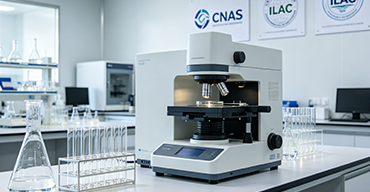
Internationally recognized authority
Certified by multiple international standards such as CNAS, VCS, and GS, with reports universally applicable worldwide.

Global service capability
Covering 140+ countries and regions, it supports on-site detection and remote verification in multiple languages.
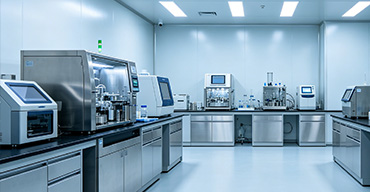
Professional experimental methods
Adopt standard experimental methods to ensure accurate and reliable data.
Precision Quantification of Lysine Modification Rate in Anhydride‑Treated Lactoglobulins: A High‑Resolution Mass Spectrometric and Amino Acid Analytical Service
Lactoglobulin, the major whey protein in bovine milk, is extensively utilised in food, pharmaceutical, and biotechnological applications due to its excellent functional properties and high nutritional value. Chemical modification with acid anhydrides (e.g., succinic, acetic, or maleic anhydride) is a widely adopted strategy to alter the charge, hydrophobicity, and stability of the protein, particularly to improve emulsifying capacity, reduce allergenicity, or mask bitter flavours. The modification primarily targets the ε‑amino groups of lysine residues, which are critical for the protein’s net charge and interaction with other molecules. Accurate determination of the lysine modification rate—the percentage of lysine residues that have been acylated—is essential for quality control, process optimisation, and regulatory compliance of modified protein products. Clients seeking this analysis are typically engaged in the development of novel protein ingredients, hypoallergenic formulas, or targeted drug delivery systems, where precise control over the degree of modification directly correlates with functional performance and safety. Our laboratory offers a fully integrated, ISO‑accredited analytical platform that combines liquid chromatography‑tandem mass spectrometry (LC‑MS/MS), trinitrobenzenesulfonic acid (TNBS) colorimetry, and amino acid analysis (AAA) to deliver a multi‑dimensional, orthogonal assessment of lysine modification. We achieve residue‑specific modification profiling, absolute quantification of free and modified lysines, and comprehensive characterisation of reaction heterogeneity, with detection limits in the picomole range and reproducibility well within 5 % RSD. This article delineates our methodological suite, the technical sophistication of our analyses, and the distinctive competencies that establish us as a premier partner for protein modification studies.
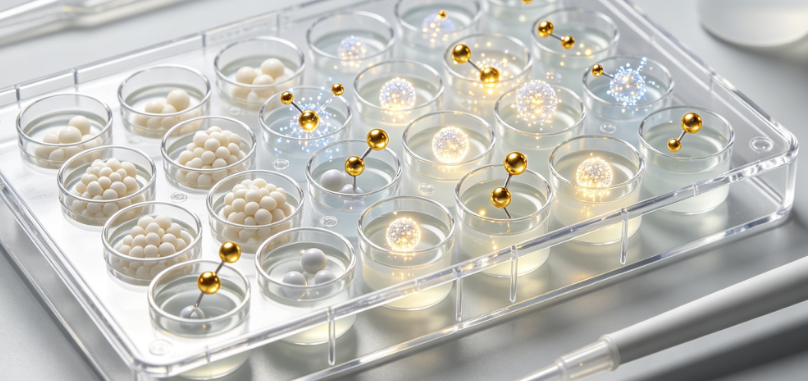
1. The Critical Importance of Lysine Modification Rate Determination
Lysine residues are pivotal for protein functionality—they contribute to positive charge, participate in hydrogen bonding, and serve as reactive sites for cross‑linking or conjugation. Acylation with acid anhydrides not only neutralises the positive charge but also introduces bulky hydrophobic or hydrophilic groups, altering the protein’s surface properties in a concentration‑dependent manner. The biological and physicochemical activities of the modified lactoglobulin are thus highly sensitive to the modification stoichiometry. Over‑modification can lead to loss of nutritional value (as lysine is an essential amino acid), excessive hydrophobicity, or even precipitation; under‑modification may fail to achieve the desired functionality. Our service provides a quantitative, statistically robust measure of the modification rate, enabling clients to set precise specifications, batch‑to‑batch consistency, and to correlate the degree of modification with performance parameters (e.g., emulsification index, solubility, and digestibility).
2. Orthogonal Analytical Approaches for Modification Rate Quantification
We employ a three‑tier analytical strategy to ensure accuracy, specificity, and cross‑validation of results, suitable for both routine quality control and in‑depth research investigations.
LC‑MS/MS Based Residue‑Specific Profiling (High‑Resolution Mass Spectrometry): Our flagship method involves enzymatic digestion of the modified lactoglobulin (using trypsin or endoproteinase Lys‑C) followed by high‑performance liquid chromatography coupled to a Q‑Exactive Orbitrap mass spectrometer. We monitor the mass shifts corresponding to the anhydride adduct (e.g., +100.07 Da for succinylation, +42.01 Da for acetylation) on each tryptic peptide. Using parallel reaction monitoring (PRM) with isotopically labelled internal standards (e.g., 13C6, 15N2‑lysine), we achieve absolute quantification of modified vs. unmodified peptides, allowing us to calculate the site‑specific modification rate for each of the 15 lysine residues in bovine β‑lactoglobulin. This approach also identifies any non‑specific modifications (e.g., on N‑termini or tyrosine) and provides a modification distribution histogram that is invaluable for process characterisation.
TNBS Colorimetric Assay (Total Free Lysine Determination): The classical TNBS method remains a robust, high‑throughput screening tool. We react the modified protein with trinitrobenzenesulfonic acid under controlled conditions (pH 8.5, 40 °C, 2 h) and measure absorbance at 420 nm. The decrease in colour development relative to the unmodified control is directly proportional to the number of blocked lysine residues. Our protocol includes a scrupulous desalting step to remove excess anhydride and its hydrolysis products, which otherwise interfere. We run each sample in triplicate and include a lysine standard curve (0‑200 nmol) to convert absorbance to molar lysine content. The method yields a global modification percentage that correlates excellently with MS data (R² > 0.95) and is ideal for routine QC.
Quantitative Amino Acid Analysis (AAA) with Pre‑column Derivatisation: For absolute determination of lysine loss, we perform acid hydrolysis (6 M HCl, 110 °C, 24 h) to liberate all amino acids, followed by pre‑column derivatisation with 6‑aminoquinolyl‑N‑hydroxysuccinimidyl carbamate (AQC) and separation on a UHPLC system with fluorescence detection (Ex/Em 250/395 nm). The decrease in the molar ratio of lysine to a stable reference amino acid (e.g., leucine or proline) provides a direct, calibration‑free measure of the total lysine modified. This method is particularly useful when the protein’s exact sequence and molecular weight are known, and it serves as an independent check against TNBS and MS results. Our AAA achieves a limit of quantification of 5 pmol and an inter‑day precision of < 3 %.
3. Advanced Characterisation of Reaction Heterogeneity and Adduct Identification
Beyond the overall modification rate, we offer in‑depth characterisation of the modification pattern:
Adduct specificity and side‑reaction profiling: Using high‑resolution MS/MS (HCD and ETD fragmentation), we identify and quantify any secondary modifications, such as O‑acylation on serine/threonine, or the formation of cyclic imides. This is critical when using reactive anhydrides that may attack multiple nucleophiles.
Conformational impact assessment: By coupling our modification data with circular dichroism (CD) spectroscopy and differential scanning calorimetry (DSC), we correlate the modification rate with changes in secondary structure and thermal stability, providing a functional context to the chemical data.
Kinetic modelling of modification: For clients optimising reaction conditions, we perform time‑course experiments (sampling at 0, 15, 30, 60, 120, 240 min) and fit the data to a pseudo‑first‑order kinetic model to determine the rate constant for each lysine residue. This reveals the relative reactivity of different lysines—a powerful tool for rational design of modification protocols.
4. Sample Matrix Compatibility and Throughput
We accept a wide range of sample formats: purified protein solutions, lyophilised powders, and formulated intermediates (e.g., with buffers, salts, or excipients). We perform a pre‑analysis desalting/buffer exchange using size‑exclusion or dialysis to eliminate interfering substances. Our automated liquid‑handling system (Tecan Freedom EVO) enables the processing of up to 96 samples per batch for TNBS and AAA, while our LC‑MS/MS workflow handles 24 samples per day with a fully validated PRM method. We provide flexible tiered packages: a rapid QC screen (TNBS only), a standard package (TNBS + AAA), and a full‑characterisation package (MS/MS + kinetics + conformational analysis).
5. Data Processing, Statistics, and Reporting
All raw data are processed using dedicated software: Xcalibur/Compound Discoverer for MS, Chromeleon for chromatography, and R/Python scripts for kinetic fitting and statistical analysis. Our reports include: (i) the global modification percentage with 95 % confidence intervals, (ii) site‑specific modification rates (if MS analysis is included), (iii) a comparison of the orthogonal methods to highlight any discrepancies, and (iv) a trend analysis for batch‑to‑batch consistency. We also provide a detailed methodological appendix with full instrument parameters, calibration curves, and quality control data, to facilitate regulatory submissions or peer‑reviewed publications.
6. Quality Assurance and Metrological Traceability
Our analytical services operate under ISO 17025:2017 and follow the principles of ICH Q2(R1) for method validation. We have validated each method for specificity, linearity, accuracy (recovery studies using spiked known modifiers), precision (repeatability and intermediate precision), limit of detection, and robustness. We incorporate in‑house reference materials (fully characterised batches of succinylated β‑lactoglobulin with known modification rates determined by independent NMR) into every batch, and we monitor system suitability using Shewhart control charts. All data are archived in a 21 CFR Part 11‑compliant LIMS, ensuring full audit traceability for GMP/GLP environments.
7. Distinctive Competencies and Differentiating Strengths
Our laboratory is uniquely positioned to deliver this service due to several core advantages:
Orthogonal, cross‑validated methodology: By offering three independent methods (MS, TNBS, AAA) that rely on different physicochemical principles, we provide a consensus modification rate that is significantly more reliable than any single method. This is particularly important when the presence of hydrolysis products or buffer contaminants can bias colorimetric or chromatographic assays.
Residue‑level resolution and kinetic insights: Our MS/MS approach not only gives a global number but also details which lysine residues are preferentially modified—information that is critical for understanding structure‑function relationships. Furthermore, our kinetic modelling reveals the order of reactivity, enabling clients to design modification protocols that target specific residues.
Flexible sample handling and rapid turnaround: We accommodate protein concentrations as low as 0.5 mg/mL and sample volumes as small as 100 µL, making our service suitable for precious or limited samples. Our standard package (TNBS + AAA) is completed within 5 working days, and the full characterisation package is delivered in 10‑12 working days, with an express 48‑hour service available for urgent QC needs.
Expert consultancy for functional interpretation: Our scientific team includes protein chemists who can correlate modification rates with functional properties (e.g., emulsification, solubility, heat stability) and advise on optimal modification ranges for specific applications. We also provide literature and patent search support to contextualise the results within the state of the art.
8. Sample Submission and Project Initiation
We provide detailed submission guidelines, including recommended buffer systems, protein concentration, and shipping conditions (e.g., frozen on dry ice or at 4 °C). A comprehensive questionnaire is filled out by the client to capture the anhydride used, expected modification range, and any special requirements. Our project managers coordinate a kick‑off meeting to finalise the analytical plan, and we offer a pre‑analysis pilot test (using a small aliquot) to confirm sample compatibility and to adjust the digestion or derivatisation conditions if needed.
9. Emerging Capabilities: In‑Process Monitoring and Automated Data Integration
We are developing a real‑time in‑process monitoring system based on Raman spectroscopy, combined with chemometric modelling, to predict the lysine modification rate during the reaction without stopping the process. This will allow clients to harvest the reaction at the exact desired degree of modification. We also offer customised software dashboards that integrate modification data with downstream functional assays, enabling a holistic process analytical technology (PAT) framework.
10. Conclusions: Precision and Confidence in Protein Modification Analysis
Accurate and reproducible determination of the lysine modification rate in anhydride‑treated lactoglobulin is the cornerstone of quality control and functional optimisation for modified whey protein products. Our integrated, multi‑method platform delivers unambiguous, residue‑specific, and statistically validated data that empower our clients to understand, control, and demonstrate the consistency of their modification processes. With our ISO‑accredited quality systems, advanced mass spectrometric capabilities, and expert interpretative support, we provide the analytical depth and reliability that modern bioproduct development demands. We invite you to partner with us for your lysine modification analysis, confident that our service will provide the clarity and confidence required for product advancement and regulatory success.