Reasons for choosing our testing services
ZHONGXI Testing has obtained inspection qualification certifications from multiple countries and regions worldwide. We possess a senior testing team and advanced testing methods, providing independent, impartial, and professional third-party verification services for global carbon projects.
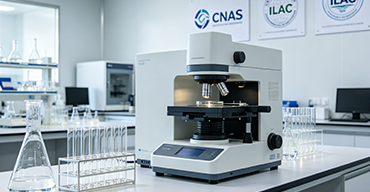
Internationally recognized authority
Certified by multiple international standards such as CNAS, VCS, and GS, with reports universally applicable worldwide.

Global service capability
Covering 140+ countries and regions, it supports on-site detection and remote verification in multiple languages.
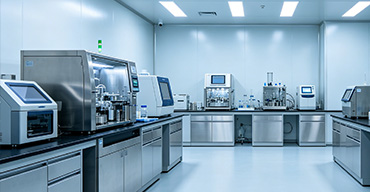
Professional experimental methods
Adopt standard experimental methods to ensure accurate and reliable data.
High‑Sensitivity Bacterial Endotoxin Testing (BET): A Multi‑Method, ISO‑Accredited Service for Pyrogen Safety and Regulatory Compliance
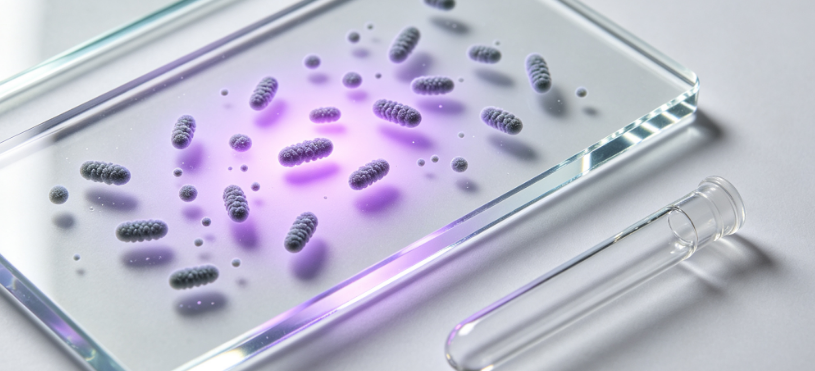
Bacterial Endotoxins, the lipopolysaccharides (LPS) present in the outer membrane of Gram‑negative bacteria, are among the most potent pyrogens known. Their presence in parenteral drugs, medical devices, biologics, and water for injection can trigger severe febrile reactions, septic shock, and even death. Regulatory authorities worldwide—including the FDA, EMA, and the Japanese Pharmacopoeia—mandate strict Endotoxin limits for all injectable and implantable products. Clients seeking bacterial Endotoxin testing are typically engaged in product release, raw material qualification, cleaning validation, or stability monitoring, where the demonstration of Endotoxin levels below defined thresholds is a non‑negotiable prerequisite for market authorisation. Our laboratory provides a fully integrated, ISO 17025‑accredited Endotoxin testing platform that offers the Limulus Amebocyte Lysate (LAL) gel‑clot, kinetic chromogenic, kinetic turbidimetric, and recombinant Factor C (rFC) assays, ensuring flexibility, sensitivity, and robustness across a wide range of sample matrices. We achieve detection limits as low as 0.005 EU/mL with a quantitative dynamic range of 5‑6 logs, and we incorporate comprehensive inhibition/enhancement validation, spike recovery studies, and interference testing to guarantee accurate results even in complex formulations. This article delineates our analytical capabilities, the technical sophistication of our methods, and the distinctive competencies that establish us as a premier partner for bacterial Endotoxin testing.
1. The Regulatory and Clinical Imperative for Endotoxin Testing
The pyrogenic response to Endotoxins is mediated by the Toll‑like receptor 4 (TLR4) pathway, and even picogram quantities can induce systemic inflammation. Therefore, the United States Pharmacopeia (USP <85>), the European Pharmacopoeia (EP 2.6.14), and the Japanese Pharmacopoeia (JP 4.01) mandate that all injectable drugs, medical devices contacting the cardiovascular or cerebrospinal systems, and certain biologics undergo Endotoxin testing as a lot‑release criterion. Our service provides a complete, regulatory‑ready documentation package that includes method validation reports, batch test records, and full audit trails, enabling seamless submission to global regulatory agencies.
2. Comprehensive Assay Portfolio and Method Selection
We offer four complementary Endotoxin detection methods, each with distinct advantages, and we guide clients to the optimal choice based on sample nature, required sensitivity, throughput, and regulatory preferences.
Gel‑Clot Method (Limulus Amebocyte Lysate – gel‑clot): This is the classical, pharmacopoeial reference method, based on the formation of a solid gel clot in the presence of Endotoxin. We perform both the limit test (qualitative) and the gel‑clot method for quantitative determination using serial dilution. Our validated gel‑clot protocol achieves a sensitivity of 0.03 EU/mL and is widely accepted for regulatory submissions, particularly for medical device extracts. We adhere strictly to the USP/EP guidelines for endpoint determination.
Kinetic Chromogenic Assay (KCA): This photometric method measures the release of p‑nitroaniline from a chromogenic substrate, with the reaction time being inversely proportional to Endotoxin concentration. Our KCA platform (using a 96‑well microplate reader with a thermostatted block) provides a quantitative range from 0.01 to 100 EU/mL with a within‑run precision of < 5 % CV. It is ideal for high‑throughput screening and for samples with expected low Endotoxin loads, as it provides kinetic data that can be archived for trend analysis.
Kinetic Turbidimetric Assay (KTA): This method monitors the increase in turbidity of the LAL reagent‑Endotoxin reaction over time, without the need for a chromogenic substrate. We offer KTA as an alternative to chromogenic methods, particularly for samples that may contain colour‑interfering substances or when a simpler, less expensive assay is preferred. Our KTA achieves a similar sensitivity (0.01 EU/mL) and is fully validated according to EP/USP requirements.
Recombinant Factor C (rFC) Assay: As a non‑animal, sustainable alternative to LAL, the rFC assay uses a recombinant version of the horseshoe crab Factor C enzyme, activated by Endotoxin. Our rFC method is available as a fully quantitative, fluorescent endpoint or kinetic assay with a detection limit of 0.005 EU/mL, and it eliminates the risk of β‑glucan cross‑reactivity, providing enhanced specificity. For clients with sustainability policies or requiring a non‑animal source method, this is the preferred option, and we have successfully validated it for a wide range of parenteral products.
3. Comprehensive Sample Preparation and Matrix Interference Mitigation
One of the greatest challenges in Endotoxin testing is the interference caused by sample matrix components—such as detergents, pH extremes, chelating agents, and particulate matter—which can either inhibit or enhance the LAL reaction. Our approach includes a mandatory inhibition/enhancement test for every new sample type, using a spike recovery protocol with a known Endotoxin standard (e.g., from USP or a commercial source). We perform a dilution series and determine the maximum valid dilution (MVD) and the minimum valid concentration (MVC) to ensure that the assay conditions are within the tolerances of the LAL reagent. We offer customised extraction protocols for medical devices (e.g., rinsing, immersion, or centrifugation), and we have validated methods for viscous, oily, or proteinaceous samples using ultrafiltration, protease pre‑treatment, or solvent extraction where appropriate.
4. Advanced Data Analysis and Interpretation
All photometric assays are processed using software that performs automatic standard curve fitting (using a 4‑parameter logistic or linear regression model), with built‑in outlier detection and compliance with the USP acceptance criteria (CV ≤ 25 % for standards, recovery 50‑200 % for interference tests). We provide a comprehensive quality control sheet for each batch, including the correlation coefficient (r²) of the standard curve, the validity of the control standard Endotoxin (CSE), and the result for each sample expressed in EU/mL or EU/device. For multi‑sample studies, we perform statistical trend analysis to monitor Endotoxin loads over time, flagging any upward drift that could indicate a change in raw material quality or cleaning efficacy.
5. Quality Assurance and Metrological Traceability
Our Endotoxin testing service operates under ISO 17025:2017 accreditation, with specific scope for all LAL and rFC methods. We maintain a master standard curve prepared from a USP reference standard Endotoxin (RSE) or a commercial control standard Endotoxin (CSE) calibrated against the RSE. Each batch of LAL reagent is qualified for sensitivity and for its ability to detect the specified Endotoxin concentration. We implement positive and negative product controls in every run, and we use spike controls to verify recovery. All data are archived in a 21 CFR Part 11‑compliant LIMS with full audit trails, electronic signatures, and encrypted storage, ensuring data integrity for regulatory inspections.
6. Distinctive Competencies and Differentiating Strengths
Our laboratory offers several unique advantages:
Multi‑method flexibility: We are one of the few providers that offer all four pharmacopoeial methods (gel‑clot, chromogenic, turbidimetric, rFC) under one roof, allowing us to adapt to client preferences, sample characteristics, and regulatory requirements without the need for cross‑laboratory coordination. This also enables us to perform method cross‑comparison studies for clients seeking to transfer from a traditional to a newer method.
Comprehensive interference testing and method development: Our expert team conducts a thorough investigation of matrix effects, including pH adjustment, dilution, and addition of blocking agents to overcome inhibition, and we provide a fully documented method validation report that can be directly submitted to regulatory agencies. We have successfully validated protocols for over 200 distinct matrices, including vaccines, monoclonal antibodies, lipid emulsions, surgical sutures, and implantable polymers.
High‑throughput and rapid turnaround: Our kinetic assays are performed on a fully automated 96‑well pipetting system, enabling the simultaneous analysis of up to 92 samples in duplicate, with a standard run time of 60 minutes. We provide a preliminary result within 24 hours of sample receipt and a full, signed report within 3‑4 business days, with an express 24‑hour service available for urgent lot‑release requests.
Regulatory‑grade documentation and consultancy: Our final reports include all raw data, instrument logs, sample preparation records, and a detailed method description. We also offer pre‑audit consultations to assist clients in preparing for regulatory inspections, reviewing their Endotoxin control strategies, and ensuring that their testing programs are fully compliant with the latest EU GMP Annex 1, USP Chapter <1225>, and FDA guidance.
7. Sample Submission and Logistics
We accept a wide range of sample types, including injectable drug solutions, medical device extracts, raw materials, water for injection, and biopharmaceutical intermediates. We provide pyrogen‑free containers and sampling kits upon request, along with detailed instructions on sampling, storage (4 °C for short‑term, -20 °C for long‑term), and shipping to avoid contamination. Our client portal allows for easy submission of sample information, tracking of analytical progress, and secure download of certificates of analysis.
8. Emerging Capabilities: Low‑Level Endotoxin Detection and Biofilm Monitoring
We are actively developing a high‑sensitivity kinetic turbidimetric method in combination with a pre‑concentration step (using tangential flow filtration) to detect Endotoxin levels as low as 0.001 EU/mL, which is critical for advanced therapies such as cell and gene therapy products where the allowable limits are extremely stringent. We are also validating a rapid Endotoxin detection system based on a microfluidic chip that enables real‑time monitoring of Endotoxin accumulation in circulating water systems. These innovative services are available on a collaborative basis, offering early access to cutting‑edge technology.
9. Conclusions: Endotoxin Assurance for Patient Safety and Regulatory Success
Bacterial Endotoxin testing is not merely a compliance step; it is a fundamental safeguard for patient safety and product quality. Our integrated, ISO‑accredited service provides a comprehensive, adaptable, and defensible approach to Endotoxin quantification, covering method selection, validation, sample analysis, and regulatory documentation. With our multi‑method capability, advanced interference handling, high throughput, and expert regulatory support, we empower our clients to confidently meet the strictest Endotoxin limits while optimising operational efficiency. We invite you to partner with us for your bacterial Endotoxin testing needs, confident that our technical rigour and client‑centric approach will deliver the clarity and reliability you require for your critical applications.