Reasons for choosing our testing services
ZHONGXI Testing has obtained inspection qualification certifications from multiple countries and regions worldwide. We possess a senior testing team and advanced testing methods, providing independent, impartial, and professional third-party verification services for global carbon projects.
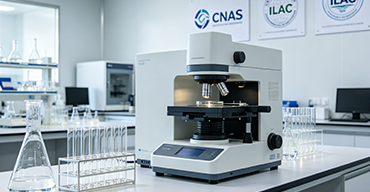
Internationally recognized authority
Certified by multiple international standards such as CNAS, VCS, and GS, with reports universally applicable worldwide.

Global service capability
Covering 140+ countries and regions, it supports on-site detection and remote verification in multiple languages.
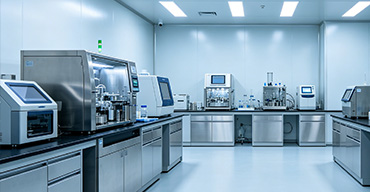
Professional experimental methods
Adopt standard experimental methods to ensure accurate and reliable data.
Comprehensive Enzyme Inhibition Kinetics Studies: A High‑Resolution Analytical Service for Mechanistic Characterisation, IC₅₀ Determination, and Drug Discovery Support
Enzyme inhibition kinetics is a cornerstone of biochemical pharmacology, enzymology, and drug development, providing critical insights into the mechanism of action, binding affinity, and selectivity of candidate inhibitors. Clients seeking enzyme inhibition kinetics testing are typically engaged in early‑stage drug discovery, lead optimisation, mechanistic toxicology, or quality control of enzyme‑based diagnostic reagents. The objective is to precisely quantify the inhibitory potency (IC₅₀), the inhibition type (competitive, non‑competitive, uncompetitive, or mixed), and the inhibition constants (Kᵢ, Kᵢ’) under physiologically relevant conditions. Our laboratory offers a fully integrated, ISO‑accredited enzyme kinetics platform that combines real‑time spectrophotometric, fluorometric, and calorimetric (ITC) detection with advanced mathematical modelling and global fitting to deliver a comprehensive inhibition profile. We achieve IC₅₀ values with a confidence interval of < 10 %, Kᵢ determinations with sub‑micromolar sensitivity, and mechanistic discrimination using both classical steady‑state and pre‑steady‑state approaches. Our service supports a wide range of enzyme classes—including kinases, proteases, transferases, and oxidoreductases—and we provide customised assay development for novel or challenging targets, including membrane‑bound and multi‑subunit enzymes. This article details our analytical capabilities, the depth of our methodological expertise, and the distinctive advantages that establish us as a premier partner for enzyme inhibition kinetics studies.
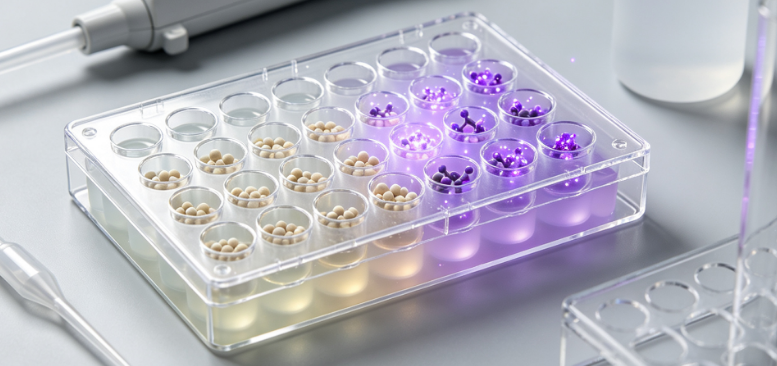
1. The Scientific and Strategic Rationale for Enzyme Inhibition Kinetics
Inhibitor discovery and optimisation require more than a simple percent inhibition at a single concentration. Understanding the mode of inhibition—whether the inhibitor competes with the substrate, binds to the enzyme‑substrate complex, or binds to both free enzyme and complex—is essential for structure‑activity relationship (SAR) studies, for predicting in vivo efficacy, and for avoiding off‑target liabilities. Furthermore, the determination of the inhibition constant (Kᵢ) provides a concentration‑independent measure of affinity that is critical for ranking compounds and for guiding medicinal chemistry efforts. Our service provides a rigorous, statistically robust characterisation that enables clients to make informed decisions on candidate selection and to generate high‑quality data for regulatory submissions or peer‑reviewed publications.
2. Core Analytical Platforms and Detection Modalities
We offer a flexible suite of detection technologies to accommodate diverse enzyme systems and inhibitor properties:
UV‑Visible Spectrophotometry: For enzymes with chromogenic or turbidimetric substrates (e.g., proteases with chromogenic peptide substrates, oxidases with ABTS), we use a dual‑beam UV‑Vis spectrophotometer with a thermostatted cell holder, enabling continuous monitoring of initial velocities at multiple substrate and inhibitor concentrations. Our standard protocol includes a minimum of 8 substrate concentrations (0.2‑5 × Km) and 5‑6 inhibitor concentrations (covering 0‑100 % inhibition), with each point measured in triplicate. We apply non‑linear regression to fit the data to the Michaelis‑Menten equation and its inhibition variants, providing robust parameter estimates.
Fluorometric and Fluorescence Polarisation: For highly sensitive assays, we employ fluorescence‑based substrates (e.g., AMC, 7‑amino‑4‑methylcoumarin) and monitor the increase or decrease in fluorescence over time using a microplate reader with kinetic capability or a fluorometer with stopped‑flow accessory. This approach achieves detection limits in the low nanomolar range and is particularly suitable for high‑throughput screening and for enzymes with low turnover numbers. We also offer fluorescence polarisation (FP) competition assays for inhibitors that bind without enzymatic turnover.
Isothermal Titration Calorimetry (ITC): For label‑free, direct measurement of binding thermodynamics and stoichiometry, we utilise a MicroCal PEAQ‑ITC system. By titrating the inhibitor into the enzyme solution, we obtain the binding affinity (Kd), enthalpy (ΔH), and entropy (ΔS) in a single experiment. This provides complementary information to kinetic data and is essential for understanding the driving forces of inhibition. We routinely achieve Kd determinations in the range of 1 nM to 100 µM with a standard error of < 5 %.
Pre‑Steady‑State Kinetics (Stopped‑Flow): To investigate fast inhibition mechanisms (e.g., covalent or rapidly reversible inhibitors), we use a stopped‑flow spectrophotometer with a dead time of < 2 ms. This allows us to observe burst phases, isomerisation steps, and slow‑binding inhibition that are missed by steady‑state methods. We fit the transient kinetic data to single or double exponential models to extract rate constants for association (kon) and dissociation (koff), providing a complete kinetic picture.
3. Comprehensive Data Analysis and Mechanistic Modelling
Our data analysis pipeline goes beyond simple curve fitting. We perform global fitting of all substrate‑inhibitor concentration combinations to discriminate between competitive, non‑competitive, uncompetitive, and mixed‑type inhibition. Using commercially available software (e.g., GraphPad Prism, SimFit, and our in‑house KineticLab™ scripts in R/Python), we also carry out:
- Dixon plot analysis (1/v vs. [I]) and Cornish‑Bowden plots ([S]/v vs. [I]) to confirm inhibition patterns visually,
- Secondary replots of slopes and intercepts vs. inhibitor concentration to obtain Kᵢ and αKᵢ (where α is the factor by which Kᵢ changes upon substrate binding),
- Goodness‑of‑fit metrics (AIC, R², and residual analysis) to validate the most appropriate model,
- Statistical comparison of nested models using F‑tests, and
- Propagation of error to provide reliable confidence intervals for all parameters.
Our reports include raw progress curves, fitted lines, residual plots, and a mechanistic summary that clearly states the inhibition type, the Kᵢ value, and the Hill coefficient (when applicable). For time‑dependent inhibitors, we provide the kinact/Kᵢ ratio—a key parameter for assessing irreversible or slowly reversible compounds.
4. Customised Assay Development for Challenging Enzymes
We recognise that many enzymes of therapeutic interest—such as membrane‑bound kinases, lipases, or cytochrome P450s—present unique challenges in terms of solubility, stability, and substrate delivery. Our team has extensive experience in designing bespoke assays for:
Membrane‑associated enzymes: We use detergent‑solubilised or reconstituted systems (with defined lipid environments) and validate that the kinetic parameters (Km, Vmax) are reproducible. For lipases, we employ turbidimetric or fluorogenic substrates that partition into micelles or liposomes.
Multi‑subunit or allosteric enzymes: We apply Hill analysis to detect cooperativity, and we use allosteric models (Monod‑Wyman‑Changeux or Koshland‑Némethy‑Filmer) to quantify the effects of modulators on both Vmax and K0.5.
Enzymes with labile cofactors: We perform experiments under argon atmosphere and include reducing agents (DTT, TCEP) to maintain cofactor integrity, and we monitor the redox state using UV‑Vis spectral scanning throughout the kinetics run.
For each custom assay, we provide a full validation report demonstrating linearity of initial velocities with enzyme concentration, substrate saturation, and reproducibility (inter‑ and intra‑day CV < 10 %).
5. High‑Throughput and Miniaturised Formats
For clients with large compound libraries or limited sample quantities, we offer miniaturised 384‑well kinetic assays with a total volume of 20‑50 µL. Using our automated liquid‑handling platform, we can screen up to 1,000 compounds per day at a single inhibitor concentration (for primary screening), and then follow up with full 10‑point IC₅₀ curves for hits. Our automated data processing pipeline generates dose‑response curves, IC₅₀ values, and Z’‑factor statistics to ensure assay quality (Z’ > 0.6).
6. Interpretation and Mechanistic Reporting
Our final report is structured to provide both a high‑level summary and exhaustive technical detail. It includes:
- A one‑page executive summary with the inhibition type, Kᵢ (or IC₅₀), and a mechanistic cartoon,
- Complete raw data tables and progress curves for every condition,
- Michaelis‑Menten and Lineweaver‑Burk plots for visual inspection,
- Results of the statistical model selection, including AIC and F‑test outcomes,
- Full methodological details, including buffer composition, pH, temperature, enzyme concentration, and substrate purity,
- Comments on the biological relevance of the measured parameters, and
- Recommendations for follow‑up experiments (e.g., cellular assays, selectivity profiling) based on the kinetic data.
All reports are delivered in a printable PDF and a fully editable Word format, and we provide raw data files (e.g., .xlsx, .txt) for clients who wish to perform their own analyses.
7. Quality Assurance and Metrological Traceability
Our enzyme kinetics service operates under ISO 17025:2017 accreditation and follows the ICH Q2(R1) and M3(R2) guidelines for method validation. We implement strict internal controls: a reference inhibitor (e.g., staurosporine for kinases, aprotinin for serine proteases) is included in every run to benchmark the assay sensitivity and to correct for day‑to‑day variations. We also monitor enzyme stability throughout the experiment using activity measurements at start and end; if activity loss exceeds 10 %, the data are discarded and repeated. All instruments are calibrated with NIST‑traceable standards (e.g., pH buffers, absorbance filters, and temperature probes), and we maintain full audit trails in our LIMS for GLP/GMP compliance.
8. Distinctive Competencies and Differentiating Strengths
Our laboratory offers several unique advantages that set us apart:
Orthogonal experimental modalities: By offering UV‑Vis, fluorescence, ITC, and stopped‑flow under one roof, we can cross‑validate results and provide a mechanistically holistic picture. For instance, we can combine steady‑state Kᵢ from kinetics with thermodynamic Kd from ITC to reveal whether inhibition is enthalpically or entropically driven.
Advanced global fitting and model discrimination: Our proprietary KineticLab™ suite implements rigorous statistical methods that outperform single‑curve fitting, enabling us to distinguish between closely related mechanisms (e.g., competitive vs. mixed with α near 1) with confidence, using a minimum of data points.
Expertise in challenging targets: Our team has successfully delivered kinetics data for over 150 different enzyme systems, including kinases, proteases, phosphatases, dehydrogenases, transferases, and epoxidases, many of which were previously considered intractable. We have a proven track record of adapting assays to non‑standard substrates, such as macromolecular substrates, lipid‑based substrates, and fluorescently labelled peptides.
Flexible project timelines and sample requirements: For a standard steady‑state inhibition study (IC₅₀ + mechanism), we require as little as 1‑2 mg of pure inhibitor and 5‑10 µg of pure enzyme (depending on specific activity). We deliver a complete report in 3‑4 weeks, with an express service (2 weeks) available for urgent projects. For high‑throughput screening, we can process 100 compounds per week with minimal sample consumption.
Regulatory‑grade documentation: Our reports are structured to meet the expectations of regulatory agencies (FDA, EMA) for IND and NDA submissions, and we have experience with both small‑molecule inhibitors and biotherapeutics. We also provide method transfer protocols and training to help clients establish in‑house capabilities.
9. Sample Submission and Project Consultation
We provide detailed submission guidelines for inhibitors, substrates, and enzymes, including recommended storage conditions and shipping protocols. Our scientific team offers a complimentary initial consultation to discuss the project objectives, the enzyme system, and the expected inhibition mechanism. We then propose a tailored experimental plan with a fixed‑price quote. Throughout the project, our project manager provides weekly progress updates and is available for technical discussions.
10. Emerging Capabilities: Microfluidic and High‑Content Kinetics
We are currently developing a microfluidic droplet‑based platform that reduces assay volumes to nanoliters and enables the simultaneous testing of multiple inhibitor concentrations in a single device, significantly accelerating mechanism determination. We are also validating a high‑content imaging approach for enzymes that can be linked to cellular phenotypes (e.g., cell‑based kinase assays), providing a direct correlation between biochemical inhibition and functional cellular response. These innovations are available as early‑access services for collaborative projects.
11. Conclusions: Delivering Mechanistic Clarity for Inhibitor Development
Enzyme inhibition kinetics is a nuanced discipline that requires both experimental precision and sophisticated data interpretation. Our integrated service provides accurate, reproducible, and mechanistically rich characterisation of enzyme‑inhibitor interactions, covering the full spectrum of kinetic parameters with statistical rigour. With our multi‑method detection, custom assay development, and regulatory‑ready reporting, we empower our clients to advance their drug discovery programmes with confidence. We invite you to partner with us for your enzyme inhibition kinetics needs, assured that our scientific depth and client‑centric approach will deliver the clarity and reliability your research demands.