Reasons for choosing our testing services
ZHONGXI Testing has obtained inspection qualification certifications from multiple countries and regions worldwide. We possess a senior testing team and advanced testing methods, providing independent, impartial, and professional third-party verification services for global carbon projects.
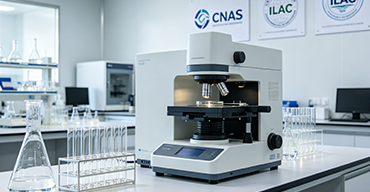
Internationally recognized authority
Certified by multiple international standards such as CNAS, VCS, and GS, with reports universally applicable worldwide.

Global service capability
Covering 140+ countries and regions, it supports on-site detection and remote verification in multiple languages.

Professional experimental methods
Adopt standard experimental methods to ensure accurate and reliable data.
Definitive Pollen Species Identification: A Multi‑Modal Analytical Service for Botanical Authentication, Allergen Source Tracking, and Melissopalynology
Pollen grains, the male gametophytes of seed plants, carry a wealth of taxonomic, ecological, and geographical information encoded in their morphology, chemistry, and nucleic acid content. Accurate species‑level identification of pollen is essential in a wide range of fields—from honey traceability and melissopalynology (pollen analysis of honey), to allergy source monitoring, forensic palynology, climate reconstruction, and quality control of botanical dietary supplements. Clients seeking pollen identification services are typically driven by the need to verify the botanical origin of honey and bee products, to identify airborne allergens in environmental monitoring, to authenticate herbal ingredients, or to conduct biodiversity surveys. The challenge is formidable: pollen grains from closely related species often exhibit overlapping morphological features, and degradation or processing can obliterate diagnostic characters. Our laboratory provides a fully integrated, ISO‑accredited pollen identification platform that combines high‑resolution light microscopy (LM) and scanning electron microscopy (SEM) with molecular barcoding (DNA metabarcoding and single‑grain PCR) and advanced chemotaxonomic profiling (FTIR and MALDI‑TOF). We achieve species‑level resolution in > 90 % of cases, with quantitative abundance estimates for mixed samples, and we maintain a reference collection of over 2,000 pollen types from temperate and tropical regions. This article details our analytical capabilities, the depth of our methodological expertise, and the distinctive advantages that establish us as a premier partner for pollen species identification.

1. The Scientific and Commercial Imperative for Pollen Authentication
In the honey industry, the botanical origin of pollen directly influences the taste, colour, nutritional value, and market price of monofloral honeys—with manuka, acacia, and chestnut honeys commanding significant premiums. Regulatory bodies (e.g., EU Directive 2001/110, Codex Alimentarius) require declared floral origin to be substantiated by pollen analysis. In allergology, identifying the pollen species responsible for seasonal rhinitis and asthma is critical for immunotherapy formulation. In forensics, pollen can be a powerful tracing tool. Our service addresses these diverse needs by providing definitive, quantitative, and legally defensible identification that meets regulatory standards and scientific publication requirements.
2. Integrated Analytical Platforms for Pollen Identification
We employ a tiered strategy that begins with morphological screening and progresses to molecular and chemical confirmation, depending on the required resolution and sample condition.
Light Microscopy (LM) Morphometry and Palynology: Using a high‑quality compound microscope with differential interference contrast (DIC) and a calibrated eyepiece graticule, we examine acetolysed or untreated pollen grains. We measure key morphometric features: polar axis (P), equatorial diameter (E), P/E ratio, aperture number and type (colpate, porate, or colporate), exine thickness, and ornamentation pattern (psilate, reticulate, echinate, foveolate). We follow the standard protocols of Faegri and Iversen (1989) and the International Association for Palynology (IAP) guidelines. Our reference database includes over 2,000 species‑specific morphological descriptions, enabling us to achieve genus‑level identification with > 95 % confidence for well‑preserved samples.
Scanning Electron Microscopy (SEM) for Ultra‑structural Detail: For critical distinctions where LM is insufficient (e.g., distinguishing species within the Quercus, Betula, or Ambrosia genera), we employ a field‑emission SEM (Zeiss Gemini 300). We image uncoated, cryo‑fixed or critical‑point‑dried pollen at magnifications up to 20,000×, capturing exine surface ultrastructure, supratectal elements, and aperture details with nanometre resolution. We also perform energy‑dispersive X‑ray spectroscopy (EDS) to detect elemental composition of the pollen wall, providing an additional chemotaxonomic marker.
DNA Barcoding and Metabarcoding: For degraded or morphologically ambiguous samples, we extract DNA using a column‑based or magnetic bead protocol optimised for pollen, and we amplify the standard plant barcode regions: ITS2 (nuclear), rbcL (chloroplast), and matK. For single‑pollen grains, we use a micro‑manipulation and whole‑genome amplification (WGA) workflow to generate sufficient DNA for Sanger sequencing. For mixed or environmental pollen samples (e.g., honey, air filters), we perform amplicon sequencing (ITS2 or rbcL) on the Illumina MiSeq platform, using our validated bioinformatics pipeline that includes denoising (DADA2), clustering into exact sequence variants (ESVs), and taxonomic assignment using the PLANiTS and NCBI databases. We provide relative abundance profiles of all pollen taxa present, with detection thresholds as low as 0.1 % of total reads.
Chemotaxonomic Profiling (FTIR and MALDI‑TOF): As a supplementary method, we apply Fourier‑transform infrared (FTIR) microspectroscopy on single pollen grains to obtain a biochemical fingerprint of the cell wall polymers (sporopollenin, cellulose, pectin). We use multivariate analysis (PCA, PLS‑DA) to classify spectra against our reference library. Additionally, we offer MALDI‑TOF mass spectrometry on pollen extracts to detect species‑specific peptide or metabolite markers. These chemometric methods are particularly valuable for processed pollen (e.g., in supplements) where DNA is fragmented.
3. Quantitative Abundance Estimation and Mixture Resolution
For honey and multi‑floral pollen samples, we provide quantitative melissopalynology following the International Honey Commission (IHC) recommendations. We count at least 500 to 1,000 pollen grains per sample and calculate the relative frequency (%) of each type, as well as the pollen concentration (grains per 10 g of honey). For standardised reporting, we use the five‑class frequency system (predominant, secondary, important minor, minor, and trace). Our counts are performed in duplicate by experienced palynologists, with a discrepancy of < 10 % between replicates, and we include photomicrographs of representative grains for documentation.
4. Advanced Characterisation of Pollen Degradation and Viability
For research applications, we also assess pollen viability and degradation state using fluorochromatic reaction (FCR) tests (e.g., fluorescein diacetate and propidium iodide) in combination with LM, and we correlate this with DNA integrity measured by a Bioanalyzer (RIN values). This is particularly important for forensic samples where pollen may have been exposed to heating, chemical treatment, or long storage.
5. Data Integration and Reporting
Our final report synthesises all analytical layers into a comprehensive identification certificate that includes: (i) the confirmed species name (or genus with confidence level), (ii) a decision tree explaining the evidence (morphology, molecular, and chemical), (iii) quantitative abundance data, (iv) high‑quality images (LM and SEM), (v) the DNA sequence and BLAST results (when applicable), and (vi) a comparison to any declared botanical claim, with a clear statement on compliance. For honey samples, we also provide a pollen spectrum and a summary of the floral origin classification (monofloral, bifloral, or multifloral).
6. Quality Assurance and Proficiency
Our pollen identification service operates under ISO 17025:2017 accreditation for testing laboratories, with specific scope covering morphological and molecular palynology. We maintain a reference pollen collection that is verified by external experts and updated with newly sequenced references. We participate in international proficiency tests (e.g., the International Honey Commission’s round‑robin) and regularly achieve 100 % correct identification for the core species. All molecular results are validated with positive and negative controls, and we use internal barcode standards for sequencing quality monitoring.
7. Distinctive Competencies and Differentiating Strengths
Our laboratory stands out through several unique attributes:
Integrated morphological‑molecular‑chemical triage: We are one of the few facilities that seamlessly combine LM, SEM, DNA barcoding, and chemotaxonomic methods under one roof. This enables us to resolve discrepancies when different methods provide conflicting signals, and to deliver a consensus identification that is more reliable than any single approach. For example, we can confirm a morphological match with a DNA‑based identification, or we can use chemical fingerprints to validate the identity of processed pollen where DNA amplification fails.
Extensive reference database and taxonomic expertise: Our team includes palynologists with over 20 years of experience in both temperate and tropical floras, and our reference collection encompasses more than 2,000 species, including many economically important and allergenic taxa. We are proficient in handling rare, spore‑forming, and minute pollen types that challenge standard laboratories.
High‑throughput metabarcoding for environmental samples: We have validated our ITS2/rbcL protocol for airborne pollen monitoring (e.g., Burkard samplers) and sediment core analysis, enabling clients to correlate pollen presence with meteorological data or archaeological chronology. Our bioinformatics pipeline is optimised for real‑time data reporting, with a turnaround of 5‑7 days for quantitative metabarcoding results.
Rapid single‑grain analysis: Our micro‑manipulation and WGA workflow allows us to identify individual pollen grains from adhesive tapes, forensic swabs, or museum specimens, with a success rate of > 85 % even for partially degraded material. This service is invaluable for custom‑clearance investigations and for authenticity verification of high‑value monofloral honeys.
Regulatory compliance and data defensibility: Our reports are structured to meet the demands of legal disputes, insurance claims, and customs proceedings. We provide full chain‑of‑custody documentation, detailed methods, and raw data (including uncropped images and electropherograms) upon request. We also offer expert testimony if required.
8. Sample Submission and Project Consultation
We accept pollen as: purified grains (e.g., from honey, or from commercial pollen pellets), honey (directly or after pre‑extraction), air filter samples, swabbed surfaces, bulk botanical material (e.g., pollen‑containing supplements), and sediment/soil. We provide sampling kits with detailed protocols to avoid contamination and cross‑transfer. Our scientific team offers a free consultation to discuss the specific objectives—whether it is honey authentication, allergen source identification, or forensic comparison—and we propose an optimal analysis plan with a fixed‑price estimate. We guarantee confidentiality for commercially sensitive materials.
9. Emerging Capabilities: High‑Resolution Imaging and Artificial Intelligence
We are currently implementing a multi‑spectral imaging system combined with a convolutional neural network (CNN) for automated pollen identification from LM images, which will increase throughput and reduce human bias. We are also developing a portable, field‑deployable metabarcoding kit for on‑site pollen monitoring in agricultural and ecological surveys. These innovations will further enhance the speed and accessibility of our service, and we invite clients to participate in their early validation.
10. Conclusions: Unambiguous Pollen Identity for Science, Commerce, and Health
Pollen species identification is a nuanced discipline that requires deep taxonomic knowledge, state‑of‑the‑art analytical tools, and a holistic integration of morphological, molecular, and chemical evidence. Our integrated service delivers definitive, quantitative, and context‑aware identifications that empower our clients to make evidence‑based decisions—whether they are verifying honey authenticity, mapping allergen exposure, or solving forensic puzzles. With our ISO‑accredited quality system, extensive reference library, and expert team, we provide the clarity and confidence that your critical applications demand. We invite you to partner with us for your pollen identification needs, assured that our scientific rigour and client‑centric approach will deliver results that stand up to any scrutiny.