Reasons for choosing our testing services
ZHONGXI Testing has obtained inspection qualification certifications from multiple countries and regions worldwide. We possess a senior testing team and advanced testing methods, providing independent, impartial, and professional third-party verification services for global carbon projects.
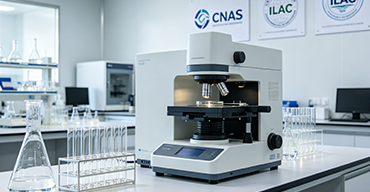
Internationally recognized authority
Certified by multiple international standards such as CNAS, VCS, and GS, with reports universally applicable worldwide.

Global service capability
Covering 140+ countries and regions, it supports on-site detection and remote verification in multiple languages.
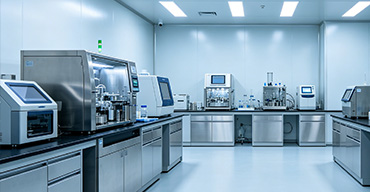
Professional experimental methods
Adopt standard experimental methods to ensure accurate and reliable data.
Comprehensive Thermal Efficiency Measurement of Plasma Torches: From Calorimetry to Real‑Time Energy Accounting
Thermal efficiency—the ratio of the enthalpy delivered to the processed material or gas stream to the total electrical power input—is the single most critical performance metric for plasma torches used in thermal spraying, waste vitrification, metallurgical processing, and chemical synthesis. A high thermal efficiency translates directly to reduced operating costs, lower electrode wear, and improved process consistency. Clients seeking plasma torch thermal efficiency testing typically aim to validate new torch designs, optimise operating parameters for maximum energy utilisation, diagnose efficiency degradation over time, or comply with increasingly stringent energy consumption regulations. Our laboratory provides a fully integrated, multi‑method characterisation platform that combines direct calorimetry, exhaust gas enthalpy analysis, heat loss quantification, and advanced optical diagnostics to deliver a complete and accurate energy balance of your torch under realistic operating conditions. We go beyond simple efficiency numbers to provide a diagnostic breakdown of where and how energy is lost—whether through cooling water, radiation, unreacted gas, or electrode heating—enabling targeted design and process improvements that can boost efficiency by 15–30 %.
Direct Calorimetric Power Measurement
The most direct and reliable method for determining torch thermal efficiency is through full‑calorimetric measurement of the cooling water and, where applicable, the substrate or gas stream. We employ a closed‑loop water‑cooling system with high‑precision ultrasonic flowmeters (accuracy ±0.2 %) and matched thermopile pairs (temperature difference resolution 0.01 °C) installed on both the torch inlet and outlet cooling lines. The heat extracted by the cooling water (Qwater = ṁ·cp·ΔT) is measured continuously during torch operation, providing a real‑time measure of the power dissipated through the torch body and electrodes. For gas‑cooled torches, we similarly instrument the primary and secondary gas streams with mass flow controllers and platinum resistance thermometers (PRTs) to determine the enthalpy gain of the process gas.
To measure the total thermal power delivered to the plasma jet, we employ a water‑cooled calorimetric probe (typically a copper slug or a gas‑collection calorimeter) that intercepts the entire plasma jet. The probe is designed to capture the full enthalpy of the jet, including both the sensible heat and the chemical energy stored in dissociated and ionised species. The heat flux to the probe is computed from the temperature rise and flow rate of its own cooling water, and the result is cross‑validated with an enthalpy probe that uses a stagnation‑pressure and stagnation‑temperature measurement to derive the total specific enthalpy (h0) of the jet. The thermal efficiency (ηth) is then calculated as the ratio of the net enthalpy delivered to the load (or to the process) to the total electrical power input, with all measurements synchronised and recorded at sampling rates up to 1 kHz to capture transient behaviour.
Exhaust Gas Analysis and Chemical Energy Accounting
In many plasma processes—especially those involving reactive gases (O₂, N₂, H₂, or hydrocarbons)—a significant fraction of the input energy may be stored as chemical enthalpy in the form of dissociated atoms, excited species, or reformed molecules. This chemical energy is not recovered in simple calorimetry but contributes to the useful work (e.g., surface activation, gas conversion). We couple a fast‑response residual gas analyser (RGA) and a Fourier‑transform infrared (FTIR) spectrometer to the torch exhaust to measure the concentrations of all major species (O₂, N₂, NO, NO₂, CO, CO₂, H₂O, and hydrocarbons). From these data, we compute the chemical energy content of the exhaust gas relative to the input feedstock, using standard thermodynamic tables and the known lower heating values (LHV) of combustible species.
For processes that generate solid or liquid by‑products (e.g., nanoparticle synthesis, waste vitrification), we collect and analyse the mass and composition of the output material, and we calculate the energy cost per unit mass of product. This allows us to derive a process‑specific thermal efficiency that accounts for both sensible and chemical energy utilisation. Our mass balance closure ensures that all input and output streams are accounted for, providing a robust basis for the efficiency calculation.
Heat Loss Quantification: Radiation, Convection, and Conduction
A comprehensive efficiency assessment requires quantification of the parasitic heat losses from the torch surface, cabling, and mounting fixtures. We employ infrared thermography (MWIR and LWIR cameras, up to 25‑Hz frame rate) to obtain full‑field temperature maps of the torch body, electrode holders, and gas lines during operation. Using the measured surface temperatures, emissivity values (determined separately via a blackbody reference), and the known geometry, we compute the radiative heat loss using the Stefan‑Boltzmann law, and the convective loss using empirical Nusselt correlations for the specific orientation and ambient conditions. We also measure the conductive loss through the torch mountings by embedding heat flux sensors (thermopile‑type) at the interface between the torch and its mechanical support. All these loss components are summed and subtracted from the input power to obtain the net useful power.
For accurate radiative loss measurements in high‑temperature regions (above 1000 °C), we deploy multi‑wavelength pyrometry to correct for any spectral emissivity variations. Our 3‑D thermal modelling software reconstructs the temperature field and integrates the losses over the entire torch surface, providing a spatial breakdown of where the major losses occur—information that is invaluable for redesigning cooling jackets, adding insulation, or optimising the torch geometry.
Arc Voltage and Current Waveform Analysis for Power Input Precision
The accuracy of the thermal efficiency calculation depends critically on the precise measurement of the electrical input power. We use ultra‑wideband high‑voltage differential probes (up to 100 kV, 100 MHz bandwidth) and precision current transformers (DC – 50 MHz) to capture the instantaneous voltage and current at the torch terminals. The real power is obtained by integrating the product v(t)·i(t) over multiple AC cycles or DC intervals, with digital signal processing to remove any DC offset and to average over a sufficient number of periods to achieve a statistical uncertainty of <0.5 %. We also record the power factor and the harmonic content (up to the 50th harmonic) to detect any non‑sinusoidal behaviour that may distort the power measurement. All electrical data are synchronised with the thermal and flow data using a common timebase, enabling a time‑resolved efficiency that can be correlated with specific arc events or gas flow fluctuations.
In‑Flight Particle and Jet Characterisation
For thermal spraying applications, the thermal efficiency is ultimately related to the ability of the torch to heat and accelerate particles to the desired velocity and temperature. We complement the calorimetric measurements with particle diagnostic tools: a two‑colour pyrometer to measure the particle temperature, a laser Doppler anemometer (LDA) for particle velocity, and a particle image velocimetry (PIV) system to map the gas velocity field. These data are integrated into the efficiency calculation by computing the kinetic energy and thermal energy imparted to the particles, and by comparing the total enthalpy of the jet with the enthalpy actually transferred to the particle stream. This approach reveals the coupling efficiency between the plasma and the injected powder, which is often the limiting factor in spray processes.
Long‑Term Efficiency Drift and Degradation Monitoring
Thermal efficiency is not a static property; it tends to decline as the torch ages due to electrode erosion, nozzle wear, and cooling channel fouling. We conduct extended endurance tests (up to 500 hours) during which we periodically (every 10 hours) repeat the full efficiency measurement. We track the evolution of each energy loss component and the overall efficiency, identifying the dominant ageing mechanism. Our degradation models (using empirical curve‑fitting and physics‑based approaches) extrapolate the efficiency trend to predict the remaining useful life and the optimal replacement interval for consumable parts. We also perform post‑test disassembly and metallographic analysis of the electrodes and nozzle to correlate the observed efficiency drop with specific wear patterns (e.g., cathode tip blunting, anode melting, or nozzle throat enlargement). This combined approach provides you with a predictive maintenance schedule that minimises downtime and maximises energy efficiency over the torch’s lifetime.
Customised Test Configurations and Process Emulation
We recognise that plasma torches are used in a wide variety of configurations—from handheld cutting torches to large‑scale, water‑cooled spray guns. Our test facility is equipped with interchangeable torch holders, gas mixing panels (up to 4 channels, each with precision MFCs), and adjustable power supplies (DC, AC, and pulsed, up to 200 kW). We can replicate your specific operating conditions, including ambient pressure (vacuum to 5 atm), gas pre‑heat (up to 500 °C), and particle injection (using a powder feeder with controlled feed rate). We also offer remote control of all parameters via a custom‑built automation software, enabling safety‑critical tests to be performed with minimal operator exposure.
For R&D clients, we provide parametric sweeps that systematically vary current, gas flow, and torch‑to‑substrate distance, while automatically recording the efficiency and all loss components. The results are presented as efficiency maps (contour plots) that clearly indicate the optimal operating point. We also offer comparative benchmarking of different torch models or nozzle designs under identical conditions, providing unbiased data for equipment selection.
Standards, Accreditation, and Scientific Rigour
Our thermal efficiency measurements are performed in accordance with relevant standards, including ASTM E2826 (thermal spray parameter measurement), DIN EN 1395‑1 (thermal spraying – acceptance testing), and ISO 9245 (efficiency of arc welding equipment). We are accredited under ISO/IEC 17025 for temperature, flow, and electrical measurements, and all our reference instruments are calibrated with NIST‑traceable standards. Our final report includes a comprehensive uncertainty analysis (following the GUM) that quantifies the contributions of each measurement chain, ensuring that the reported efficiency is robust and defensible for regulatory or financial assessments.
Our Technical Edge: Integrated Diagnostics and Actionable Insights
What distinguishes our thermal efficiency testing service is the holistic, multi‑method approach that not only measures the overall efficiency but also dissects it into its constituent losses. We do not simply give you a percentage; we provide a loss breakdown chart that shows the fraction of input power going into cooling water, radiation, unreacted gas, and electrode heating. This allows you to identify the single largest loss path and to prioritise design modifications—for instance, adding a thermal barrier coating, optimising the gas swirl, or reducing the cooling water flow—that will have the greatest impact on efficiency.
Our team includes plasma physicists and thermal engineers with extensive experience in torch design and process optimisation. We have helped clients achieve efficiency improvements of 10–25 % by implementing recommendations derived from our detailed loss analysis. Our proprietary database of efficiency measurements on over 50 torch models (ranging from 5 kW to 5 MW) allows us to benchmark your torch against industry norms and to highlight areas where it underperforms relative to similar devices.
Furthermore, we offer follow‑up testing after you implement design changes, verifying the improvement and fine‑tuning the process. Our remote data access and real‑time dashboards allow you to monitor the progress of your test from anywhere, and we provide training sessions for your engineering team on interpreting the results and applying the loss‑reduction strategies.
We invite you to engage our technical experts for a pre‑test consultation, where we will define your specific efficiency targets, operating conditions, and measurement requirements, and design a customised test plan that balances depth, time, and cost. With our advanced diagnostic arsenal and deep scientific expertise, we turn the complexity of plasma torch thermodynamics into clear, quantifiable, and actionable knowledge—empowering you to minimise energy waste, extend electrode life, and maximise the cost‑effectiveness of your plasma process.