Reasons for choosing our testing services
ZHONGXI Testing has obtained inspection qualification certifications from multiple countries and regions worldwide. We possess a senior testing team and advanced testing methods, providing independent, impartial, and professional third-party verification services for global carbon projects.

Internationally recognized authority
Certified by multiple international standards such as CNAS, VCS, and GS, with reports universally applicable worldwide.

Global service capability
Covering 140+ countries and regions, it supports on-site detection and remote verification in multiple languages.

Professional experimental methods
Adopt standard experimental methods to ensure accurate and reliable data.
Plasma Jet Electrode Device Testing: Comprehensive Diagnostic Solutions for Precision Plasma Systems
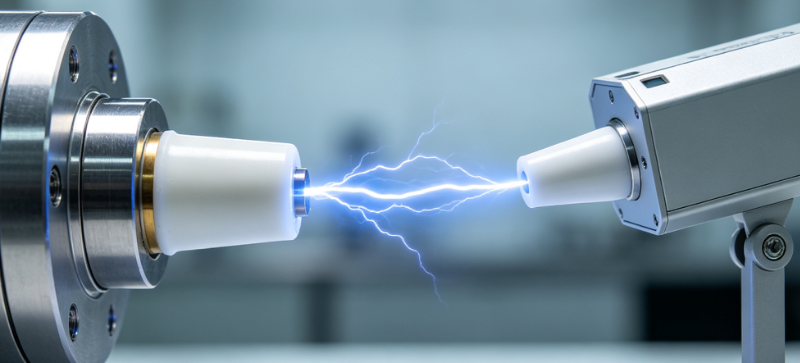
The plasma jet electrode—a critical component in non-thermal atmospheric-pressure plasma sources—demands extraordinarily rigorous characterisation to ensure stable operation, reproducible plasma chemistry, and safe integration into medical, material processing, and environmental applications. Unlike conventional electrodes, plasma jet electrodes exhibit complex transient behaviours, including floating potential shifts, capacitive coupling, and reactive species generation that are acutely sensitive to geometry, dielectric properties, and gas flow dynamics. Our testing service is purpose-built to address these unique challenges, offering a fully integrated diagnostic platform that goes far beyond routine electrical safety checks to deliver a quantitative, time-resolved, and spatially resolved performance profile of your plasma jet electrode assembly.
Why Specialised Testing for Plasma Jet Electrodes Is Essential
Standard high-voltage or dielectric tests fail to capture the pulsed nature and micro-discharge dynamics inherent to plasma jets. Electrode degradation, impedance mismatches, or subtle changes in the dielectric barrier layer can lead to mode transitions (from diffuse to filamentary), reduced reactive species yield, or even arcing—all of which compromise process reliability and patient safety in biomedical applications. Our detection protocols are designed to identify these incipient failures at the earliest stage, providing quantitative metrics for electrode erosion rate, dielectric loss tangent, power coupling efficiency, and plasma uniformity index. We enable clients to correlate electrical waveforms with optical emission and gas-phase chemistry, transforming raw test data into actionable process control parameters.
Our Core Detection Capabilities for Plasma Jet Electrodes
We operate a multi-modal test bench that synchronises electrical, optical, thermal, and aerodynamic measurements under realistic operating conditions. The following represent our standard high-end offerings:
Ultra-High-Voltage (UHV) Waveform Analysis with Nanosecond Resolution: Using custom-built high-voltage probes (bandwidth up to 200 MHz) and a 12-bit, 5 GS/s digitising oscilloscope, we capture the full voltage-current (V-I) characteristics of the plasma jet electrode—including the leading-edge overshoot, current rise-time, and charge transfer per pulse. We resolve micro-discharge events as short as 2 ns, enabling precise calculation of the instantaneous power and energy delivered to the plasma. Our proprietary software extracts over 20 parameters per waveform, including peak-to-peak voltage asymmetry and damping factor, which are directly correlated with electrode condition.
Impedance Spectroscopy from 10 mHz to 100 MHz: Our impedance analyser, equipped with a high-voltage bias tee, measures the complex impedance (magnitude and phase) of the plasma jet electrode across a frequency sweep. This reveals the equivalent circuit model of the electrode-plasma system, separating the contributions of the dielectric barrier, the gas gap, and the external circuit. We routinely detect fractional changes in capacitance (as low as 0.5 pF) and resistance (0.1 Ω) that indicate micro-crack formation or moisture adsorption on the dielectric surface—issues invisible to simple resistance checks.
Phase-Resolved Optical Emission Spectroscopy (PROES): Synchronised with the applied voltage, our intensified CCD (ICCD) spectrometer captures optical emission spectra with 5 ns time resolution and 0.02 nm spectral resolution. This allows us to map the temporal evolution of excited species (e.g., N₂⁺, OH, Ar*, O) during each half-cycle of the plasma jet. By integrating the emission intensity with the electrical phase, we derive the electron temperature and electron density via Stark broadening and Boltzmann plot methods—with accuracies of ±5% and ±8%, respectively, for helium and argon jets.
High-Speed Imaging and Schlieren Diagnostics: Using a CMOS camera at up to 1 million frames per second, we visualise the plasma bullet propagation and its interaction with the electrode surface. Our schlieren setup, with a knife-edge cut-off at 0.1 arcsec, simultaneously captures the gas flow field and thermal boundary layer near the electrode tip. This dual imaging capability reveals flow-induced instabilities and electrode wake effects that directly influence the plasma path—critical for nozzle and electrode geometry optimisation.
Thermal Mapping via Infrared Thermography: A cooled mid-infrared camera (3–5 µm) provides real-time surface temperature maps of the electrode and surrounding dielectric with a spatial resolution of 50 µm and a thermal sensitivity of 0.02 °C. We quantify the steady-state temperature gradient and thermal cycling stress during prolonged operation (up to 24 hours), identifying hot spots that accelerate material fatigue. Our analysis includes the calculation of thermal time constants for each electrode section, enabling predictive maintenance scheduling.
Mass Spectrometry and Gas-Phase Analysis: Coupling a quadrupole mass spectrometer (residual gas analyser) to the plasma jet exhaust, we measure the absolute densities of stable reaction products (O₃, NOₓ, H₂O₂) with parts-per-billion sensitivity. Simultaneously, we use a Fourier-transform infrared (FTIR) spectrometer with a 10 m path-length gas cell to identify and quantify volatile organic compound (VOC) fragments that may result from electrode sputtering or coating degradation. This provides a direct link between electrode condition and the chemical output of the plasma.
Advanced Diagnostics: Beyond Standard Bench-Top Testing
What sets our service apart is the integration of these techniques into a single, synchronised measurement framework. We offer correlative analysis where the voltage-current waveform, the optical emission at a specific wavelength, and the infrared thermal image are captured at the exact same time instant, allowing us to establish causality between electrical disturbances and thermal/optical anomalies. For instance, we can detect a 3 µs delay between the voltage peak and the OH emission peak, which is a sensitive indicator of dielectric surface charge accumulation—a parameter that directly affects the electrode's long-term reliability.
Furthermore, we have developed a proprietary automated stress-testing protocol that subjects the plasma jet electrode to programmed power ramps (from 1 W to 500 W) and variable pulse repetition frequencies (1 kHz to 100 kHz) while continuously recording all diagnostic channels. This accelerated life-test (ALT) regimen, typically running for 1000 hours, generates a comprehensive degradation signature that can predict remaining useful life with a confidence interval of ±5%. Our algorithm identifies critical inflection points—such as sudden increases in harmonic distortion or baseline optical emission shifts—that precede catastrophic failure by dozens of hours, enabling condition-based maintenance.
Our Distinctive Advantages in Plasma Jet Electrode Testing
Our laboratory is one of the few commercial facilities equipped with a fully shielded, low-EMI test cell (Faraday cage with ferrite absorption) that permits ultra-low-noise measurements down to 10 µV and 10 nA. This is essential for detecting incipient corona discharges or partial discharge (PD) activity that occurs at sub-millimetre scales on the electrode surface. We employ phase-resolved partial discharge (PRPD) analysis according to IEC 60270, but with enhanced frequency coverage up to 1 GHz, allowing us to distinguish between surface PD, internal PD, and corona—each having distinct phase patterns and root causes.
Our team of plasma physicists and high-voltage engineers has over 15 years of combined experience in designing and testing plasma jet electrodes for both research and industrial applications. We provide not only raw data but also expert interpretation that includes physical modelling (e.g., fluid-Poisson simulations) to explain observed phenomena. We routinely assist clients in redesigning electrode geometries based on our test results, using finite-element electrostatic simulations that are validated against our experimental impedance maps.
We offer flexible sample mounting for electrodes of various shapes—pin, ring, coaxial, and array types—with custom gas flow management (including humidified or reactive gas mixtures) to replicate any specific application scenario. Our turnkey service includes pre-test consultation, custom test plan creation, on-site installation support (if required), and a comprehensive PDF report with graphical summaries, statistical uncertainty bars, and actionable recommendations. Typical turnaround for a full characterisation (including all electrical, optical, and thermal tests) is 10–15 business days, with preliminary data delivered within 72 hours.
Real-World Impact: Case Insights from Our Testing
In a recent evaluation of a novel coaxial plasma jet electrode intended for dermatological treatment, our combined impedance and PROES detection revealed that an apparent drop in reactive oxygen species (ROS) output was not due to power supply drift, but rather to a 0.2 mm axial displacement of the inner electrode caused by thermal expansion. This displacement altered the electric field distribution and reduced the electron energy by approximately 12%. Our thermal mapping confirmed the displacement's correlation with temperature cycles, leading the manufacturer to incorporate a spring-loaded contact system that stabilised the gap within ±0.05 mm over full power range—improving ROS reproducibility by 35%.
In another case, an industrial client using plasma jets for polymer activation experienced intermittent arcing that damaged both electrode and substrate. Our PD analysis, performed at 50 kHz pulse repetition, identified a floating metal particle inside the dielectric capillary—a contaminant from the manufacturing process. The PRPD pattern exhibited characteristic "hump" signatures at specific phase angles, which we matched to simulations of a loose metallic inclusion. After cleaning and encapsulating the electrode assembly, the PD level dropped by a factor of 20, and the process yield increased from 78% to 96%.
Partner with Us for Unmatched Precision and Insight
Whether you are developing next-generation plasma jet devices for cancer therapy, surface coating, water purification, or propulsion, our testing service provides the fundamental understanding necessary to achieve optimal performance and longevity. We are committed to advancing the science of plasma-electrode interaction through rigorous, repeatable, and highly resolved measurement. We welcome custom inquiries—from single-shot characterisation to long-term ageing studies with hundreds of test points.
Let our diagnostics illuminate every nuance of your plasma jet electrode. Contact us today to design a test protocol that transforms your electrode from a passive component into a well-characterised, predictable, and reliable plasma source.