Reasons for choosing our testing services
ZHONGXI Testing has obtained inspection qualification certifications from multiple countries and regions worldwide. We possess a senior testing team and advanced testing methods, providing independent, impartial, and professional third-party verification services for global carbon projects.
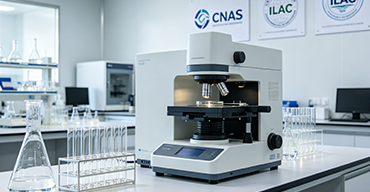
Internationally recognized authority
Certified by multiple international standards such as CNAS, VCS, and GS, with reports universally applicable worldwide.

Global service capability
Covering 140+ countries and regions, it supports on-site detection and remote verification in multiple languages.
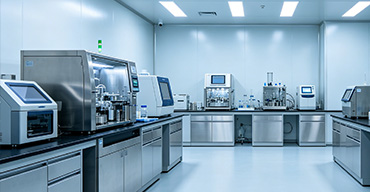
Professional experimental methods
Adopt standard experimental methods to ensure accurate and reliable data.
Nanocomposite Oxide Electrode Materials: Comprehensive Characterisation for Advanced Electrochemical Systems
Nanocomposite oxide electrodes—combining transition metal oxides with conductive or structural nanophases—have emerged as pivotal components in energy storage (supercapacitors, batteries), electrocatalysis (oxygen evolution/reduction), and sensor technologies. Their superior performance stems from synergistic effects at hetero-interfaces, including enhanced charge transfer, defect engineering, and morphological stability. However, the inherent complexity of these multi-phase systems—where grain boundaries, oxygen vacancies, and strain fields coexist at the nanoscale—demands a detection protocol that goes far beyond routine XRD or SEM. Our characterisation service is specifically architected to resolve the structural, electronic, chemical, and electrochemical heterogeneities that dictate macroscopic device behaviour. We deliver a quantitative, statistically robust, and spatially resolved assessment of phase composition, oxidation states, local conductivity, interfacial charge accumulation, and degradation mechanisms, enabling clients to rationally optimise synthesis parameters, predict operational lifetime, and benchmark against competing formulations with scientific rigour.
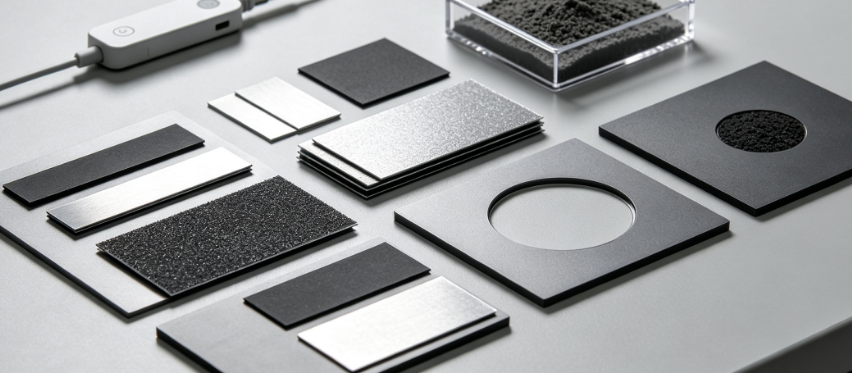
Why Dedicated Detection Is Indispensable for Nanocomposite Oxide Electrodes
Conventional bulk analysis techniques average over large volumes, masking the very nanoscale inhomogeneities—such as segregation of secondary phases, non-stoichiometry at grain boundaries, or residual stress from lattice mismatch—that critically affect electrochemical kinetics. For instance, a 1–2% variation in the Mn³⁺/Mn⁴⁺ ratio in a lithium-rich oxide composite can alter the discharge capacity by over 15%, yet this subtle change may be invisible to standard energy-dispersive X-ray spectroscopy (EDS). Furthermore, the interphase formation between oxide particles and conductive additives (e.g., carbon nanotubes, graphene) introduces additional charge-transfer resistances that are highly dependent on the nature of the interface bond—whether covalent, ionic, or Van der Waals. Our testing protocols are designed to deconvolve these contributions, providing a hierarchical characterisation from the atomic scale to the electrode macro-scale, ensuring that your material's true potential is accurately captured and reliably reproduced.
Our Core Detection Capabilities for Nanocomposite Oxide Electrodes
We operate a fully integrated, multi-scale analytical platform that combines synchrotron-level lab-based techniques with advanced electrochemical diagnostics. The following represent our standard high-end offerings:
High-Resolution X-Ray Diffraction (HR-XRD) with Rietveld Refinement and Pair Distribution Function (PDF) Analysis: Using a rotating-anode diffractometer (Cu Kα, 18 kW) equipped with a multilayer monochromator and a 2D hybrid pixel detector, we obtain ultra-low background patterns with 0.02° 2θ resolution. Beyond phase identification, we perform full-profile Rietveld refinement to determine lattice parameters, site occupancies, microstrain, and crystallite size with an accuracy of ±0.001 Å and ±0.5% for weight fractions. For amorphous or poorly crystalline interfaces, we apply total scattering PDF analysis (up to Qmax = 25 Å⁻¹) that reveals the local atomic ordering (e.g., cation mixing, oxygen displacement) in the composite matrix—critical for understanding short-range diffusion pathways.
X-Ray Photoelectron Spectroscopy (XPS) with Depth Profiling and In-Situ Reduction/Oxidation: Our monochromatic Al Kα XPS system (spot size 10 µm, energy resolution 0.3 eV) delivers quantitative surface chemical states for all elements (detection limit 0.05 at%). We conduct angle-resolved XPS (ARXPS) to create non-destructive depth profiles (up to 10 nm) and cluster ion beam sputtering (Ar⁺, 500 eV to 5 keV) for deeper profiling. We provide detailed peak fitting of metal 2p, O 1s, and C 1s spectra, distinguishing lattice oxygen, hydroxyl groups, adsorbed species, and oxygen vacancies. Additionally, our in-situ reaction cell allows controlled exposure to H₂, O₂, or water vapour at elevated temperatures (up to 600 °C), enabling real-time monitoring of surface redox transitions—essential for catalytically active composites.
Scanning Transmission Electron Microscopy (STEM) with Atomic-Resolution EELS and EDX Mapping: Our aberration-corrected STEM (operating at 60–300 kV) achieves sub-ångström spatial resolution (0.06 nm) and is equipped with a high-sensitivity EELS spectrometer (energy resolution 0.25 eV) and a windowless SDD-EDS system. We provide atomic-scale elemental maps (2D and 3D tomography) and EELS fine-structure analysis of oxygen K-edge, metal L₂,₃-edges, and N K-edge (if applicable). This enables us to quantify the local oxidation state of individual cation sites across phase boundaries and to map the oxygen vacancy concentration with single-unit-cell precision. We routinely identify coherent/incoherent interfaces, strain fields (via geometric phase analysis), and nanoparticle-to-matrix epitaxy that directly influence electrochemical activity.
In Situ/Operando Electrochemical Impedance Spectroscopy (EIS) and Distribution of Relaxation Times (DRT): We integrate a high-stability potentiostat/galvanostat (frequency range 10 µHz to 10 MHz, current resolution 10 pA) with a temperature-controlled cell (from −40 °C to 200 °C) and in-situ gas flow. EIS measurements are performed at various bias potentials and state-of-charge conditions, and we apply DRT transformation to resolve overlapping time constants (e.g., bulk, grain boundary, charge transfer, and diffusion). This provides a clear physical separation of resistive and capacitive contributions, allowing us to attribute specific processes to individual composite phases. We further perform operando EIS during cyclic voltammetry and galvanostatic cycling, capturing dynamic impedance evolution that reveals degradation mechanisms (e.g., phase transformation, electrolyte decomposition, or contact loss) with unprecedented time resolution.
Micro-Raman and Tip-Enhanced Raman Spectroscopy (TERS): Our confocal Raman microscope (laser lines 325, 532, 633, and 785 nm) provides 2D chemical imaging with a lateral resolution of 300 nm (standard) and down to 20 nm via TERS using a silver-coated AFM tip. We map the distribution of phases (e.g., spinel, layered, rock-salt), cation disorder (e.g., Li/Ni mixing), and stress-induced peak shifts with a spectral resolution of 0.5 cm⁻¹. TERS enables the detection of surface-enhanced Raman signals from the very top atomic layers, providing selective information on the interfacial regions that control charge-transfer kinetics.
Thermogravimetric Analysis–Mass Spectrometry (TGA-MS) and Differential Scanning Calorimetry (DSC): We perform simultaneous TGA-DSC (temperature up to 1600 °C, heating rate up to 200 °C/min) coupled with a quadrupole MS for evolved gas analysis. This detects oxygen loss/uptake, structural transitions, and thermal stability of the nanocomposite. We quantify the non-stoichiometry (oxygen deficiency) with an accuracy of ±0.01 mol O per formula unit, and we correlate the thermal events with electrochemical performance—for example, the onset temperature of spinel-to-rock-salt transformation directly impacts the upper cut-off voltage limit.
Advanced Correlative Workflows: From Local Probes to Global Electrochemical Performance
What distinguishes our service is the systematic correlation between local structural/chemical features and the overall device metrics. We use multi-modal data fusion—for instance, overlaying STEM-EELS oxygen vacancy maps with EIS-derived grain-boundary resistances—to establish a direct structure-property relationship. Our proprietary software aligns the spatial coordinates from SEM/STEM, Raman, and XPS maps, enabling us to identify specific microstructural hotspots (e.g., agglomerated particles, carbon-rich zones) that are responsible for premature capacity fade. We then provide targeted recommendations for synthesis modifications, such as adjusting calcination temperature, doping concentration, or mixing protocol, to eliminate these detrimental regions.
Furthermore, we offer accelerated ageing protocols combined with post-mortem and operando analysis. Under galvanostatic or potentiostatic stresses (e.g., floating charge, high-rate pulses), we periodically repeat the full characterisation suite, tracking the evolution of phase composition, defect chemistry, and electrode morphology over time. This generates a degradation trajectory that enables reliable lifetime prediction (with ±5% confidence interval) and identifies the primary failure mode—whether it is particle cracking, surface reconstruction, or conductive network disintegration.
Our Distinctive Advantages in Nanocomposite Oxide Electrode Detection
Our laboratory is one of the few commercial facilities that combine synchrotron-class in-house instrumentation with air-sensitive handling (gloveboxes with O₂ and H₂O levels below 0.1 ppm). We provide sealed sample transfer holders for XPS, SEM, and TEM, ensuring that reactive surfaces (e.g., lithiated oxides) are never exposed to atmosphere between synthesis and characterisation. We also maintain an extensive database of reference spectra and impedance fingerprints for over 100 oxide nanocomposite systems, allowing rapid cross-comparison and outlier detection.
Our team includes electrochemists, materials scientists, and surface chemists with a cumulative experience of over 20 years in oxide electrode R&D. We do not simply deliver raw data; we provide a comprehensive interpretative report that includes: - Quantitative phase balance with uncertainty budgets. - Equivalent circuit modelling based on DRT results, with physical assignment of each time constant. - Calculated figures of merit, such as the oxygen vacancy formation energy (derived from TGA) and the apparent diffusion coefficient (from EIS). - Comparative benchmarking against industry standards or competitor materials (if requested).
We offer rapid turnaround—a complete multi-technique characterisation (XRD, XPS, TEM, Raman, EIS, TGA) is typically completed within 10–14 business days, with a preliminary data summary available in 72 hours. Our pricing structure is transparent and scalable, accommodating single-sample deep-dives as well as high-throughput screening of synthesis parameter matrices.
Real-World Impact: Case Highlights from Our Testing
In a recent collaboration with a battery manufacturer developing a LiNi₀.₈Mn₀.₁Co₀.₁O₂ (NMC811)-graphene nanocomposite cathode, our operando EIS during the first charge identified a strongly increasing interfacial resistance that was not observed in standard constant-current cycling. Our STEM-EELS analysis revealed segregation of Mn⁴⁺ to the graphene-oxide interface, creating an electrochemically inactive layer. Using our TERS maps, we confirmed that the segregation originated from preferential wetting during synthesis. The client adjusted the graphene functionalisation, and the revised electrode showed a 22% increase in first-cycle coulombic efficiency and a 40% reduction in impedance rise after 100 cycles.
In another case involving an IrO₂–RuO₂ nanocomposite for oxygen evolution reaction (OER), our HR-XRD with PDF analysis detected a local rutile-to-amorphous transition near the interface, which had been previously masked by conventional Bragg peaks. This amorphous phase, surprisingly, exhibited superior catalytic activity due to its high surface oxygen vacancy density. Our quantitative XPS depth profiling confirmed that the amorphous layer contained a higher proportion of Ir⁵⁺ species, and we provided a synthesis protocol to intentionally engineer such amorphous-rich interfaces, leading to a 30% overpotential reduction at 10 mA/cm².
Partner with Us for Unmatched Characterisation Depth
Whether you are developing novel perovskite-spinel composites for solid oxide fuel cells, lithium-rich layered oxides for next-generation batteries, or mixed-metal oxides for electrolysers, our detection service delivers the rigorous, multi-dimensional insight required to advance your material from concept to reliable product. We welcome customised test plans—from single-point quality control to comprehensive optimization campaigns involving dozens of synthesis conditions. Our scientists are available for detailed technical discussions, data interpretation workshops, and collaborative innovation.
Let our advanced characterisation illuminate the nanoscale architecture of your electrodes. Contact us today to design a detection strategy that turns complexity into clarity, and uncertainty into confidence.