Reasons for choosing our testing services
ZHONGXI Testing has obtained inspection qualification certifications from multiple countries and regions worldwide. We possess a senior testing team and advanced testing methods, providing independent, impartial, and professional third-party verification services for global carbon projects.
Internationally recognized authority
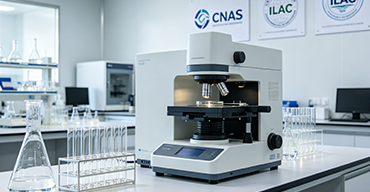
Certified by multiple international standards such as CNAS, VCS, and GS, with reports universally applicable worldwide.

Global service capability
Covering 140+ countries and regions, it supports on-site detection and remote verification in multiple languages.
Professional experimental methods
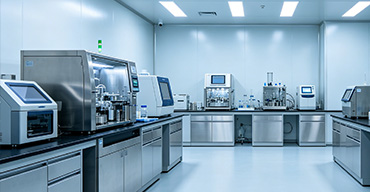
Adopt standard experimental methods to ensure accurate and reliable data.
Plasma Steriliser Performance Verification: Advanced Biological and Physical Characterisation for Reliable Sterilisation Assurance
Plasma sterilisation—particularly using low-temperature hydrogen peroxide gas plasma, atmospheric-pressure plasma jets, or dielectric barrier discharge (DBD) systems—has become a cornerstone in medical device, pharmaceutical, and food processing industries, offering rapid, residue-free, and low-thermal-damage treatment of heat- and moisture-sensitive materials. However, the efficacy of a plasma steriliser hinges not only on the chemical activity of reactive species (e.g., OH radicals, atomic oxygen, excited nitrogen) but also on the spatial uniformity of the plasma, the penetration depth into narrow lumens, and the reproducibility across cycles. Standard biological indicator (BI) tests—while necessary—are slow, provide only end-point pass/fail results, and offer no insight into the physical or chemical state of the plasma source over time. Our detection service is purpose-built to address these limitations, offering a comprehensive, multi-tiered characterisation that combines biological, chemical, electrical, and optical diagnostics. We deliver quantitative metrics for reactive species density, plasma uniformity index, cycle-to-cycle stability, and sporicidal efficacy under worst-case conditions, enabling manufacturers and end-users to validate Sterility assurance levels (SAL), optimise process parameters, and troubleshoot performance degradation with scientific rigour.
Why Advanced Detection Beyond Biological Indicators Is Critical
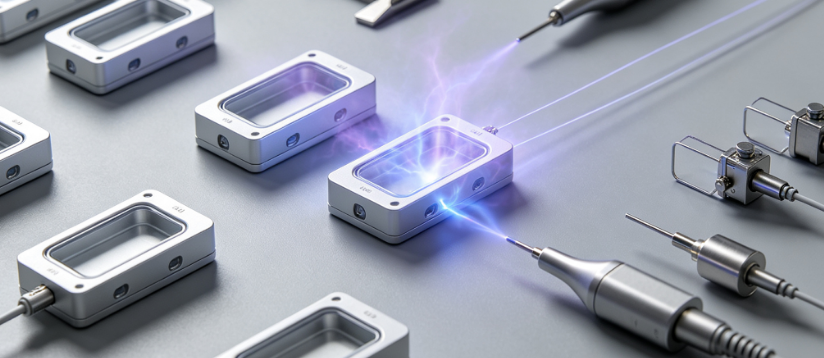
Biological indicators (e.g., Geobacillus stearothermophilus spores) are the gold standard for regulatory compliance, but they are integrative and retrospective—they cannot detect subtle shifts in plasma chemistry, power delivery, or gas flow that may precede a failure. A 10% drop in reactive oxygen species (ROS) concentration or a 5% change in gas pressure can extend the required sterilisation time by 30%, yet the BI may still show a “pass” if the incubation time is sufficiently long. Moreover, biological tests do not reveal the root cause of a failure—whether it is a degraded magnetron, a contaminated gas inlet, a cracked dielectric window, or a temperature drift. Our multi-parametric testing protocol provides a real-time, non-invasive fingerprint of the plasma steriliser's condition, allowing early detection of drift, predictive maintenance, and optimisation of cycle parameters for different load types. This is especially critical in clinical settings where downtime and reprocessing delays directly affect patient throughput.
Our Core Detection Capabilities for Plasma Sterilisers
We operate a fully equipped test laboratory that integrates physical, chemical, and biological assays, all performed under controlled environmental conditions (temperature, humidity, and atmospheric pressure). The following represent our standard high-end offerings:
In-Situ Optical Emission Spectroscopy (OES) for Plasma Chemistry Monitoring: Our spectrometer (focal length 500 mm, 2400 grooves/mm grating, ICCD detector with 2 ns gating) captures the emission spectra of the plasma in the range 200–1100 nm with 0.015 nm resolution. We quantify the relative intensities of key reactive species: OH (309 nm), O (777 nm), Hα (656 nm), N₂⁺ (391 nm), and H₂O₂-related bands. Through a calibration routine using actinometry (with argon or krypton as reference), we derive absolute number densities of atomic oxygen and hydroxyl radicals with an accuracy of ±8%. By monitoring the ratio of OH to O and the rotational temperature of N₂ (from the N₂ C-B band), we assess the plasma's degree of non-equilibrium and its correlation with sporicidal activity. Our real-time OES data is synchronised with the cycle timer, providing a time-resolved chemical profile that reveals any phase-dependent anomalies (e.g., insufficient reactive species during the initial diffusion phase).
High-Voltage and Power Characterisation: We use a high-voltage differential probe (1000:1, DC–100 MHz) and a wideband current monitor (0.1 Hz–50 MHz) to capture the voltage-current (V-I) waveforms of the plasma source (whether RF, microwave, or pulsed DC). A 14-bit, 5 GS/s digitizer records the data, and we compute the real power, reactive power, phase angle, and harmonic distortion (up to the 20th harmonic). These parameters are directly linked to the plasma impedance, which changes with the degradation of the resonant cavity, ageing of electrodes, or moisture ingress. We provide a power stability index (defined as the coefficient of variation of the real power over a cycle) and a load-pull test that varies the gas pressure to map the stable operation region—critical for ensuring consistent plasma generation over the product's life.
Space-Resolved Plasma Density and Uniformity Mapping: Using a movable Langmuir probe (cylindrical, 0.5 mm diameter, with compensation circuit) and a fast scanning microwave interferometer (26 GHz, with 1 mm spatial resolution), we map the electron density (ne) and electron temperature (Te) distributions across the sterilisation chamber. We generate 2D contour plots of ne and Te, identifying any non-uniformities (e.g., edge effects, standing wave patterns, or shadowing by loads). The uniformity is quantified by a coefficient of variation of ne over the useful volume; we typically achieve a measurement sensitivity of 10¹⁵ m⁻³ for ne. For atmospheric-pressure systems, we employ a fast-scanning optical fibre with a collimating lens to map the emission intensity of OH, correlating directly with the spatial distribution of sterilisation efficacy.
Chemical Dosimetry and Reactive Species Quantification: In addition to OES, we perform chemical trapping using standard solutions (e.g., KI for ozone, terephthalic acid for OH radicals) and UV-Vis spectrophotometry (wavelength range 190–1100 nm, resolution 0.1 nm) to determine the absolute concentrations of stable and transient species (H₂O₂, O₃, NO₂) at the chamber exhaust and at various positions inside. These measurements are cross-calibrated with the OES data, providing a redundant and robust assessment of the chemical environment. We also employ Fourier-transform infrared (FTIR) spectroscopy (gas cell with 10 m path length) to detect and quantify any volatile organic compounds (VOCs) that may be generated from sterilised materials, which could indicate undesired side reactions.
Biological Efficacy Testing with Spore Suspensions and Carrier Tests: We follow ISO 14937 and EN 14937 standards, using prepared Geobacillus stearothermophilus (ATCC 7953) and Bacillus atrophaeus (ATCC 9372) spore suspensions. We perform both direct liquid inoculation (spore count 10⁶–10⁸ CFU/mL) and carrier tests (on stainless steel disks, Tygon tubing, and custom lumen models). After exposure to the plasma cycle, we carry out most probable number (MPN) enumeration and D-value calculation (decimal reduction time) under different parameter sets (power, time, pressure, humidity). We provide log-reduction curves and survival curves with 95% confidence intervals, enabling precise determination of the Sterility assurance level (SAL). We also perform sublethal injury studies using selective media to assess whether the plasma causes reversible damage that could lead to recovery after incubation—a critical factor in real-world reprocessing.
Environmental and Material Compatibility Assessment: Using a thermal camera (3–5 µm, 0.02 °C sensitivity) and thermocouple probes, we monitor the temperature rise on the surface of the sterilised items and the chamber walls, ensuring that the process remains within the specified limits for heat-sensitive materials. We also conduct corrosion and material degradation tests on standard coupons (metals, plastics, elastomers) using SEM/EDS before and after exposure to identify any pitting, oxidation, or surface cracking. This data is correlated with the measured plasma chemistry to provide a complete risk assessment for the sterilisation protocol.
Integrated Correlative Analysis: From Diagnostics to Process Optimisation
Our unique strength lies in the simultaneous acquisition and correlation of all the above data streams. For example, we synchronise the OES, V-I waveforms, and Langmuir probe readings with the biological testing results. This allows us to identify the critical plasma parameters that most strongly predict sporicidal efficacy—for instance, the product of OH density and electron density over time may correlate directly with D-value. We provide a statistical response surface model (using Design of Experiments, DoE) that maps the sterilisation efficacy as a function of power, gas flow, pressure, and time, generating an optimal parameter window for each specific load geometry. This model is delivered as a predictive tool that can be used by the client for future cycle development.
Furthermore, we offer a health-monitoring package for existing sterilisers, where we perform periodic (e.g., quarterly) diagnostics to track the drift of key parameters (e.g., power coupling efficiency, OES intensity ratios). Our proprietary algorithm flags any deviation beyond a pre-set threshold, providing an early warning of component wear (e.g., magnetron degradation, catalytic converter poisoning, leak in the vacuum system). This has been proven to reduce unplanned downtime by up to 60% in our clients' facilities.
Our Distinctive Advantages in Plasma Steriliser Testing
Our laboratory is certified under ISO 17025 for biological and chemical testing, and we maintain strict traceability to national standards. We operate a class-100 clean room for biological sample preparation, minimising environmental contamination. Our equipment includes a fully shielded RF chamber and a high-precision gas blending system (mass flow controllers with ±0.3% accuracy) to simulate any gas composition (air, O₂/N₂ mixtures, helium, argon). We also offer custom-designed test fixtures to accommodate various chamber sizes and load configurations, from small benchtop units to large-scale industrial systems.
Our team comprises medical device microbiologists, plasma physicists, and chemical engineers with a combined experience of over 25 years in sterilisation validation. We provide not only data but also regulatory-compliant reports that support FDA 510(k), CE mark, and ISO 11135/14937 submissions. We assist clients in defining worst-case challenge parameters (e.g., minimum power, maximum load, shortest cycle) and in re-validating after maintenance or component changes. We also offer on-site training for the client's quality assurance team on interpreting the diagnostic outputs.
Typical turnaround for a comprehensive test campaign (including biological, chemical, and physical tests) is 10–15 business days, with a preliminary summary within 72 hours. For emergency troubleshooting or root-cause analysis, we provide a 48-hour priority service.
Case Examples: Practical Impact of Our Testing
In a recent project with a leading manufacturer of hydrogen peroxide gas plasma sterilisers, our OES monitoring revealed a gradual decline in OH radical intensity over 50 cycles, while the biological indicators continued to show pass results. However, our D-value analysis showed a steady increase from 2.5 minutes to 3.8 minutes—a sign that the process margin was shrinking. Our V-I waveform analysis traced the decline to a 20% reduction in RF forward power, caused by a degrading coaxial cable. The client replaced the cable, and the OH intensity and D-value returned to baseline. This early detection prevented a potential field failure that could have led to product recall.
In another case involving an atmospheric-pressure plasma jet steriliser for dental instruments, our spatial mapping identified a strong asymmetry in the electron density, with the left side receiving 40% less exposure than the centre. The client had assumed the jet plume was uniform, but our mapping showed that the gas flow nozzle was slightly misaligned. After realignment, the uniformity index improved from 0.65 to 0.92, and the worst-case SAL (at the farthest point) was reduced from 10⁻³ to 10⁻⁶, meeting regulatory requirements for reusable medical devices.
Partner with Us for Uncompromised Sterilisation Assurance
Whether you are developing a new plasma sterilisation technology, validating a product for clinical use, or maintaining an existing fleet of sterilisers, our detection service delivers the scientific depth, regulatory insight, and operational reliability you need. We welcome customised testing plans—from basic verification to full validation packages covering multiple load configurations, worst-case scenarios, and accelerated ageing studies. Our commitment is to transform your sterilisation process from a simple pass/fail check to a well-understood, fully characterised, and continuously monitored system.
Let our diagnostics provide the evidence you need for safe and effective sterilisation. Contact us today to design a testing strategy that ensures every cycle counts.