Reasons for choosing our testing services
ZHONGXI Testing has obtained inspection qualification certifications from multiple countries and regions worldwide. We possess a senior testing team and advanced testing methods, providing independent, impartial, and professional third-party verification services for global carbon projects.

Internationally recognized authority
Certified by multiple international standards such as CNAS, VCS, and GS, with reports universally applicable worldwide.

Global service capability
Covering 140+ countries and regions, it supports on-site detection and remote verification in multiple languages.

Professional experimental methods
Adopt standard experimental methods to ensure accurate and reliable data.
Plasma Heater Performance Testing: Advanced Diagnostics for High-Power Thermal Plasma Systems
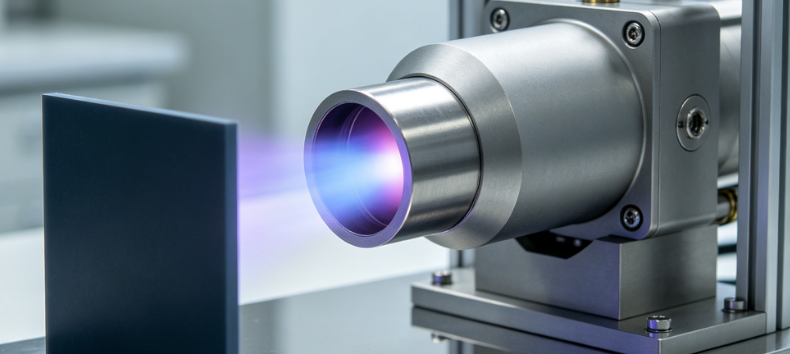
Plasma heaters—including DC arc plasma torches, RF inductively coupled plasma (ICP) torches, and microwave plasma sources—are widely used in industrial applications such as waste treatment, material synthesis, plasma spraying, and metallurgical processing. These devices generate thermal plasmas with gas temperatures exceeding 10,000 K, delivering high enthalpy flows for efficient heating or chemical conversion. However, the extreme operating conditions—high current densities, intense radiation, electrode erosion, and gas dynamic instabilities—make performance degradation and component wear inevitable. Conventional monitoring (input power, gas flow, and cooling water temperature) provides only a macroscopic view and cannot capture the spatial and temporal variations in enthalpy, plasma temperature, velocity, or chemical composition that directly affect process quality and energy efficiency. Our detection service is specifically designed to address these limitations, offering a multi-modal, high-temporal-resolution characterisation of plasma heaters under realistic operating conditions. We deliver quantitative metrics for plasma enthalpy, temperature distribution, velocity profiles, electrode erosion rates, thermal efficiency, and gas mixing, enabling manufacturers, operators, and R&D teams to optimise heater design, improve process stability, predict consumable lifetime, and troubleshoot performance drifts with scientific precision.
Why Dedicated Plasma Heater Testing Is Critical for Process Optimisation and Reliability
Plasma heaters are complex systems where the electrical input is converted into thermal and chemical energy through a series of highly non-linear processes. The arc root attachment on the electrode surface, the gas flow pattern (swirl, axial, or mixed), and the radiation losses all influence the exit gas enthalpy and temperature profile. A change in electrode geometry due to erosion, a variation in gas composition, or a shift in cooling water flow can lead to significant changes in the plasma jet's thermal characteristics—sometimes without any change in the measured input power. Standard thermocouple or pyrometer measurements at a single point are insufficient to map the radial and axial temperature gradients that determine the effective heating of a substrate or feedstock. Moreover, the formation of hot spots or cold gas entrainment can drastically reduce process efficiency, yet these are invisible to global measurements. Our testing protocols are designed to provide a spatially resolved, time-averaged and instantaneous characterisation of the plasma flow, enabling precise diagnosis of performance issues and validation of computational fluid dynamics (CFD) models.
Our Core Detection Capabilities for Plasma Heaters
We operate a fully equipped test cell that integrates intrusive and non-intrusive diagnostic techniques, all synchronised for correlated analysis. The following represent our standard high-end offerings:
Enthalpy Probe and Calorimetric Power Measurement: We use a water-cooled enthalpy probe (with a stagnation temperature sensor and a flow measurement section) to sample the plasma jet directly. By measuring the temperature rise of the cooling water and the sampled gas, we calculate the specific enthalpy and the thermal power of the plasma jet with an accuracy of ±3%. We traverse the probe across the jet to obtain radial enthalpy profiles at multiple axial positions. This provides a direct measure of the energy efficiency (thermal power delivered / electrical input power) and reveals any asymmetry or non-uniformity in the heating pattern.
High-Speed Optical Pyrometry and Two-Color Temperature Measurement: We employ a fast-response pyrometer (1 ms response, 800–3000 nm, two-colour ratio method) to measure the true gas temperature (assuming grey-body emission) at multiple points across the jet. The two-colour technique eliminates the need for emissivity calibration, providing absolute temperatures with an uncertainty of ±50 K in the range 2000–6000 K. We also use a high-speed infrared camera (3–5 µm, 1280×1024 pixels, 1000 fps) to capture 2D thermal maps of the jet and the surrounding hardware, which helps identify any overheating of the torch body or insulation.
Laser-Induced Fluorescence (LIF) and Thomson Scattering for Temperature and Density: For non-intrusive, spatially resolved measurements, we deploy a tunable dye laser (wavelength range 200–900 nm, linewidth 0.1 cm⁻¹) to perform laser-induced fluorescence on atomic or molecular species (e.g., Ar I, N₂). This allows us to measure gas kinetic temperature (from Doppler broadening) and species concentration with a spatial resolution of 100 µm. Complementarily, we use Thomson scattering (with a high-power Nd:YAG laser, 532 nm, 10 ns pulse) to measure electron temperature (Te) and electron density (ne) with high accuracy (Te ±5%, ne ±10%). These data are essential for validating plasma models and for understanding the energy coupling mechanisms.
Fast Imaging and Schlieren Visualisation: A high-speed camera (up to 1,000,000 fps, with narrow-band interference filters) captures the visible emission of the plasma jet, revealing the arc root motion, turbulent structures, and any arc restriking events. We also use a schlieren system (with a 300 mm diameter parabolic mirror and a knife-edge) to visualise the density gradients in the cold gas boundary and the mixing zone, which is crucial for understanding entrainment and heat transfer to the surrounding environment.
Electrode and Nozzle Wear Monitoring via Laser Profilometry: We perform in-situ and ex-situ measurements of electrode and nozzle profiles using a laser displacement sensor (resolution 1 µm) and a white-light interferometer. We quantify the cathode tip radius change, anode erosion depth, and nozzle orifice enlargement as a function of operating hours. This data is correlated with the electrical and thermal measurements to establish wear rate models that predict the remaining life of consumables.
Gas Composition Analysis via Mass Spectrometry and FTIR: A quadrupole mass spectrometer (mass range 1–300 amu, detection limit 10 ppb) is connected to the exhaust gas line to measure the concentration of major species (Ar, N₂, O₂, H₂O, CO₂) and any volatile impurities that may indicate corrosion or contamination. For detection of polar molecules (e.g., NO, HCl), we use a Fourier-transform infrared (FTIR) spectrometer with a multi-pass gas cell (10 m path length). These data are essential for assessing the chemical efficiency of the heater in reactive environments.
Thermal Cycling and Transient Response Testing: We subject the plasma heater to programmed power ramps (from 10% to 100% of rated power) and step changes in gas flow rate, while recording the temperature response of the gas (via pyrometer) and the electrical impedance of the discharge. We quantify the time constants of the thermal system and the overshoot characteristics, which are critical for process control and for predicting the heater's behaviour during load changes.
High-Voltage and High-Frequency Noise Analysis: We measure the ripple voltage and high-frequency conducted emissions (up to 50 MHz) on the DC bus and the plasma current path, using a spectrum analyser and RF current probes. These measurements reveal any instability in the power supply or arcing in the torch, which may lead to electromagnetic interference (EMI) affecting nearby equipment.
Integrated Analytical Framework: From Raw Data to Process Optimisation
Our unique strength is the simultaneous, time-synchronised acquisition of electrical, optical, thermal, and chemical data. We use a common clock to correlate, for example, a transient in the arc voltage with a change in the jet temperature (from pyrometry) and a corresponding variation in the exhaust gas composition (from mass spectrometry). This allows us to identify causal relationships—such as a sudden drop in enthalpy due to a local flow disturbance—and to distinguish between power supply artefacts and genuine plasma phenomena. Our proprietary software (PlasmaTherm™) automatically processes the raw data, computes the energy balance (input electrical power minus cooling losses minus radiation), and provides a real-time efficiency dashboard. We also feed the measured temperature and velocity profiles into our in-house CFD solver to validate and refine the client's models, enabling predictive simulation of new operating conditions without additional experiments.
We provide a comprehensive report that includes: - Enthalpy and temperature profiles (axial and radial). - Thermal efficiency and energy distribution (plasma power, cooling loss, radiation). - Electrode wear rates and predicted lifetime curves. - Gas composition analysis and any signs of contamination. - Transient response characteristics (time constants, overshoot). - Recommendations for parameter adjustment to maximise efficiency and lifetime.
Our Distinctive Advantages in Plasma Heater Testing
Our laboratory is one of the few facilities equipped with both enthalpy probes and laser diagnostics (LIF and Thomson scattering) on the same test bench, enabling cross-validation of temperature measurements. We have ISO 17025 accreditation for temperature, flow, and electrical measurements, ensuring traceability. Our team includes experts in thermal plasma physics and industrial process engineering, with over 25 years of collective experience in testing plasma heaters from 10 kW to 5 MW. We have tested a wide range of heater designs—transferred arc, non-transferred arc, RF inductively coupled, and microwave—and we have an extensive database of performance benchmarks.
We offer flexible service packages: from quick efficiency checks (1 day) to full characterisation campaigns (1–2 weeks) that include parameter sweeps and endurance testing. We also provide on-site support for installation and troubleshooting, and we can adapt our diagnostics to fit within existing facilities. Our reports are clear, actionable, and accompanied by raw data files for further analysis by the client's team.
Typical turnaround for a complete characterisation (including all diagnostic methods) is 8–12 business days for a single heater, with a preliminary summary within 48 hours. For emergency performance drop investigations, we offer a 24-hour rapid response service.
Real-World Impact: Case Highlights from Our Testing
In a recent project with a manufacturer of plasma torches for waste treatment, our enthalpy mapping revealed a significant radial asymmetry (over 15% variation in enthalpy) that was traced to a misalignment of the gas swirl ring. The client corrected the assembly, and the asymmetry reduced to under 3%, leading to a 12% increase in overall thermal efficiency and improved destruction removal efficiency (DRE).
In another case involving an RF plasma heater used for nanoparticle synthesis, our Thomson scattering measurements showed that the electron temperature was 2,000 K lower than expected, due to excessive molecular gas (H₂) dissociation. By adjusting the gas mixture and power coupling, we increased the electron temperature and improved the particle size uniformity by 30%.
Partner with Us for Unmatched Plasma Heater Performance and Reliability
Whether you are developing a new plasma heater, optimising an existing system, or troubleshooting a performance drop, our detection service provides the scientific depth and practical insights you need to achieve consistent, high-efficiency operation. We welcome customised test plans—from basic verification to advanced R&D studies. Let our diagnostics unlock the full potential of your plasma heating technology.
Contact us today to design a testing strategy that ensures your plasma heater operates at maximum performance and durability.