Reasons for choosing our testing services
ZHONGXI Testing has obtained inspection qualification certifications from multiple countries and regions worldwide. We possess a senior testing team and advanced testing methods, providing independent, impartial, and professional third-party verification services for global carbon projects.

Internationally recognized authority
Certified by multiple international standards such as CNAS, VCS, and GS, with reports universally applicable worldwide.

Global service capability
Covering 140+ countries and regions, it supports on-site detection and remote verification in multiple languages.

Professional experimental methods
Adopt standard experimental methods to ensure accurate and reliable data.
Comprehensive Bacillus cereus Detection and Characterisation Services – From Classical Culture to Molecular Toxin Typing and Genomic Epidemiology
The accurate and rapid detection of Bacillus cereus in food, environmental samples, raw materials, and finished products is a critical requirement for the food industry, regulatory authorities, and public health surveillance. B. cereus is a ubiquitous, spore‑forming, Gram‑positive, facultative anaerobe that is a major cause of foodborne illness, manifesting as two distinct clinical syndromes: emetic (vomiting) and diarrhoeal (enterotoxigenic), caused by the emetic toxin cereulide and various enterotoxins (Hbl, Nhe, CytK), respectively. The organism is frequently associated with starchy foods, rice, pasta, dairy products, and spices, and its heat‑resistant spores can survive cooking and processing. Regulatory frameworks, such as EU Regulation 2073/2005, FDA BAM, and ISO 7932, set microbiological limits for certain foods, often requiring absence in 10 g or 25 g for infant formula, or acceptance levels (e.g., ≤ 10³ CFU/g) for other food categories. However, the practical performance of a testing strategy is not defined by a single method; it is critically dependent on the sample matrix, the expected spore load, the presence of competing Bacillus species, the physiological state (vegetative vs. spores, stressed or injured cells), and the required turnaround time for product release. Routine enumeration and isolation methods, such as selective plating on MYP (Mannitol Egg Yolk Polymyxin) agar, often fail to differentiate B. cereus from other closely related species (e.g., B. thuringiensis, B. mycoides, B. weihenstephanensis), and they cannot distinguish toxigenic from non‑toxigenic strains. Furthermore, the increasing recognition of toxin gene variability, the emergence of hypervirulent clones, and the potential for antimicrobial resistance demands advanced analytical capabilities beyond conventional culture‑based techniques. Our ISO/IEC 17025‑accredited microbiology laboratory offers a fully integrated, multi‑method testing platform specifically designed for B. cereus analysis, covering the entire spectrum from classical isolation and biochemical confirmation to rapid molecular detection, toxin gene profiling (including cereulide synthase, Hbl, Nhe, and CytK), antimicrobial susceptibility testing, and high‑resolution subtyping via PFGE and whole‑genome sequencing (WGS) – delivering quantitative, traceable data that directly support regulatory compliance, risk assessment, root‑cause investigation, and process validation.
1. Scientific Rationale and Regulatory Context for Bacillus cereus Testing
B. cereus is an environmental organism that can enter the food chain via raw materials (e.g., flour, spices, rice) and survive standard cooking temperatures due to spore formation. The emetic syndrome is caused by the heat‑stable, cyclic dodecadepsipeptide toxin cereulide, which is pre‑formed in the food matrix and leads to rapid onset of nausea and vomiting. The diarrhoeal syndrome is caused by a range of heat‑labile enterotoxins, including the Hbl (haemolysin BL), Nhe (non‑haemolytic enterotoxin), and CytK (cytotoxin K), which are produced during vegetative growth in the small intestine. Regulatory limits vary: for dried infant formulae, a limit of < 100 CFU/g is often applied; for other food types, limits range from 10³ to 10⁵ CFU/g, depending on the intended use and processing. The choice of analytical method – whether standard plate count on selective agar, most probable number (MPN) technique, chromogenic media, ELISA‑based toxin detection, or real‑time PCR – must be tailored to the sample type, the expected population (spores vs. vegetative), and the urgency of the result. Additionally, the increasing need for differentiation between toxigenic and non‑toxigenic strains, as well as identification of specific pathotypes, requires molecular approaches that go beyond phenotypic identification. Our service begins with a comprehensive consultation to design a testing protocol that aligns with your regulatory target, product characteristics, and decision‑making timelines.
2. Our Comprehensive Analytical Platform – Classical, Biochemical, and Molecular Methods
We maintain a complete suite of reference and alternative methods, all performed under strictly controlled environmental conditions and with certified reference strains (e.g., B. cereus ATCC 14579, ATCC 11778) for quality control. Our testing portfolio includes:
2.1 Classical Culture – Enumeration and Isolation
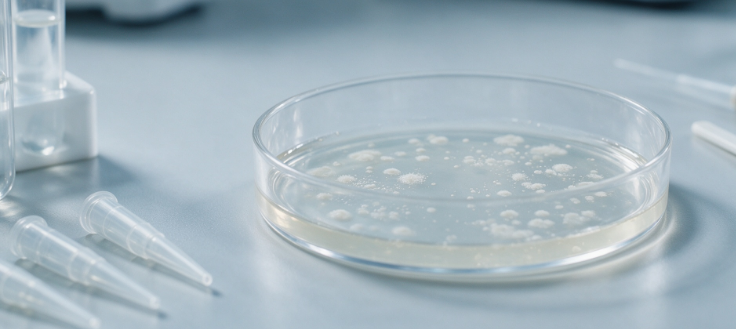
We adhere to ISO 7932 (horizontal method for the enumeration of presumptive B. cereus) and FDA BAM Chapter 14. The procedure involves surface plating of appropriate dilutions on MYP agar (Mannitol Egg Yolk Polymyxin), supplemented with polymyxin B to inhibit other bacteria. Presumptive B. cereus colonies are identified by their characteristic mannitol non‑fermentation (red/pink colonies) and lecithinase activity (opaque halo due to egg yolk breakdown). We perform a confirmatory biochemical scheme: catalase, oxidase, anaerobic growth on glucose, nitrate reduction, Voges‑Proskauer, and growth at 30 °C and 37 °C. We report CFU per gram or millilitre with a limit of detection as low as 10 CFU/g, and include statistical uncertainty (expanded uncertainty at k=2).
2.2 Chromogenic and Differential Media
To improve specificity and reduce the need for extensive confirmatory testing, we employ chromogenic selective media (e.g., BACARA™, Chromogenic Bacillus cereus Agar) that allow B. cereus to be distinguished from other Bacillus species by a characteristic colour (e.g., blue‑grey colonies). This significantly reduces the time to presumptive identification and improves accuracy in samples with high background flora.
2.3 Most Probable Number (MPN) Technique
For low‑level contamination, especially in water or powders, we use the MPN method using tryptic soy broth with polymyxin and incubation at 30 °C, followed by confirmation on MYP agar. The MPN index is calculated using standard statistical tables and provides a quantitative estimate with a 95% confidence interval.
2.4 Biochemical and Proteomic Identification
For conclusive species identification, we use commercial identification systems such as API 50CH, VITEK 2 BC card, or MALDI‑TOF MS (Matrix‑Assisted Laser Desorption/Ionization Time‑of‑Flight Mass Spectrometry), which provides species‑level identification with a confidence score > 2.0. We also use 16S rRNA gene sequencing for the rare or atypical isolates that are not identified by phenotypic methods.
2.5 Real‑Time Polymerase Chain Reaction (qPCR) – Rapid and Specific Detection
For urgent product release, we perform real‑time PCR targeting the gyrB gene (specific for B. cereus group) and the ces gene (cereulide synthetase) for emetic toxin detection. Our assay includes an internal amplification control (IAC) to detect PCR inhibition, and we apply propidium monoazide (PMA) treatment to selectively amplify DNA from viable cells, reducing false‑positive signals from dead cells. The detection limit is ≤ 5 CFU per reaction, with results available in 3‑4 hours after DNA extraction. This method is validated according to ISO 22174 and can be used for screening large numbers of samples.
2.6 Droplet Digital PCR (ddPCR) – Absolute Quantification
For precise quantification without the need for a standard curve, we offer ddPCR targeting the same markers, providing absolute copy numbers. This is particularly valuable for samples with low contamination levels or for quantification in validation studies.
3. Advanced Characterisation – Toxin Typing, Virulence Profiling, and Genomic Epidemiology
For clients requiring detailed strain characterisation – whether for investigating an outbreak, assessing the toxigenic potential of an environmental isolate, or verifying the efficacy of a processing step – we offer a suite of cutting‑edge, research‑grade analytical services that go beyond routine detection:
3.1 Toxin Gene Profiling – Comprehensive Enterotoxin and Emetic Toxin Detection
Using multiplex PCR or whole‑genome sequencing (WGS), we screen for the following key virulence genes: - ces (cereulide synthetase) – the emetic toxin. - hblA, hblB, hblD (haemolysin BL components). - nheA, nheB, nheC (non‑haemolytic enterotoxin components). - cytK (cytotoxin K, associated with severe diarrhoea). - entFM (enterotoxin FM, a secreted metalloprotease). We quantify the relative abundance of these genes and provide an interpretation of the potential toxigenic capacity of the strain.
3.2 Cereulide Production Assessment – Peptide Mass Spectrometry
When gene presence is not sufficient to confirm toxin production, we perform LC‑MS/MS to directly quantify cereulide in the culture supernatant, providing definitive evidence of emetic toxin production.
3.3 Antimicrobial Resistance (AMR) Testing
We determine minimum inhibitory concentrations (MICs) for a panel of antibiotics relevant to B. cereus, including penicillin, ampicillin, erythromycin, clindamycin, vancomycin, ciprofloxacin, and gentamicin, using broth microdilution according to CLSI guidelines. We also screen for common resistance genes (bla, erm, tet, qnr) by PCR or WGS to provide a complete resistance profile.
3.4 High‑Resolution Subtyping – PFGE and Whole‑Genome Sequencing
For outbreak investigation and source tracking, we perform Pulsed‑Field Gel Electrophoresis (PFGE) using NotI and AsiSI digestion, following the PulseNet protocol. The resulting DNA fingerprints are compared with national reference databases. For the highest discrimination, we offer WGS with core‑genome multi‑locus sequence typing (cgMLST) and single‑nucleotide polymorphism (SNP) analysis, which can differentiate isolates at the level of a few single‑nucleotide differences, enabling precise epidemiological tracking.
3.5 Spore Heat Resistance and Process Validation
We evaluate the thermal resistance (D‑value, z‑value) of spores using a customised thermoresistometer, which is essential for validating cooking or pasteurisation processes. We also assess spore germination kinetics and survival under acid and osmotic stress, providing data for hazard analysis and critical control point (HACCP) development.
3.6 Viability and Injury Detection
We utilise PMA‑qPCR combined with resuscitation media (e.g., tryptic soy agar with catalase and sodium pyruvate) to quantify viable cells, including those that are sub‑lethally injured and might be missed by conventional plating, ensuring a realistic assessment of product safety.
4. Data Integrity, Standardisation, and Comprehensive Reporting
All analyses are conducted under a strict quality management system with daily controls, certified reference cultures, and participation in international proficiency testing (e.g., FAPAS, APHL). Our reports deliver: - Full method description (sample preparation, media, incubation conditions, and confirmation criteria). - Quantitative enumeration results (CFU/g or MPN) with expanded uncertainty (k=2) and detection limits. - Identification confirmation (biochemical profile, API code, MALDI‑TOF score, or PCR result). - Toxin gene profile – presence/absence of ces, hbl, nhe, cytK, and interpretation of pathogenic potential. - Antimicrobial susceptibility results (MIC values and categorical interpretation, S/I/R). - Genotyping outputs – PFGE patterns or WGS‑based cgMLST allele profiles and SNP distances, with comparisons to relevant outbreak strains. - Spore resistance data – D‑value, z‑value, and thermal death time, if requested. - Actionable recommendations for corrective actions, process optimisation, and root‑cause identification.
Our reports are authored by senior food microbiologists and molecular epidemiologists who provide not just raw data, but interpretive insights that help you understand the potential health risk, the likely source of contamination, and the effectiveness of your control measures. We also offer method validation and customised sampling plans for challenging matrices (e.g., spices, chocolate, powders).
Turnaround times: 2‑3 days for enumeration and isolation, 24‑48 hours for qPCR screening, 3‑4 days for toxin gene profiling, and 5‑7 days for PFGE or WGS analysis. Express services are available for urgent contamination events.
5. Our Unmatched Expertise – Why Choose Our Laboratory for Bacillus cereus Testing
We are one of the few laboratories that hold ISO/IEC 17025 accreditation for the detection, enumeration, and toxin gene profiling of B. cereus, covering all major international standards (ISO 7932, ISO 21871, FDA BAM, and CLSI guidelines for AST). Our integrated infrastructure combines classical microbiology, biochemical identification, immunological methods, molecular diagnostics (qPCR, ddPCR), advanced typing (PFGE, WGS), and bioinformatics analysis – enabling cross‑method verification and rapid resolution of ambiguous results. Our team comprises PhD‑level microbiologists, bioinformaticians, and food safety experts with extensive experience in food microbiology, outbreak investigation, and process validation, and we have a proven track record of supporting regulatory audits and legal proceedings with defensible data.
We offer unparalleled flexibility: we accept samples from all types of foods, ingredients, environmental swabs, water, and pharmaceutical products. We provide customised sampling kits with preservatives and transport media to maintain spore viability and integrity. Our secure online portal enables real‑time tracking, access to raw data, and trend reporting.
Our modular pricing ensures cost‑effectiveness: you select the level of analysis – from a simple enumeration to full genomic characterisation – with discounts for routine monitoring programmes and bulk submissions. We also provide training, inter‑laboratory comparison, and technical consultancy to help you strengthen your in‑house testing and control programmes.
With a proven history of serving over 70 food manufacturers, ingredient suppliers, and regulatory agencies, we have enabled our partners to meet regulatory requirements, detect contamination early, trace the source effectively, and implement corrective measures efficiently. We invite you to leverage our expertise for your Bacillus cereus testing needs.
Contact our technical experts today to discuss your sample types, regulatory targets, and required turn‑around times. We will design a tailored testing plan and provide a detailed proposal within one business day.