Reasons for choosing our testing services
ZHONGXI Testing has obtained inspection qualification certifications from multiple countries and regions worldwide. We possess a senior testing team and advanced testing methods, providing independent, impartial, and professional third-party verification services for global carbon projects.

Internationally recognized authority
Certified by multiple international standards such as CNAS, VCS, and GS, with reports universally applicable worldwide.

Global service capability
Covering 140+ countries and regions, it supports on-site detection and remote verification in multiple languages.

Professional experimental methods
Adopt standard experimental methods to ensure accurate and reliable data.
Comprehensive Detection and Enumeration of Sulfite‑Reducing Anaerobic Bacteria – From Classical Spore Assays to Molecular Confirmation and Source Tracking
The detection and enumeration of sulfite‑reducing anaerobic bacteria (SRAB), predominantly represented by Clostridium species (notably C. perfringens), constitute a cornerstone of water quality monitoring, food safety testing, and environmental hygiene assessment. These organisms, particularly their heat‑resistant spores, serve as robust indicators of faecal contamination, treatment process efficiency, and the potential presence of pathogenic anaerobes. Regulatory frameworks such as ISO 6461‑1 (water quality), ISO 15213‑1 (food microbiology), and national drinking water guidelines mandate the enumeration of sulfite‑reducing clostridia as a sensitive and conservative indicator of intermittent contamination and as a validation tool for disinfection processes, especially where traditional faecal indicator bacteria may be compromised (e.g., in groundwater or treated wastewater). However, the practical performance of an SRAB testing strategy is not defined by a single method; it is critically dependent on the sample matrix (water, sludge, soil, food), the need to differentiate between vegetative cells and spores, the presence of competing anaerobic flora, and the required turnaround time for regulatory compliance or process control. Routine enumeration using selective media such as tryptose‑sulfite‑cycloserine (TSC) agar or iron sulfite agar (ISA) provides a reliable count of presumptive SRAB, but it often lacks the specificity to distinguish between different clostridial species and does not provide information on toxigenic potential or source attribution. Furthermore, the increasing demand for rapid screening, viable‑spore discrimination, and molecular confirmation requires advanced analytical capabilities beyond conventional culture‑based techniques. Our ISO/IEC 17025‑accredited microbiology laboratory offers a fully integrated, multi‑method testing platform specifically designed for SRAB analysis, covering the entire spectrum from classical spore enumeration and biochemical confirmation to rapid molecular detection (real‑time PCR) and high‑resolution identification (MALDI‑TOF MS, 16S sequencing) – delivering quantitative, traceable data that directly support regulatory compliance, process validation, environmental monitoring, and outbreak investigation.
1. Scientific and Regulatory Context for Sulfite‑Reducing Anaerobe Testing
Sulfite‑reducing anaerobes are defined by their ability to reduce sulfite to sulfide under anaerobic conditions, producing black colonies in media containing iron salts. The group is dominated by Clostridium perfringens, but also includes other clostridia (C. sordellii, C. bifermentans) and some non‑clostridial anaerobes. The spores of these organisms are highly resistant to environmental stresses, including chlorination and UV irradiation, making them excellent indicators of historical contamination and treatment breakthrough. In water quality monitoring (e.g., EU Drinking Water Directive, WHO guidelines), the absence of SRAB in 100 mL or a specified volume is often required for drinking water, while for recreational waters and effluents, limit values (e.g., < 20 CFU/100 mL) are applied. In food microbiology, the enumeration of sulfite‑reducing clostridia (ISO 15213‑1) is used to assess the hygienic quality of raw meat, poultry, and spices, with action limits varying by product. The choice of analytical method – whether membrane filtration, pour‑plate (liquid) method, or most probable number (MPN) – must be tailored to the sample type, the expected spore load, and the urgency of the result. Additionally, the need to differentiate spores from vegetative cells (via heat shocking) is essential for distinguishing treatment‑resistant from transient contamination. Our service provides a comprehensive method‑selection consultation, ensuring that the chosen protocol delivers the most reliable and actionable data for your specific application.
2. Our Comprehensive Analytical Platform – Classical, Confirmatory, and Molecular Methods
We maintain a complete suite of reference and alternative methods, all performed under strict anaerobic conditions using anaerobic chambers and gas‑generating systems, and with certified reference strains (e.g., C. perfringens ATCC 13124) for quality control. Our testing portfolio includes:
2.1 Classical Spore Enumeration – Membrane Filtration and Pour‑Plate Techniques
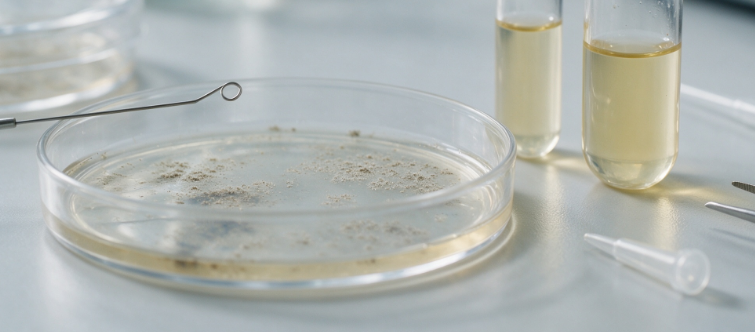
For water and clear liquids, we perform membrane filtration using 0.45‑µm filters, followed by incubation on tryptose‑sulfite‑cycloserine (TSC) agar or iron sulfite agar (ISA) at 37 °C for 24‑48 h under anaerobic conditions. For solid samples (food, soil, sludge), we apply the pour‑plate method with appropriate dilution and overlay. Heat shock (75 °C for 15 minutes) is routinely applied to selectively enumerate spores, providing a direct measure of treatment‑resistant populations. We report CFU per 100 mL or per gram with a detection limit as low as 1 CFU/100 mL (filtration) or 10 CFU/g (pour‑plate), and we include statistical uncertainty (expanded uncertainty at k=2).
2.2 Most Probable Number (MPN) Technique – For Low‑Level Contamination
For samples with very low counts or high turbidity (e.g., sludge, soil), we employ the MPN method using three‑tube serial dilutions in a selective sulfite broth, followed by sub‑culture on TSC agar. The MPN index is calculated with a 95% confidence interval, providing a reliable estimate even for samples where colony counting is challenging.
2.3 Confirmatory Biochemical and Proteomic Identification
All black colonies (presumptive SRAB) are subjected to a confirmatory scheme: anaerobic growth, catalase and oxidase tests, motility, nitrate reduction, and the production of lecithinase and lipase. For definitive species identification, we use commercial identification systems such as API 20A, VITEK 2 ANC card, or MALDI‑TOF MS, which provides species‑level identification with a high confidence score (> 2.0). For rare or ambiguous isolates, we perform 16S rRNA gene sequencing to confirm the species.
2.4 Real‑Time Polymerase Chain Reaction (qPCR) – Rapid Detection and Viability Discrimination
For urgent screening or when rapid results are essential, we perform real‑time PCR targeting the cpa (alpha‑toxin) gene – specific to C. perfringens – as a marker for the dominant SRAB. Our assay includes an internal amplification control (IAC) to detect inhibition and, critically, we apply propidium monoazide (PMA) treatment to selectively amplify DNA from viable cells, reducing false‑positive signals from dead or membrane‑compromised cells. The detection limit is ≤ 10 CFU per reaction, with results available in 3‑4 hours after DNA extraction. This method is validated according to ISO 22174 and is particularly valuable for rapid screening of drinking water and processed food.
2.5 Droplet Digital PCR (ddPCR) – Absolute Quantification
For precise quantification without the need for a standard curve, we offer ddPCR targeting the cpa gene. This provides absolute copy‑number determination and is especially useful for samples with PCR inhibitors or for validation of treatment efficacy.
3. Advanced Characterisation – Speciation, Toxin Gene Profiling, and Source Tracking
For clients requiring detailed characterisation – whether for investigating a contamination event, assessing the pathogenic potential of isolates, or supporting epidemiological studies – we offer a suite of cutting‑edge, research‑grade analytical services that go beyond routine enumeration:
3.1 Toxin Gene Profiling – Distinguishing Pathogenic from Non‑Pathogenic Strains
Using multiplex PCR or whole‑genome sequencing (WGS), we screen for the major toxin genes (cpa, cpb, etx, iap, cpe, netB) to assign the toxinotype (A‑G) and to assess the potential to cause foodborne illness or enterotoxaemia. This profiling is essential for risk assessment, particularly in food and clinical contexts.
3.2 Antimicrobial Resistance (AMR) Profiling
We determine minimum inhibitory concentrations (MICs) for a panel of clinically and veterinary relevant antibiotics (e.g., penicillin, tetracycline, metronidazole, clindamycin, vancomycin) using broth microdilution according to CLSI guidelines. We also screen for common resistance genes (tet, erm, bla) by PCR or WGS, supporting surveillance programmes and therapeutic choices.
3.3 High‑Resolution Subtyping – PFGE and Whole‑Genome Sequencing
For outbreak investigation and source tracking, we perform Pulsed‑Field Gel Electrophoresis (PFGE) using SmaI digestion, following PulseNet protocols. This generates DNA fingerprints that can be compared with reference databases. For the highest discriminatory power, we offer WGS with core‑genome multi‑locus sequence typing (cgMLST) and single‑nucleotide polymorphism (SNP) analysis, enabling precise differentiation of isolates for epidemiological investigations.
3.4 Spore Heat Resistance and Process Validation
We evaluate the thermal resistance (D‑value, z‑value) of spores using a custom‑built thermoresistometer, providing critical data for validating pasteurisation, sterilisation, and disinfection processes in the water, food, and pharmaceutical industries.
3.5 Viability and Injury Detection – PMA‑qPCR and Resuscitation Assays
We combine PMA‑qPCR with resuscitation on non‑selective media to quantify viable spores and to assess the proportion of sub‑lethally injured cells that may be underestimated by direct plating. This gives a realistic picture of the total viable count after treatment.
4. Data Integrity, Standardisation, and Comprehensive Reporting
All analyses are conducted under a strict quality management system with daily controls, certified reference cultures, and participation in international proficiency testing (e.g., ERA, FAPAS). Our reports deliver: - Full method description (sample pre‑treatment, heat shock conditions, media, incubation parameters, and confirmation criteria). - Quantitative enumeration results (CFU/100 mL, CFU/g, or MPN) with expanded uncertainty (k=2) and detection limits. - Confirmation of presumptive colonies (biochemical profile, API code, MALDI‑TOF score, or 16S sequencing result). - Toxin gene profile (presence/absence of major toxin genes, toxinotype assignment) and interpretation of pathogenic potential. - Antimicrobial susceptibility data (MIC values and categorical interpretation, S/I/R). - Genotyping outputs (PFGE patterns, cgMLST allelic profiles, SNP distances) with comparative analysis where possible. - Spore resistance data – D‑value, z‑value, and thermal death time, if requested. - Actionable recommendations for corrective actions, process optimisation, and source identification.
Our reports are authored by senior environmental and food microbiologists who provide not just raw data, but interpretive insights that help you understand the significance of the results, the likely origin of contamination, and the effectiveness of your disinfection or processing steps. We also offer method validation and customised sampling plans for unusual or challenging matrices.
Turnaround times: 2‑3 days for enumeration and confirmation, 24‑48 hours for qPCR screening, 3‑4 days for toxin typing and AMR, and 5‑7 days for PFGE or WGS analysis. Express services are available for emergency or high‑priority projects.
5. Our Unmatched Expertise – Why Choose Our Laboratory for SRAB Testing
We are one of the few laboratories that hold ISO/IEC 17025 accreditation for the detection, enumeration, and identification of sulfite‑reducing anaerobes, covering the major international standards (ISO 6461‑1, ISO 15213‑1, and national guidelines). Our integrated infrastructure combines classical anaerobic culture, biochemical identification, MALDI‑TOF MS, molecular diagnostics (qPCR, ddPCR), and genomic subtyping (PFGE, WGS) – enabling cross‑method verification and rapid resolution of ambiguous results. Our team comprises PhD‑level microbiologists, bioinformaticians, and process validation experts with extensive experience in water quality monitoring, food safety, and environmental hygiene, and we have a strong track record of supporting regulatory audits and incident investigations with robust, defensible data.
We offer unparalleled flexibility: we accept samples from drinking water, groundwater, wastewater, food, soil, sludge, and swabs. We provide customised sampling kits with appropriate preservatives and transport media to maintain sample integrity. Our secure online portal enables real‑time tracking, access to raw data, and trend reporting.
Our modular pricing ensures cost‑effectiveness: you select the level of analysis – from a simple enumeration to full characterisation – with discounts for routine monitoring programmes and bulk submissions. We also provide training, inter‑laboratory comparison, and technical consultancy to help you strengthen your in‑house monitoring and control programmes.
With a proven history of serving over 80 water utilities, food manufacturers, and environmental consultancies, we have enabled our partners to meet regulatory requirements, validate treatment processes, and respond rapidly to contamination events. We invite you to leverage our expertise for your sulfite‑reducing anaerobe testing needs.
Contact our technical experts today to discuss your sample types, regulatory targets, and required turn‑around times. We will design a tailored testing plan and provide a detailed proposal within one business day.