Reasons for choosing our testing services
ZHONGXI Testing has obtained inspection qualification certifications from multiple countries and regions worldwide. We possess a senior testing team and advanced testing methods, providing independent, impartial, and professional third-party verification services for global carbon projects.

Internationally recognized authority
Certified by multiple international standards such as CNAS, VCS, and GS, with reports universally applicable worldwide.

Global service capability
Covering 140+ countries and regions, it supports on-site detection and remote verification in multiple languages.

Professional experimental methods
Adopt standard experimental methods to ensure accurate and reliable data.
Advanced Endotoxin Detection and Quantification Services – From Routine Screening to Complex Method Development and Regulatory Compliance
The reliable detection and accurate quantification of Endotoxins (lipopolysaccharides, LPS) is a fundamental requirement for the safety and quality of pharmaceutical products, medical devices, biological therapeutics, and parenteral preparations. Endotoxins, derived from the outer membrane of Gram‑negative bacteria, are potent pyrogens capable of inducing fever, septic shock, and even death when introduced into the human bloodstream. Regulatory authorities worldwide – including the US Pharmacopeia (USP), European Pharmacopoeia (EP), Japanese Pharmacopoeia (JP), and the Chinese Pharmacopoeia (ChP) – mandate strict limits for Endotoxin contamination in all injectable products, implantable devices, and biological drugs. However, the practical performance of an Endotoxin testing strategy is not defined by a single method; it is critically dependent on the sample matrix, the presence of interfering substances (enhancers or inhibitors), the expected Endotoxin concentration range, and the required turnaround time for product release. Routine screening using the standard gel‑clot or turbidimetric assays may be insufficient for complex formulations (e.g., lipid emulsions, proteins, or nanoparticle suspensions) that can mask or interfere with the assay. Moreover, the emergence of the recombinant Factor C (rFC) assay and the need for low‑Endotoxin recovery (LER) studies demand advanced analytical capabilities beyond conventional methods. Our ISO/IEC 17025‑accredited and GMP‑compliant laboratory offers a fully integrated, multi‑method Endotoxin testing platform – encompassing both the traditional Limulus Amebocyte Lysate (LAL) techniques and the recombinant Factor C (rFC) cascade – coupled with comprehensive method validation, interference screening, and low‑Endotoxin recovery assessment. We deliver quantitative, traceable data that directly support product release, process validation, stability studies, and regulatory submissions, ensuring that your products meet the most stringent global safety standards.
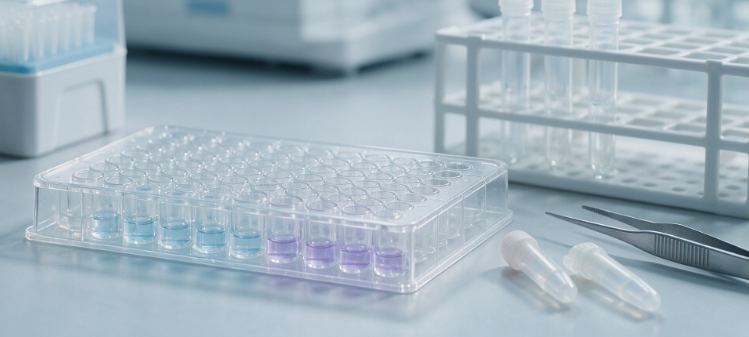
1. The Scientific and Regulatory Rationale for Dedicated Endotoxin Testing
Endotoxins are highly heat‑stable and resilient molecules that can persist through standard sterilization processes. Their biological activity is mediated by the lipid A moiety, which triggers a strong inflammatory response even at picogram‑per‑millilitre concentrations. Regulatory limits are expressed as Endotoxin units (EU) per milligram of drug substance, per device, or per dose – with thresholds varying from 0.5 EU/mL for intrathecal products to 5 EU/kg body weight for general parenteral use. The choice of assay method – whether gel‑clot (limit test or semi‑quantitative), kinetic turbidimetric, kinetic chromogenic, or rFC‑based – must be tailored to the sample type, the expected Endotoxin load, and the need for endpoint determination or real‑time kinetics. Additionally, the complexity of modern biopharmaceuticals (e.g., monoclonal antibodies, vaccines, gene therapy vectors, liposomal formulations) introduces novel interference patterns that require customised sample preparation and dilution strategies. Our service begins with a thorough consultation to define the optimal testing strategy, ensuring both regulatory compliance and scientific validity for your specific product.
2. Our Comprehensive Endotoxin Testing Platform – Multi‑Technique Capability
We maintain a complete suite of validated Endotoxin detection methods, all performed under controlled environmental conditions (including low‑Endotoxin environments) and with certified reference Endotoxin standards (e.g., USP Endotoxin RS, or internationally recognised control standard Endotoxins). Our portfolio includes:
2.1 Gel‑Clot (Limulus Amebocyte Lysate) Assay
The gel‑clot technique is the reference method for limit testing. We perform both semi‑quantitative (endpoint) and quantitative (replicate) gel‑clot assays with a sensitivity down to 0.03 EU/mL, suitable for routine quality control and pharmacopoeial compliance. We carefully perform parallel testing with positive product controls to detect interference and ensure that the assay is valid for your specific matrix.
2.2 Kinetic Turbidimetric and Chromogenic LAL Assays
For precise quantification over a wide dynamic range (0.005–100 EU/mL), we offer kinetic turbidimetric and kinetic chromogenic assays using automated microplate readers. These methods provide a continuous measurement of the LAL‑Endotoxin reaction, enabling accurate determination of the spike recovery, linearity, and the effect of sample dilution. They are particularly advantageous for complex matrices where endpoint assays may suffer from variable background.
2.3 Recombinant Factor C (rFC) Assay
We are one of the few laboratories to fully implement the recombinant Factor C assay, which replaces the natural LAL cascade with a single recombinant protein (Factor C) activated by Endotoxin. This method offers comparable sensitivity and specificity to traditional LAL, but with elimination of the animal‑origin component – a key advantage for sustainable and supply‑chain‑resilient testing. Our rFC platform is validated for a wide range of products and provides results within 60‑90 minutes.
2.4 Rapid Endotoxin Detection – During Process Monitoring
For at‑line and in‑process control, we offer rapid Endotoxin detection using a portable kinetic reader, delivering results in under 30 minutes. This is invaluable for monitoring wash steps, intermediate purification stages, or Bioburden reduction steps.
2.5 Interference and Low‑Endotoxin Recovery (LER) Assessment
We conduct comprehensive inhibition/enhancement testing according to USP <85> and EP 2.6.14, including the use of multiple dilution factors and spike recovery experiments. For products known to exhibit LER (e.g., those containing surfactants or chelating agents), we apply specialised sample pre‑treatment protocols – such as dilution in specific buffers, heating, or filtration – to ensure accurate recovery of endogenous Endotoxin without false negatives.
3. Advanced Capabilities – Method Development, Validation, and Low‑Level Quantification
For clients dealing with novel formulations, challenging matrices, or extremely low Endotoxin specifications, we offer a suite of customised, research‑grade services that go far beyond routine testing:
3.1 Method Development and Full Validation
We design and validate a complete Endotoxin testing protocol for your specific product, including sample preparation, dilution scheme, concentration range selection, and suitability of the assay. Validation parameters include limit of detection (LOD), limit of quantification (LOQ), linearity, precision, accuracy (spike recovery), robustness, and the effect of different vialing, storage, and shipping conditions. All validations are performed in accordance with ICH Q2(R1) and pharmacopoeial guidelines.
3.2 Endotoxin Recovery Studies – Low‑Endotoxin Recovery (LER) and Product‑Specific Suppression
We conduct systematic LER studies to evaluate the recovery of Endotoxin after spiking into your product, using both conventional LAL and rFC platforms. We identify the optimal conditions (diluent, dilution factor, time, temperature) to maximise recovery and provide robust recommendations for routine testing.
3.3 High‑Throughput Screening for Process Validation
For large‑scale manufacturing processes, we offer high‑throughput testing using automated liquid‑handling systems capable of processing up to 384 samples per run, combined with automated data analysis and flagging of outliers. This is essential for validating cleaning procedures and monitoring trends.
3.4 Endotoxin Neutralisation and Removal Studies
We can evaluate the capacity of your process steps (e.g., filtration, chromatography, ultrafiltration) to remove or neutralise Endotoxin, providing critical data for process validation and ensuring that your final product meets the release specifications.
3.5 Stability‑Indicating Endotoxin Testing
We assess the stability of Endotoxin levels in your product under accelerated and real‑time storage conditions, ensuring that the Endotoxin load does not increase during shelf life.
3.6 Specialised Matrices – Lipids, Proteins, and Nanoparticles
Our expert team has developed tailored protocols for products containing high lipid content (e.g., parenteral nutrition, liposomes), high protein concentrations (e.g., antibody formulations), and particulate systems (e.g., micelles, polymeric nanoparticles). We use a combination of appropriate diluents, surfactant addition, and low‑binding materials to overcome matrix‑induced interference.
4. Data Integrity, Standardisation, and Comprehensive Reporting
All analyses are conducted under a strict quality management system that includes the use of certified Endotoxin standards, routine positive and negative controls, and participation in international proficiency testing (e.g., USP Endotoxin proficiency tests). Our reports provide:
- Full method description – including diluent used, incubation parameters, wavelength (for chromogenic), and reader settings.
- Quantitative results – in EU/mL, EU/mg, or EU/device, with expanded uncertainty (k=2) and limits of detection and quantification.
- Interference data – recovery percentages for positive product controls and dilution profiles.
- Validation statistics – if method development has been conducted.
- Interpretative comments – on compliance with the relevant pharmacopoeial limits and any special considerations for your product.
Our reports are authored by senior biopharmaceutical analytical scientists who provide not just numerical results, but contextual insights – explaining the significance of any inhibition or enhancement, recommending appropriate actions, and highlighting any trends that may require further investigation.
Turnaround times: 24‑48 hours for standard LAL screening, 2‑3 working days for full kinetic quantification, and 5‑7 working days for method development and validation. Express services are available for urgent product release.
5. Our Unmatched Expertise – Why Choose Our Laboratory for Endotoxin Testing
We are one of the few laboratories that hold ISO/IEC 17025 accreditation for Endotoxin testing and GMP compliance for pharmaceutical release testing. Our integrated infrastructure encompasses both traditional LAL (gel‑clot, turbidimetric, chromogenic) and recombinant rFC platforms, enabling direct cross‑validation and rapid resolution of ambiguous results. Our team comprises PhD‑level microbiologists and biopharmaceutical analysts with extensive experience in method development, LER studies, and regulatory submissions, and we have a proven track record of supporting product registrations with the FDA, EMA, and other agencies.
We offer unparalleled flexibility: we accept all types of samples – from small‑scale R&D batches to large‑scale commercial lots, including liquids, lyophilised powders, medical devices, and raw materials. We provide customised sampling kits and detailed guidance on sample handling to prevent exogenous Endotoxin contamination. Our secure online portal enables real‑time tracking, access to raw data, and downloadable certificates.
Our modular pricing ensures cost‑effectiveness: you select the level of analysis – from a simple screening to full method validation – with discounts for routine monitoring programmes and bulk submissions. We also provide training, method transfer, and technical consultancy to help you build or strengthen your internal Endotoxin testing capability.
With a proven history of serving over 90 pharmaceutical, biotech, and medical device companies, we have enabled our partners to ensure product safety, achieve regulatory compliance, and accelerate time‑to‑market. We invite you to leverage our expertise for your Endotoxin testing needs.
Contact our technical experts today to discuss your product characteristics, regulatory requirements, and desired turn‑around times. We will design a tailored testing plan and provide a detailed proposal within one business day.