Reasons for choosing our testing services
ZHONGXI Testing has obtained inspection qualification certifications from multiple countries and regions worldwide. We possess a senior testing team and advanced testing methods, providing independent, impartial, and professional third-party verification services for global carbon projects.

Internationally recognized authority
Certified by multiple international standards such as CNAS, VCS, and GS, with reports universally applicable worldwide.

Global service capability
Covering 140+ countries and regions, it supports on-site detection and remote verification in multiple languages.

Professional experimental methods
Adopt standard experimental methods to ensure accurate and reliable data.
Comprehensive Bacteriophage Detection and Characterisation Services – From Plaque Assays to Genomic Surveillance and Process Risk Assessment
The reliable detection and characterisation of Bacteriophages (phages) in biological products, fermentation processes, environmental samples, and clinical settings is an increasingly critical requirement for the biotechnology, pharmaceutical, and food industries. Phages – viruses that infect bacteria – can compromise microbial fermentation, contaminate raw materials, skew microbiome analyses, and, conversely, are being developed as therapeutic agents against antibiotic‑resistant infections. Regulatory frameworks such as the USP, EP, and ICH guidelines require robust testing for phage contamination in certain biological products, particularly those derived from bacterial hosts. However, the practical performance of a phage detection strategy is not defined by a single method; it is critically dependent on the sample matrix, the expected phage host range, the lytic vs. lysogenic nature of the phages, the required sensitivity, and the need for strain‑level discrimination. Routine plaque assays, while providing quantitative infectivity data, are host‑dependent and may miss non‑culturable or temperate phages. Moreover, the rise of phage therapy and the need for environmental phage surveillance demand advanced analytical capabilities that go beyond classical microbiology. Our ISO/IEC 17025‑accredited and GMP‑compliant laboratory offers a fully integrated, multi‑method Bacteriophage testing platform, encompassing the entire spectrum from traditional host‑based infectivity assays to advanced molecular techniques – including real‑time PCR, next‑generation sequencing (NGS), transmission electron microscopy (TEM), and host‑range mapping. We deliver quantitative, traceable data, expert interpretation, and full compliance support, enabling you to assess contamination risks, validate clearance processes, and characterise therapeutic phage candidates with the highest scientific rigour.
1. The Scientific and Regulatory Rationale for Dedicated Bacteriophage Testing
Bacteriophages are ubiquitous in nature and can be introduced into manufacturing processes via raw materials, water, or personnel. In bacterial fermentation (e.g., for recombinant protein production, enzyme manufacturing, or probiotic cultures), phage contamination can cause complete culture lysis, leading to significant economic losses and batch failures. In the context of phage therapy, precise characterisation of the phage (including its host range, lytic activity, stability, and genomic identity) is essential for product safety and efficacy. Regulatory agencies expect a thorough assessment of phage‑related risks for products derived from bacterial hosts, often requiring validation of clearance steps (e.g., filtration, heat treatment, or chemical inactivation). The choice of analytical method – whether double‑layer plaque assay, liquid culture infectivity assay, qPCR, or droplet digital PCR (ddPCR) – must be tailored to the sample volume, the expected phage concentration, the host specificity, and the differentiation between viable and total (DNA/RNA) phage particles. Our service begins with a comprehensive consultation to design a testing strategy that meets your regulatory and operational requirements.
2. Our Comprehensive Bacteriophage Testing Platform – Classical and Molecular Approaches
We maintain a complete suite of validated phage detection and characterisation methods, all performed under controlled environmental conditions and with certified reference phages (e.g., T4, λ, Phi6) for quality control. Our portfolio includes:
2.1 Double‑Layer Agar Plaque Assay (Plaque‑Forming Units – PFU)
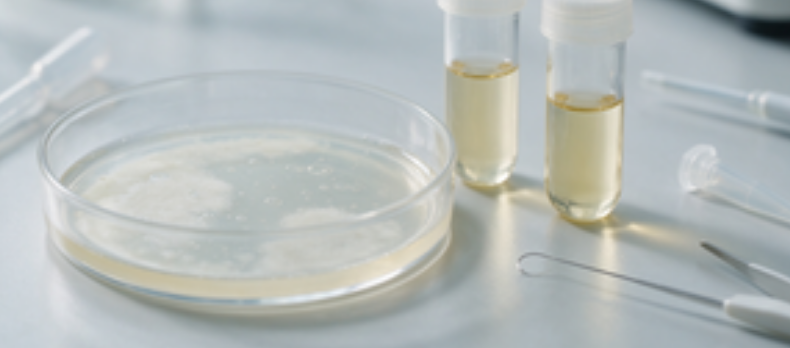
This is the gold‑standard method for quantifying infectious phage particles. We perform the plaque assay using your specific host strain (or a suitable indicator strain) to determine the plaque‑forming titre (PFU/mL). We can conduct this assay with a sensitivity as low as 1 PFU per plate, and we include appropriate controls to distinguish between lytic and lysogenic phages. The method is fully compliant with USP and EP guidance for phage enumeration. We provide detailed images of plaque morphology and a quantitative report with statistical uncertainty (expanded uncertainty at k=2).
2.2 Liquid Culture Infectivity (Most Probable Number – MPN)
For low‑level contamination, we use an MPN format in liquid medium, where serial dilutions of the sample are incubated with the host culture, and the presence of lysis is scored after a defined period. This provides a statistical estimate of infectious units with a 95% confidence interval and is particularly useful for water and environmental samples.
2.3 Real‑Time PCR (qPCR) and Droplet Digital PCR (ddPCR) – Total Genome Detection
We utilise validated qPCR assays targeting highly conserved phage genes (e.g., the gp23 for T‑even phages, or the orf for specific phages) to detect total phage DNA, irrespective of infectivity. Our assay includes an internal amplification control (IAC) to monitor inhibition and is calibrated against purified phage DNA standards. We offer ddPCR for absolute quantification without the need for a standard curve, providing a detection limit as low as 1‑5 genomic copies per reaction. This method is particularly valuable for phage clearance validation where a single infectious particle cannot be detected by plaque assay.
2.4 Transmission Electron Microscopy (TEM) – Morphological Identification
For visual confirmation and morphotyping, we perform negative‑staining TEM to visualise phage particles. This allows us to determine the phage family (e.g., Myoviridae, Siphoviridae, Podoviridae) and to assess the purity and morphology of the sample – essential for characterising therapeutic phage preparations.
2.5 Host‑Range Mapping – Spot‑Test and Efficiency of Plating (EOP) Assays
We characterise the host range of isolated phages by performing spot tests on a panel of bacterial strains, followed by EOP analysis to quantify the relative plating efficiency. This provides a detailed host‑profile, which is essential for phage therapy candidates and for understanding the potential impact of a contaminating phage on a production strain.
3. Advanced Characterisation – Genomic Analysis, Stability Studies, and Clearance Validation
For clients requiring a comprehensive understanding of their phage isolates or a robust validation of phage clearance, we offer a suite of cutting‑edge, research‑grade services that go beyond routine detection:
3.1 Whole‑Genome Sequencing (WGS) and Bioinformatics Analysis
We perform WGS of isolated phages (or enriched samples) using Illumina or Oxford Nanopore platforms. Our bioinformatics pipeline includes assembly, annotation, taxonomic classification, and identification of lysogeny‑related genes, virulence factors, and antibiotic resistance markers. We provide a comprehensive genomic report that meets the standards for regulatory submissions and scientific publications.
3.2 Phage Stability Studies – Thermal, pH, and Storage Stability
We evaluate the thermal stability (D‑value, z‑value), pH tolerance, and long‑term storage stability of your phage samples, providing critical data for formulation development and shelf‑life determination.
3.3 Phage Clearance Validation – Filtration, Chemical, and Heat Inactivation Studies
We design and execute clearance studies to validate the efficacy of your manufacturing process in removing or inactivating phages. Using a combination of high‑titre phage spikes and quantitative assays (plaque assay and qPCR), we determine the log reduction value (LRV) for each unit operation, generating data that directly supports your regulatory submissions.
3.4 Environmental Phage Monitoring – Water and Raw Material Screening
We offer routine monitoring of incoming water, raw materials, and environmental surfaces for the presence of phages using a combination of plaque assay and PCR screening, helping you to maintain a robust contamination control strategy.
3.5 Phage Engineering and Characterization – CRISPR‑Cas and Receptor‑Binding Analysis
For therapeutic phage development, we can conduct receptor‑binding studies and assess the ability to overcome bacterial resistance, using advanced methods including whole‑genome analysis and in‑vitro evolution experiments.
4. Data Integrity, Standardisation, and Comprehensive Reporting
All analyses are conducted under a strict quality management system with certified reference phages, routine positive and negative controls, and participation in international proficiency testing (where available). Our reports provide:
- Full method description – including host strain, media, incubation conditions, and any pre‑treatment steps.
- Quantitative results – PFU/mL, MPN, genomic copies/mL, with expanded uncertainty (k=2) and limits of detection.
- Morphological and genomic data – including TEM images, genome length, G+C content, and annotation summaries.
- Host‑range and EOP profiles – with a clear interpretation of the phage’s specificity.
- Clearance validation data – LRV values for each process step, with confidence intervals.
- Interpretative comments – on the significance of the findings, potential risks, and recommended actions.
Our reports are authored by senior virologists and molecular biologists who provide not just data, but actionable insights to guide your quality decisions.
Turnaround times: 2‑3 days for plaque assay and infectivity testing, 24‑48 hours for qPCR screening, 5‑7 days for genome sequencing and analysis, and 10‑14 days for comprehensive clearance studies. Express services are available for urgent contamination events.
5. Our Unmatched Expertise – Why Choose Our Laboratory for Bacteriophage Testing
We are one of the few laboratories that hold ISO/IEC 17025 accreditation and GMP compliance for the full suite of phage detection and characterisation methods. Our integrated infrastructure combines classical microbiology (plaque assays), molecular diagnostics (qPCR, ddPCR), electron microscopy, and NGS – enabling method triangulation and rapid resolution of ambiguous results. Our team comprises PhD‑level virologists, bioinformaticians, and bioprocessing experts with extensive experience in phage biology and regulatory submissions, and we have a proven track record of supporting products ranging from fermentation‑derived biologics to therapeutic phage candidates.
We offer unparalleled flexibility: we accept all sample types – from cell culture harvests, fermentation broths, water, and raw materials to purified phage preparations and spiked samples for validation. We provide customised sampling kits and guidance on sample handling to preserve phage integrity. Our secure online portal enables real‑time tracking, access to raw data, and downloadable certificates.
Our modular pricing ensures cost‑effectiveness: you select the level of analysis – from a simple infectivity screen to full genomic characterisation – with discounts for routine monitoring programmes and bulk submissions. We also provide training, method transfer, and technical consultancy to help you build or strengthen your internal phage testing capabilities.
With a proven history of serving over 60 biopharmaceutical, food, and environmental companies, we have enabled our partners to ensure process security, achieve regulatory compliance, and accelerate product development. We invite you to leverage our expertise for your Bacteriophage testing needs.
Contact our technical experts today to discuss your sample types, regulatory requirements, and desired turn‑around times. We will design a tailored testing plan and provide a detailed proposal within one business day.