Reasons for choosing our testing services
ZHONGXI Testing has obtained inspection qualification certifications from multiple countries and regions worldwide. We possess a senior testing team and advanced testing methods, providing independent, impartial, and professional third-party verification services for global carbon projects.

Internationally recognized authority
Certified by multiple international standards such as CNAS, VCS, and GS, with reports universally applicable worldwide.

Global service capability
Covering 140+ countries and regions, it supports on-site detection and remote verification in multiple languages.

Professional experimental methods
Adopt standard experimental methods to ensure accurate and reliable data.
Advanced Sterility Testing Services – Comprehensive, Regulatory‑Ready, and Scientifically Rigorous
The demonstration of Sterility is a fundamental requirement for all pharmaceutical products, medical devices, tissue‑based therapies, and other materials intended for parenteral, ophthalmic, or other sterile administration. Regulatory authorities worldwide – including the US Pharmacopoeia (USP), European Pharmacopoeia (EP), Japanese Pharmacopoeia (JP), and the Chinese Pharmacopoeia (ChP) – mandate that Sterility assurance be performed using validated, pharmacopoeial methods for product release. However, a successful Sterility testing strategy is not a one‑size‑fits‑all procedure; it requires careful consideration of the sample matrix, the product’s antimicrobial properties, the volume to be tested, the expected Bioburden, and the specific regulatory pathway. The conventional direct inoculation and membrane filtration methods, while broadly applicable, can be compromised by product‑related interference (e.g., inhibition, enhancement, or poor filterability). Furthermore, the increasing complexity of advanced therapeutics (cell and gene therapies, lipid nanoparticles, combination products) demands customised validation approaches, including product‑specific method suitability studies, growth promotion testing, and low‑Bioburden method validation. Our ISO/IEC 17025‑accredited and GMP‑compliant laboratory offers a fully integrated Sterility testing platform, encompassing both the direct inoculation and membrane filtration techniques according to USP <71>, EP 2.6.1, and JP 4.06, supported by comprehensive validation, interference testing, and rapid alternative methods (including automated continuous monitoring). We deliver quantitative, traceable data, expert interpretation, and full regulatory support, enabling you to meet the strictest Sterility assurance requirements and confidently release your products to the market.
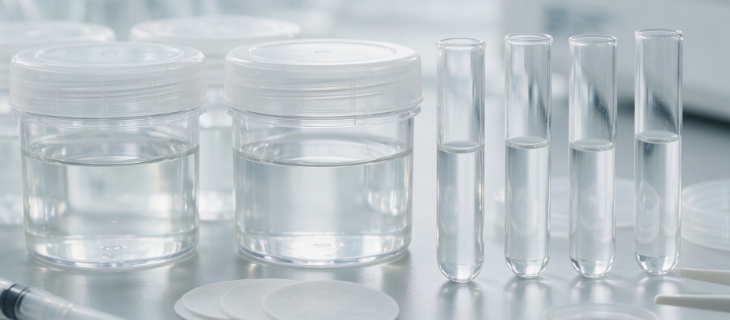
1. The Scientific and Regulatory Imperative for Rigorous Sterility Testing
Sterility testing is performed to determine whether a product or its components contain any viable microorganisms. It is a destructive, end‑product test that must be performed on a representative sample of each batch. Regulatory criteria are explicit: the test must be performed under carefully controlled conditions, using appropriate media, and with adequate incubation times and temperatures. The choice of method is dictated by the product’s physical state (e.g., liquid, powder, solid, or device) and its ability to be filtered or directly inoculated. The membrane filtration method is the preferred approach for aqueous and filterable products, while the direct inoculation method is used for oils, creams, and products that cannot be filtered. In all cases, method suitability testing must be performed to confirm that the test conditions do not inhibit any potential microbial growth. Our service begins with a thorough consultation to define the optimal testing scheme, including sample size, volume, and validation protocol, ensuring full compliance and scientific validity.
2. Our Comprehensive Sterility Testing Platform – Classical and Rapid Methods
We maintain a complete suite of validated Sterility testing methods, all performed in an ISO Class 5 (Grade A) environment with continuous monitoring, and with certified reference microorganisms (e.g., Staphylococcus aureus, Pseudomonas aeruginosa, Bacillus subtilis, Clostridium sporogenes, Candida albicans, Aspergillus brasiliensis) for growth promotion and method suitability. Our portfolio includes:
2.1 Membrane Filtration Method (USP <71>, EP 2.6.1)
We perform the membrane filtration method using validated filter assemblies (e.g., Steritest™ systems) with a pore size of 0.45 µm. The sample is passed through the filter, and the filter membrane is then rinsed with a suitable diluent (e.g., peptone water or Fluid A) to remove any antimicrobial residues. The filter is then aseptically transferred to two culture media: Fluid Thioglycollate Medium (FTM) for the detection of anaerobic and aerobic bacteria (incubated at 30‑35 °C), and Soybean‑Casein Digest Medium (SCDM) for the detection of aerobic bacteria and fungi (incubated at 20‑25 °C). We provide full documentation of filtration volumes, rinsing steps, and incubation conditions, with the final result reported after 14 days (with interim observations at 3, 5, 7, and 10 days).
2.2 Direct Inoculation Method
For non‑filterable products (oils, ointments, creams, or devices that cannot be filtered), we use the direct inoculation method, where the sample (or an extract of the device) is directly inoculated into two containers each of FTM and SCDM. The volume of sample and the number of replicates follow the pharmacopoeial requirements, and we carefully calculate the dilution and neutralisation steps to ensure no inhibition of growth. We validate this method by performing parallel tests with positive controls (low‑level spiking) to confirm recovery.
2.3 Rapid Alternative Methods – Automated Continuous Monitoring (e.g., BacT/ALERT)
For expedited product release or for products where early detection is critical, we offer the BacT/ALERT® 3D or equivalent automated system, which continuously monitors microbial growth through a colorimetric sensor that detects CO₂ production. This system can provide a positive result as early as 24‑48 hours, and is validated to meet the equivalency criteria for rapid Sterility testing. We integrate this with the conventional 14‑day culture for parallel comparison and for regulatory acceptance in many jurisdictions.
2.4 Method Suitability (Validation) Testing
We conduct comprehensive method suitability studies as required by pharmacopoeias. For each new product, we perform inhibition/enhancement testing by spiking the product with low levels (e.g., 10‑100 CFU) of the six representative organisms. We demonstrate that the assay is capable of recovering the micro‑organisms within the specified time (≤ 5 days for bacteria, ≤ 7 days for fungi). Our validation reports include a full description of the product, diluents, neutralisers, spike levels, recovery times, and a clear statement of the suitability of the method for its intended use.
2.5 Product‑Specific Interference Assessment
We evaluate the possible antimicrobial activity of your product (e.g., from preservatives, active pharmaceutical ingredients, or formulation excipients) and, if necessary, recommend and validate the use of neutralising agents (e.g., lecithin, polysorbate 80, or histidine) to counteract the inhibition, ensuring a valid test result.
3. Advanced Capabilities – Method Development, Low‑Bioburden Validation, and Full Regulatory Support
For clients dealing with novel therapeutic modalities, low‑volume products, or challenging matrices, we offer a suite of customised, research‑grade services that go beyond routine compliance:
3.1 Micro‑volume and Low‑Bioburden Testing
We have developed specialised protocols for small‑volume samples (e.g., gene therapy vectors, small‑batch preclinical products) using our membrane filtration and direct inoculation methods, validated to maintain the required sensitivity even with minimal sample availability.
3.2 Combined Rapid and Conventional Approach for Product Release
We offer an integrated approach where the rapid automated system is used for early‑stage screening, while the conventional 14‑day culture serves as the confirmatory reference. This reduces the time to decision for early‑release programmes while maintaining the full regulatory safety net.
3.3 Growth Promotion Testing (GPT) of Culture Media
All media batches used in our laboratory are subjected to growth promotion testing with all six indicator organisms, in accordance with the relevant pharmacopoeial chapters. We maintain detailed records of media quality, expiration, and performance, ensuring complete traceability.
3.4 Environmental Monitoring and Validation of Sterility Testing Area
We validate the Sterility testing environment by performing active and passive air sampling, surface monitoring (contact plates), and gowning qualifications, all documented to demonstrate that the testing conditions meet the ISO 5 (Class 100) requirements.
3.5 Customised Sampling Plans and Device Testing (ISO 11737‑2)
For medical devices, we can design and execute a Sterility testing plan according to ISO 11737‑2, including sample size determination, extraction protocols, and the use of appropriate neutralisers to ensure recovery from device surfaces.
3.6 Regulatory Submission Support – Validation Summary Reports
We provide validation summary reports that are directly usable for INDs, NDAs, and other regulatory submissions. These reports include all experimental details, statistical analyses, and conclusions, and we can provide expert input for responding to regulatory queries.
4. Data Integrity, Standardisation, and Comprehensive Reporting
All analyses are conducted under a strict quality management system that includes daily calibration of all equipment, use of certified media and reagents, and participation in proficiency testing schemes (e.g., UK NEQAS, USP). Our reports provide:
- Full method description – including sample preparation, filtration or inoculation details, media used, incubation parameters, and validation results.
- Detailed results – with clear documentation of any turbidity, visible growth, or lack thereof; for automated systems, the time‑to‑detection curves and any flags.
- Validation data – including recovery percentages, growth promotion test results, and any neutralisation strategies employed.
- Interpretative comments – on the validity of the test, any deviations, and a clear statement of the Sterility status of the batch.
Our reports are authored by senior pharmaceutical microbiologists who provide not just data, but contextual insights to help you understand the robustness of your Sterility assurance programme.
Turnaround times: 14 days for standard culture‑based methods (with interim reports available), 3‑5 days for rapid method screening (with final confirmation at 14 days), and 2‑3 weeks for method suitability validation. Express services are available for high‑priority batches.
5. Our Unmatched Expertise – Why Choose Our Laboratory for Sterility Testing
We are one of the few laboratories that hold ISO/IEC 17025 accreditation and GMP compliance for Sterility testing according to USP <71>, EP 2.6.1, and JP 4.06. Our integrated infrastructure combines traditional culture‑based systems, automated rapid detection platforms, and method development capabilities – enabling cross‑verification and rapid resolution of ambiguous results. Our team comprises PhD‑level microbiologists and pharmaceutical scientists with extensive experience in method validation, regulatory submissions, and Sterility assurance, and we have a proven track record of supporting products ranging from small‑molecule injectables to complex biologics and cell‑based therapies.
We offer unparalleled flexibility: we accept all product types – from liquids, solids, and ointments to medical devices, combination products, and tissue‑based materials. We provide customised sampling kits and guidance on sample handling to preserve Sterility and representativeness. Our secure online portal enables real‑time tracking, access to raw data, and downloadable certificates.
Our modular pricing ensures cost‑effectiveness: you select the level of analysis – from a simple routine release test to full method validation – with discounts for routine monitoring programmes and bulk submissions. We also provide training, method transfer, and technical consultancy to help you build or strengthen your internal Sterility testing capability.
With a proven history of serving over 100 pharmaceutical, biotech, and medical device companies, we have enabled our partners to ensure product safety, achieve regulatory compliance, and accelerate time‑to‑market. We invite you to leverage our expertise for your Sterility testing needs.
Contact our technical experts today to discuss your product characteristics, regulatory requirements, and desired turn‑around times. We will design a tailored testing plan and provide a detailed proposal within one business day.