Reasons for choosing our testing services
ZHONGXI Testing has obtained inspection qualification certifications from multiple countries and regions worldwide. We possess a senior testing team and advanced testing methods, providing independent, impartial, and professional third-party verification services for global carbon projects.

Internationally recognized authority
Certified by multiple international standards such as CNAS, VCS, and GS, with reports universally applicable worldwide.

Global service capability
Covering 140+ countries and regions, it supports on-site detection and remote verification in multiple languages.

Professional experimental methods
Adopt standard experimental methods to ensure accurate and reliable data.
Comprehensive Antimicrobial Preservative Efficacy Testing – From USP/EP/JP Compliance to Advanced Challenge Study Design and Data Interpretation
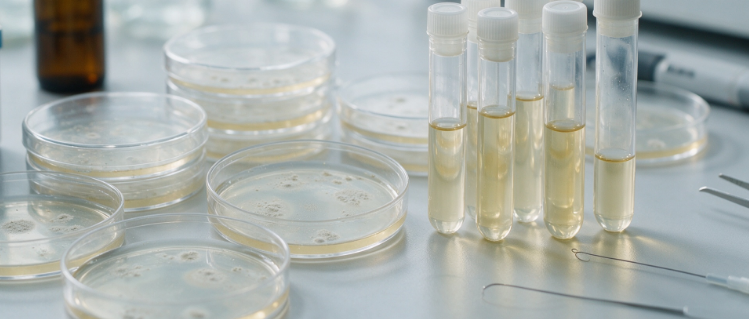
The demonstration of antimicrobial preservative efficacy is a regulatory requirement for all multidose pharmaceutical products, cosmetics, and certain medical devices that contain preservatives to prevent microbial growth during use. Regulatory authorities—including the US Pharmacopoeia (USP <51>), European Pharmacopoeia (EP 5.1.3), Japanese Pharmacopoeia (JP), and ISO 11930 for cosmetics—mandate that preservative efficacy be proven through standardised challenge tests (often termed “preservative effectiveness testing” or PET). However, a successful PET strategy is not a one‑size‑fits‑all procedure; it requires careful consideration of the product formulation, the specific microorganisms of concern, the intended use (e.g., parenteral, ophthalmic, or topical), and the regulatory classification. The conventional approach of inoculating the product with a panel of test organisms (bacteria, yeasts, and moulds) and monitoring the log reduction over time is well‑established, but the results are highly dependent on inoculum preparation, neutralisation validation, recovery methodology, and the statistical interpretation of the kill kinetics. Furthermore, the increasing complexity of biological products, liposomal formulations, and non‑aqueous systems demands customised validation protocols, including product‑specific neutralisation, low‑recovery organism testing, and real‑time versus accelerated study designs. Our ISO/IEC 17025‑accredited and GMP‑compliant laboratory offers a fully integrated preservative efficacy testing platform, encompassing both the standard pharmacopoeial challenge methods and customised study designs for novel products. We deliver quantitative, traceable data, expert interpretation, and full regulatory support, enabling you to meet the strictest efficacy criteria and confidently validate the preservative system of your product.
1. The Scientific and Regulatory Rationale for Preservative Efficacy Testing
Preservative efficacy is assessed by challenging the product with a defined inoculum of micro‑organisms and measuring the reduction in viable count over time. The test is designed to simulate the potential for contamination during routine use and to ensure that the preservative system is capable of preventing proliferation or even eliminating the contaminant organisms. The acceptance criteria vary according to the product category: for example, USP <51> requires a specific log reduction (e.g., ≥ 1.0 log for bacteria at 14 days, ≥ 3.0 log at 28 days) for categories 1 and 2 products, with less stringent requirements for topical preparations (Category 3). EP 5.1.3 specifies a two‑tiered system (A and B criteria) for parenteral and ophthalmic preparations, whereas ISO 11930 for cosmetics introduces a “protection value” based on both the reduction in viability and the recovery of test organisms. The choice of test organisms, the inoculum level, the number of replicates, and the sampling time points must be defined based on the product’s intended use and the regulatory market. Our service begins with a comprehensive consultation to design a testing strategy that aligns with your specific regulatory requirements and product characteristics.
2. Our Comprehensive Preservative Efficacy Testing Platform – Classical and Customised Approaches
We maintain a complete suite of validated test methods for preservative efficacy, all performed in an ISO Class 5 (Grade A) environment with continuous monitoring, and with certified reference strains (e.g., Pseudomonas aeruginosa, Staphylococcus aureus, Candida albicans, Aspergillus brasiliensis, and Escherichia coli for USP; plus additional strains for EP and ISO). Our portfolio includes:
2.1 USP <51> and EP 5.1.3 Challenge Testing
We perform the standard pharmacopoeial challenge test by inoculating the product (in its final container or a representative sample) with a suspension of the test micro‑organism at a defined concentration (typically 10⁵‑10⁶ CFU/mL). The product is then incubated at the specified temperature (e.g., 20‑25 °C) and sampled at predetermined intervals (e.g., 0, 7, 14, and 28 days for USP; 0, 6, 24, 48 hours, and 7, 14, 28 days for EP). We quantify the viable organisms using a validated membrane filtration or pour‑plate method, with appropriate neutralisers to quench the preservative effect. We provide a detailed log reduction profile and a clear statement of compliance or non‑compliance with the relevant criteria. All tests are performed in triplicate, and the results are reported with statistical uncertainty (expanded uncertainty at k=2).
2.2 ISO 11930 (Cosmetics) – Protection Value Determination
For cosmetic products, we follow ISO 11930, which introduces a “protection value” (or “α‑value”) based on the reduction in the microbial count and the recovery of the test organism after neutralisation. We perform the challenge with three microorganisms (bacteria, yeast, and mould) and calculate the reduction factor for each. The product passes if the reduction meets the specified criteria (e.g., ≥ 2 log for bacteria at 7 days, ≥ 3 log at 14 days, and ≥ 1 log for mould). We also assess the “recovery factor” to ensure that the neutralisation procedure does not inhibit the growth of the survivors.
2.3 Customised Challenge Studies – Real‑World Simulation and Low‑Recovery Organisms
For products with atypical formulations or for specific regulatory submissions, we design customised challenge studies. This may include the use of clinical isolates (in addition to the standard strains), variable temperature profiles (e.g., simulating patient handling), or the evaluation of preservative efficacy after multiple opening/closing cycles. We also specialise in testing products with known antimicrobial activity that may interfere with the recovery, using validated neutralisation protocols.
2.4 Neutralisation Validation and Interference Testing
A critical step in preservative efficacy testing is the validation of the neutralisation procedure to ensure that the residual preservative does not inhibit the recovery of viable organisms. We perform a series of spike‑and‑recovery experiments to select the most effective neutraliser (e.g., lecithin, polysorbate 80, or a combination) and to demonstrate that the recovery of the test organism is ≥ 70% compared to the positive control. This validation is documented in full, providing robust data for regulatory acceptance.
2.5 Growth Promotion and Medium Suitability
All media used in the test (e.g., tryptic soy agar, sabouraud dextrose agar, and specific enumeration media) are subjected to growth promotion testing with the six indicator organisms, ensuring that the media are capable of supporting the growth of the test micro‑organisms. We maintain detailed records of media batch quality and expiration.
2.6 Low‑Level Inoculum Studies – For Preservative Systems with Very High Efficacy
For highly effective preservative systems that reduce the microbial count to below the detection limit (e.g., ≤ 10 CFU/mL), we offer studies with lower initial inocula or with extended incubation, allowing a more accurate determination of the killing kinetics and the potential for regrowth.
3. Advanced Capabilities – Mechanistic Insights, Stability‑Integrated Studies, and Rapid Screening
For clients requiring a deeper understanding of the preservative performance or for accelerated product development, we offer a suite of customised, research‑grade services that go beyond routine compliance:
3.1 Time‑Kill Kinetics and Determination of D‑value (Decimal Reduction Time)
We conduct time‑kill kinetic studies with frequent sampling (e.g., 0, 1, 2, 4, 8, 24, 48 hours) to determine the rate of microbial kill under the preservative challenge. This allows the calculation of the D‑value (the time required to achieve a 1‑log reduction), which is a key parameter for comparing the efficacy of different preservative systems or batch‑to‑batch consistency.
3.2 Preservation Efficacy Under Accelerated and Real‑Time Storage Conditions
We can integrate preservative efficacy testing with stability studies, conducting challenge tests on samples stored at different temperatures (e.g., 5 °C, 25 °C, 40 °C) and at different time points (e.g., initial, 3 months, 6 months) to confirm that the preservative system remains effective throughout the product’s shelf‑life.
3.3 Preservative Capacity Studies – Titration of the Maximum Challenge
We offer capacity testing by challenging the product with increasing inocula (e.g., 10³, 10⁵, 10⁷ CFU/mL) to determine the maximum microbial load that the preservative system can effectively control. This is particularly valuable for products that may be subjected to high levels of contamination during manufacturing or use.
3.4 Rapid Preservative Efficacy Screening – ATP Bioluminescence and Flow Cytometry
For early‑stage formulation screening, we provide rapid assessment using ATP bioluminescence or flow cytometry to detect changes in microbial viability within 24‑48 hours. While these methods are not regulatory‑grade, they provide valuable data for formulation optimisation and down‑selection, and we can correlate the results with the standard pharmacopoeial assay.
3.5 Evaluation of Specific Pathogens – Including Drug‑Resistant and Fastidious Organisms
We can test the efficacy of your preservative system against specific clinical isolates (e.g., methicillin‑resistant S. aureus, Pseudomonas spp., or Burkholderia cepacia) to assess the risk of contamination from atypical organisms that may be present in the manufacturing environment or during clinical use.
3.6 Regulatory Submission Assistance – Protocol Design and Response Documents
Our team provides full protocol design and summary report writing for your regulatory submissions (e.g., CTD, CMC, or IND). We can also draft responses to regulatory queries regarding the preservative efficacy data, ensuring that your submission is complete and defensible.
4. Data Integrity, Standardisation, and Comprehensive Reporting
All analyses are conducted under a strict quality management system that includes the use of certified reference cultures, routine positive and negative controls, and participation in proficiency testing (e.g., UK NEQAS for pharmaceutical microbiology). Our reports provide:
- Full method description – including inoculation preparation, neutralisation validation, enumeration procedures, and incubation conditions.
- Detailed results – in the form of log reduction values for each organism at each time point, with the calculated 95% confidence intervals.
- Compliance statement – clearly indicating whether the product meets the USP, EP, JP, or ISO criteria, with the relevant acceptance limits quoted.
- Neutralisation validation data – showing the recovery efficiencies for each organism and each neutraliser tested.
- Interpretative comments – on the robustness of the preservative system, the relative susceptibility of the different organisms, and any potential challenges (e.g., mould resistance).
Our reports are authored by senior pharmaceutical microbiologists who provide not just data, but actionable insights to guide your formulation and quality decisions.
Turnaround times: 3‑4 weeks for the full pharmacopoeial test (including neutralisation validation, sampling, and enumeration), 2‑3 weeks for a rapid screening, and 4‑6 weeks for customised kinetics or stability‑integrated studies. Express services are available for urgent submissions.
5. Our Unmatched Expertise – Why Choose Our Laboratory for Preservative Efficacy Testing
We are one of the few laboratories that hold ISO/IEC 17025 accreditation and GMP compliance for preservative efficacy testing according to USP <51>, EP 5.1.3, JP, and ISO 11930. Our integrated infrastructure combines classical microbiology, advanced rapid screening platforms, and method development capabilities – enabling cross‑verification and rapid resolution of ambiguous results. Our team comprises PhD‑level microbiologists and formulation scientists with extensive experience in method validation, regulatory submissions, and preservative system design, and we have a proven track record of supporting products ranging from injectables and ophthalmics to topical creams and cosmetics.
We offer unparalleled flexibility: we accept all product types – including aqueous and non‑aqueous systems, suspensions, emulsions, liposomal formulations, and medical devices with preservative release. We provide customised sampling kits and detailed guidance on sample handling to maintain product integrity. Our secure online portal enables real‑time tracking, access to raw data, and downloadable certificates.
Our modular pricing ensures cost‑effectiveness: you select the level of analysis – from a standard pharmacopoeial test to a comprehensive kinetic study – with discounts for routine monitoring programmes and bulk submissions. We also provide training, method transfer, and technical consultancy to help you build or strengthen your internal preservative efficacy testing capability.
With a proven history of serving over 80 pharmaceutical, biotech, and cosmetic companies, we have enabled our partners to ensure product safety, achieve regulatory compliance, and accelerate product development. We invite you to leverage our expertise for your preservative efficacy testing needs.
Contact our technical experts today to discuss your product characteristics, regulatory requirements, and desired turn‑around times. We will design a tailored testing plan and provide a detailed proposal within one business day.