Reasons for choosing our testing services
ZHONGXI Testing has obtained inspection qualification certifications from multiple countries and regions worldwide. We possess a senior testing team and advanced testing methods, providing independent, impartial, and professional third-party verification services for global carbon projects.

Internationally recognized authority
Certified by multiple international standards such as CNAS, VCS, and GS, with reports universally applicable worldwide.

Global service capability
Covering 140+ countries and regions, it supports on-site detection and remote verification in multiple languages.

Professional experimental methods
Adopt standard experimental methods to ensure accurate and reliable data.
Advanced Bioburden Testing Services – From Routine Enumeration to Comprehensive Method Validation and Rapid Alternative Approaches
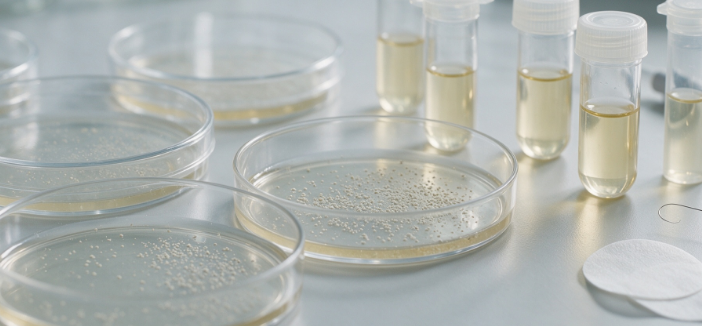
The determination of Bioburden (the total number of viable micro‑organisms on or in a product, raw material, or medical device) is a fundamental component of quality control, process validation, and regulatory compliance in the pharmaceutical, medical device, biotechnology, and food industries. Bioburden testing is not merely a routine enumeration; it is a critical tool for assessing the effectiveness of cleaning and sterilisation processes, monitoring manufacturing environments, and ensuring the overall microbial safety of products. Regulatory frameworks—including USP <61>, EP 2.6.12, ISO 11737‑1 (for medical devices), and AAMI TIR30—require validated Bioburden methods that provide accurate, reproducible, and representative counts. However, the practical performance of a Bioburden strategy is not defined by a single method; it is critically dependent on the sample matrix, the expected microbial load, the efficiency of recovery, the presence of inhibitory substances, and the need for differentiation (e.g., aerobic vs. anaerobic, mesophilic vs. thermophilic, or between bacteria and fungi). Routine plate‑count methods (pour‑plate, spread‑plate, or membrane filtration) may be insufficient for products with low Bioburden, for matrices with significant particulate matter, or for organisms that are fastidious or sub‑lethally injured. Furthermore, the increasing complexity of biological products (e.g., cell therapies, advanced therapeutics) demands customised validation protocols, including neutralisation of antimicrobial residues, selection of appropriate culture media and incubation conditions, and the use of rapid microbiological methods (RMM) for faster product release. Our ISO/IEC 17025‑accredited and GMP‑compliant laboratory offers a fully integrated Bioburden testing platform, encompassing both the classical plate‑count methods and advanced membrane filtration, automated enumeration, and rapid molecular techniques. We deliver quantitative, traceable data, expert interpretation, and full regulatory support, enabling you to meet the strictest Bioburden specifications and to validate your manufacturing processes with confidence.
1. The Scientific and Regulatory Rationale for Rigorous Bioburden Testing
Bioburden data are used for a variety of critical purposes: (a) to establish the microbial quality of incoming raw materials; (b) to monitor the microbial load during manufacturing (in‑process controls); (c) to validate the efficacy of cleaning and sanitisation procedures; (d) to determine the appropriate sterilisation process parameters (e.g., radiation or steam); and (e) to assess the overall microbiological health of a product line. The choice of test method—whether membrane filtration, pour‑plate, spread‑plate, or a rapid method—must be tailored to the physical state of the sample (e.g., liquid, powder, solid, or device), the volume or weight available, the expected Bioburden level, and the need to recover stressed or injured organisms. Regulatory guidelines require that the chosen method be validated for each product matrix, demonstrating that the recovery is ≥ 70% of the spike (for a positive control) and that the method does not cause inhibition. Our service begins with a comprehensive consultation to design a testing strategy that meets your specific product characteristics and regulatory expectations.
2. Our Comprehensive Bioburden Testing Platform – Classical and Advanced Methods
We maintain a complete suite of validated Bioburden testing methods, all performed in an ISO Class 5 (Grade A) environment with continuous monitoring, and with certified reference cultures for positive controls and media growth promotion. Our portfolio includes:
2.1 Membrane Filtration Method (for liquids and rinse fluids)
We perform membrane filtration using validated filter assemblies (e.g., Sterility test kits) with a nominal pore size of 0.45 µm. The sample is filtered, and the filter is aseptically transferred to appropriate culture media (e.g., tryptic soy agar for aerobic bacteria, Sabouraud dextrose agar for fungi, and reinforced clostridial medium for anaerobes). The filters are incubated at specified temperatures (typically 30‑35 °C for bacteria, 20‑25 °C for fungi) for a defined period (e.g., 3‑5 days, with extended incubation for low‑Bioburden or stressed organisms). We provide quantitative counts (CFU per mL, per g, or per device) with a detection limit as low as 1 CFU per sample, and we include statistical uncertainty (expanded uncertainty at k=2). This method is the preferred approach for aqueous products and for medical devices that can be rinsed.
2.2 Pour‑Plate and Spread‑Plate Methods (for powders, solids, and viscous materials)
For non‑filterable materials, we use the pour‑plate or spread‑plate method with appropriate dilutions. The sample is homogenised in a suitable diluent (e.g., peptone water, phosphate‑buffered saline) and plated onto the selective or non‑selective media. We perform serial dilutions to ensure that the count falls within the countable range (30‑300 CFU per plate). The results are reported as CFU per gram or per unit, with the limit of detection defined by the dilution factor. We also offer the spiral‑plating technique for high‑throughput and precise enumeration.
2.3 Membrane Filtration with Rinse and Neutralisation (for products with antimicrobial activity)
For products that contain preservatives, antibiotics, or other antimicrobial agents, we incorporate a rinsing step with an appropriate volume of diluent (e.g., 100‑500 mL) to dilute the inhibitory effect, and we validate the use of neutralising agents (e.g., lecithin, polysorbate 80, histidine, or sodium thiosulphate) to ensure that any residual antimicrobial is inactivated before incubation. We perform parallel spike‑and‑recovery experiments to confirm that the neutralisation is effective and that the recovery is ≥ 70%.
2.4 Low‑Bioburden and High‑Sensitivity Testing – Extended Incubation and Enrichment
For products with very low expected Bioburden (e.g., < 10 CFU per unit), we offer extended incubation (up to 14 days) and enrichment procedures (e.g., using fluid thioglycollate medium for anaerobes) to maximise the recovery of stressed or slow‑growing organisms. We also apply membrane filtration on larger volumes (e.g., 1‑10 L) to concentrate any potential contamination, enhancing the sensitivity of the test.
2.5 Differential and Selective Media – for Differentiation of Bacterial and Fungal Species
We can utilise a range of differential media (e.g., MacConkey agar for Gram‑negative enterics, cetrimide agar for Pseudomonas, or chromogenic media for specific indicator organisms) to characterise the Bioburden population and to identify dominant organisms that may indicate a process deviation.
2.6 Rapid Microbiological Methods (RMM) – ATP Bioluminescence, Flow Cytometry, and PCR
For expedited product release or in‑process monitoring, we offer rapid methods that provide results within 24‑48 hours: ATP bioluminescence (measuring total cellular ATP), flow cytometry (with viability dyes), and real‑time PCR targeting conserved 16S rRNA or specific marker genes. These methods are validated against the classical plate‑count method and are suitable for screening purposes, although the final regulatory acceptance may require confirmatory culture‑based testing.
3. Advanced Capabilities – Method Validation, Recovery Studies, and Process Monitoring
For clients requiring a deeper understanding of the microbial ecology or a robust validation of their Bioburden method, we offer a suite of customised, research‑grade services that go beyond routine enumeration:
3.1 Comprehensive Method Validation (ISO 11737‑1, USP <61>, and EP 2.6.12)
We conduct full Bioburden method validation for your specific product, including: (a) determination of the limit of detection, (b) assessment of linearity, precision, and accuracy (via spike‑and‑recovery), (c) evaluation of the neutralisation efficiency for antimicrobial agents, (d) selection of the most appropriate culture media and incubation conditions (temperature, atmosphere, and duration), and (e) demonstration of robustness to variations in sample handling and testing parameters. The validation report is structured to support regulatory submissions and to provide the basis for routine quality control.
3.2 Recovery Efficiency Studies – for Stressed and Injured Organisms
We perform recovery efficiency studies using environmental isolates or specific indicator organisms (e.g., B. subtilis spores, P. aeruginosa, C. albicans) to quantify the extent to which the test method recovers the organisms that are actually present on the product. This is particularly important for products that may be exposed to sub‑lethal stresses (e.g., heat, radiation, or chemical exposure) during manufacturing, as injured cells may require additional recovery time or specific nutrient supplementation.
3.3 Bioburden Profiling – Identification of Dominant Flora and Trend Analysis
We provide Bioburden profiling by identifying the predominant micro‑organisms recovered (using MALDI‑TOF MS, 16S sequencing, or phenotypic methods). This information is critical for determining whether the observed Bioburden is characteristic of the process or an indicator of a contamination event (e.g., the emergence of a specific organism that may indicate a biofilm or a water‑borne contamination). We also provide statistical trend analysis (e.g., control charts) to monitor Bioburden over time and to alert you to any shifts in the microbial population.
3.4 Bioburden on Medical Devices – Extraction and Recovery Studies (ISO 11737‑1)
For medical devices, we follow ISO 11737‑1 guidelines for Bioburden determination, including the use of recovery efficiency factors (obtained from multiple rinse/extraction cycles) to correct the measured count and to provide an estimate of the actual Bioburden. We perform the extraction using validated methods (sonication, vortexing, or manual agitation) and determine the optimal extraction conditions (time, diluent, and agitation).
3.5 Environmental Monitoring – Integration with Bioburden Data
We can correlate the Bioburden data with your environmental monitoring results (air, surface, and personnel) to identify potential sources of contamination and to validate the effectiveness of your cleaning and sanitisation programmes.
3.6 Rapid Alternative Method Equivalency Studies
If you are considering transitioning from a classical culture‑based method to a rapid alternative (e.g., ATP, flow cytometry, or PCR), we can conduct a method equivalency study to demonstrate that the new method provides at least equivalent sensitivity and accuracy, as required by EP 5.1.6 and USP <1223>. We provide a detailed comparability report for submission to regulatory authorities.
4. Data Integrity, Standardisation, and Comprehensive Reporting
All analyses are conducted under a strict quality management system that includes the use of certified reference cultures, daily media growth promotion testing, and participation in proficiency testing (e.g., UK NEQAS). Our reports provide:
- Full method description – including sample preparation, diluents, filtration or plating parameters, media used, incubation conditions, and any neutralisation steps.
- Detailed results – with the raw counts, calculated CFU per unit (with correction factors if applicable), and the statistical uncertainty (expanded uncertainty at k=2).
- Validation data – including recovery efficiencies, limits of detection, and the results of the neutralisation validation.
- Interpretative comments – on the significance of the Bioburden level, trends over time, and any potential implications for sterilisation or product quality.
Our reports are authored by senior pharmaceutical microbiologists who provide not just data, but actionable insights to guide your quality and process decisions.
Turnaround times: 3‑5 working days for standard enumeration, 2‑3 working days for rapid methods, and 2‑3 weeks for full method validation. Express services are available for urgent batches.
5. Our Unmatched Expertise – Why Choose Our Laboratory for Bioburden Testing
We are one of the few laboratories that hold ISO/IEC 17025 accreditation and GMP compliance for Bioburden testing according to USP <61>, EP 2.6.12, and ISO 11737‑1. Our integrated infrastructure combines classical plate‑count methods, membrane filtration, rapid molecular platforms, and characterisation tools (MALDI‑TOF MS, sequencing) – enabling cross‑verification and rapid resolution of ambiguous results. Our team comprises PhD‑level microbiologists and process validation experts with extensive experience in method validation, regulatory submissions, and contamination control, and we have a proven track record of supporting products ranging from small‑molecule pharmaceuticals to complex biologics and medical devices.
We offer unparalleled flexibility: we accept all sample types – liquids, solids, powders, device swabs, and entire medical devices – and we provide customised sampling kits and guidance on sample handling to preserve viability. Our secure online portal enables real‑time tracking, access to raw data, and downloadable certificates.
Our modular pricing ensures cost‑effectiveness: you select the level of analysis – from a simple enumeration to a full method validation – with discounts for routine monitoring programmes and bulk submissions. We also provide training, method transfer, and technical consultancy to help you build or strengthen your internal Bioburden testing capability.
With a proven history of serving over 100 pharmaceutical, biotech, and medical device companies, we have enabled our partners to ensure product safety, achieve regulatory compliance, and optimise manufacturing processes. We invite you to leverage our expertise for your Bioburden testing needs.
Contact our technical experts today to discuss your product characteristics, regulatory requirements, and desired turn‑around times. We will design a tailored testing plan and provide a detailed proposal within one business day.