Reasons for choosing our testing services
ZHONGXI Testing has obtained inspection qualification certifications from multiple countries and regions worldwide. We possess a senior testing team and advanced testing methods, providing independent, impartial, and professional third-party verification services for global carbon projects.

Internationally recognized authority
Certified by multiple international standards such as CNAS, VCS, and GS, with reports universally applicable worldwide.

Global service capability
Covering 140+ countries and regions, it supports on-site detection and remote verification in multiple languages.

Professional experimental methods
Adopt standard experimental methods to ensure accurate and reliable data.
Comprehensive Viral Plaque Assay Services – From Routine Titration to Advanced Neutralisation and Antiviral Efficacy Testing
The viral plaque assay remains the gold‑standard method for the quantification of infectious viral particles, providing a direct measurement of viral titres in terms of plaque‑forming units (PFU). This technique is essential for a wide range of applications, including vaccine development, antiviral drug screening, viral vector manufacturing, quality control of biological products, and environmental virology. However, the successful execution of a plaque assay is far from a simple procedure; it demands careful optimisation of cell culture conditions, overlay media, fixation and staining protocols, and precise counting methodologies to ensure accurate, reproducible, and regulatory‑compliant results. The assay is inherently dependent on the host cell line, the viral strain, the adsorption time, and the incubation environment, and a poorly optimised assay can lead to underestimation of titres, artefacts, or a lack of sensitivity for low‑titre samples. Furthermore, regulatory guidelines such as the US Pharmacopoeia (USP), European Pharmacopoeia (EP), and ICH Q5A require rigorous validation of plaque assays for product release and stability testing. Our ISO/IEC 17025‑accredited and GMP‑compliant laboratory offers a fully integrated viral plaque assay platform, covering the entire spectrum from cell line qualification and assay optimisation to routine titrations, neutralisation tests, and antiviral susceptibility assessments. We deliver quantitative, traceable data, including detailed plaque morphology documentation and statistical analysis of the PFU counts, with expert interpretation and full regulatory support, enabling you to obtain robust and defensible viral titres for your specific application.
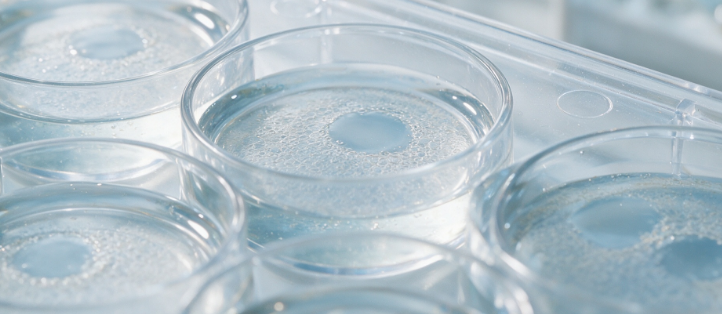
1. The Scientific and Regulatory Rationale for Robust Viral Plaque Assays
The plaque assay quantifies infectious virus particles by measuring the ability of a single virus to infect a cell, replicate, and lyse a localised monolayer of host cells, forming a visible clear zone (plaque) after staining. This direct infectivity assay is the benchmark for determining viral titres, as it specifically measures infectious units rather than total viral particles (which would be measured by PCR or electron microscopy). It is indispensable for: (a) characterisation of viral seed stocks; (b) monitoring virus production during fermentation; (c) determining the concentration of viral vectors (e.g., lentivirus, adenovirus, AAV) used in gene therapy; (d) evaluating the neutralising antibody response; (e) testing the efficacy of antiviral compounds; and (f) assessing viral clearance during purification processes. The choice of host cell line (e.g., Vero, MDCK, HeLa, HEK293, or specific permissive cells), the overlay method (agarose, methylcellulose, or carboxymethylcellulose), the staining technique (crystal violet, neutral red, or immunostaining), and the counting approach (manual or automated) must be tailored to each virus‑cell system. Regulatory expectations, including EP 2.6.15 (Virus Titration) and USP <1052>, require validated methods that demonstrate linearity, accuracy (spike recovery), precision, and specificity. Our service starts with a comprehensive consultation to design a plaque assay protocol that is perfectly suited to your virus, host cell, and regulatory context, ensuring that you obtain reliable and defensible titre data.
2. Our Comprehensive Plaque Assay Testing Platform – From Cell Line Qualification to Titre Determination
We maintain a complete suite of validated plaque assay workflows, all performed in a dedicated Biosafety Level 2 (BSL‑2) and BSL‑3 suite (as required), with continuous monitoring and strict quality controls. Our portfolio includes:
2.1 Cell Line Qualification and Maintenance
The foundation of a successful plaque assay is a healthy, confluent, and uniformly growing monolayer. We maintain a panel of qualified cell lines (including Vero, MDCK, Hep‑2, HeLa, A549, and others) that are routinely tested for Mycoplasma, Sterility, and identity (by STR profiling). We provide cell culture services to ensure that the cells are in the optimal growth phase and that the monolayer density is consistent for each assay run, minimising well‑to‑well variability.
2.2 Virus Propagation and Titration
We perform plaque assays on a wide range of viruses: enveloped and non‑enveloped, DNA and RNA, human and animal pathogens. The assay involves: (i) preparing serial dilutions of the virus sample; (ii) adsorbing the virus onto the cell monolayer for a defined period (typically 1‑2 hours); (iii) overlaying with a semi‑solid medium (e.g., agarose or methylcellulose) to restrict viral spread; (iv) incubating under appropriate conditions (temperature, CO₂, and humidity) for the required time (typically 3‑14 days depending on the virus); (v) fixing and staining the monolayer to visualise plaques; and (vi) enumerating the plaques and calculating the titre in PFU/mL. We use automated colony counters and image analysis software to ensure accurate and reproducible counting, and we include statistical uncertainty (expanded uncertainty at k=2).
2.3 Plaque Reduction Neutralisation Test (PRNT)
We conduct PRNT to quantify the neutralising antibody titre in serum or other biological fluids, which is a critical endpoint for vaccine efficacy studies and for assessing immune responses. The assay involves incubating a fixed amount of virus with serial dilutions of the test sample, then plating the mixture on the cell monolayer. The reduction in plaque count relative to the virus‑only control is used to calculate the 50% neutralisation titre (PRNT₅₀). We perform this test in duplicate with appropriate positive and negative controls, and we provide a detailed neutralisation curve and PRNT₅₀ value with confidence intervals.
2.4 Antiviral Susceptibility Testing (Plaque Reduction Assay)
We evaluate the inhibitory effect of antiviral compounds (e.g., antibodies, small molecules, or interferons) by co‑incubating the virus with serial dilutions of the test compound before plating. We calculate the 50% inhibitory concentration (IC₅₀) and the 90% inhibitory concentration (IC₉₀) based on the reduction in plaque numbers, providing critical data for drug development and resistance monitoring.
2.5 Viral Vector Titration (e.g., Adenovirus, AAV, Lentivirus)
We adapt the plaque assay for viral vectors used in gene therapy and vaccine platforms. For non‑lytic vectors, we use endpoint dilution or immunostaining to visualise infected foci (instead of clear plaques), followed by counting using chromogenic or fluorescent detection. We provide both physical titre (total particles) and infectious titre (PFU or IU), enabling you to calculate the infectivity ratio.
2.6 Custom Assay Development – For Novel Viruses and Unconventional Matrices
We develop and validate custom plaque assays for emerging viruses, for viruses that form indistinct plaques, or for samples with complex matrices (e.g., tissue homogenates, vaccine adjuvants, or biological fluids). We optimise the adsorption time, overlay viscosity, staining method, and incubation duration to maximise plaque visibility and to minimise non‑specific background.
3. Advanced Capabilities – Method Validation, Neutralisation Kinetics, and Image Analysis
For clients requiring a deeper understanding or a high‑level validation of their plaque assay, we offer a suite of customised, research‑grade services that go beyond routine titrations:
3.1 Full Assay Validation According to Pharmacopoeial Guidelines
We conduct comprehensive method validation for your plaque assay, including: (a) linearity (over a range of virus dilutions); (b) accuracy (by spike‑and‑recovery with a reference virus); (c) precision (intra‑assay, inter‑assay, and inter‑operator repeatability); (d) specificity (by testing unrelated viruses and by using neutralising antibodies); (e) limit of detection (LOD) and limit of quantification (LOQ); and (f) robustness to variations in cell passage, overlay thickness, and incubation time. The validation report is structured to support regulatory submissions (e.g., for investigational new drugs (IND) or biologics licence applications (BLA)).
3.2 Neutralisation Kinetics and Plaque Reduction Time‑Course Studies
We conduct time‑course neutralisation studies to assess the kinetics of neutralisation (e.g., the rate of neutralisation and the efficacy at different incubation times). This is particularly relevant for evaluating the protective capacity of monoclonal antibodies or for comparing the functional activity of different vaccine batches.
3.3 Automated Plaque Counting and Image Analysis
We utilise high‑resolution imaging systems coupled with machine‑learning‑based plaque counting algorithms to increase throughput and reproducibility, and to reduce operator‑dependent variability. We provide you with images of the wells and the counted plaques, allowing you to verify the accuracy of the counting.
3.4 Plaque Purification and Isolation
We can perform plaque purification to isolate clonal virus populations from a mixed viral stock. This involves picking individual plaques under a microscope, propagating the virus in a new culture, and re‑assaying to ensure clonality. This service is essential for generating well‑characterised reference viruses or for the production of homogeneous viral stocks.
3.5 Temperature‑Sensitive and Mutant Virus Assays
We adapt the plaque assay for temperature‑sensitive (ts) mutants by performing the assay at both the permissive and non‑permissive temperatures. This allows the determination of the reversion frequency and the genetic stability of the mutant, which is crucial for live‑attenuated vaccine development.
3.6 Virus Stability Studies – Thermostability and pH Stability Testing
We can assess the thermal stability (by incubating the virus at different temperatures and then titrating the remaining infectivity) and the pH stability of your viral sample, which is important for formulation development and for determining storage conditions.
4. Data Integrity, Standardisation, and Comprehensive Reporting
All analyses are conducted under a strict quality management system that includes the use of reference virus stocks, routine positive and negative controls, and participation in proficiency testing (where applicable). Our reports provide:
- Full method description – including the host cell line, virus strain, overlay medium, fixation and staining protocol, incubation conditions, and the counting procedure.
- Detailed results – with the raw plaque counts, the calculated titre (PFU/mL) with expanded uncertainty (k=2), and any appropriate transformation (e.g., log₁₀).
- Validation data – including linearity, precision, accuracy, LOD, LOQ, and robustness, with a clear statement of the assay’s performance.
- Graphical outputs – representative images of the stained wells, showing plaque morphology and distribution, and any relevant charts (e.g., neutralisation curves).
- Interpretative comments – on the significance of the titre, the consistency with historical data, and any recommendations for further testing or process optimisation.
Our reports are authored by senior virologists and cell biologists who provide not just raw data, but actionable insights to guide your quality and development decisions.
Turnaround times: 5‑10 working days for routine plaque titration (depending on the virus growth rate), 2‑3 weeks for full method validation, and 1‑2 weeks for neutralisation or antiviral testing. Express services are available for urgent projects.
5. Our Unmatched Expertise – Why Choose Our Laboratory for Viral Plaque Assays
We are one of the few laboratories that hold ISO/IEC 17025 accreditation and GMP compliance for plaque assays across a wide range of viruses and host cells. Our integrated infrastructure combines a dedicated cell culture facility, a full BSL‑2/3 containment suite, automated imaging systems, and bioinformatics support – enabling cross‑verification and rapid resolution of ambiguous results. Our team comprises PhD‑level virologists, cell biologists, and bioinformaticians with extensive experience in assay development, method validation, and regulatory submissions, and we have a proven track record of supporting products from research through to clinical and commercial phases.
We offer unparalleled flexibility: we accept all sample types – from purified virus, infected cell supernatants, and clinical specimens to vaccine formulations and gene therapy vectors – and we provide customised sampling kits and guidance on sample handling to maintain infectivity. Our secure online portal enables real‑time tracking, access to raw data, and downloadable certificates.
Our modular pricing ensures cost‑effectiveness: you select the level of analysis – from a simple titre determination to a full validation – with discounts for routine monitoring programmes and bulk submissions. We also provide training, method transfer, and technical consultancy to help you build or strengthen your internal plaque assay capabilities.
With a proven history of serving over 70 clients in the vaccine, gene therapy, and antiviral sectors, we have enabled our partners to ensure product quality, achieve regulatory compliance, and accelerate development timelines. We invite you to leverage our expertise for your viral plaque assay needs.
Contact our technical experts today to discuss your virus, host cell system, and specific assay requirements. We will design a tailored testing plan and provide a detailed proposal within one business day.