Reasons for choosing our testing services
ZHONGXI Testing has obtained inspection qualification certifications from multiple countries and regions worldwide. We possess a senior testing team and advanced testing methods, providing independent, impartial, and professional third-party verification services for global carbon projects.

Internationally recognized authority
Certified by multiple international standards such as CNAS, VCS, and GS, with reports universally applicable worldwide.

Global service capability
Covering 140+ countries and regions, it supports on-site detection and remote verification in multiple languages.

Professional experimental methods
Adopt standard experimental methods to ensure accurate and reliable data.
Advanced Time‑Kill Kinetics and Bactericidal Curve Analysis Services – From Standard Kill‑Curve Determination to Mechanistic Profiling and Synergy Assessment
The time‑kill (bactericidal) curve is the most comprehensive and dynamic method for characterising the antimicrobial activity of an agent, providing a continuous kinetic profile of bacterial killing over time. Unlike the static endpoint of the minimum inhibitory concentration (MIC) or the minimum bactericidal concentration (MBC), the time‑kill assay reveals the rate and extent of bacterial reduction, the potential for regrowth, and the presence of subpopulations with reduced susceptibility (such as persisters or tolerant cells). This information is indispensable for the clinical management of severe infections, for the evaluation of novel antimicrobials, and for the design of optimal dosing regimens in combination therapy. Regulatory guidelines, including CLSI M26 (Methods for Determining Bactericidal Activity of Antimicrobial Agents) and ISO 20776‑1, require that time‑kill studies be performed using standardised, validated procedures with rigorous quality control. However, a reliable time‑kill assay is technically demanding; it requires precise sampling at multiple time points, accurate enumeration of surviving colonies, careful handling to prevent carry‑over of the antimicrobial, and robust statistical analysis to distinguish true killing from experimental variation. A poorly executed assay can lead to misinterpretation of the rate of killing, failure to detect regrowth, and erroneous conclusions about synergy or antagonism. Our ISO/IEC 17025‑accredited and GMP‑compliant laboratory offers a fully integrated time‑kill testing platform, encompassing the gold‑standard broth‑based time‑kill method, advanced mathematical modelling, and complementary mechanistic analyses (e.g., flow cytometry, microscopy, and molecular profiling). We deliver quantitative, traceable kill‑curve data, including key parameters such as the rate of killing (log10 reduction per hour), regrowth time, post‑antibiotic effect (PAE), and the area under the kill‑curve (AUBC). Our expert microbiologists provide comprehensive interpretation, enabling you to optimise antimicrobial therapy, validate new agents, and meet the most stringent regulatory and quality standards.
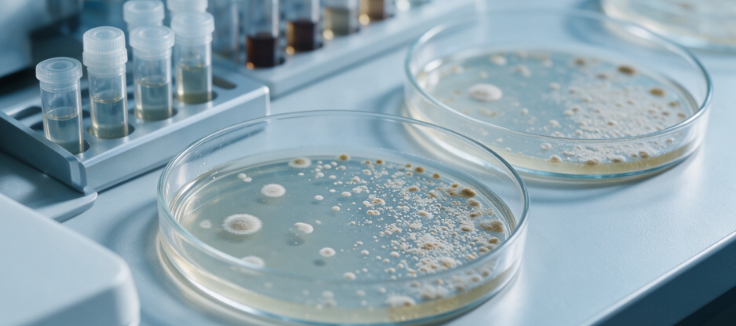
1. The Scientific and Clinical Rationale for Time‑Kill Kinetic Analysis
The time‑kill curve is essential for multiple critical purposes: (a) to characterise the rate and extent of bactericidal activity of an antimicrobial, which is a key pharmacodynamic parameter; (b) to distinguish between concentration‑dependent killing (greater kill with higher concentrations) and time‑dependent killing (kill is related to the duration of exposure); (c) to detect the regrowth of resistant or tolerant subpopulations after the initial killing phase; (d) to evaluate the synergy or antagonism of combination therapies; (e) to assess the post‑antibiotic effect (PAE) – the persistent suppression of bacterial growth after a brief exposure to the antibiotic; and (f) to provide pharmacodynamic data for the design of rational dosing regimens (e.g., by determining the optimal concentration and dosing interval). The time‑kill assay involves exposing a standardised inoculum (typically 5×10⁵‑1×10⁶ CFU/mL) to a range of concentrations of the antimicrobial (e.g., 0.5×, 1×, 2×, 4×, 8× MIC) and enumerating the surviving bacteria at multiple time points (0, 1, 2, 4, 6, 12, and 24 hours). The data are plotted as log10 CFU/mL versus time, and the killing kinetics are analysed. The choice of the method – whether the standard broth‑based time‑kill assay, the agar‑based assay for fastidious organisms, or the automated turbidimetric monitoring – must be tailored to the organism, the antimicrobial, and the required precision. Our service begins with a thorough consultation to define the optimal time‑kill strategy, including the selection of the appropriate concentrations, sampling intervals, and statistical analysis plan, ensuring that the data are scientifically robust and compliant with the relevant guidelines.
2. Our Comprehensive Time‑Kill Testing Platform – Standard and Advanced Methods
We maintain a complete suite of validated time‑kill methods, all performed in a dedicated microbiology facility with stringent quality controls, and using certified reference strains (e.g., E. coli ATCC 25922, S. aureus ATCC 29213, P. aeruginosa ATCC 27853) for daily quality assurance. Our portfolio includes:
2.1 Standard Broth‑Based Time‑Kill Assay (CLSI M26)
We perform the time‑kill assay using cation‑adjusted Mueller‑Hinton broth (CAMHB) in a shaking incubator at 35 °C. The antimicrobial is added at the desired concentrations (including 0× as a growth control) to a defined inoculum (5‑8×10⁵ CFU/mL). At specified time points (0, 1, 2, 4, 6, 12, and 24 hours), we withdraw aliquots, dilute them in saline or medium (to minimise carry‑over), and plate them onto Mueller‑Hinton agar using the pour‑plate or spread‑plate technique. We incubate the plates for 24‑48 hours and count the colonies. The results are expressed as the mean log10 CFU/mL (± SD) of duplicate or triplicate determinations. We include the appropriate control (no antibiotic) to confirm that the organism is in the log‑phase of growth during the experiment.
2.2 Agar‑Based Time‑Kill for Fastidious Organisms and Anaerobes
For organisms that are difficult to grow in broth (e.g., Streptococcus, Haemophilus, or anaerobes), we adapt the time‑kill assay to agar‑based methods. We use a modified macro‑dilution method, where the antimicrobial is added to agar plates and the organism is spread, incubated, and the colonies are counted at each time point. For anaerobes, we use pre‑reduced agar and incubate in an anaerobic chamber, with samples taken at extended time points (e.g., 0, 6, 12, 24, 48 hours).
2.3 Automated Turbidimetric Time‑Kill – Continuous Real‑Time Monitoring
We use automated plate readers with real‑time absorbance or fluorescence monitoring to measure bacterial growth continuously. This method provides high‑resolution kinetic data, enabling the detection of transient regrowth events and the accurate determination of the time to 1‑log reduction (the “kill time”). We calibrate the optical density against viable counts and validate the method against the standard plate‑counting technique.
2.4 Combination Time‑Kill Assays – Synergy and Antagonism Assessment
We evaluate the interaction of two or more antimicrobials by performing time‑kill assays with the agents alone and in combination, at concentrations around the MIC (e.g., 0.5×, 1×, 2× MIC). We determine the fractional bactericidal concentration (FBC) index at different time points and construct isobolograms. We classify the interaction as synergistic if the combination shows a ≥ 2‑log10 reduction in CFU/mL compared to the most active agent alone, and antagonistic if the combination shows a ≥ 2‑log10 increase in CFU/mL compared to the most active agent alone.
2.5 Post‑Antibiotic Effect (PAE) and Post‑Antibiotic Sub‑MIC Effect (PA‑SME)
We determine the post‑antibiotic effect (PAE) by exposing the organism to a supra‑MIC concentration of the antimicrobial for a short period (e.g., 1‑2 hours), then removing the antibiotic (by dilution or by washing), and monitoring the regrowth. The PAE is calculated as the difference in time required for the treated and untreated cultures to reach a 1‑log10 increase in CFU/mL. We also determine the post‑antibiotic sub‑MIC effect, which is the persistent suppression of regrowth in the presence of sub‑MIC concentrations.
2.6 Bactericidal Curve Modelling – Mathematical Characterisation of Killing
We apply mathematical models to the kill‑curve data to extract key parameters. We use the Hill‑type model to describe the relationship between concentration and the rate of killing, and we calculate the rate of killing (k), the maximal killing (Emax), and the concentration for half‑maximal killing (EC₅₀). We also use the bi‑phasic model to detect the presence of a resistant subpopulation, and we determine the regrowth time and the area under the kill‑curve (AUBC).
2.7 Flow Cytometry and Viability Staining – Rapid and Multiparametric Killing Assessment
We complement the plate‑counting method with flow cytometry using fluorescent viability dyes (e.g., SYTO9/PI, or CFDA‑PI). This allows the rapid quantification of viable, injured, and dead cells at each time point, providing additional information on the mode of killing (e.g., membrane damage, metabolic inactivation). The flow cytometry data are correlated with the plate counts to confirm the accuracy of the viability assessment.
3. Advanced Capabilities – Mechanistic Deep‑Dive, Custom Panels, and Regulatory Support
For clients requiring a deeper understanding of the bactericidal mechanism or a high‑level validation of their antimicrobial, we offer a suite of customised, research‑grade services that go beyond routine time‑kill analysis:
3.1 Mechanistic Killing Profiling – Morphological and Molecular Analysis
We combine time‑kill data with transmission electron microscopy (TEM) and scanning electron microscopy (SEM) to visualise the morphological changes induced by the antimicrobial (e.g., cell lysis, filamentation, or membrane disruption). We also perform whole‑genome sequencing (WGS) of the surviving cells to identify mutations that may lead to tolerance or resistance.
3.2 Biofilm Time‑Kill and Eradication Kinetics
For biofilm‑associated infections, we perform biofilm time‑kill assays using the Calgary biofilm device or a flow‑cell system. We assess the killing of biofilm‑embedded cells, which may show a significantly slower killing rate compared to planktonic cells. We determine the minimum biofilm eradication concentration (MBEC) and the biofilm kill‑time.
3.3 Persister Detection and Characterisation
We use the time‑kill assay with a high initial inoculum (10⁷‑10⁸ CFU/mL) to detect the presence of persister cells – a small subpopulation that survives high concentrations of the antimicrobial. We measure the frequency of persistence (the proportion of surviving cells after a 24‑hour exposure) and, if required, we isolate and characterise the persister cells.
3.4 Pharmacodynamic (PD) Modelling and In‑Vitro PK/PD Simulation
We use the time‑kill kinetic data to construct pharmacodynamic models that describe the relationship between drug concentration and the killing rate. We can simulate the effect of different dosing regimens (e.g., continuous vs. intermittent infusion) and provide data for the design of in‑vivo efficacy studies.
3.5 Method Validation and Regulatory Submission Support
We provide full method validation for your time‑kill assay, including: (a) accuracy (by comparison with the reference BMD and MBC methods); (b) precision (intra‑assay and inter‑assay reproducibility); (c) reproducibility (across multiple media and instrument settings); (d) robustness to variations in inoculum, incubation time, and sampling intervals; and (e) the limit of detection for surviving cells. The validation report is structured to meet the requirements of the FDA, EMA, and other agencies.
4. Data Integrity, Standardisation, and Comprehensive Reporting
All assays are conducted under a strict quality management system that includes the use of certified reference strains, routine daily controls, and participation in proficiency testing schemes (e.g., UK NEQAS). Our reports provide:
- Full method description – detailing the organism, the antimicrobial, the test concentrations, the inoculum, the media, the sampling times, and the enumeration procedure.
- Detailed results – including the raw CFU counts, the mean log10 CFU/mL at each time point, and the standard deviation.
- Kill‑curve plots – showing the log10 CFU/mL versus time for each concentration, with the growth control curve included.
- Key parameters – including the rate of killing (log10 reduction per hour), the time to 1‑log, 2‑log, and 3‑log reduction, the regrowth time, the PAE (if measured), and the area under the kill‑curve (AUBC).
- Synergy/antagonism analysis – including the FBC index and the isobologram.
- Quality control data – the results of the concurrent QC strains.
- Interpretative comments – on the clinical significance of the killing kinetics, the potential for regrowth, and any recommendations for further testing (e.g., combination regimens, biofilm studies).
Our reports are authored by senior clinical microbiologists and pharmacologists who provide not just raw data, but contextual insights to guide your clinical, research, or regulatory decisions.
Turnaround times: 5‑7 working days for standard time‑kill assays, 7‑10 working days for combination synergy and PAE studies, and 2‑3 weeks for mechanistic profiling and PD modelling. Express services are available for urgent projects.
5. Our Unmatched Expertise – Why Choose Our Laboratory for Time‑Kill Curve Testing
We are one of the few laboratories that hold ISO/IEC 17025 accreditation and GMP compliance for the full spectrum of time‑kill and bactericidal kinetic methods, including broth‑based, agar‑based, automated turbidimetric, and flow cytometric approaches. Our integrated infrastructure combines a reference microbiology laboratory, a state‑of‑the‑art flow cytometry facility, and a bioinformatics core – enabling cross‑verification of results and a comprehensive understanding of the bactericidal phenotype and the underlying mechanisms. Our team comprises PhD‑level clinical microbiologists, pharmacologists, and bioinformaticians with extensive experience in time‑kill method development, validation, and regulatory submissions, and we have a proven track record of supporting antimicrobial development, clinical decision‑making, and public health surveillance.
We offer unparalleled flexibility: we accept a wide range of clinical and environmental isolates – from common pathogens (E. coli, S. aureus, Klebsiella, Pseudomonas) to fastidious organisms (Streptococcus, Haemophilus, anaerobes, and mycobacteria) – and we provide customised antimicrobial panels for novel agents and combination regimens. Our secure online portal enables real‑time tracking, access to raw data, and downloadable certificates of analysis.
Our modular pricing ensures cost‑effectiveness: you select the level of analysis – from a simple time‑kill curve to a full kinetic plus synergy and mechanistic study – with discounts for routine monitoring programmes and bulk submissions. We also provide training, method transfer, and technical consultancy to help you build or strengthen your internal time‑kill testing capabilities.
With a proven history of serving over 70 clients in the pharmaceutical, clinical, and biotechnology sectors, we have enabled our partners to characterise the killing activity of antimicrobials, optimise combination therapies, and accelerate drug development. We invite you to leverage our expertise for your bactericidal curve testing needs.
Contact our technical experts today to discuss your test organisms, antimicrobial panels, and specific requirements. We will design a tailored testing plan and provide a detailed proposal within one business day.