Reasons for choosing our testing services
ZHONGXI Testing has obtained inspection qualification certifications from multiple countries and regions worldwide. We possess a senior testing team and advanced testing methods, providing independent, impartial, and professional third-party verification services for global carbon projects.

Internationally recognized authority
Certified by multiple international standards such as CNAS, VCS, and GS, with reports universally applicable worldwide.

Global service capability
Covering 140+ countries and regions, it supports on-site detection and remote verification in multiple languages.

Professional experimental methods
Adopt standard experimental methods to ensure accurate and reliable data.
Comprehensive Pathogenic Bacteria Identification Services – From Phenotypic Profiling to Genomic Characterisation and Regulatory Support
The precise and reliable identification of pathogenic bacteria is a fundamental requirement for clinical diagnostics, food safety, environmental monitoring, pharmaceutical quality control, and outbreak investigation. Accurate species‑level, subspecies‑level, and strain‑level identification is essential for guiding antimicrobial therapy, implementing infection control measures, verifying product Sterility, and tracing the source of contamination. However, a robust identification strategy is not fulfilled by a single analytical technique; it demands a systematic, multi‑layered approach that integrates conventional culture and biochemical phenotyping, immunological serotyping, proteomic profiling (MALDI‑TOF MS), molecular methods (PCR, sequencing), and, when necessary, whole‑genome characterisation (WGS). A poorly designed identification scheme can lead to misidentification, delayed treatment, unnecessary interventions, and regulatory non‑compliance. Our ISO/IEC 17025‑accredited and GMP‑compliant laboratory offers a fully integrated pathogenic bacteria identification platform, encompassing the complete spectrum from initial isolation and preliminary screening to definitive species and strain identification, virulence and resistance profiling, and high‑resolution genomic typing. We deliver quantitative, traceable data, including species confirmation, serotype/sequence type, antimicrobial resistance gene detection, and phylogenetic relationships, with expert interpretation and actionable recommendations. Our advanced facilities and experienced microbiologists enable us to handle the most challenging isolates, from fastidious and slow‑growing organisms to complex polymicrobial samples, ensuring that you obtain the definitive identification required for clinical decisions, regulatory submissions, and quality assurance programmes.
1. The Scientific and Regulatory Imperative for Accurate Pathogenic Bacteria Identification
The identification of pathogenic bacteria serves multiple critical purposes: (a) to guide appropriate antimicrobial therapy by identifying the causative agent and its susceptibility profile; (b) to support outbreak investigation and source tracking by comparing isolates at the strain level; (c) to verify the absence of specified pathogens in pharmaceutical products, medical devices, and food matrices; (d) to assess the effectiveness of disinfection and sterilisation processes; (e) to monitor the emergence of antimicrobial resistance (AMR) and the dissemination of resistance genes; and (f) to meet the regulatory requirements of the FDA, EMA, USP, EP, ISO, and national health authorities. The choice of identification method – whether conventional biochemical profiling (API, VITEK), matrix‑assisted laser desorption/ionisation time‑of‑flight mass spectrometry (MALDI‑TOF MS), DNA sequence‑based methods (16S rRNA, housekeeping gene sequencing), or whole‑genome sequencing (WGS) – must be tailored to the organism, the required resolution, the sample matrix, and the clinical or regulatory context. A method that is sufficient for a routine environmental isolate may be inadequate for distinguishing between virulent and avirulent strains of a pathogen, or for identifying emerging variants. Our service begins with a comprehensive consultation to define the optimal identification pathway for your specific sample and objective, ensuring both scientific rigor and operational efficiency.
2. Our Comprehensive Pathogenic Bacteria Identification Platform – A Multi‑Tiered Approach
We maintain a complete suite of validated identification methods, all performed in a dedicated microbiology and molecular biology facility with stringent quality controls, and using certified reference cultures (e.g., ATCC, NCTC) for daily quality assurance and method validation. Our portfolio includes:
2.1 Conventional Culture and Biochemical Phenotyping – The Foundation of Identification
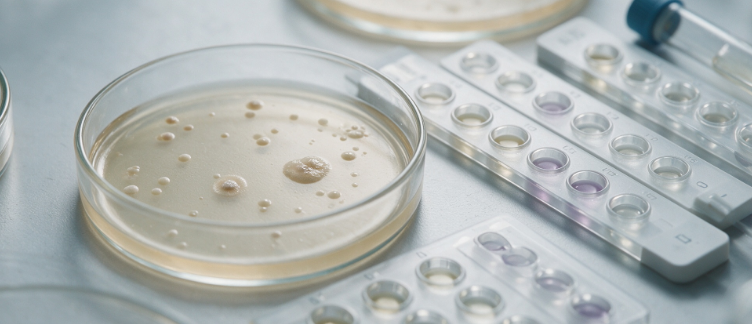
We begin with standardised culture techniques on selective and non‑selective media, followed by comprehensive biochemical profiling using commercial identification systems (e.g., API® strips, VITEK® 2 GN/BC/AST cards, and MicroScan panels). We perform confirmatory tests including catalase, oxidase, coagulase, urease, and sugar fermentation patterns, as well as serological grouping (e.g., slide agglutination for Salmonella, Listeria, and Streptococcus). We provide a presumptive and confirmed identification to the genus and species level, with a detailed biochemical profile and confidence score. This approach remains the gold standard for regulatory submissions and is essential for obtaining viable isolates for further characterisation.
2.2 Matrix‑Assisted Laser Desorption/Ionisation Time‑of‑Flight Mass Spectrometry (MALDI‑TOF MS) – Rapid and Accurate Proteomic Identification
We utilise MALDI‑TOF MS (e.g., Bruker Biotyper or bioMérieux VITEK MS) for the rapid and high‑throughput identification of bacteria and yeasts directly from isolated colonies. The system compares the organism's protein fingerprint against a comprehensive reference library (including the FDA‑, NIH‑, and clinical‑validated databases). We provide a species‑level identification with a numerical score indicating the confidence level (e.g., score ≥ 2.0 for high‑confidence species identification). This method significantly reduces turnaround time (to < 30 minutes per sample) and is ideal for routine screening and for organisms that are slow‑growing or biochemically inert.
2.3 Molecular Identification – 16S rRNA and Housekeeping Gene Sequencing
For organisms that are not adequately resolved by phenotypic or proteomic methods, or when definitive species‑level or subspecies‑level identification is required, we perform DNA sequencing of the 16S rRNA gene (for bacteria) and, if necessary, housekeeping genes (e.g., gyrB, rpoB, sodA) or the ITS region for fungi. We use Sanger sequencing (or, for complex mixtures, NGS) and compare the sequences against curated databases (e.g., NCBI BLAST, RDP, EzBioCloud). We provide the definitive species assignment, with the percentage similarity and the phylogenetic tree, giving you the highest confidence in the identity of the isolate.
2.4 Whole‑Genome Sequencing (WGS) – High‑Resolution Characterisation and Strain Typing
For the most demanding applications – outbreak investigation, source tracking, vaccine development, and comprehensive AMR surveillance – we offer WGS of the bacterial isolate using Illumina or Nanopore platforms. Our bioinformatics pipeline includes: (a) species and subspecies identification using average nucleotide identity (ANI) and in silico DNA‑DNA hybridisation; (b) multi‑locus sequence typing (MLST) and core‑genome MLST (cgMLST) for high‑resolution strain typing; (c) serotype prediction (e.g., for E. coli, Salmonella, Streptococcus); (d) virulence gene profiling (identifying the presence of key pathogenicity factors); (e) resistome analysis (detection of acquired and intrinsic antimicrobial resistance genes); and (f) phylogenetic reconstruction to determine the relationship of your isolate to reference strains and outbreak clusters. We provide a comprehensive genomic report that is directly usable for regulatory submissions and for publication.
2.5 Multiplex PCR and Real‑Time PCR Panels – Targeted Detection and Differentiation
For rapid screening of known pathogens or for the simultaneous detection of multiple targets, we offer multiplex PCR and real‑time PCR (qPCR) panels that target species‑specific and genus‑specific genes. These panels are particularly useful for the identification of Salmonella (invA), Listeria (hly), STEC (stx, eae), Campylobacter (mapA), Vibrio (toxR), and Bacillus cereus (ces, nhe). We provide a qualitative (presence/absence) or quantitative (copy number) result, with an internal control to confirm the absence of PCR inhibition. This method is ideal for high‑throughput screening and for the rapid identification of isolates in an outbreak context.
2.6 Serotyping and Subtyping – Phenotypic and Genotypic Approaches
We perform serotyping using specific antisera for key pathogens (e.g., Salmonella O‑ and H‑antigens, Listeria serogroups, E. coli O‑ and H‑antigens). For serotypes that are difficult to resolve by classical serology, we use molecular serotyping via PCR or WGS (e.g., the SeqSero pipeline for Salmonella, the SerotypeFinder for E. coli). We provide the definitive serotype (e.g., Salmonella Typhimurium, Listeria 4b, E. coli O157:H7), which is essential for epidemiological surveillance and for assessing the public health significance of the isolate.
2.7 Antimicrobial Susceptibility Testing (AST) – Phenotypic and Genotypic Resistance Profiling
To complement the identification, we determine the minimum inhibitory concentrations (MICs) of a panel of clinically relevant antibiotics using broth microdilution, disc diffusion, or automated AST systems, following CLSI and EUCAST guidelines. We also perform genotypic resistance screening via PCR or WGS to detect the presence of specific resistance genes (e.g., blaCTX‑M, mecA, vanA). We provide a comprehensive resistance profile that integrates both phenotypic and genotypic data, with an interpretative summary to guide therapy and infection control.
3. Advanced Capabilities – Strain‑Level Differentiation, Phylogenomics, and Regulatory Support
For clients requiring the highest level of characterisation or for complex investigations, we offer a suite of customised, research‑grade services that go beyond routine identification:
3.1 Core‑Genome and Whole‑Genome Phylogeny – Linking Isolates to Outbreaks
We construct core‑genome phylogenies using WGS data, including the calculation of single‑nucleotide polymorphism (SNP) distances and the generation of maximum‑likelihood trees. This allows you to determine whether a set of isolates is clonal or genetically diverse, to link clinical and environmental isolates, and to confirm or exclude a common source for an outbreak. We provide the tree with bootstrap support and a matrix of pair‑wise SNP distances.
3.2 Resistance and Virulence Plasmid Analysis – Tracking Mobile Genetic Elements
We perform plasmid reconstruction from WGS data to identify the replicon types, resistance cassettes, and virulence determinants carried on mobile genetic elements. This is essential for understanding the potential for horizontal gene transfer and for assessing the stability of resistance phenotypes.
3.3 Genome‑Based Taxogenomics – Resolving Atypical and Novel Isolates
For isolates that are not clearly resolved by 16S rRNA or standard housekeeping genes, we use average nucleotide identity (ANI) and digital DNA‑DNA hybridisation (dDDH) to determine the species boundaries, and, if necessary, to propose novel species or subspecies. This service is particularly valuable for environmental isolates, for organisms from atypical sources, and for research into microbial diversity.
3.4 Metagenomic Identification – Direct Detection and Identification from Complex Samples
When culture is not possible or when the sample contains a polymicrobial community, we perform shotgun metagenomic sequencing to identify all pathogenic species present, including their relative abundances, virulence genes, and resistance genes, without the need for prior cultivation. We provide a comprehensive microbial profile, including the identification of fastidious, anaerobic, and unculturable organisms.
3.5 Method Validation and Regulatory Submission Support
We provide full method validation for your identification protocol, including the demonstration of: (a) specificity (against a panel of related organisms); (b) sensitivity (limit of detection for molecular methods); (c) precision (intra‑ and inter‑assay reproducibility); (d) accuracy (by comparison with reference methods); and (e) robustness to variations in culture conditions and sample matrices. The validation report is structured to meet the requirements of the FDA, EMA, or other regulatory agencies.
3.6 Strain Archive and Biobanking Services
We offer long‑term storage and archival of isolated strains in a secure, temperature‑controlled biobank, with full documentation of the identification and characterisation data. This supports retrospective studies, ongoing quality assurance, and regulatory audits.
4. Data Integrity, Standardisation, and Comprehensive Reporting
All analyses are conducted under a strict quality management system that includes the use of certified reference cultures, routine positive and negative controls, and participation in proficiency testing schemes (e.g., UK NEQAS, FAPAS, CAP). Our reports provide:
Full method description – detailing the culture conditions, the identification platform (biochemical, proteomic, molecular), the database versions, and the data analysis parameters.
Detailed results – including the species and subspecies identification (with confidence scores), the serotype, the sequence type (MLST/cgMLST), the virulence gene profile, the resistance gene profile, and, for WGS, the phylogenetic tree and SNP distances.
Quality control data – the results of the concurrent controls, confirming the validity of the test run.
Graphical outputs – including mass spectra, electropherograms, phylogenetic trees, and heatmaps of resistance genes.
Interpretative comments – by our senior clinical and environmental microbiologists, including an assessment of the clinical significance, the potential source of the isolate, and the recommended antimicrobial therapy or control measures.
Our reports are structured to be directly usable for regulatory submissions, for clinical decision‑making, and for internal quality assurance.
Turnaround times: 1‑2 working days for MALDI‑TOF identification, 2‑3 working days for biochemical and phenotypic identification, 3‑5 working days for 16S rRNA or housekeeping gene sequencing, and 2‑3 weeks for WGS and full genomic characterisation. Express services are available for urgent clinical or outbreak‑related cases.
5. Why Choose Our Laboratory for Pathogenic Bacteria Identification
We are one of the few laboratories that hold ISO/IEC 17025 accreditation and GMP compliance for the full spectrum of pathogenic bacteria identification methods, including conventional phenotyping, MALDI‑TOF MS, molecular sequencing, and WGS. Our integrated infrastructure combines a state‑of‑the‑art microbiology laboratory, advanced proteomic instruments, a sequencing facility, and a bioinformatics core – enabling cross‑verification of results and a comprehensive characterisation of each isolate. Our team comprises PhD‑level clinical and environmental microbiologists, bioinformaticians, and molecular biologists with extensive experience in method development, validation, and regulatory submissions, and we have a proven track record of supporting hospitals, public health agencies, food producers, and pharmaceutical companies.
We offer unparalleled flexibility: we accept a wide range of sample types – including clinical specimens, food, water, environmental swabs, and pure cultures – and we provide customised identification pathways that match your specific needs, budget, and turnaround requirements. Our secure online portal enables real‑time tracking, access to raw data, and downloadable certificates of analysis.
Our modular pricing ensures cost‑effectiveness: you select the level of identification – from a simple MALDI‑TOF screen to a full WGS‑based characterisation – with discounts for routine monitoring programmes and bulk submissions. We also provide training, method transfer, and technical consultancy to help you build or strengthen your internal identification capabilities.
With a proven history of serving over 120 clients in the clinical, food, pharmaceutical, and environmental sectors, we have enabled our partners to achieve accurate diagnoses, ensure product safety, and respond effectively to contamination events. We invite you to leverage our expertise for your pathogenic bacteria identification needs.
Contact our technical experts today to discuss your isolates, your identification requirements, and your specific objectives. We will design a tailored testing plan and provide a detailed proposal within one business day.