Reasons for choosing our testing services
ZHONGXI Testing has obtained inspection qualification certifications from multiple countries and regions worldwide. We possess a senior testing team and advanced testing methods, providing independent, impartial, and professional third-party verification services for global carbon projects.

Internationally recognized authority
Certified by multiple international standards such as CNAS, VCS, and GS, with reports universally applicable worldwide.

Global service capability
Covering 140+ countries and regions, it supports on-site detection and remote verification in multiple languages.

Professional experimental methods
Adopt standard experimental methods to ensure accurate and reliable data.
Comprehensive Disinfectant Efficacy Testing Services – From Suspension Tests to Surface Carrier Assays and Regulatory Compliance
The reliable and rigorous evaluation of disinfectant efficacy is a cornerstone of infection prevention, public health, and product safety across healthcare, pharmaceutical, food processing, and domestic environments. Whether assessing a novel antiseptic, validating a surface disinfectant for hospital use, or confirming the activity of a food‑contact sanitiser, the testing must be performed using standardised, reproducible, and relevant methods that reflect real‑world conditions. Regulatory bodies such as the US EPA, FDA, EN (CEN), AOAC, and WHO require that disinfectant claims be supported by validated efficacy data, often with specified log reduction criteria (e.g., ≥ 5 log for bactericidal, ≥ 4 log for fungicidal). A poorly designed or executed test can lead to over‑estimation of efficacy, false‑confidence in infection control, and regulatory non‑compliance, with serious consequences for product liability and public health. Our ISO/IEC 17025‑accredited and GMP‑compliant laboratory offers a fully integrated disinfectant efficacy testing platform, encompassing a comprehensive suite of suspension, surface, carrier, and practical‑use tests, tailored to your product type, target microorganisms, and regulatory market. We deliver quantitative, traceable results, including log10 reductions, minimum effective concentrations, and neutralisation validation, with full compliance to the latest international standards. Our expert microbiologists provide clear interpretation and actionable recommendations, enabling you to substantiate your disinfectant claims, meet regulatory requirements, and ensure the highest level of protection for users and the environment.
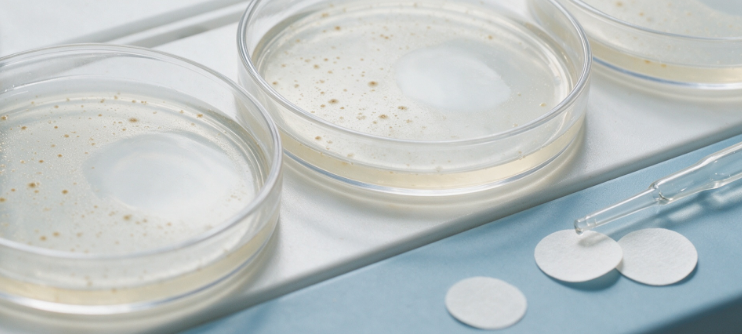
1. The Scientific and Regulatory Rationale for Disinfectant Efficacy Testing
Disinfectant efficacy testing serves multiple essential purposes: (a) to verify the antimicrobial activity of a product against a defined panel of microorganisms; (b) to determine the minimum effective concentration (MEC) and contact time required for a specified log reduction; (c) to assess the influence of interfering substances (e.g., organic soil, hard water, proteins) on activity; (d) to validate the activity on different surfaces (porous, non‑porous, and in‑use conditions); (e) to support product registration and label claims under EPA, EU BPR, or other jurisdictions; and (f) to confirm batch‑to‑batch consistency and long‑term stability. The choice of test method – whether suspension test (EN 1276, EN 1650, ASTM E2315), surface carrier test (EN 13697, AOAC 961.02), hard‑surface carrier test (AOAC 991.47), or in‑use test (EN 13727) – must be guided by the product’s intended use, the target microorganisms (bacteria, yeasts, moulds, mycobacteria, spores, viruses), the required contact time, and the regulatory pathway. A test that is adequate for a general‑purpose sanitiser may not be sufficient for a high‑level disinfectant intended for medical devices. Our service begins with a comprehensive consultation to define the optimal testing strategy for your product, ensuring both scientific rigor and regulatory compliance.
2. Our Extensive Disinfectant Efficacy Testing Capabilities – Adherence to International Standards
We maintain a complete suite of validated test methods that are fully compliant with the major international standards. Our portfolio includes:
European EN Standards – We perform the full range of EN test methods for chemical disinfectants and antiseptics, including EN 1276 (bactericidal activity of chemical disinfectants and antiseptics for food, industrial, domestic, and institutional areas), EN 1650 (fungicidal activity), EN 13697 (surface test for bactericidal and fungicidal activity), EN 13727 (bactericidal activity for medical areas), EN 14476 (virucidal activity for medical areas), and the corresponding phase 2 step 2 and phase 2 step 3 tests. We work with the specified test organisms (e.g., Pseudomonas aeruginosa, Staphylococcus aureus, Enterococcus hirae, Escherichia coli, Candida albicans, Aspergillus brasiliensis) and the required interfering substances (e.g., BSA, blood, milk). We provide a clear statement of compliance with the relevant standard and the achieved log reduction.
US EPA and AOAC Methods – We are proficient in AOAC Official Methods for disinfectants, including AOAC 961.02 (Germicidal and Detergent Sanitizing Action of Disinfectants), AOAC 991.47 (Testing Sanitizers Against E. coli), AOAC 955.14 (Tuberculocidal Activity), and the AOAC Use‑Dilution Method. We also perform the Hard Surface Carrier Test and the Germicidal Spray Products Test as required for EPA product registration. We follow the strict EPA protocols for neutralisation validation, carrier preparation, and test conditions.
ASTM and USP Methods – We offer ASTM E1153 (Efficacy of Sanitizers on Hard Surfaces), ASTM E2197 (Standard Quantitative Disk Carrier Test), ASTM E2315 (Time‑Kill Method), and USP <1072> for disinfectants used in pharmaceutical manufacturing environments. We also evaluate the compatibility of disinfectants with different materials and surfaces.
Customised and In‑House Methods – For clients with unique product formulations, novel microorganisms, or specific in‑use conditions, we develop and validate customised test protocols. This may include the use of environmental isolates, alternative interfering substances, non‑standard contact times or temperatures, and specific carrier materials (e.g., stainless steel, plastic, ceramic, or fabric). We ensure that the custom method is fit‑for‑purpose and, if required, we provide a full validation report.
3. Advanced Analytical and Microbiological Platforms – Beyond Routine Testing
We utilise state‑of‑the‑art microbiological and analytical techniques to provide a deeper understanding of disinfectant efficacy. Our capabilities include:
Time‑Kill and Neutralisation Kinetics – We perform time‑kill kinetic studies to determine the rate of microbial inactivation at multiple contact times, providing a detailed kill‑curve. This is essential for optimising the contact time and for understanding the mode of action. We also rigorously validate the neutralisation step to ensure that the residual disinfectant does not interfere with the recovery of surviving organisms, a critical requirement for all standardised test methods.
Biofilm Disinfectant Testing – For applications where biofilms are a concern (e.g., medical devices, food processing surfaces, water systems), we offer biofilm disinfectant efficacy tests. We grow biofilms using a Calgary Biofilm Device or flow‑cell systems, and we evaluate the reduction in viable biofilm cells (MBEC and MBIC) and the removal of biofilm mass. This provides data that is more relevant to in‑use conditions than planktonic assays.
Sporicidal Testing – We evaluate the sporicidal activity of disinfectants against Bacillus subtilis and Clostridium difficile spores, using both suspension and carrier tests. This is critical for high‑level disinfectants and sterilants, and we follow the standard methods (e.g., AOAC Sporicidal Test, EN 13704).
Mycobactericidal and Virucidal Testing – We perform testing against Mycobacterium terrae or M. avium (for mycobactericidal claims) and against a range of enveloped and non‑enveloped viruses (e.g., poliovirus, norovirus, adenovirus, and SARS‑CoV‑2) using quantitative suspension and carrier tests, following EN 14348 and EN 14476, or EPA guidelines.
Surface Compatibility and Material Testing – We can assess the compatibility of your disinfectant with the surfaces it is intended to be used on, including the effect on materials (e.g., corrosion, staining, degradation). This is an important aspect of product development and regulatory submission.
4. Customised Testing Protocols for Diverse Applications
We understand that each product has a unique intended use, and we offer bespoke testing protocols to match your specific requirements. Our flexibility includes:
Simulated In‑Use Conditions – We can incorporate the presence of organic soiling (e.g., bovine serum albumin, blood, milk, or food residues), hard water, and specific temperatures to mimic the actual application conditions. We can also simulate the mechanical action of wiping or spraying, ensuring that the test is not just a laboratory abstraction but a true reflection of real‑world performance.
Diverse Test Organisms – In addition to the standard ATCC strains, we can use clinical or environmental isolates provided by you, or we can source relevant strains to meet your specific challenge. We also offer panels of multidrug‑resistant organisms (e.g., MRSA, VRE, ESBL‑producing E. coli) to demonstrate the product’s activity against contemporary threats.
End‑Point and Multiple‑Stage Tests – We can design tests that assess the effect of multiple applications, drying times, or repeated use, and we can evaluate the residual activity of the disinfectant over time.
Rapid Screening and High‑Throughput Options – For formulation development, we offer rapid screening using microtiter plate‑based assays (e.g., MIC/MBC determination) to quickly rank candidates before performing the full regulatory tests.
5. Data Integrity, Standardisation, and Comprehensive Reporting
All tests are performed under a strict quality management system that includes the use of certified reference cultures, routine positive and negative controls, and participation in proficiency testing schemes (e.g., UK NEQAS, or the EPA’s disinfectant PT). Our reports provide:
- Full method description – detailing the standard or protocol, the test organism(s), the interfering substance, the neutraliser, the test conditions, and the contact times.
- Detailed results – including the viable counts (log10 CFU/mL or CFU/carrier) for the test and control, the log reduction achieved, and the pass/fail statement according to the specified criterion (e.g., ≥ 5 log reduction).
- Neutralisation validation data – confirming the effectiveness of the neutraliser for each organism and condition.
- Quality control data – the results of the concurrent controls, confirming the validity of the test run.
- Interpretative comments – by our senior microbiologists, providing an assessment of the product’s efficacy, any limitations, and recommendations for product labelling or further testing.
Our reports are structured to meet the requirements of regulatory audits (EPA, FDA, EU BPR), customer inspections, and internal quality assurance. We can also provide the raw data and full documentation for inclusion in regulatory submissions.
Turnaround times: 2‑3 weeks for standard suspension and surface tests, 3‑4 weeks for carrier tests and sporicidal testing, and 1‑2 weeks for rapid screening. Express services are available for urgent projects.
6. Why Choose Our Laboratory for Disinfectant Efficacy Testing
We are one of the few laboratories that hold ISO/IEC 17025 accreditation and GMP compliance for the full spectrum of disinfectant test methods, covering EN, AOAC, ASTM, and USP standards. Our integrated infrastructure combines a state‑of‑the‑art microbiology facility with dedicated biocontainment, automated liquid‑handling systems, and advanced imaging – enabling cross‑verification of results and a comprehensive characterisation of your product’s activity. Our team comprises PhD‑level microbiologists, formulation scientists, and regulatory specialists with extensive experience in method development, validation, and regulatory submissions, and we have a proven track record of supporting successful product registrations in the US, Europe, and Asia.
We offer unparalleled flexibility: we accept all types of disinfectant products – liquids, sprays, wipes, foams, and powders – and we can customise the test conditions to your specific application. Our secure online portal enables real‑time tracking, access to raw data, and downloadable certificates of analysis.
Our modular pricing ensures cost‑effectiveness: you select the level of analysis – from a simple screening to a full regulatory package – with discounts for routine monitoring programmes and bulk submissions. We also provide training, method transfer, and technical consultancy to help you build or strengthen your internal testing capabilities.
With a proven history of serving over 120 clients in the pharmaceutical, healthcare, food, and chemical sectors, we have enabled our partners to achieve regulatory compliance, substantiate efficacy claims, and bring safe, effective disinfectant products to market. We invite you to leverage our expertise for your disinfectant efficacy testing needs.
Contact our technical experts today to discuss your product, target microorganisms, and specific regulatory requirements. We will design a tailored testing plan and provide a detailed proposal within one business day.