Reasons for choosing our testing services
ZHONGXI Testing has obtained inspection qualification certifications from multiple countries and regions worldwide. We possess a senior testing team and advanced testing methods, providing independent, impartial, and professional third-party verification services for global carbon projects.

Internationally recognized authority
Certified by multiple international standards such as CNAS, VCS, and GS, with reports universally applicable worldwide.

Global service capability
Covering 140+ countries and regions, it supports on-site detection and remote verification in multiple languages.

Professional experimental methods
Adopt standard experimental methods to ensure accurate and reliable data.
Advanced ATP Bioluminescence Testing Services – Rapid, Quantitative Hygiene Monitoring and Microbial Activity Assessment
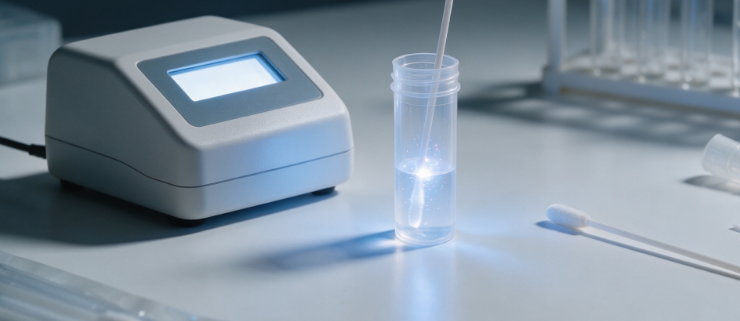
The ATP bioluminescence assay has emerged as the gold‑standard rapid method for the quantitative assessment of microbial contamination, hygiene status, and biological activity across a diverse range of industries, including healthcare, food and beverage processing, pharmaceutical manufacturing, water treatment, and environmental monitoring. By measuring the level of adenosine triphosphate (ATP) – the universal energy currency of all living cells – this technique provides a direct, real‑time measure of viable biomass, enabling immediate corrective actions and process optimisation. However, a reliable ATP bioluminescence test is not merely a “sample‑to‑result” swab test; it requires careful consideration of sample collection, extraction efficiency, light‑generating biochemistry, instrument sensitivity, and the interpretation of data in the context of the specific matrix and application. A poorly designed or executed protocol can lead to under‑estimation of contamination (due to quenching or insufficient lysis), over‑estimation (from non‑microbial ATP), or erratic results that fail to correlate with reference methods, undermining the value of the rapid result. Our ISO/IEC 17025‑accredited and GMP‑compliant laboratory offers a fully integrated ATP bioluminescence testing platform, covering the entire spectrum from routine hygiene swabbing and water testing to sophisticated validation studies, method development, and data correlation with standard plate counts. We deliver quantitative, traceable results, with full quality control, expert interpretation, and, where required, statistical analysis and method validation, enabling you to achieve rapid, actionable hygiene data, to validate cleaning protocols, and to meet the most stringent regulatory and operational requirements.
1. The Scientific and Operational Rationale for ATP Bioluminescence Testing
ATP bioluminescence testing serves multiple critical purposes: (a) to provide rapid (5‑10 minutes) hygiene monitoring of surfaces, equipment, and water, enabling immediate verification of cleaning effectiveness; (b) to detect the presence of microbial contamination in food, beverages, and pharmaceutical processes; (c) to assess the biological activity and metabolic state of microorganisms in environmental and industrial samples; (d) to validate cleaning and sanitation protocols by comparing ATP levels before and after cleaning; (e) to support risk‑based monitoring programmes by identifying high‑risk areas; and (f) to provide rapid screening for the presence of viable cells in biopharmaceutical and clinical samples. The assay is based on the firefly luciferase‑luciferin reaction, which generates light proportional to the ATP concentration. The key to a successful test lies in: (a) extracting ATP from all viable cells, including those that are stressed or biofilm‑associated; (b) minimising background ATP from non‑microbial sources (e.g., plant, animal, or food residues); (c) correctly interpreting the results in terms of Relative Light Units (RLU) and correlating them with traditional colony‑forming units (CFU) or with pre‑established hygiene limits. Our service begins with a comprehensive consultation to define the optimal testing strategy for your sample type, application, and regulatory environment, ensuring both scientific rigor and operational efficiency.
2. Our Comprehensive ATP Bioluminescence Testing Platform – From Routine Swabbing to In‑Depth Validation
We maintain a complete suite of validated ATP bioluminescence methods, all performed in a dedicated analytical facility with stringent quality controls, and using high‑sensitivity luminometers (e.g., Promega GloMax, 3M Clean‑Trace, or Hygiena SureTrend) and validated extraction agents. Our portfolio includes:
2.1 Surface Hygiene Monitoring – Rapid Swab and Spray Testing
We perform surface hygiene monitoring using standardised swabbing techniques (e.g., with pre‑moistened swabs, or using the clean‑surface method) to sample defined areas (e.g., 25 cm², 100 cm², or 1 m²). We extract ATP from the collected sample, add the luciferase reagent, and measure the RLU. We provide the results in RLU, as well as a pass/fail determination based on pre‑defined action limits (e.g., < 100 RLU for high‑risk areas, < 200 RLU for medium‑risk, etc.) or, where required, we correlate the RLU with CFU counts to establish your own in‑house limits.
2.2 Water and Liquid ATP Testing – Ultra‑Low Level ATP Detection
For water, beverages, and other liquids, we use membrane filtration or direct injection to collect the ATP from the sample. We use specialised reagents that are optimised for low‑ATP matrices, achieving detection limits as low as 0.1‑1 fM ATP (equivalent to < 1 CFU/mL). We provide the ATP concentration in RLU, and, where possible, we calculate the equivalent CFU/mL using a correlation model.
2.3 Biofilm and Surface‑Adherent ATP – Assessing Aggregated Biomass
For biofilms and strongly adherent bio‑contamination, we use enhanced extraction protocols that include mechanical disruption (vortexing, sonication) and chemical agents (e.g., surfactants, chelating agents) to release ATP from the biofilm matrix. We measure the ATP content of the sample, providing a quantitative measure of the biofilm biomass and its metabolic activity, which is more relevant to the cleaning challenge than planktonic ATP.
2.4 Sample Preparation and Extraction Optimisation – Overcoming Matrix Interferences
We optimise the extraction procedure for each sample type to ensure complete lysis of all viable cells, including Gram‑positive, Gram‑negative, yeasts, and moulds. We validate the extraction efficiency using internal ATP standards and by comparing the ATP results with the plate count for representative samples. We also evaluate and, if necessary, eliminate or correct for quenching effects (e.g., from bleach, acid, or alkaline residues) by using appropriate neutralising agents.
2.5 Correlation Studies – Relating RLU to CFU for Your Specific Application
We offer comprehensive correlation studies to establish a robust relationship between the ATP bioluminescence result (RLU) and the traditional plate count (CFU) for your specific sample type and microbial flora. We perform parallel testing with both methods on a large number of samples, and we use statistical regression (e.g., linear regression, or the Deming method) to provide a conversion equation and the associated 95% prediction intervals. This enables you to set meaningful action limits based on CFU equivalents and to justify the use of ATP as a surrogate for the plate count.
2.6 Method Validation and Suitability Testing – ISO 11133, AOAC, and In‑House
We provide full method validation for your ATP bioluminescence protocol, including: (a) specificity (lack of interference from non‑microbial ATP); (b) linearity (over the expected ATP range); (c) accuracy (by spike‑and‑recovery experiments with known amounts of ATP or with spiked microbial cultures); (d) precision (intra‑assay, inter‑assay, and inter‑operator); (e) limit of detection (LOD) and limit of quantification (LOQ); and (f) robustness to variations in extraction time, temperature, and reagent volumes. The validation report is structured to meet the requirements of regulatory bodies (e.g., FDA, USDA, ISO).
2.7 Rapid Screening for Bioburden and Process Control – In‑Line and At‑Line
We can also provide rapid ATP screening for in‑process samples, for monitoring the microbial load of raw materials, intermediates, and final products. We offer a rapid turnaround (typically < 30 minutes) and provide a quantitative result that can be used for real‑time decision‑making in manufacturing environments.
3. Advanced Capabilities – Mechanistic Studies, Stability, and Customised Applications
For clients requiring a deeper level of characterisation or a high‑level validation of their ATP‑based programme, we offer a suite of customised, research‑grade services that go beyond routine hygiene monitoring:
3.1 ATP as a Surrogate for Viable Cell Counting – Correlation with Plate Counts and Molecular Methods
In addition to the basic RLU‑to‑CFU correlation, we can perform in‑depth comparative studies that include other rapid methods (e.g., flow cytometry, PMA‑qPCR) to validate ATP as a surrogate for total viable cell concentration. We provide a detailed statistical analysis of the correlation, including the coefficient of determination (R²), the slope and intercept, and the prediction limits.
3.2 ATP in Biofilms and Adherent Cells – Extracting and Measuring Bound ATP
We have developed specialised extraction protocols for different biofilm matrices (e.g., plastic, metal, concrete, or food residues) and can measure the ATP content of the biofilm, including the active (intracellular) ATP and, optionally, the total ATP (including extracellular ATP). This provides a more comprehensive measure of the contamination burden.
3.3 Degradation and Stability Studies – ATP Stability in Different Matrices
We can assess the stability of ATP in different sample matrices (e.g., water, cleaning agents, organic residues) over time, and we can determine the optimal storage conditions and the time window for testing. This is crucial for reliable sampling in the field.
3.4 ATP in Complex Matrices – Food, Cosmetics, and Environmental Samples
We have validated protocols for ATP analysis in a wide range of complex matrices: food products (meat, dairy, salad, and processed foods), cosmetics and personal care products, and environmental samples (air filters, dust, and soil). We use appropriate extraction and neutralisation steps to overcome matrix interference.
3.5 Integration with Other Rapid Methods – ATP in Combination with Impedance or Fluorescence
We can combine ATP bioluminescence with other rapid methods (e.g., impedance‑based microbial monitoring, or fluorescence) for a more comprehensive assessment of the microbial status, providing a multi‑parametric profile of the sample.
3.6 Data Interpretation and Action Limit Setting – Statistical Process Control
We provide statistical process control (SPC) services to help you to establish and update your hygiene action limits based on historical data, using control charts and trend analysis. We provide a clear protocol for setting, reviewing, and adjusting the limits.
4. Data Quality, Standardisation, and Comprehensive Reporting
All analyses are conducted under a strict quality management system that includes the use of certified ATP standards (e.g., from the National Institute of Standards and Technology, NIST), routine positive and negative controls, and participation in proficiency testing schemes (e.g., the UK NEQAS ATP scheme). Our reports provide:
- Full method description – detailing the sample preparation, the extraction protocol, the luminometer settings, and the data analysis.
- Detailed results – including the raw RLU values, the mean and standard deviation for replicates, the pass/fail determination (based on your specified limits), and the equivalent CFU, if a correlation has been established.
- Quality control data – the results of the concurrent controls, confirming the validity of the test run.
- Graphical outputs – including correlation plots, control charts, and, where applicable, the trend analysis.
- Interpretative comments – by our senior microbiologists, providing an assessment of the hygiene status, the significance of the results, and any recommendations for corrective actions or process improvements.
Our reports are structured to be directly usable for regulatory audits, customer inspections, and internal quality assurance.
Turnaround times: 1‑2 working days for routine ATP hygiene monitoring, 2‑3 working days for complex correlation studies, and 1‑2 weeks for full method validation. Express services are available for urgent projects.
5. Why Choose Our Laboratory for ATP Bioluminescence Testing
We are one of the few laboratories that hold ISO/IEC 17025 accreditation and GMP compliance for the full spectrum of ATP bioluminescence testing, covering both routine hygiene monitoring and advanced method development and validation. Our integrated infrastructure combines high‑sensitivity luminometers, automated sample processing, and a dedicated microbiology facility – enabling cross‑verification of results and a comprehensive understanding of the microbial status. Our team comprises PhD‑level microbiologists and analytical chemists with extensive experience in method development, validation, and the interpretation of ATP data, and we have a proven track record of supporting food producers, pharmaceutical companies, and healthcare facilities.
We offer unparalleled flexibility: we accept all types of samples – from swabs and water to food, cosmetics, and industrial matrices – and we provide customised protocols to meet your specific sample types, regulatory requirements, and operational needs. Our secure online portal enables real‑time tracking, access to raw data, and downloadable certificates of analysis.
Our modular pricing ensures cost‑effectiveness: you select the level of analysis – from a simple pass/fail screen to a full validation and correlation study – with discounts for routine monitoring programmes and bulk submissions. We also provide training, method transfer, and technical consultancy to help you build or strengthen your internal ATP‑based hygiene monitoring capabilities.
With a proven history of serving over 100 clients in the food, pharmaceutical, and healthcare sectors, we have enabled our partners to achieve rapid, reliable hygiene monitoring, validate their cleaning protocols, and maintain a high level of operational excellence. We invite you to leverage our expertise for your ATP bioluminescence testing needs.
Contact our technical experts today to discuss your sample types, your applications, and your specific requirements. We will design a tailored testing plan and provide a detailed proposal within one business day.