Reasons for choosing our testing services
ZHONGXI Testing has obtained inspection qualification certifications from multiple countries and regions worldwide. We possess a senior testing team and advanced testing methods, providing independent, impartial, and professional third-party verification services for global carbon projects.

Internationally recognized authority
Certified by multiple international standards such as CNAS, VCS, and GS, with reports universally applicable worldwide.

Global service capability
Covering 140+ countries and regions, it supports on-site detection and remote verification in multiple languages.

Professional experimental methods
Adopt standard experimental methods to ensure accurate and reliable data.
Advanced Pulsed‑Field Gel Electrophoresis (PFGE) Testing Services – Gold‑Standard Molecular Typing for Outbreak Investigation, Source Tracking, and Strain Characterisation
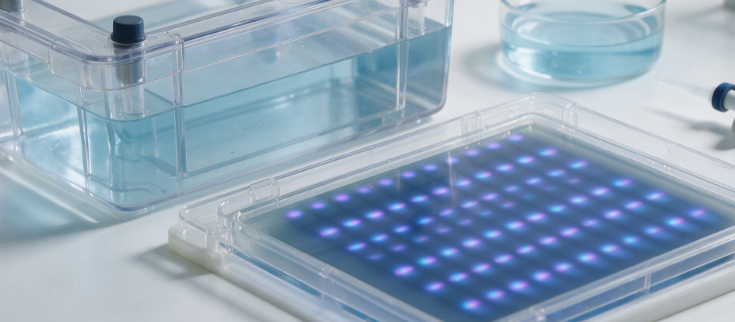
The precise and reproducible characterisation of bacterial strains at the molecular level is a cornerstone of public health, food safety, and pharmaceutical quality control. Among the available typing methods, Pulsed‑Field Gel Electrophoresis (PFGE) remains the gold‑standard technique for the high‑resolution subtyping of a wide range of pathogenic and environmental bacteria. By generating a unique, stable DNA fingerprint from the entire bacterial chromosome, PFGE enables the definitive differentiation of strains that are indistinguishable by phenotypic or other molecular methods. This technique is indispensable for outbreak investigation, source tracking of foodborne and nosocomial pathogens, confirming the identity of production strains, and monitoring the genetic stability of microorganisms in bioprocesses. However, a robust PFGE analysis is not a routine gel electrophoresis procedure; it demands a carefully controlled and standardised workflow, including embedding cells in agarose plugs, in‑cell lysis and proteinase K digestion, restriction digestion with rare‑cutting enzymes (e.g., XbaI, SpeI, NotI, SmaI), and separation of the resulting large DNA fragments (50 kb to > 1 Mb) under precisely controlled pulsed‑field conditions. A poorly executed PFGE protocol can lead to irreproducible banding patterns, incomplete digestion, smearing, or misinterpretation of the fingerprint, undermining the value of the analysis. Our ISO/IEC 17025‑accredited and GMP‑compliant laboratory offers a fully integrated PFGE testing platform, covering the entire spectrum from sample preparation and restriction digestion to electrophoresis, imaging, and standardised pattern analysis (including dendrogram construction and comparison to national reference databases). We deliver high‑resolution, quantitative fingerprints, with full quality control, expert interpretation, and, where required, statistical analysis and compliance with the PulseNet international standardisation framework. Our experienced team ensures that you obtain reliable, defensible data for outbreak investigation, source tracking, and strain characterisation, enabling you to make informed decisions with the highest level of confidence.
1. The Scientific and Operational Rationale for PFGE Typing
PFGE is the reference method for bacterial subtyping in many epidemiological and quality‑assurance contexts. It serves multiple critical purposes: (a) to differentiate between closely related strains that are indistinguishable by other methods, such as serotyping or multi‑locus sequence typing (MLST); (b) to trace the source of contamination in foodborne outbreaks by linking clinical isolates to environmental or food isolates; (c) to confirm the identity and genetic stability of production strains used in fermentation and biopharmaceutical processes; (d) to monitor the emergence and spread of specific clones in hospital and community settings; and (e) to support regulatory submissions for the release of well‑characterised reference strains. The choice of restriction enzyme – typically XbaI for most Gram‑negative bacteria (Salmonella, E. coli, Campylobacter), SmaI for Listeria monocytogenes, NotI for Pseudomonas, and SpeI or BlnI for other organisms – must be tailored to the organism and the level of resolution required. The method must be validated to demonstrate that it is reproducible, discriminatory, and stable across different runs and operators, and that it provides a reliable basis for strain comparison. Our service begins with a comprehensive consultation to define the optimal PFGE strategy for your sample type, organism, and investigative or quality‑assurance objectives, ensuring both scientific rigor and regulatory compliance.
2. Our Comprehensive PFGE Testing Platform – From Plugs to Dendrograms
We maintain a complete, validated PFGE workflow, all performed in a dedicated molecular epidemiology facility with stringent contamination controls, and using certified reference strains (e.g., Salmonella Braenderup H9812) for daily quality assurance and standardisation. Our portfolio includes:
2.1 Sample Preparation – Agarose Plug Embedding and Cell Lysis
We prepare the bacterial cells for PFGE by embedding them in low‑melting‑point agarose plugs. The cells are lysed in‑situ using a combination of lysozyme, proteinase K, and detergents, which removes proteins and cell debris while leaving the high‑molecular‑weight DNA intact and immobilised in the plug. We include appropriate controls (e.g., a reference strain) in each run to monitor the efficiency of lysis and the integrity of the DNA. The plugs are then washed thoroughly to remove the lysis reagents.
2.2 Restriction Digestion – Rare‑Cutting Enzyme Digestion
We perform the restriction digestion of the immobilised DNA using a validated panel of rare‑cutting restriction enzymes. We use the enzyme that is most appropriate for your organism and that provides the optimal resolution (typically 10‑20 well‑resolved fragments). We optimise the digestion time, temperature, and enzyme concentration to ensure complete and reproducible cleavage. We include a no‑enzyme control to confirm that the banding pattern is due to specific cleavage and not to degradation.
2.3 Pulsed‑Field Gel Electrophoresis – Separation of Large DNA Fragments
We use a state‑of‑the‑art PFGE system (e.g., Bio‑Rad CHEF‑Mapper or equivalent) with precisely controlled switch times, voltage, and temperature to achieve optimal separation of the DNA fragments. We use a specific protocol that is optimised for the expected fragment size range (typically 20‑800 kb). We use a DNA size standard (e.g., Lambda ladder, or a specific reference strain) in each gel to allow accurate size determination and pattern normalisation. The run parameters are recorded in full, ensuring the reproducibility of the separation.
2.4 Gel Staining, Imaging, and Quality Control
After electrophoresis, the gel is stained with a sensitive DNA‑binding dye (e.g., ethidium bromide, SYBR Safe, or a fluorescent intercalator). The gel is imaged using a high‑resolution digital imaging system (e.g., a CCD camera‑based gel documentation system) with standardised settings. We ensure that the image quality is sufficient for accurate band detection and pattern analysis. We include quality control checks on the image (e.g., the presence of the reference strain bands at the correct positions, the absence of smearing, and the resolution of the fragments).
2.5 Pattern Analysis and Dendrogram Construction – Cluster Analysis and Phylogenetic Interpretation
We perform automated pattern analysis using validated software (e.g., BioNumerics, GelCompar, or the PulseNet standard software). We normalise the gel images against the size standard (or the reference strain) to allow accurate comparison between gels. We then create a band‑matching table (assigning the same size to bands of similar mobility) and calculate the Dice similarity coefficient (or the Jaccard coefficient). We construct a dendrogram using the Unweighted Pair Group Method with Arithmetic Mean (UPGMA), including the cophenetic correlation and, where appropriate, the bootstrap support values. We provide a high‑quality, publication‑ready dendrogram, along with a table of the pairwise similarity values, enabling you to visualise and interpret the relatedness of your strains.
2.6 Database Comparison and Epidemiological Interpretation – PulseNet and Other Databases
We can compare your PFGE fingerprints with the PulseNet international database (for foodborne pathogens) or other national reference databases. We can search for matches and provide an indication of whether your strain is known to be associated with a specific outbreak or a particular source. We provide a report that includes the relationship of your strains to the reference patterns, along with the epidemiological interpretation.
2.7 Method Validation and Quality Control – Ensuring Reproducibility and Discriminatory Power
We provide full method validation for your PFGE protocol, including: (a) reproducibility (by testing the same strain in multiple runs and across multiple operators); (b) discriminatory power (by testing a panel of closely related strains, and calculating the Simpson’s index of diversity, D); (c) stability (by testing the same strain after multiple subcultures); and (d) specificity (by testing the method against a panel of non‑target organisms). The validation report is structured to meet the requirements of regulatory submissions and internal quality assurance.
3. Advanced Capabilities – Combination Typing, Whole‑Genome Correlation, and Customised Studies
For clients requiring the highest level of characterisation or a comprehensive view of strain relatedness, we offer a suite of customised, research‑grade services that go beyond routine PFGE analysis:
3.1 Combination Typing – PFGE with Other Molecular Methods (e.g., MLST, WGS)
We can combine PFGE with multi‑locus sequence typing (MLST) or whole‑genome sequencing (WGS) to provide a multi‑faceted characterisation of your strains. We provide a comprehensive report that integrates the PFGE fingerprint with the sequence‑based data, offering the highest level of resolution and the greatest confidence in the identification.
3.2 Time‑Course and Stability Studies – Monitoring Genetic Stability Over Time
We can perform stability studies by conducting PFGE on samples of the same strain taken at different times (e.g., after repeated subculture, after storage, or after passage through a production process). We provide a comparison of the fingerprints and a statistical assessment of the genetic stability.
3.3 Source Tracking and Outbreak Investigation – Advanced Epidemiological Analysis
For outbreak investigations, we provide a comprehensive source‑tracking service that includes: (a) the PFGE typing of all available isolates; (b) the construction of a dendrogram; (c) the comparison with the PulseNet database; and (d) a detailed epidemiological report that identifies the likely source of the contamination and the relationships between the isolates.
3.4 Custom Enzyme Panels – For the Highest Resolution and Differentiation
If the standard enzymes do not provide sufficient discrimination, we can test a panel of alternative rare‑cutting enzymes (e.g., BglII, BssHII, HindIII, etc.) to identify the one that yields the optimal pattern for your specific organism. We provide a comparative report that identifies the most effective enzyme for your typing application.
3.5 Data Review and Regulatory Submission Support
Our team of experienced molecular biologists and epidemiologists can assist you in the interpretation of the PFGE data, in the preparation of the required documentation for regulatory submissions, and in responding to queries from authorities. We provide a full data package, including the raw gel images, the normalised fingerprints, and the dendrograms.
4. Data Integrity, Standardisation, and Comprehensive Reporting
All analyses are conducted under a strict quality management system that includes the use of certified reference strains, routine positive and negative controls (including a no‑DNA control), and, where applicable, participation in proficiency testing schemes (e.g., PulseNet, or the UK NEQAS). Our reports provide:
- Full method description – detailing the organism, the restriction enzyme, the PFGE run parameters, the size standard, and the data analysis method.
- Detailed results – including the gel image, the normalised fingerprints, the band‑matching table, the Dice similarity coefficients, and the dendrogram with the relevant statistics (cophenetic correlation, bootstrap values).
- Quality control data – the results of the concurrent controls, confirming the validity of the test run.
- Interpretative comments – by our senior molecular biologists and epidemiologists, providing an assessment of the relatedness of the strains, the discriminatory power of the method, and any recommendations for further analysis.
Our reports are structured to meet the requirements of regulatory audits, customer inspections, and internal quality assurance.
Turnaround times: 3‑5 working days for routine PFGE typing, 5‑7 working days for combined‑enzyme or outbreak‑investigation packages, and 1‑2 weeks for method development and validation. Express services are available for urgent projects.
5. Why Choose Our Laboratory for PFGE Testing
We are one of the few laboratories that hold ISO/IEC 17025 accreditation and GMP compliance for the full spectrum of PFGE services, including the use of the PulseNet standardised protocol and the comparison with international reference databases. Our integrated infrastructure combines state‑of‑the‑art PFGE systems, high‑resolution gel imaging, and advanced pattern‑analysis software – enabling cross‑verification of results and a consistent, objective interpretation of the fingerprints. Our team comprises PhD‑level molecular biologists, microbial geneticists, and epidemiologists with extensive experience in method development, validation, and the interpretation of complex PFGE data, and we have a proven track record of supporting food safety, public health, and pharmaceutical quality‑control programmes.
We offer unparalleled flexibility: we accept all types of bacterial isolates – from pure cultures, food, water, clinical specimens, and environmental samples – and we provide customised protocols to meet your specific organism, enzyme, and application requirements. Our secure online portal enables real‑time tracking, access to raw data, and downloadable certificates of analysis.
Our modular pricing ensures cost‑effectiveness: you select the level of analysis – from a simple fingerprint to a full outbreak‑investigation package – with discounts for routine monitoring programmes and bulk submissions. We also provide training, method transfer, and technical consultancy to help you build or strengthen your internal PFGE capabilities.
With a proven history of serving over 100 clients in the food, pharmaceutical, and public health sectors, we have enabled our partners to identify contamination sources, confirm strain identity, and respond effectively to outbreaks. We invite you to leverage our expertise for your PFGE testing needs.
Contact our technical experts today to discuss your sample types, target organisms, and specific investigative or quality‑assurance objectives. We will design a tailored testing plan and provide a detailed proposal within one business day.