Reasons for choosing our testing services
ZHONGXI Testing has obtained inspection qualification certifications from multiple countries and regions worldwide. We possess a senior testing team and advanced testing methods, providing independent, impartial, and professional third-party verification services for global carbon projects.

Internationally recognized authority
Certified by multiple international standards such as CNAS, VCS, and GS, with reports universally applicable worldwide.

Global service capability
Covering 140+ countries and regions, it supports on-site detection and remote verification in multiple languages.

Professional experimental methods
Adopt standard experimental methods to ensure accurate and reliable data.
Advanced Bioburden Inactivation Validation Services – Comprehensive, Regulatory‑Ready Studies for Sterilisation and Disinfection Process Assurance
The validation of Bioburden inactivation is a fundamental requirement for ensuring the safety and efficacy of pharmaceutical products, medical devices, cosmetics, and other products that must be rendered free of viable microorganisms. Regulatory authorities, including the FDA, ISO (11137, 11138, 17665), USP, and EP, mandate that manufacturers demonstrate through rigorous, scientifically sound studies that their sterilisation or disinfection processes are capable of achieving the required level of microbial reduction (e.g., a Sterility assurance level of 10⁻⁶ for terminally sterilised products). A robust Bioburden inactivation validation study is not merely a test of the process; it is a comprehensive, multi‑faceted exercise that integrates Bioburden characterisation, selection of appropriate biological indicators (BIs), determination of resistance parameters (D‑value, z‑value, survivor curve), and the demonstration of process efficacy under worst‑case conditions. A poorly designed or executed validation can lead to inadequate sterilisation, product recalls, and severe regulatory repercussions. Our ISO/IEC 17025‑accredited and GMP‑compliant laboratory offers a fully integrated Bioburden inactivation validation platform, encompassing the entire spectrum from Bioburden enumeration and resistance profiling to full‑scale process validation and ongoing routine monitoring. We utilise a wide range of standardised and custom biological indicators (including Geobacillus stearothermophilus, Bacillus atrophaeus, and others), state‑of‑the‑art resistometers, and validated Sterility and Bioburden testing methods. Our expert team of microbiologists and sterilisation scientists provides comprehensive study design, flawless execution, and clear, defensible reports, enabling you to validate your sterilisation processes, meet regulatory requirements, and ensure the highest level of product safety.
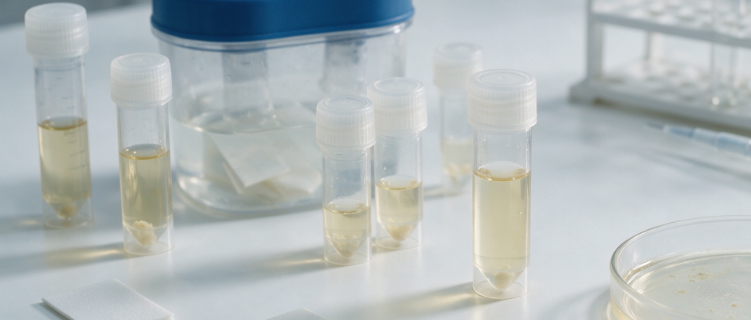
1. The Scientific and Regulatory Rationale for Bioburden Inactivation Validation
Bioburden inactivation validation serves multiple essential purposes: (a) to demonstrate the capability of a sterilisation or disinfection process to achieve the specified reduction in viable microorganisms; (b) to establish the worst‑case conditions (e.g., minimum exposure time, lowest temperature, maximum Bioburden) under which the process still meets the acceptance criteria; (c) to support regulatory submissions by providing quantitative, traceable efficacy data; (d) to monitor the ongoing consistency of the process through routine performance qualification; and (e) to justify changes in the process or the product without repeating the full validation. The choice of test organism – typically a highly resistant spore‑former such as Geobacillus stearothermophilus for steam sterilisation, or Bacillus atrophaeus for ethylene oxide and dry heat – must be justified based on the process and the Bioburden profile. The validation must also account for the nature of the product (e.g., its Bioburden level, its resistance to sterilisation, and its interaction with the process). Our service begins with a comprehensive consultation to define the optimal validation strategy, including the selection of appropriate biological indicators, the determination of the D‑value and z‑value, and the design of the process challenge, ensuring both scientific rigor and regulatory compliance.
2. Our Comprehensive Bioburden Inactivation Validation Platform – From Enumeration to Process Qualification
We maintain a complete, validated workflow for Bioburden inactivation validation, all performed in a dedicated microbiology and resistance‑testing facility with stringent quality controls. Our portfolio includes:
2.1 Bioburden Characterisation and Enumeration – Establishing the Baseline
We perform Bioburden enumeration on your product (or a representative sample) using validated methods (e.g., membrane filtration, pour‑plate, or most‑probable‑number) to determine the total viable microbial count. We also characterise the Bioburden population (to identify the most resistant organisms) using morphological, biochemical, or molecular techniques. This data is essential for selecting the appropriate biological indicator and for determining the required log reduction.
2.2 Selection and Preparation of Biological Indicators (BIs)
We provide a wide range of standardised and custom biological indicators, including:
- Geobacillus stearothermophilus (ATCC 7953) – for steam, hydrogen peroxide vapour, and vapourised peracetic acid.
- Bacillus atrophaeus (ATCC 9372) – for ethylene oxide, dry heat, and formaldehyde.
- Bacillus pumilus (ATCC 27142) – for radiation sterilisation.
- Custom BIs – prepared from your own Bioburden isolates or from other relevant strains, using validated carrier materials.
We prepare the BIs with a defined population (typically 10⁵‑10⁶ CFU per carrier) and characterise their resistance (D‑value) under the specified conditions.
2.3 Resistance Determination – D‑Value, z‑Value, and Survivor Curve
We determine the D‑value (decimal reduction time) – the time required to reduce the BI population by 90% at a given condition – using the survivor curve method or the fractional negative method. We perform the test under precisely controlled conditions (temperature, pressure, sterilant concentration) and provide a full survivor curve with the calculated D‑value, the correlation coefficient, and the 95% confidence interval. We also determine the z‑value (the temperature change required to alter the D‑value by a factor of 10) by performing D‑value determinations at multiple temperatures. This is essential for validating processes that experience temperature variations.
2.4 Process Validation – Full‑Scale and Scaled‑Down Studies
We execute validation studies using your specific sterilisation or disinfection process (steam, EO, dry heat, radiation, VHP, etc.) or a scaled‑down model that accurately replicates the full‑scale process. We place the BIs in the worst‑case locations (e.g., the most difficult‑to‑reach areas, the coldest zones, the positions with the lowest sterilant concentration) and run the process under defined conditions. We recover the BIs and perform Sterility testing (or Bioburden enumeration) to determine the number of survivors, and we calculate the achieved log reduction. We repeat the study at the minimum and maximum process parameter settings to establish the processing window.
2.5 Worst‑Case Challenge – Assessing Process Robustness
We perform worst‑case challenges by using the most resistant BI, at the highest population, under the least favourable process conditions (e.g., minimum temperature, shortest exposure time, maximum load). This provides evidence that the process is robust and can achieve the required SAL even under the most demanding conditions.
2.6 Kinetic Studies – Real‑Time Inactivation Profiles
We conduct kinetic studies by sampling BIs at multiple time points during the process, enabling the construction of a survivor curve and the calculation of the D‑value directly from the process data. This provides a detailed understanding of the inactivation kinetics and is often required for processes where the exposure time is not fixed (e.g., in continuous sterilisation).
2.7 Bioburden Inactivation Verification – Post‑Sterility Testing
After the validation run, we perform Sterility testing on the BIs (or on the product itself) using validated methods (USP <71>, EP 2.6.1) to confirm the absence of viable microorganisms. We provide a clear pass/fail determination, along with the full documentation of the test.
2.8 Routine Monitoring and Re‑validation Services
We support ongoing routine monitoring of your sterilisation process using BIs and, if required, we perform re‑validation studies following any significant change to the process, the product, or the packaging. We also provide trend analysis and statistical process control for your BI results.
3. Advanced Capabilities – Custom BI Development, Complex Matrices, and Novel Technologies
For clients requiring specialised validation studies, we offer a suite of customised, research‑grade services that go beyond the standard validation package:
3.1 Custom Biological Indicator Development – From Bioburden Isolates
We can develop custom BIs using the most resistant organisms isolated from your own product's Bioburden. This provides the highest level of relevance and is often required for validating processes against the specific microbiota that may be present. We prepare the BIs on the same carrier materials and under the same formulation as your product, ensuring a realistic challenge.
3.2 Validation in Complex Matrices – Products with High Protein, Lipid, or Particulate Content
We specialise in validating inactivation in complex matrices that can protect microorganisms from the sterilising agent. We use appropriate carriers (e.g., product itself, or product‑soaked carriers) and adjust the BI preparation to simulate the real product conditions. We also apply validated neutralisation and recovery techniques to ensure accurate enumeration.
3.3 Validation of Novel Sterilisation Technologies – UV‑C, Plasma, and Cold Atmospheric Pressure
We have extensive experience in validating novel sterilisation technologies, including UV‑C, pulsed light, low‑temperature plasma, and cold atmospheric pressure plasma. We design custom studies to characterise the inactivation kinetics and to determine the optimal process parameters for your specific product.
3.4 Sub‑Lethal Injury and Recovery Studies
We assess the sub‑lethal injury and recovery of microorganisms after exposure to sub‑lethal conditions, using selective and non‑selective media. This is important for understanding the potential for false‑negative results in Sterility testing and for optimising the validation protocol.
3.5 Computational Modelling – Predictive Inactivation Kinetics
We integrate our experimental data with mathematical models (e.g., the Arrhenius model, the Weibull model) to predict the inactivation kinetics under different conditions, enabling the optimisation of process parameters and the support of scale‑up studies.
3.6 Method Validation and Regulatory Submission Support
We provide full method validation for all assays used in the study (Bioburden enumeration, Sterility testing, resistance determination) according to ICH Q2, USP, and EP requirements. We also assist in preparing the sterilisation validation section of regulatory dossiers, including the risk assessment and the justification of the chosen BIs and parameters.
4. Data Integrity, Standardisation, and Comprehensive Reporting
All studies are conducted under a strict quality management system that includes the use of certified reference cultures, routine controls, and participation in proficiency testing schemes (where available). Our reports provide:
- Full study protocol – detailing the product, the process, the Bioburden characterisation, the BI selection, the resistance determination, and the validation runs.
- Detailed results – including the D‑value (with confidence intervals), the survivor curves, the achieved log reductions, the pass/fail outcomes, and the statistical analysis.
- Quality control data – the results of the concurrent controls, confirming the validity of the study.
- Graphical outputs – including survivor curves, bar charts of log reductions, and process parameter monitoring logs.
- Interpretative comments – by our senior sterilisation scientists, providing an assessment of the process robustness, the safety margin, and any recommendations for ongoing monitoring or process improvement.
Our reports are structured to meet the requirements of regulatory audits and to facilitate a smooth review process. All data are stored in a secure, auditable environment.
Turnaround times: 4‑6 weeks for a standard validation study, 2‑3 weeks for D‑value determination and screening, and 6‑8 weeks for complex custom studies. Expedited services are available for urgent regulatory submissions.
5. Why Choose Our Laboratory for Bioburden Inactivation Validation
We are one of the few laboratories that hold ISO/IEC 17025 accreditation and GMP compliance for Bioburden inactivation validation, covering the full range of sterilisation and disinfection methods. Our integrated infrastructure combines a state‑of‑the‑art microbiology and resistance‑testing facility, automated BI preparation systems, and a dedicated data analysis team – enabling cross‑verification of results and a comprehensive, fully defensible validation package. Our team comprises PhD‑level microbiologists, sterilisation scientists, and regulatory specialists with extensive experience in study design, execution, and the interpretation of Bioburden inactivation data, and we have supported more than 60 successful product registrations across the globe.
We offer unparalleled flexibility: we work with all types of products – from pharmaceuticals and medical devices to cosmetics and food products – and we can adapt to your specific process parameters, timelines, and budget constraints. Our secure online portal enables real‑time tracking, access to raw data, and downloadable reports.
Our modular pricing ensures cost‑effectiveness: you select the level of analysis – from a simple D‑value determination to a full, multi‑cycle validation package – with discounts for long‑term partnerships and multiple product programmes. We also provide training, method transfer, and technical consultancy to help you build or strengthen your internal sterilisation validation capabilities.
With a proven history of serving over 90 clients in the pharmaceutical, medical device, and consumer product sectors, we have enabled our partners to achieve regulatory compliance, ensure product safety, and maintain market access. We invite you to leverage our expertise for your Bioburden inactivation validation needs.
Contact our technical experts today to discuss your product, your process, and your specific regulatory requirements. We will design a tailored validation plan and provide a detailed proposal within one business day.