Reasons for choosing our testing services
ZHONGXI Testing has obtained inspection qualification certifications from multiple countries and regions worldwide. We possess a senior testing team and advanced testing methods, providing independent, impartial, and professional third-party verification services for global carbon projects.

Internationally recognized authority
Certified by multiple international standards such as CNAS, VCS, and GS, with reports universally applicable worldwide.

Global service capability
Covering 140+ countries and regions, it supports on-site detection and remote verification in multiple languages.

Professional experimental methods
Adopt standard experimental methods to ensure accurate and reliable data.
Comprehensive Settle Plate (Fallout) Monitoring Services – Passive Air Sampling for Microbial Contamination Control in Cleanrooms and Controlled Environments
The reliable monitoring of settle plates (also known as fallout or deposition plates) is a fundamental component of environmental monitoring programmes in pharmaceutical manufacturing, medical device production, healthcare facilities, and other cleanroom environments. Settle plate monitoring provides a direct measure of the viable airborne microbial fallout that settles onto critical surfaces, offering a quantitative assessment of the potential contamination risk to products and processes. Regulatory authorities, including the FDA, EMA, ISO (14698‑1, 14644‑1), and PIC/S, require that settle plate monitoring be performed as part of a comprehensive environmental monitoring strategy to demonstrate the ongoing control of the manufacturing environment. A robust settle plate monitoring programme is not merely the placement of a few plates; it requires a scientifically sound, risk‑based approach that integrates appropriate plate placement, validated media and incubation conditions, rigorous quality control, and correct interpretation of the data in the context of the defined action and alert limits. A poorly designed or executed programme can lead to under‑estimation of contamination risk, false‑negative results (due to desiccation or inappropriate media), and non‑compliance with regulatory expectations. Our ISO/IEC 17025‑accredited and GMP‑compliant laboratory offers a fully integrated settle plate monitoring service, encompassing the entire spectrum from plate preparation and incubation to enumeration, identification of isolates, and comprehensive data analysis. We utilise validated media (e.g., TSA, SDA), standardised incubation conditions, and stringent quality controls to ensure accurate, traceable, and defensible results. Our expert team of microbiologists and environmental monitoring specialists provides comprehensive study design, flawless execution, and clear, actionable reports, enabling you to demonstrate the microbial quality of your environment, meet regulatory requirements, and maintain the highest standards of product and patient safety.
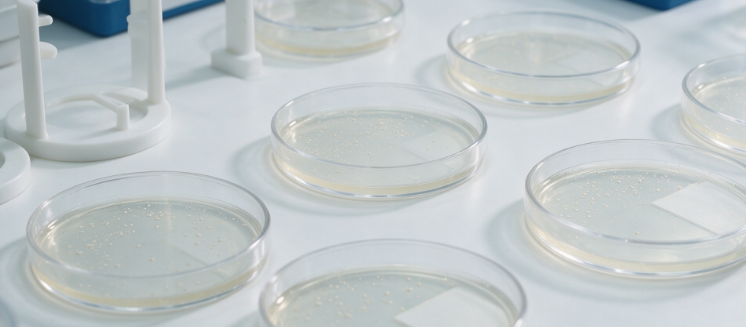
1. The Scientific and Regulatory Rationale for Settle Plate Monitoring
Settle plate monitoring serves multiple essential purposes: (a) to quantify the deposition of viable microorganisms onto critical surfaces, which can directly contaminate exposed products, equipment, or packaging; (b) to assess the effectiveness of cleaning and disinfection procedures by measuring the residual microbial load on surfaces; (c) to detect changes in the microbial quality of the air that may indicate a failure in the HVAC system, a breach in the cleanroom integrity, or a deviation in operator behaviour; (d) to support the establishment of alert and action limits for the environmental monitoring programme; (e) to provide data for trend analysis and to identify potential sources of contamination; and (f) to demonstrate compliance with the regulatory requirements for the specific cleanroom grade (e.g., Grade A, B, C, or D). The choice of the settle plate location, the duration of exposure, the type of media, and the incubation conditions must be tailored to the cleanroom grade, the production process, and the expected microbial flora. The method must be validated to demonstrate that it is capable of recovering the target organisms under the defined conditions and that the data are representative of the actual contamination risk. Our service begins with a comprehensive consultation to define the optimal monitoring strategy, including the selection of the appropriate plates, the placement locations, and the interpretation of the results, ensuring both scientific rigor and regulatory compliance.
2. Our Comprehensive Settle Plate Monitoring Platform – From Plate Preparation to Data Interpretation
We maintain a complete, validated settle plate monitoring workflow, all performed in a dedicated environmental monitoring and microbiology facility with stringent quality controls. Our portfolio includes:
2.1 Plate Preparation and Media Selection – Tailored to Your Monitoring Needs
We prepare settle plates using a range of validated media, including Tryptone Soya Agar (TSA) for the enumeration of aerobic bacteria, Sabouraud Dextrose Agar (SDA) for fungi (yeasts and moulds), and, if required, selective and differential media for the specific detection of certain organisms (e.g., Bacillus, Staphylococcus, or Pseudomonas). We ensure that the plates are prepared under controlled conditions (to minimise contamination), and we perform growth promotion testing on each batch of media to confirm its ability to support the growth of the target organisms. We also provide plates with neutralisers for environments where disinfectants are used, to prevent any residual biocide from affecting the recovery.
2.2 Sampling Strategy and Plate Placement – Risk‑Based and Scientifically Justified
We develop a risk‑based sampling strategy in consultation with you, identifying the critical locations (e.g., directly adjacent to the product, in the filling zone, in areas of high activity, and in the cleanest and least clean areas) and the appropriate number of plates per location. We provide detailed instructions on the correct placement of the plates (at working height, away from walls, and in a horizontal position), the exposure time (typically 1‑4 hours, but defined based on the cleanroom grade and the risk assessment), and the handling and transport of the plates (e.g., in a validated transport container, at a controlled temperature). We also provide a template for the monitoring plan, including a map of the sampling locations.
2.3 Incubation and Enumeration – Standardised, Validated Conditions
We incubate the settle plates under the appropriate conditions: for TSA, we incubate at 30‑35 °C for 2‑3 days (for total bacterial count), and for SDA, we incubate at 20‑25 °C for 3‑5 days (for total yeast and mould count). We also offer extended incubation for low‑Bioburden environments, or for the detection of slow‑growing organisms. After incubation, we perform a manual or automated enumeration (using a plate counter) of the colonies, and we record the count in CFU per plate. We include appropriate positive and negative controls to validate the incubation process.
2.4 Identification of Isolates – Speciation, Characterisation, and Source Tracking
If a colony is detected (or if a specific organism is suspected), we perform definitive identification of the isolate using a combination of methods: (a) morphological and biochemical characterisation (colony morphology, Gram stain, and specific biochemical tests); (b) MALDI‑TOF MS for rapid and accurate species‑level identification; (c) 16S rRNA gene sequencing for definitive identification and phylogenetic analysis. We provide a detailed report that includes the identity of the isolate, and, where possible, an assessment of the potential source (e.g., environmental, human, or equipment‑related), and an interpretation of the risk to the product.
2.5 Data Analysis and Trend Reporting – Action and Alert Limits, Control Charts
We provide comprehensive data analysis and trend reporting for your settle plate monitoring programme. We calculate the mean, standard deviation, and the distribution of the counts, and we help you to establish and review the action and alert limits based on the historical data and the cleanroom grade. We provide control charts (e.g., X‑bar and R charts) to visualise the trends and to detect any statistically significant deviations. We provide a regular (e.g., monthly or quarterly) trend report that summarises the results, highlights any out‑of‑trend results, and offers recommendations for corrective actions.
2.6 Investigation of Deviations – Root‑Cause Analysis and Corrective Actions
If a settle plate result exceeds the action or alert limit, we assist you in the investigation to identify the root cause. We perform a systematic analysis, including: (a) a review of the sampling procedure; (b) a check of the plate handling and incubation; (c) an assessment of the environmental conditions (temperature, humidity, air changes); (d) an evaluation of the recent activities in the area (e.g., maintenance, personnel movement); and (e) the identification of the organism (if possible). We provide a detailed report of the investigation and recommendations for corrective and preventive actions (CAPA).
2.7 Quality Control and Media Validation – Ensuring Plate Quality and Performance
We perform quality control testing on each batch of settle plates, including: (a) growth promotion testing using a panel of certified reference cultures (e.g., Staphylococcus aureus, Pseudomonas aeruginosa, Bacillus subtilis, Candida albicans, and Aspergillus brasiliensis) to confirm the ability of the media to support the growth of the target organisms; (b) Sterility testing (for a defined number of plates from each batch) to confirm the absence of contamination; and (c) neutralisation efficacy testing (if applicable) to confirm the ability of the neutraliser to inactivate any residual disinfectant.
3. Advanced Capabilities – Customised Monitoring, Rapid Methods, and Regulatory Support
For clients requiring specialised monitoring or a high‑level validation of their environmental monitoring programme, we offer a suite of customised, research‑grade services that go beyond routine settle plate monitoring:
3.1 Customised Plate Design – For Specific Organisms or Unique Sampling Requirements
We can develop and prepare custom settle plates tailored to your specific monitoring needs, including: (a) selective and differential media for the detection of specific microorganisms (e.g., for the detection of Pseudomonas, Salmonella, or E. coli); (b) plates with neutralisers for use in areas with heavy disinfectant use; (c) larger‑diameter plates for increased sensitivity; and (d) plates with a defined surface area for quantitative assessments.
3.2 Integration with Active Air Sampling – Comparing Settle Plate and Impaction Data
We can integrate settle plate monitoring with active air sampling (using an impaction air sampler) to provide a more comprehensive assessment of the airborne microbial load. We perform comparative studies to correlate the settle plate counts with the active air counts, and we provide a validated correlation factor for your environment.
3.3 Rapid Microbiological Methods (RMM) – ATP and Flow Cytometry for Surface Monitoring
As a supplement to settle plate monitoring, we offer rapid microbiological methods (RMM) for the real‑time assessment of surface hygiene. These include ATP bioluminescence (for immediate hygiene screening) and flow cytometry (for total viable cell enumeration) on swab samples. These methods provide a rapid, objective measure of surface cleanliness, which can be used for routine monitoring and for the verification of cleaning effectiveness.
3.4 Environmental Monitoring Programme Design and Review – Full System Optimisation
We offer a comprehensive review and optimisation of your entire environmental monitoring programme, including: (a) the assessment of the current monitoring plan; (b) the identification of gaps and weaknesses; (c) the proposal of a risk‑based sampling strategy; (d) the establishment of alert and action limits; and (e) the development of a validated data analysis and trend reporting system.
3.5 Data Review and Regulatory Submission Support
Our team of experienced environmental microbiologists and regulatory specialists can assist you in the interpretation of the data, in the preparation of the required documentation for regulatory submissions, and in responding to queries from authorities. We provide a full data package, including the raw results, the trend analysis, the action/alert limit justifications, and the investigation reports.
3.6 Training and Competency Assessment – For Your In‑House Monitoring Team
We provide training and competency assessment for your personnel who are responsible for performing settle plate monitoring, including: (a) the correct plate placement and handling; (b) the accurate recording of data; (c) the proper incubation and enumeration techniques; and (d) the appropriate response to out‑of‑trend results. We provide a certificate of training and a documented assessment of competency.
4. Data Integrity, Standardisation, and Comprehensive Reporting
All analyses are conducted under a strict quality management system that includes the use of certified reference cultures, routine positive and negative controls, and participation in proficiency testing schemes (where available). Our reports provide:
- Full method description – detailing the media, the plate preparation, the sampling protocol, the incubation conditions, and the enumeration procedure.
- Detailed results – including the settle plate counts (CFU/plate), the identity of any isolates, the comparison to the action and alert limits, and a clear pass/fail determination.
- Quality control data – the results of the concurrent controls, confirming the validity of the test run.
- Graphical outputs – including control charts, trend plots, and a summary of the data by location.
- Interpretative comments – by our senior microbiologists, providing an assessment of the environmental quality, any potential risks, and recommendations for corrective actions if required.
Our reports are structured to meet the requirements of regulatory audits and to facilitate a smooth review process. All data are stored in a secure, auditable environment.
Turnaround times: 3‑5 working days for routine enumeration, 5‑7 working days for identification and characterisation, and 1‑2 weeks for comprehensive trend reporting. Expedited services are available for urgent investigations.
5. Why Choose Our Laboratory for Settle Plate Monitoring Services
We are one of the few laboratories that hold ISO/IEC 17025 accreditation and GMP compliance for settle plate monitoring and microbiological testing, covering a wide range of media, organisms, and cleanroom grades. Our integrated infrastructure combines a state‑of‑the‑art microbiology facility, advanced identification systems (MALDI‑TOF, sequencing), and validated data analysis tools – enabling cross‑verification of results and a comprehensive, fully defensible monitoring programme. Our team comprises PhD‑level microbiologists, environmental monitoring specialists, and regulatory experts with extensive experience in cleanroom monitoring, method development, and regulatory submissions, and we have supported more than 100 clients across the pharmaceutical, biotechnology, and medical device industries.
We offer unparalleled flexibility: we work with all types of cleanrooms and controlled environments – from Grade A to Grade D, and from small R&D labs to large‑scale manufacturing facilities – and we can adapt to your specific monitoring plan, your equipment, and your regulatory requirements. Our secure online portal enables real‑time tracking, access to raw data, and downloadable reports.
Our modular pricing ensures cost‑effectiveness: you select the level of analysis – from a simple enumeration to a full programme review and validation – with discounts for long‑term partnerships and multi‑site monitoring programmes. We also provide training, method transfer, and technical consultancy to help you build or strengthen your internal environmental monitoring capabilities.
With a proven history of serving over 100 clients in the pharmaceutical, biotech, and medical device sectors, we have enabled our partners to demonstrate environmental control, achieve regulatory compliance, and ensure product safety. We invite you to leverage our expertise for your settle plate monitoring needs.
Contact our technical experts today to discuss your cleanroom, your monitoring plan, and your specific regulatory requirements. We will design a tailored monitoring programme and provide a detailed proposal within one business day.