Reasons for choosing our testing services
ZHONGXI Testing has obtained inspection qualification certifications from multiple countries and regions worldwide. We possess a senior testing team and advanced testing methods, providing independent, impartial, and professional third-party verification services for global carbon projects.

Internationally recognized authority
Certified by multiple international standards such as CNAS, VCS, and GS, with reports universally applicable worldwide.

Global service capability
Covering 140+ countries and regions, it supports on-site detection and remote verification in multiple languages.

Professional experimental methods
Adopt standard experimental methods to ensure accurate and reliable data.
Comprehensive Biofilm Inhibition Testing Services – Advanced Screening and Mechanistic Profiling for Antimicrobial and Material Development
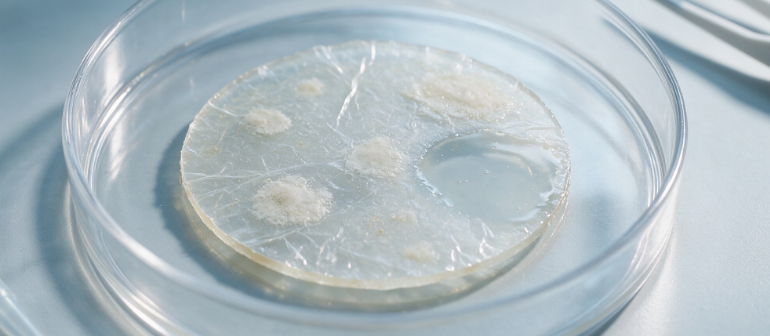
The ability to inhibit biofilm formation is a critical attribute for a wide range of products, including antimicrobial agents, surface coatings, medical devices, disinfectants, and industrial biocides. Biofilms – structured communities of microorganisms encased in a self‑produced extracellular polymeric matrix – are notoriously resistant to conventional antimicrobials and are implicated in numerous chronic infections, device‑associated failures, and industrial biofouling. Consequently, the evaluation of biofilm inhibition is not merely a standard antimicrobial test; it requires a sophisticated, multi‑parametric approach that integrates quantitative viability assays, biomass quantification, structural imaging, and, increasingly, mechanistic insight into the inhibition of adhesion, quorum sensing, or matrix production. A poorly designed or executed biofilm inhibition assay can lead to misleading results, false claims of efficacy, and non‑compliance with regulatory expectations. Our ISO/IEC 17025‑accredited and GMP‑compliant laboratory offers a fully integrated biofilm inhibition testing platform, covering the entire spectrum from standardised microtiter plate‑based screening to advanced confocal imaging and molecular mechanistic studies. We utilise a range of validated models (static, flow‑cell, and colony biofilm), a diverse panel of clinically and environmentally relevant organisms, and state‑of‑the‑art analytical tools (crystal violet staining, live/dead viability staining, metabolic activity assays, and confocal laser scanning microscopy). Our expert team of microbiologists and biofilm scientists provides comprehensive study design, flawless execution, and clear, interpretative reporting, enabling you to substantiate efficacy claims, support product development, and meet the most stringent regulatory requirements.
1. The Scientific and Regulatory Rationale for Biofilm Inhibition Testing
Biofilm inhibition testing serves multiple essential purposes: (a) to screen and rank antimicrobial compounds for their ability to prevent biofilm formation; (b) to evaluate the anti‑biofilm efficacy of surface coatings (e.g., on catheters, implants, or food contact surfaces); (c) to determine the minimum biofilm inhibitory concentration (MBIC) – the lowest concentration of an agent that prevents biofilm development; (d) to assess the ability of a disinfectant or biocide to prevent biofilm regrowth; (e) to support the development of anti‑biofilm strategies and to validate their effectiveness; and (f) to comply with regulatory expectations (e.g., for medical device approval under ISO 10993, or for the registration of biocidal products). The choice of the test model – whether static (microtiter plate), dynamic (flow‑cell), or colony biofilm – must be tailored to the application, the target organism, and the required throughput. The assay must be validated to demonstrate that it is reproducible, sensitive, and specific for the biofilm‑inhibitory effect, and that it distinguishes true inhibition from mere growth inhibition or bactericidal activity. Our service begins with a comprehensive consultation to define the optimal biofilm inhibition testing strategy, ensuring both scientific rigor and regulatory compliance.
2. Our Comprehensive Biofilm Inhibition Testing Platform – From Screening to Mechanistic Profiling
We maintain a complete, validated workflow for biofilm inhibition testing, all performed in a dedicated microbiology and biofilm laboratory with stringent quality controls, and using certified reference strains (e.g., ATCC, NCTC) for method validation. Our portfolio includes:
2.1 Standardised Microtiter Plate Screening – MBIC and Biofilm Biomass Quantification
We perform the microtiter plate method (e.g., based on the Calgary Biofilm Device or the standard 96‑well plate format) to screen for biofilm inhibition. The test organism (e.g., Pseudomonas aeruginosa, Staphylococcus aureus, Candida albicans, or a relevant clinical isolate) is inoculated into the wells in the presence of serial dilutions of the test compound. After incubation (typically 24‑48 hours), the biofilm is quantified using the crystal violet staining method (to measure total biofilm biomass) and, where required, a metabolic activity assay (e.g., XTT or resazurin reduction) to quantify the viable cells in the biofilm. We determine the minimum biofilm inhibitory concentration (MBIC) – the lowest concentration that inhibits biofilm formation by ≥ 80% (or the specified threshold) – and we provide the MBIC with a 95% confidence interval. We also include the minimum bactericidal concentration (MBC) for the planktonic cells to distinguish between biofilm‑specific inhibition and general antimicrobial activity.
2.2 Biofilm Eradication and Prevention Assays – Distinguishing Prevention from Disruption
We perform biofilm eradication assays (also known as biofilm disruption assays) to evaluate the ability of a compound to remove or kill an established biofilm. In this assay, the biofilm is first grown for a defined period (e.g., 24 hours), and then the test compound is added. After further incubation, the residual biofilm is quantified. We calculate the minimum biofilm eradication concentration (MBEC) – the lowest concentration that eradicates ≥ 99.9% of the biofilm‑associated cells. This distinction – between prevention (MBIC) and eradication (MBEC) – is critical for understanding the clinical utility of an anti‑biofilm agent.
2.3 Biofilm Structure and Viability Assessment – Confocal Laser Scanning Microscopy (CLSM)
For a deeper understanding of the inhibition mechanism, we perform confocal laser scanning microscopy (CLSM) on biofilms grown in microtiter plates or in flow‑cell chambers. We use live/dead viability staining (e.g., SYTO9/PI, or a combination of fluorescent dyes) to visualise the architecture of the biofilm and to quantify the proportion of live and dead cells. We also use fluorophore‑conjugated lectins (e.g., concanavalin A, or wheat germ agglutinin) to stain the extracellular polymeric substance (EPS) matrix. We provide high‑resolution images, a 3D reconstruction of the biofilm, and quantitative data on the biomass, the thickness, the coverage, and the viability distribution. This information is essential for understanding the mode of action (e.g., whether the compound prevents adhesion, kills the cells, or disrupts the matrix).
2.4 Biofilm Inhibition Kinetics – Real‑Time Monitoring and Time‑Kill Curves
We perform kinetic studies to monitor the inhibition of biofilm formation over time. Using the microtiter plate method with periodic sampling (e.g., at 0, 4, 8, 12, 24, and 48 hours), we can construct a biofilm inhibition curve and determine the time to inhibition (the time required for the compound to achieve the MBIC). We also perform time‑kill curves on the biofilm‑associated cells to assess the rate of killing.
2.5 Biofilm Inhibition on Surfaces – Coupon and Flow‑Cell Models
For applications where the biofilm forms on a specific material (e.g., catheters, stainless steel, or polymer surfaces), we use surface coupon models or flow‑cell systems that allow the biofilm to develop on a defined material. The test compound is applied (either as a coating or as a treatment) and the biofilm inhibition is quantified by CFU counting, by crystal violet staining, or by confocal microscopy. We provide the log reduction in biofilm‑associated cells and a visual assessment of the surface colonisation.
2.6 Biofilm Inhibition in Mixed Species – Polymicrobial Biofilm Testing
For applications where a complex microbiome is involved (e.g., in wound infections or in industrial biofouling), we perform polymicrobial biofilm inhibition assays. We use a defined mixture of organisms (e.g., S. aureus + P. aeruginosa) or a sample from a real environment (e.g., a wound swab). We evaluate the effect of the test compound on the total biofilm biomass and on the composition of the polymicrobial community (using culturing and, if required, molecular identification).
2.7 Biofilm Inhibition and Antimicrobial Synergy – Checkerboard Assays
We evaluate the synergy, additivity, or antagonism of a compound with an antibiotic or another agent. We use the checkerboard method in the microtiter plate format, where we perform a two‑dimensional dilution of the two agents and measure the MBIC (or the reduction in biofilm biomass). We calculate the fractional inhibitory concentration index (FICI) for biofilm inhibition and we provide the classification (synergistic, additive, or antagonistic).
3. Advanced Capabilities – Mechanistic Profiling, Transcriptomics, and Custom Model Development
For clients requiring a deeper mechanistic understanding or a high‑level validation of their anti‑biofilm strategy, we offer a suite of customised, research‑grade services that go beyond routine inhibition testing:
3.1 Mechanistic Profiling – Quorum Sensing, EPS Production, and Adhesion
We perform a range of mechanistic assays to determine the specific stage of biofilm formation that is inhibited. This includes: (a) adhesion assays (e.g., on a hydrophobic surface, or on a biofilm‑conditioned surface) to assess the inhibition of initial attachment; (b) quorum sensing inhibition assays (e.g., using the Agrobacterium tumefaciens reporter system, or by quantifying the production of quorum‑sensing signals such as acyl‑homoserine lactones); (c) EPS production assays (e.g., measuring the production of polysaccharides, proteins, or eDNA); and (d) motility assays (assessing the effect on swimming, swarming, and twitching, which are often associated with biofilm development).
3.2 Transcriptomic (RNA‑seq) and Proteomic Analysis of Biofilm Inhibition
We perform RNA‑seq (transcriptomics) and LC‑MS/MS proteomics on the biofilm cells exposed to the test compound (at the MBIC concentration) and compare the expression profiles with those of the untreated control. This identifies the genes and proteins that are up‑ or down‑regulated in response to the compound, providing a comprehensive understanding of the mechanism of inhibition (e.g., inhibition of adhesion genes, down‑regulation of matrix production, or disruption of quorum sensing).
3.3 Biofilm Inhibition in Continuous Flow Systems – Reactor and Biofilm Loop Models
We use continuous flow systems (e.g., the CDC biofilm reactor, or the drip‑flow reactor) to simulate the conditions of a flowing environment (such as in a catheter or a water system). We evaluate the effect of the test compound on the biofilm under flow conditions, and we provide quantitative and visual data on the prevention of biofilm formation.
3.4 Custom Biofilm Inhibition Model Development – For Novel Organisms or Applications
If your target organism or your specific application is not covered by standard models, we develop and validate a custom biofilm inhibition assay. We work with you to define the appropriate growth conditions, the surface, the analysis method, and the statistical design, and we provide a full validation report.
3.5 Biofilm Inhibition in the Presence of Shear Stress – Parallel‑Plate Flow Chamber
For applications where shear stress is a key factor (e.g., in vascular grafts or in food‑processing pipes), we use a parallel‑plate flow chamber to assess the inhibition of biofilm formation under defined shear stress conditions. We provide visual and quantitative data on the biofilm coverage and viability.
3.6 Data Review and Regulatory Submission Support
Our team of experienced microbiologists and regulatory specialists can assist you in the interpretation of the biofilm inhibition data, in the preparation of the required documentation for regulatory submissions, and in responding to queries from authorities. We provide a full data package, including the raw data, the statistical analysis, and the supporting images.
4. Data Integrity, Standardisation, and Comprehensive Reporting
All analyses are conducted under a strict quality management system that includes the use of certified reference strains, routine positive and negative controls, and participation in proficiency testing schemes (where available). Our reports provide:
- Full method description – detailing the model, the organism, the conditions, the analysis method, and the statistical design.
- Detailed results – including the MBIC, the MBEC, the biofilm biomass (OD₅₇₀), the viability (for CLSM), the percentage inhibition, and the statistical significance.
- Quality control data – the results of the concurrent controls, confirming the validity of the test run.
- Graphical outputs – including dose‑response curves, confocal images, and, where applicable, biofilm‑inhibition heatmaps.
- Interpretative comments – by our senior biofilm scientists, providing an assessment of the anti‑biofilm activity, the likely mechanism of action, and any recommendations for product development or further testing.
Our reports are structured to meet the requirements of regulatory audits and to facilitate a smooth review process. All data are stored in a secure, auditable environment.
Turnaround times: 2‑3 working days for routine MBIC screening, 3‑5 working days for MBEC and biomass quantification, and 1‑2 weeks for CLSM, mechanistic, and transcriptomic analyses. Expedited services are available for urgent projects.
5. Why Choose Our Laboratory for Biofilm Inhibition Testing
We are one of the few laboratories that hold ISO/IEC 17025 accreditation and GMP compliance for the full spectrum of biofilm inhibition testing, covering a wide range of models (static, flow‑cell, and surface), organisms, and endpoints. Our integrated infrastructure combines a state‑of‑the‑art microbiology facility, a confocal microscopy suite, a molecular biology unit (for qPCR, RNA‑seq, and proteomics), and a dedicated data analysis team – enabling cross‑verification of results and a comprehensive, fully defensible testing package. Our team comprises PhD‑level microbiologists, biofilm scientists, and bioinformaticians with extensive experience in method development, validation, and regulatory submissions, and we have supported more than 60 clients across the pharmaceutical, medical device, and industrial sectors.
We offer unparalleled flexibility: we work with all types of test articles (compounds, formulations, coatings, and materials) and all types of organisms (pure cultures, mixed cultures, and environmental isolates) – and we can adapt to your specific application, throughput, and regulatory requirements. Our secure online portal enables real‑time tracking, access to raw data, and downloadable reports.
Our modular pricing ensures cost‑effectiveness: you select the level of analysis – from a simple MBIC screen to a full mechanistic and validation package – with discounts for long‑term partnerships and multi‑product screening programmes. We also provide training, method transfer, and technical consultancy to help you build or strengthen your internal biofilm testing capabilities.
With a proven history of serving over 80 clients in the pharmaceutical, biotech, and medical device sectors, we have enabled our partners to validate the anti‑biofilm activity of their products, achieve regulatory compliance, and advance their research and development programmes. We invite you to leverage our expertise for your biofilm inhibition testing needs.
Contact our technical experts today to discuss your test article, your target organisms, and your specific regulatory or research requirements. We will design a tailored testing plan and provide a detailed proposal within one business day.