Reasons for choosing our testing services
ZHONGXI Testing has obtained inspection qualification certifications from multiple countries and regions worldwide. We possess a senior testing team and advanced testing methods, providing independent, impartial, and professional third-party verification services for global carbon projects.

Internationally recognized authority
Certified by multiple international standards such as CNAS, VCS, and GS, with reports universally applicable worldwide.

Global service capability
Covering 140+ countries and regions, it supports on-site detection and remote verification in multiple languages.

Professional experimental methods
Adopt standard experimental methods to ensure accurate and reliable data.
Advanced Cosmetic Preservative Efficacy Testing (Challenge Test) – Regulatory‑Ready Evaluation for Product Safety and Stability
The preservative efficacy test (PET), often referred to as a challenge test, is a critical regulatory requirement for all multidose cosmetic products placed on the market. This test demonstrates that the product's preservative system is capable of preventing the growth of microorganisms that may be introduced during normal use. Regulatory authorities, including the EU (EC 1223/2009), the US FDA, and ISO (11930), require that cosmetic products be evaluated using validated, standardised challenge test protocols to ensure consumer safety and product stability. A robust preservative efficacy study is not a simple “pass/fail” screening; it is a meticulously designed, quantitative microbiological assay that integrates inoculum preparation, product neutralisation validation, timed recovery, and rigorous statistical analysis. Furthermore, the interpretation of the results must account for the product type (e.g., aqueous, emulsion, anhydrous), the intended use (rinse‑off vs. leave‑on), and the specific regulatory criteria (e.g., ISO 11930, USP <51>, EP 5.1.3). A poorly executed challenge test can lead to false‑negative results (due to inadequate neutralisation), false‑positive results (from contamination), or misclassification of the product's preservative efficacy, with significant implications for product safety, regulatory compliance, and brand reputation. Our ISO/IEC 17025‑accredited and GMP‑compliant laboratory offers a fully integrated cosmetic preservative efficacy testing platform, covering the entire spectrum from study design and method validation to execution and regulatory reporting. We utilise validated challenge organisms (bacteria, yeasts, and moulds), state‑of‑the‑art neutralisation techniques, and rigorous quality controls to deliver accurate, traceable, and defensible results. Our expert team of cosmetic microbiologists provides comprehensive study design, flawless execution, and clear interpretative reporting, enabling you to substantiate your preservative system, meet regulatory requirements, and ensure the safety and stability of your products.
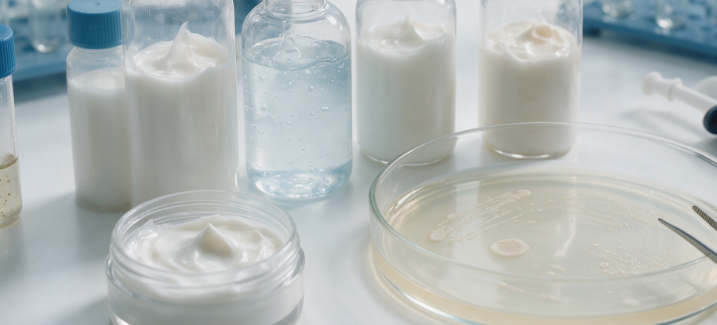
1. The Scientific and Regulatory Rationale for Cosmetic Challenge Testing
The preservative efficacy test serves multiple essential purposes: (a) to demonstrate that the product's preservative system is capable of protecting the product from microbial contamination during use; (b) to determine the log reduction of a defined inoculum of test organisms over a specified time period; (c) to verify that the product meets the acceptance criteria of the relevant regulatory standard (e.g., ISO 11930, USP <51>, EP 5.1.3); (d) to support product registration and market access; (e) to monitor the stability of the preservative system over the product's shelf‑life; and (f) to guide the optimisation of the preservative formulation. The choice of the test method – whether ISO 11930 (cosmetics), USP <51> (pharmaceuticals, often used as a reference), or EP 5.1.3 – must be tailored to the product type, the intended use, and the regulatory jurisdiction. The method must be validated to demonstrate that the neutralisation procedure is effective, that the recovery of the organisms is not inhibited, and that the test is reproducible. Our service begins with a comprehensive consultation to define the optimal testing strategy, ensuring both scientific rigor and regulatory compliance.
2. Our Comprehensive Cosmetic Preservative Efficacy Testing Platform – Standardised and Customised
We maintain a complete suite of validated challenge test methods, all performed in a dedicated microbiology facility with stringent quality controls, and using certified reference cultures (e.g., ATCC, NCTC) for method validation and daily quality assurance. Our portfolio includes:
2.1 ISO 11930 – The Cosmetics‑Specific Standard
We perform the ISO 11930 challenge test, which is the most relevant standard for cosmetic products. This method uses a panel of five test organisms: Pseudomonas aeruginosa, Staphylococcus aureus, Candida albicans, Aspergillus brasiliensis, and Escherichia coli. The product is inoculated with a defined inoculum (typically 10⁵‑10⁶ CFU/g or mL) and sampled at specific time points (0, 7, 14, and 28 days). The reduction in viable count is calculated, and the product is classified as “pass” or “fail” based on the criteria for the specific product category (A, B, or C). We provide a detailed report, including the raw data, the log reductions, and the final classification.
2.2 USP <51> and EP 5.1.3 – Reference Pharmacopoeial Methods
We also perform the USP <51> and EP 5.1.3 challenge tests, which are commonly used for pharmaceutical and, by extension, many cosmetic products. These methods use a similar inoculation and sampling protocol but have slightly different acceptance criteria. We adapt the test to your specific product and regulatory pathway, ensuring that the results are accepted by the relevant authorities.
2.3 Customised Challenge Test – For Non‑Standard Products or Organisms
We offer customised challenge tests for products that are not covered by the standard methods (e.g., anhydrous products, powders, or products with specific ingredients that may interfere with the assay). We can also use a custom panel of organisms (including environmental isolates, clinical isolates, or specific organisms of concern) to provide a more realistic challenge for your product. We develop and validate a custom protocol, including the selection of the neutraliser, the inoculum preparation, and the sampling schedule.
2.4 Neutralisation Validation – The Key to Accurate Results
A critical step in the challenge test is the validation of the neutralisation procedure, which ensures that the residual preservative in the product does not inhibit the recovery of the test organisms. We perform a comprehensive neutralisation validation using a range of neutralising agents (e.g., lecithin, polysorbate 80, or sodium thiosulphate) and confirm that the recovery of the organisms is ≥ 70% (or meets the acceptance criteria of the standard). We provide a detailed neutralisation validation report that is essential for regulatory submissions.
2.5 Quantitative Enumeration – Plate Count and Membrane Filtration
We quantify the viable organisms using validated plate‑count methods (pour‑plate, spread‑plate, or membrane filtration) with appropriate media (e.g., TSA, SDA). We use statistical methods to calculate the log reduction and the confidence intervals, and we provide a clear interpretation of the results.
2.6 Method Validation and Quality Assurance – Full Compliance
We provide full method validation for your challenge test, including: (a) neutralisation efficacy; (b) linearity (for the enumeration); (c) accuracy (by spike‑and‑recovery); (d) precision (repeatability and reproducibility); (e) robustness to variations in inoculum and incubation conditions; and (f) stability of the test organism. The validation report is structured to meet the requirements of regulatory submissions.
3. Advanced Capabilities – Challenge Beyond the Standard
For clients requiring a deeper characterisation of their preservative system or a high‑level validation of their product, we offer a suite of customised, research‑grade services that go beyond routine challenge testing:
3.1 Multiple‑Inoculum Challenge – Simulating Practical Contamination
We can perform a multiple‑inoculum challenge where the product is repeatedly challenged with new inocula over the test period (e.g., at days 0, 7, and 14). This simulates the repeated contamination that can occur during the product's use. The test provides a more realistic assessment of the preservative system's robustness.
3.2 Challenge with Mixed Organisms – Polymicrobial Contamination
We can perform a mixed‑organism challenge where the product is inoculated with a mixture of organisms (e.g., a combination of bacteria and fungi). This tests the preservative system's ability to control the growth of different organisms simultaneously.
3.3 Challenge of Preservative‑Exhausted Products – Assessing the End of the Shelf‑Life
We can perform a challenge test on a product that has been aged (e.g., at elevated temperature) to assess the preservative system's efficacy at the end of the shelf‑life. This is essential for confirming the product's stability and safety over its lifetime.
3.4 Challenge of Products with Natural Preservatives – Customised Test Conditions
For products preserved with natural or "clean‑label" preservatives, we can adapt the challenge test to the specific properties of these systems (e.g., lower concentration, different mode of action). We can also use a wider range of organisms to challenge the system.
3.5 Data Review and Regulatory Submission Support
Our team of experienced cosmetic microbiologists and regulatory specialists can assist you in the interpretation of the data, in the preparation of the required documentation for regulatory submissions (e.g., for product registration or for the validation of a new preservative strategy), and in responding to queries from authorities. We provide a full data package, including the raw data, the statistical analysis, and the supporting evidence.
4. Data Integrity, Standardisation, and Comprehensive Reporting
All analyses are conducted under a strict quality management system that includes the use of certified reference cultures, routine positive and negative controls, and participation in proficiency testing schemes (e.g., the UK NEQAS for cosmetic microbiology). Our reports provide:
- Full method description – detailing the standard used, the test organisms, the inoculum preparation, the test conditions (contact time, temperature), and the enumeration procedure.
- Detailed results – including the viable counts at each time point, the log reductions, the pass/fail determination, and the statistical analysis.
- Neutralisation validation data – confirming the effectiveness of the neutralisation for each test organism.
- Quality control data – the results of the concurrent controls, confirming the validity of the test run.
- Interpretative comments – by our senior cosmetic microbiologists, providing an assessment of the preservative efficacy, the robustness of the system, and any recommendations for product improvement or claim support.
Our reports are structured to be directly usable for regulatory submissions, for internal quality assurance, and for marketing claims.
Turnaround times: 4‑6 weeks for the standard challenge test (ISO 11930), 2‑3 weeks for a screening test, and 1‑2 weeks for method development and validation. Express services are available for urgent projects.
5. Why Choose Our Laboratory for Cosmetic Preservative Efficacy Testing
We are one of the few laboratories that hold ISO/IEC 17025 accreditation and GMP compliance for the full spectrum of cosmetic challenge test methods, including ISO 11930, USP <51>, and EP 5.1.3. Our integrated infrastructure combines a state‑of‑the‑art microbiology facility, a dedicated method development unit, and a team of PhD‑level cosmetic microbiologists – enabling cross‑verification of results and a comprehensive understanding of the preservative system. Our team comprises PhD‑level cosmetic scientists, microbiologists, and regulatory specialists with extensive experience in method development, validation, and regulatory submissions, and we have a proven track record of supporting product development and market approvals for leading cosmetic brands.
We offer unparalleled flexibility: we work with all types of cosmetic products – from simple aqueous solutions to complex emulsions, anhydrous systems, and powders – and we can adapt to your specific formulation, target organisms, and regulatory requirements. Our secure online portal enables real‑time tracking, access to raw data, and downloadable certificates of analysis.
Our modular pricing ensures cost‑effectiveness: you select the level of analysis – from a simple challenge test to a full validation and optimisation package – with discounts for routine monitoring programmes and bulk submissions. We also provide training, method transfer, and technical consultancy to help you build or strengthen your internal preservative efficacy testing capabilities.
With a proven history of serving over 100 clients in the cosmetic and personal care sectors, we have enabled our partners to validate their preservative systems, achieve regulatory compliance, and bring safe, high‑quality products to market. We invite you to leverage our expertise for your cosmetic preservative efficacy testing needs.
Contact our technical experts today to discuss your product, your preservative system, and your specific regulatory requirements. We will design a tailored testing plan and provide a detailed proposal within one business day.