Reasons for choosing our testing services
ZHONGXI Testing has obtained inspection qualification certifications from multiple countries and regions worldwide. We possess a senior testing team and advanced testing methods, providing independent, impartial, and professional third-party verification services for global carbon projects.

Internationally recognized authority
Certified by multiple international standards such as CNAS, VCS, and GS, with reports universally applicable worldwide.

Global service capability
Covering 140+ countries and regions, it supports on-site detection and remote verification in multiple languages.

Professional experimental methods
Adopt standard experimental methods to ensure accurate and reliable data.
Comprehensive Biodegradable Plastic Testing Services – Advanced Analytical Solutions for Certification, Performance, and Environmental Safety
The global shift toward sustainable materials has propelled biodegradable plastics into the spotlight, with applications ranging from packaging and agricultural films to disposable cutlery and biomedical devices. However, the term "biodegradable" is often used loosely, and without rigorous third‑party verification, products may fail to degrade as claimed, leading to environmental harm, regulatory penalties, and reputational damage. Clients seeking biodegradable plastic testing services typically aim to: (i) obtain recognized certifications such as OK compost INDUSTRIAL, OK compost HOME, DIN CERTCO, BPI, or TÜV AUSTRIA, (ii) verify degradation rates under specific disposal environments (industrial composting, home composting, soil, marine, or landfill), (iii) ensure that degradation products are non‑toxic to plants, earthworms, and aquatic life, (iv) confirm that the material meets international standards (ISO, ASTM, EN), (v) support marketing claims with defensible scientific data, and (vi) optimize formulations during research and development. Our laboratory offers a fully integrated, ISO/IEC 17025‑accredited biodegradable plastic testing service that combines respirometric biodegradability, disintegration, ecotoxicity, chemical characterization, and physical performance testing into a unified assessment platform. We do not merely report pass/fail results; we deliver a holistic degradation fingerprint that correlates material composition, processing conditions, and disposal environment with actual environmental fate, empowering our clients to achieve certification, reduce risk, and accelerate market access.
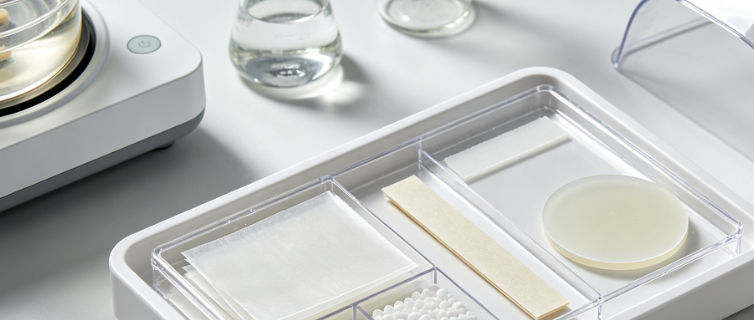
Biodegradability Testing – Respirometric Methods for Aerobic and Anaerobic Environments
The core of biodegradable plastic testing is the measurement of microbial conversion of carbon into CO₂ (aerobic) or CH₄ and CO₂ (anaerobic) under controlled conditions. Our laboratory performs aerobic biodegradability tests according to ISO 14855‑1/2, ASTM D6400, ASTM D6868, and EN 13432 using automated respirometric systems (e.g., OxiTop® and Sapromat®) that continuously monitor CO₂ evolution over periods ranging from 45 days to 180 days. We test under multiple conditions: industrial composting (58 °C, thermophilic), home composting (25–30 °C, mesophilic), soil burial (ISO 17556, ASTM D5988), and marine environments (ASTM D6691, ISO 19679). For anaerobic digestion, we follow ISO 13975 and ASTM D5511, measuring biogas production and methane yield. Each test includes a positive control (microcrystalline cellulose) and a negative control (non‑biodegradable polyethylene) to validate microbial activity and test system integrity. We provide percent biodegradation curves with statistical confidence intervals, and we calculate the degree of biodegradation at the end of the test, along with the lag phase and maximum degradation rate – parameters that are critical for distinguishing truly biodegradable materials from those that merely disintegrate.
For clients seeking certification, we offer pre‑certification screening to identify whether a formulation is likely to meet the stringent thresholds (e.g., ≥90% biodegradation in 180 days for industrial composting). Our respirometric systems are equipped with continuous CO₂ and O₂ sensors, and all data are logged automatically, eliminating manual errors and ensuring full traceability.
Disintegration and Physical Degradation Assessment – Visual and Gravimetric Analysis
Biodegradation must be preceded by disintegration, the physical breakdown of the material into fragments. We perform disintegration tests according to ISO 20200, EN 13432, and ASTM D6400, exposing test specimens to controlled composting conditions in pilot‑scale reactors (up to 200 L) with periodic turning and moisture adjustment. At defined intervals (e.g., 7, 14, 28, 56, and 84 days), we retrieve specimens and assess mass loss, dimensional changes, surface morphology (SEM), and fragmentation. We also measure the particle size distribution of residual fragments using laser diffraction and sieve analysis, ensuring that no more than 10% of the original material remains on a 2 mm sieve – a key requirement for compostability certification. For agricultural films and mulch, we conduct field disintegration tests in real soil environments, monitoring the loss of mechanical integrity and the rate of surface coverage reduction. Our gravimetric analysis is performed with a precision of ±0.1 mg, and all tests include photographic documentation at each time point.
Ecotoxicity and Environmental Safety Assessment – Beyond Biodegradation
A material that biodegrades but releases toxic intermediates cannot be considered environmentally safe. Our ecotoxicity testing suite evaluates the impact of biodegradable plastics and their degradation products on living organisms. We perform plant growth tests (OECD 208, ISO 11269‑2) using cress, barley, and tomato seeds, measuring germination rate, root elongation, and biomass. Earthworm acute toxicity (OECD 207) and reproduction tests (OECD 222) assess soil health, while aquatic toxicity tests (OECD 201, 202, 203) evaluate effects on algae, Daphnia, and fish. We also conduct microbial toxicity assays (e.g., Vibrio fischeri bioluminescence inhibition) and genotoxicity screening (Ames test) to rule out mutagenic potential. All ecotoxicity tests are performed on leachates and degradation residues obtained from the biodegradation experiments, ensuring that the assessment reflects real‑world exposure. Our reports include EC₅₀ and NOEC values, along with a comprehensive risk characterization that compares measured concentrations to predicted environmental concentrations.
Chemical Characterization and Additive Analysis – Ensuring No Harmful Substances
Biodegradable plastics often contain additives, plasticizers, stabilizers, and colorants that may persist or leach into the environment. We perform chemical characterization using Fourier‑transform infrared spectroscopy (FTIR) for polymer identification, gel permeation chromatography (GPC) for molecular weight distribution, and Thermogravimetric Analysis (TGA) for thermal stability. For additive screening, we use gas chromatography‑mass spectrometry (GC‑MS) and liquid chromatography‑mass spectrometry (LC‑MS/MS) to quantify phthalates, bisphenols, heavy metals (Pb, Cd, Cr, Hg, As), and other regulated substances. We also test for heavy metal content according to EN 13432 and ASTM D6400, ensuring that concentrations remain below the stringent limits (e.g., <50 ppm for Pb, <0.5 ppm for Cd). Our leachate analysis follows EPA 1311/1312 (TCLP/SPLP) to simulate landfill conditions and assess the mobility of toxic elements. All chemical data are correlated with ecotoxicity results to provide a complete safety profile.
Physical and Mechanical Properties – Performance During Use and Degradation
Biodegradable plastics must perform adequately during their intended service life before degrading. We evaluate tensile strength, elongation at break, and elastic modulus according to ISO 527 and ASTM D638, as well as tear resistance, puncture resistance, and impact strength for films and rigid articles. We also measure barrier properties (oxygen and water vapor transmission) using ASTM D3985 and ASTM E96, which are critical for food packaging applications. To simulate aging and storage, we perform accelerated weathering (QUV, Xenon‑arc) and heat aging tests, monitoring changes in mechanical properties over time. These data are essential for clients who need to balance durability with degradability – a key challenge in formulation development.
Our Distinctive Competencies – Accreditation, Expertise, and Global Compliance
What sets our biodegradable plastic testing service apart is the seamless integration of biodegradability, disintegration, ecotoxicity, and chemical analysis within a single laboratory, enabling correlative interpretation that is impossible when samples are shipped between multiple vendors. Our team comprises PhD‑level polymer scientists, microbiologists, and environmental toxicologists with extensive experience in biodegradable materials and certification processes. We do not simply report numbers; we interpret them in terms of formulation, processing, and disposal environment – for example, distinguishing between incomplete biodegradation due to intrinsic recalcitrance and that due to inadequate microbial activity in the test system.
Our laboratory is ISO/IEC 17025 accredited for key biodegradability and ecotoxicity methods, and we are recognized by major certification bodies (e.g., DIN CERTCO, TÜV AUSTRIA, BPI) as an approved testing partner. We maintain NIST‑traceable calibrations and participate in international proficiency testing programs (e.g., ASTM, ISO) to ensure global comparability. We offer rapid turnaround – typically 6–8 weeks for full certification packages, with expedited options available – and we accept samples in various forms: films, sheets, pellets, molded articles, and finished products. Our data analytics platform employs statistical process control and machine learning to identify trends and anomalies across batches, helping clients monitor supplier quality and optimize their own production.
We also provide custom test plans for novel materials (e.g., PHA, PLA, PBAT, starch blends) and for specific environments (e.g., marine, soil, anaerobic digestion). Our consulting services include material selection, certification strategy, and failure analysis with root‑cause determination. We offer pre‑submission reviews of technical dossiers to ensure that all required data are complete and compliant with the target certification scheme.
Comprehensive Service Modules – Tailored to Your Certification and R&D Needs
We organize our testing into modular packages to meet diverse client objectives:
Module 1 – Biodegradability Screening: Respirometric tests (ISO 14855, ASTM D6400) for industrial composting, with percent biodegradation curves and lag phase analysis – ideal for early‑stage R&D.
Module 2 – Certification Package (Industrial Composting): Full biodegradation, disintegration, ecotoxicity, and heavy metal analysis according to EN 13432 or ASTM D6400 – suitable for OK compost INDUSTRIAL, DIN CERTCO, and BPI certification.
Module 3 – Home Composting Certification: Biodegradation at mesophilic temperatures (ISO 14855‑2, ASTM D6400) and disintegration in home compost bins – for OK compost HOME and similar schemes.
Module 4 – Marine Degradability: ASTM D6691 and ISO 19679 tests in simulated seawater and marine sediment – for applications in marine environments.
Module 5 – Soil Biodegradation: ISO 17556 and ASTM D5988 for agricultural films, mulch, and soil‑contact products.
Module 6 – Ecotoxicity Assessment: Plant, earthworm, aquatic, and microbial toxicity tests – to ensure environmental safety of degradation products.
Module 7 – Chemical and Physical Characterization: FTIR, GPC, TGA, GC‑MS, LC‑MS/MS, and mechanical testing – for formulation optimization and quality control.
Module 8 – Comprehensive Certification Support: All modules combined, plus dossier preparation and liaison with certification bodies – a turnkey solution for market access.
We also offer on‑site sampling and custom test design for unique disposal scenarios, such as anaerobic digestion, landfill, or open environment.
Data Integrity, Security, and Reporting
All measurements are performed under strict SOPs, with fully traceable calibration records and environmental logging. Our Laboratory Information Management System (LIMS) records every operation, operator, and timestamp, ensuring full auditability. We use encrypted data transfer and role‑based access to protect client proprietary information. Our reports include comprehensive tables, graphs, uncertainty statements, and an executive summary that translates technical findings into actionable insights. Raw data files are available upon request. A post‑delivery review meeting is included to discuss results and recommend next steps.
Client Engagement and Workflow
Our engagement begins with a complimentary consultation to understand your material type, intended application, target certification, and specific concerns (e.g., incomplete degradation, ecotoxicity, or additive leaching). We then propose a tailored test plan with a fixed price and timeline. Upon sample receipt, we log and inspect the samples, then commence testing. Clients receive progressive updates through a secure portal, with preliminary data shared on request. The final report is delivered in PDF format, and we offer a follow‑up call to discuss the findings and their implications for your certification or product development.
Conclusion – Validating Biodegradability with Scientific Rigor and Market Credibility
Biodegradable plastics hold the promise of a circular economy, but that promise can only be realized through rigorous, multidimensional testing that verifies degradation, safety, and performance. Our comprehensive, ISO‑accredited testing service provides exactly that – a one‑stop solution that combines biodegradability, disintegration, ecotoxicity, and chemical analyses into a unified, interpretable picture. With our advanced instrumentation, deep materials expertise, and global regulatory knowledge, we empower our clients to achieve certification, substantiate marketing claims, and confidently bring sustainable products to market. Whether you are developing a new biopolymer, seeking OK compost certification, or investigating a field failure, our service delivers the clarity and confidence you need to succeed.
We invite you to contact our biodegradable plastic testing specialists to discuss your specific requirements. Let us partner with you to ensure that your biodegradable products meet the highest standards of environmental safety and performance – from the laboratory to the compost heap. Your journey to credible biodegradability begins with our rigorous, integrative, and actionable testing.