Reasons for choosing our testing services
ZHONGXI Testing has obtained inspection qualification certifications from multiple countries and regions worldwide. We possess a senior testing team and advanced testing methods, providing independent, impartial, and professional third-party verification services for global carbon projects.

Internationally recognized authority
Certified by multiple international standards such as CNAS, VCS, and GS, with reports universally applicable worldwide.

Global service capability
Covering 140+ countries and regions, it supports on-site detection and remote verification in multiple languages.

Professional experimental methods
Adopt standard experimental methods to ensure accurate and reliable data.
Comprehensive Leather Testing Services – Advanced Analytical Solutions for Quality, Compliance, and Performance
Leather is a complex, versatile material used in footwear, apparel, automotive interiors, furniture, and luxury goods. Its performance and safety are governed not only by the animal hide source but also by the tanning, retanning, dyeing, finishing, and coating processes. Clients seeking leather testing services typically aim to: (i) verify that raw materials and finished products meet international standards such as ISO, ASTM, EN, and GB/T, (ii) ensure compliance with chemical regulations like REACH, CPSIA, and OEKO‑TEX, (iii) troubleshoot performance failures such as cracking, color bleeding, or excessive shrinkage, (iv) obtain certifications for eco‑labels and market access, and (v) generate comprehensive test reports for buyers, auditors, and regulatory bodies. Our laboratory offers a fully integrated, ISO/IEC 17025‑accredited leather testing service that combines physical, mechanical, chemical, colorfastness, and performance testing into a unified assessment platform. We do not merely report pass/fail results; we deliver a holistic leather quality fingerprint that correlates hide type, tanning chemistry, and finishing formulation with actual performance, empowering our clients to make informed decisions on material selection, supplier qualification, and product development.
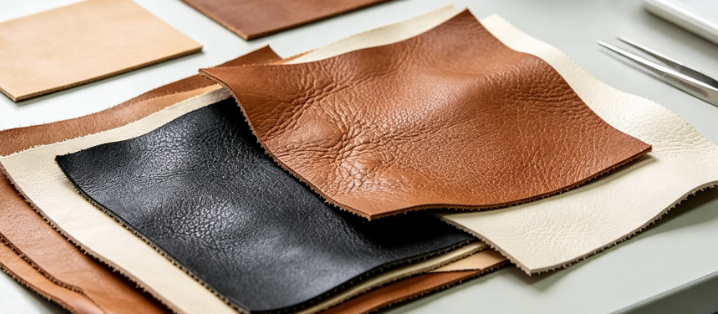
Physical and Mechanical Property Testing – Durability and Structural Integrity
The mechanical properties of leather determine its suitability for specific applications and its ability to withstand repeated flexing, abrasion, and stretching. Our laboratory performs a comprehensive suite of mechanical tests, including tensile strength and elongation (ISO 3376, ASTM D2209), tear strength (ISO 3377‑1/2, ASTM D4704), flexing endurance (ISO 5402‑1/2, ASTM D6182), and grain crack resistance (ISO 5402‑2, ASTM D2210). We also evaluate abrasion resistance using Taber (ASTM D7255) and Martindale (ISO 17076‑2) methods, which are critical for upholstery, automotive, and footwear applications. Adhesion of finishes is assessed via peel strength (ISO 11644, ASTM D2724), and softness is quantified using a leather softness tester (ISO 17235). We measure thickness, area, and density (ISO 2589, ASTM D1817) to ensure consistency, and we perform compression and recovery tests for cushioning applications. All mechanical tests are conducted under controlled environmental conditions (23 ± 2 °C, 50 ± 5% RH) to ensure reproducibility.
Chemical Safety and Regulatory Compliance – Protecting Consumers and the Environment
Leather products are subject to increasingly stringent chemical regulations worldwide. Our chemical testing services cover a wide range of restricted substances: chromium VI (ISO 17075‑1/2, EN ISO 17075) with detection limits down to 3 mg/kg, formaldehyde (ISO 17226‑1/2, ASTM D5910), azo dyes (ISO 17234‑1/3, EN ISO 17234) with detection limits down to 5 mg/kg, heavy metals (Pb, Cd, Cr, Hg, As, etc.) using ICP‑MS (ISO 17294‑2, ASTM D7439), organotin compounds (ISO 17353), phthalates (ISO 14389, ASTM D3421), polycyclic aromatic hydrocarbons (PAHs) (ISO 18287), perfluorinated compounds (PFCs) (ISO 25101), alkylphenol ethoxylates (APEOs) (ISO 18254), and chlorinated phenols (ISO 17070). We also test for pesticides (ISO 15913), dimethyl fumarate (ISO 16186), and allergenic disperse dyes (ISO 16373‑2). All analyses are performed on state‑of‑the‑art instrumentation, including GC‑MS, LC‑MS/MS, ICP‑MS, and UV‑Vis spectrophotometry, with full method validation and traceability to NIST standards.
Colorfastness and Appearance Retention – Color Durability Under Real‑World Conditions
Colorfastness is one of the most common causes of consumer complaints and product returns. Our colorfastness testing suite covers all major exposure conditions: rubbing (crocking – ISO 11640, ASTM D5053), washing (ISO 105‑C06, AATCC 61), light (xenon‑arc – ISO 105‑B02, AATCC 16), perspiration (ISO 105‑E04, AATCC 15), water (ISO 105‑E01), sea water (ISO 105‑E02), and dry cleaning (ISO 105‑D01). We also assess color migration into adjacent materials (ISO 105‑A03) and phenolic yellowing (ISO 105‑X18), which is particularly relevant for storage and transport. All colorfastness tests are evaluated using a spectrophotometer (Datacolor or X‑Rite) with CIELAB color difference calculations (ΔE*, ΔL*, Δa*, Δb*) and grey scale ratings, ensuring objective, reproducible results. Our laboratory also offers appearance retention testing after multiple cycles of flexing, abrasion, and exposure, including color loss, cracking, and surface distortion, providing a complete picture of how the leather will perform over its lifetime.
Performance and Functional Testing – Water Repellency, Breathability, and Special Properties
Modern leathers are increasingly engineered to deliver specific functional properties. Our laboratory evaluates water repellency using spray rating (ISO 4920, AATCC 22) and hydrostatic pressure (ISO 811, AATCC 127), as well as water resistance after multiple flexing cycles (ISO 5403‑1/2). Breathability is measured via moisture vapor transmission rate (MVTR) using the upright cup method (ASTM E96, ISO 15496) and the dynamic moisture permeation cell (ASTM F2298). Thermal resistance and water vapor resistance are assessed with a sweating guarded hotplate (ISO 11092) for footwear and apparel. Flammability testing includes 45‑degree angle test (ASTM D1230), vertical flame test (ASTM D6413, ISO 15025), and limiting oxygen index (LOI – ASTM D2863) for flame‑retardant leathers. We also offer UV protection testing (AS/NZS 4399, AATCC 183) to determine UPF ratings, and antimicrobial activity testing (ISO 20743, AATCC 100) for hygienic leather products. All functional tests are conducted under controlled environmental conditions to ensure reproducibility.
Microbiological and Organoleptic Testing – Odor, Mold, and Sensory Quality
Leather is susceptible to microbial growth, especially in humid environments, which can cause odors, discoloration, and deterioration. We perform microbiological testing for total bacterial count, mold and yeast count, and specific pathogens (e.g., Staphylococcus aureus, Escherichia coli) according to ISO 22196 and ISO 20743. We also evaluate odor using a trained sensory panel or instrumental methods (GC‑MS olfactometry), quantifying volatile organic compounds (VOCs) that contribute to unpleasant smells. Organoleptic properties such as softness, handle, and grain appearance are assessed by expert evaluators using standardized scales, providing a complete sensory profile. These tests are essential for automotive interiors, footwear, and luxury goods where consumer perception is critical.
Our Distinctive Competencies – Accreditation, Expertise, and Global Compliance
What sets our leather testing service apart is the seamless integration of physical, chemical, and functional testing within a single laboratory, enabling correlative interpretation that is impossible when samples are shipped between multiple vendors. Our team comprises PhD‑level leather scientists, chemists, and engineers with extensive experience in hide processing, tanning chemistry, and regulatory affairs. We do not simply report numbers; we interpret them in terms of raw material quality, processing history, and end‑use performance – for example, distinguishing between chromium VI formation due to poor tanning control versus post‑manufacturing oxidation, or identifying the root cause of color bleeding as incomplete dye fixation versus inadequate washing.
Our laboratory is ISO/IEC 17025 accredited for a wide range of leather test methods, and we are recognized by major certification bodies (e.g., OEKO‑TEX, GOTS, Bluesign) as an approved testing partner. We maintain NIST‑traceable calibrations for all equipment and participate in international proficiency testing programs (e.g., ASTM, ISO, UNIDO) to ensure global comparability. We offer rapid turnaround – typically 3–5 business days for standard testing packages, with expedited options available – and we accept samples in various forms: raw hides, crust leather, finished leather, and manufactured articles. Our data analytics platform employs statistical process control and machine learning to identify trends and anomalies across batches, helping clients monitor supplier quality and optimize their own production.
We also provide custom test plans for novel leather types (e.g., bio‑based, recycled, high‑performance) and for specific end‑use requirements (e.g., automotive, medical, aerospace). Our consulting services include material selection, certification strategy, and failure analysis with root‑cause determination. We offer pre‑submission reviews of technical dossiers to ensure that all required data are complete and compliant with the target market regulations.
Comprehensive Service Modules – Tailored to Your Needs
We organize our testing into modular packages to meet diverse client objectives:
Module 1 – Basic Physical and Mechanical Properties: Tensile, tear, flexing, abrasion, adhesion, and softness – essential for incoming material inspection and quality control.
Module 2 – Chemical Compliance Package: Chromium VI, formaldehyde, azo dyes, heavy metals, APEOs, PFCs, and phthalates – for REACH, CPSIA, and OEKO‑TEX compliance.
Module 3 – Colorfastness Package: Rubbing, washing, light, perspiration, water, and chlorinated water – for appearance retention and consumer satisfaction.
Module 4 – Functional Performance Package: Water repellency, breathability, flammability, UV protection, and antimicrobial – for technical and performance leathers.
Module 5 – Microbiological and Organoleptic Testing: Microbial count, odor, and sensory evaluation – for automotive, footwear, and luxury applications.
Module 6 – Comprehensive Leather Qualification Package: All modules combined into a single project, with integrated analysis, statistical summary, and a detailed interpretive report – suitable for buyer approval, supplier audits, or regulatory submissions.
We also offer on‑site sampling and custom test design for unique leathers or applications.
Data Integrity, Security, and Reporting
All measurements are performed under strict SOPs, with fully traceable calibration records and environmental logging. Our Laboratory Information Management System (LIMS) records every operation, operator, and timestamp, ensuring full auditability. We use encrypted data transfer and role‑based access to protect client proprietary information. Our reports include comprehensive tables, graphs, uncertainty statements, and an executive summary that translates technical findings into actionable insights. Raw data files are available upon request. A post‑delivery review meeting is included to discuss results and recommend next steps.
Client Engagement and Workflow
Our engagement begins with a complimentary consultation to understand your leather type, intended application, target market, and specific concerns (e.g., chromium VI, color bleeding, or flex cracking). We then propose a tailored test plan with a fixed price and timeline. Upon sample receipt, we log and inspect the samples, then commence testing. Clients receive progressive updates through a secure portal, with preliminary data shared on request. The final report is delivered in PDF format, and we offer a follow‑up call to discuss the findings and their implications for your product development or sourcing decisions.
Conclusion – Ensuring Leather Excellence from Hide to Finished Product
Leather testing is not merely a regulatory hurdle; it is a strategic investment in product quality, consumer safety, and brand reputation. Our comprehensive, ISO‑accredited testing service provides exactly that – a one‑stop solution that combines physical, chemical, and functional analyses into a unified, interpretable picture. With our advanced instrumentation, deep leather expertise, and global regulatory knowledge, we empower our clients to verify material compliance, prevent costly failures, and confidently bring high‑quality leather products to market. Whether you are developing a new collection, qualifying a new supplier, or investigating a field return, our service delivers the clarity and confidence you need to succeed.
We invite you to contact our leather testing specialists to discuss your specific requirements. Let us partner with you to ensure that your leather products meet the highest standards of quality, safety, and performance – from the tannery to the consumer. Your journey to leather excellence begins with our rigorous, integrative, and actionable testing.