Reasons for choosing our testing services
ZHONGXI Testing has obtained inspection qualification certifications from multiple countries and regions worldwide. We possess a senior testing team and advanced testing methods, providing independent, impartial, and professional third-party verification services for global carbon projects.

Internationally recognized authority
Certified by multiple international standards such as CNAS, VCS, and GS, with reports universally applicable worldwide.

Global service capability
Covering 140+ countries and regions, it supports on-site detection and remote verification in multiple languages.

Professional experimental methods
Adopt standard experimental methods to ensure accurate and reliable data.
Comprehensive Flooring Board Testing Services – Advanced Analytical Solutions for Safety, Durability, and Compliance
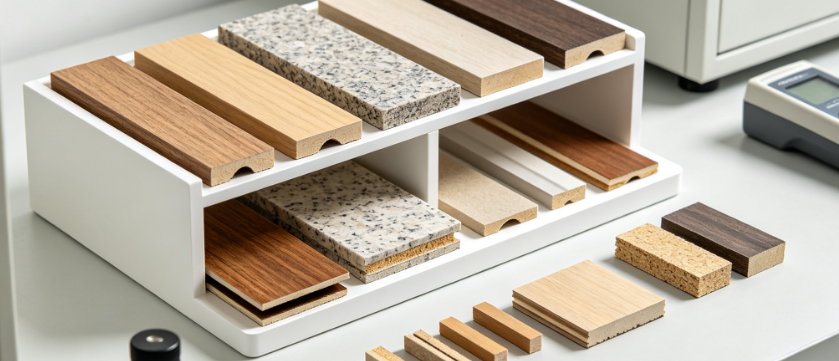
Flooring boards – including laminate, engineered wood, solid wood, bamboo, vinyl (LVT/SPC), and composite panels – are subjected to relentless mechanical, environmental, and chemical stresses throughout their service life. Their performance directly affects indoor air quality, structural integrity, acoustic comfort, and aesthetic longevity. Clients seeking flooring board testing services typically aim to: (i) verify compliance with international standards such as ISO, ASTM, EN, and GB/T, (ii) ensure indoor air safety by quantifying formaldehyde and VOC emissions, (iii) assess durability against abrasion, impact, moisture, and staining, (iv) evaluate fire resistance and slip resistance for commercial and public spaces, and (v) generate certification data for CE marking, FloorScore, GREENGUARD, or CARB compliance. Our laboratory offers a fully integrated, ISO/IEC 17025‑accredited flooring board testing service that combines physical, mechanical, chemical, fire, acoustic, and slip resistance testing with advanced instrumental analysis into a unified assessment platform. We do not merely report pass/fail results; we deliver a holistic flooring quality fingerprint that correlates raw material composition, manufacturing parameters, and surface treatment with real‑world performance, empowering our clients to accelerate product development, reduce claims, and achieve market access with confidence.
Why Professional Flooring Board Testing Is Critical for Manufacturers, Importers, and Specifiers
Flooring failures – such as warping, delamination, excessive wear, or unacceptable formaldehyde emission – can lead to costly recalls, health complaints, and reputational damage. Regulatory requirements are also tightening globally: the U.S. EPA TSCA Title VI and California CARB ATCM 93120 regulate formaldehyde emissions from composite wood products; the EU Construction Products Regulation (CPR) mandates CE marking for flooring; and many green building schemes (LEED, BREEAM) require documented VOC and sustainability data. Our testing services provide the objective evidence needed to demonstrate compliance, support marketing claims, and win specification battles. We help clients navigate the complex landscape of standards, including EN 13329, EN 14342, ISO 10582, ASTM D4060, ASTM D2047, ASTM E648, and ISO 9239, ensuring that every board meets the requirements of its intended application.
Mechanical and Physical Property Testing – Durability Under Real‑World Conditions
The mechanical performance of flooring boards determines their resistance to wear, impact, and structural failure. Our laboratory performs a comprehensive suite of tests:
Abrasion Resistance: taber abrasion (ASTM D4060, EN 13329) with calibrated wheels and weights, measuring wear cycles to reach a defined wear‑through point. For laminate flooring, we also perform the Martindale abrasion test (ISO 12947) and the castor chair test (EN 425) to simulate rolling loads.
impact resistance: Falling ball impact (EN 13329, ISO 24343‑1), large‑diameter ball impact (ASTM D5420), and concentrated impact (ASTM D1037) to assess resistance to dropping objects and foot traffic. We measure indentation depth, crack formation, and delamination.
Dimensional Stability: Thermal and hygroscopic expansion (EN 434, ISO 24339), curling, and warping after exposure to varying humidity and temperature. We also measure thickness swelling (EN 317, ASTM D1037) after water immersion, which is critical for wood‑based boards.
Flexural Strength and Modulus: Three‑point and four‑point bending tests (EN 310, ASTM D790) to determine the load‑bearing capacity and stiffness of boards.
Surface Bonding and Delamination: Pull‑off adhesion (ASTM D4541) and cross‑cut adhesion (ASTM D3359) to evaluate the bonding strength between layers.
Static Load and Point Load: Resistance to furniture legs and heavy equipment (EN 424, ISO 24343‑2), measuring residual indentation.
All mechanical tests are conducted under controlled environmental conditions (23 ± 2 °C, 50 ± 5% RH) to ensure reproducibility, and results are reported with statistical confidence intervals.
Chemical Safety and Indoor Air Quality – Formaldehyde, VOC, and Heavy Metals
Indoor air quality is a primary concern for flooring products, especially those containing adhesives, resins, and coatings. Our chemical testing services cover a wide range of regulated substances:
Formaldehyde Emission: We perform chamber testing (ASTM D6007, EN 717‑1) and desiccator testing (EN 717‑3, ASTM D5582) to quantify formaldehyde release from composite wood cores. Our facilities include 1 m³ and 20 L chambers with controlled temperature, humidity, and air exchange rates. Detection limits are as low as 0.01 ppm.
Volatile Organic Compounds (VOCs): We use thermal desorption GC‑MS (ISO 16000‑6, ASTM D5116) to identify and quantify individual VOCs, including benzene, toluene, xylenes, styrene, and aldehydes. We also measure total VOC (TVOC) and provide emission rate data for green building certifications.
Heavy Metals: ICP‑MS and ICP‑OES (ASTM D3335, CPSC‑CH‑E1001‑09.3) quantify lead, cadmium, chromium, mercury, arsenic, and other toxic elements in coatings, pigments, and substrates.
Phthalates and Plasticizers: GC‑MS (ASTM D7083, CPSC‑CH‑C1001‑09.3) for DEHP, DBP, BBP, and other restricted phthalates in vinyl flooring.
Polycyclic Aromatic Hydrocarbons (PAHs): GC‑MS (ISO 18287) for benzo[a]pyrene and other carcinogenic PAHs in rubber and recycled materials.
Organotin Compounds: GC‑MS (ISO 17353) for tributyltin and dibutyltin in PVC and coatings.
All chemical analyses are performed on state‑of‑the‑art instrumentation with full method validation and NIST‑traceable calibration.
Fire Performance and Flammability Testing – Meeting Building Code Requirements
Fire safety is a non‑negotiable requirement for flooring in commercial, public, and high‑rise buildings. Our fire testing suite includes:
Reaction‑to‑Fire Tests: Cone calorimeter (ISO 5660‑1, ASTM E1354) to measure heat release rate, smoke production, and ignition time. We also perform the radiant panel test (ASTM E648, EN 9239‑1) for critical radiant flux, and the flooring radiant panel test (ISO 9239‑1) for flame spread.
Flammability of Materials: UL 94, ASTM D635, and IEC 60695‑11‑10 for horizontal and vertical burning rates.
Smoke Density: ASTM E662 and ISO 5659‑2 for specific optical density of smoke.
Non‑Combustibility: ISO 1182 and ASTM E136 for inorganic or mineral‑based boards.
Fire Resistance: ASTM E119 and EN 1365‑2 for assemblies requiring fire‑rated performance.
Our fire testing laboratory is equipped with calibrated instrumentation and experienced technicians, and we provide comprehensive reports with all relevant fire performance parameters for building code compliance.
Slip Resistance and Acoustic Performance – Safety and Comfort Underfoot
Slip resistance is critical for preventing accidents, especially in commercial kitchens, bathrooms, and public spaces. We measure the coefficient of friction (COF) using the English XL tribometer (ASTM F1679), the James Machine (ASTM D2047), and the ramp test (DIN 51130, AS 4586). We also assess slip resistance after contamination with water, oil, and cleaning agents. For acoustic performance, we measure impact sound insulation (ISO 717‑2, ASTM E492) and airborne sound insulation (ISO 717‑1, ASTM E90) using a standard tapping machine and reverberation rooms. These data are essential for multi‑story residential and commercial buildings where noise transmission is a major concern.
Advanced Instrumental Analysis – FTIR, GC‑MS, SEM, and Thermal Analysis
To diagnose failures and reverse‑engineer competitor products, we offer a comprehensive suite of instrumental techniques. Fourier‑transform infrared spectroscopy (FTIR) identifies polymer binders, coatings, and additives. Pyrolysis GC‑MS provides detailed compositional information on resins, plasticizers, and stabilizers. Scanning electron microscopy (SEM) with EDS examines surface morphology, wear patterns, and cross‑sectional structure at the microscale. Thermal analysis (DSC, TGA, DMA) characterizes glass transition, melting behavior, and thermal stability. X‑ray diffraction (XRD) identifies crystalline phases in mineral fillers and coatings. These techniques allow us to identify the root cause of failures such as poor adhesion, uneven wear, or excessive emission, and to recommend corrective actions at the formulation or process level.
Our Distinctive Competencies – Accreditation, Expertise, and Rapid Turnaround
What sets our flooring board testing service apart is the seamless integration of physical, chemical, fire, and acoustic testing within a single laboratory, enabling correlative interpretation that is impossible when samples are shipped between multiple vendors. Our team comprises PhD‑level polymer scientists, chemists, and materials engineers with extensive experience in flooring technology, wood composites, and regulatory affairs. We do not simply report numbers; we interpret them in terms of raw material quality, manufacturing parameters, and end‑use conditions – for example, distinguishing between formaldehyde emission from the core versus the coating, or identifying the root cause of warping as insufficient conditioning versus inadequate moisture barrier.
Our laboratory is ISO/IEC 17025 accredited for a wide range of flooring test methods, and we are recognized by major certification bodies (e.g., CARB, EPA TSCA Title VI, FloorScore, GREENGUARD) as an approved testing partner. We maintain NIST‑traceable calibrations for all equipment and participate in international proficiency testing programs (e.g., ASTM, ISO, EN) to ensure global comparability. We offer rapid turnaround – typically 5–7 business days for standard testing packages, with expedited options available – and we accept samples in various forms: full boards, cut sections, and finished flooring assemblies. Our data analytics platform employs statistical process control and machine learning to identify trends and anomalies across batches, helping clients monitor supplier quality and optimize their own production.
We also provide custom test plans for novel flooring materials (e.g., rigid core SPC, WPC, hybrid, bio‑based) and for specific end‑use requirements (e.g., sports floors, raised access floors, outdoor decking). Our consulting services include material selection, certification strategy, and failure analysis with root‑cause determination. We offer pre‑submission reviews of technical dossiers to ensure that all required data are complete and compliant with the target market regulations.
Comprehensive Service Modules – Tailored to Your Flooring Product
We organize our testing into modular packages to meet diverse client objectives:
Module 1 – Mechanical and Physical Properties: Abrasion, impact, dimensional stability, flexural strength, and surface bonding – essential for quality control and product development.
Module 2 – Chemical Safety and Indoor Air Quality: Formaldehyde, VOC, heavy metals, phthalates, and PAHs – for CARB, EPA TSCA Title VI, and green building compliance.
Module 3 – Fire Performance: Cone calorimeter, radiant panel, smoke density, and non‑combustibility – for building code and fire safety certification.
Module 4 – Slip Resistance and Acoustics: COF, ramp test, impact sound, and airborne sound – for safety and comfort in residential and commercial spaces.
Module 5 – Advanced Instrumental Analysis: FTIR, GC‑MS, SEM‑EDS, DSC, TGA, and XRD – for failure analysis and formulation reverse‑engineering.
Module 6 – Comprehensive Flooring Qualification Package: All modules combined into a single project, with integrated analysis, statistical summary, and a detailed interpretive report – suitable for product launch, certification, or regulatory submission.
We also offer on‑site sampling and custom test design for unique flooring systems or installation methods.
Data Integrity, Security, and Reporting
All measurements are performed under strict SOPs, with fully traceable calibration records and environmental logging. Our Laboratory Information Management System (LIMS) records every operation, operator, and timestamp, ensuring full auditability. We use encrypted data transfer and role‑based access to protect client proprietary information. Our reports include comprehensive tables, graphs, uncertainty statements, and an executive summary that translates technical findings into actionable insights. Raw data files are available upon request. A post‑delivery review meeting is included to discuss results and recommend next steps.
Client Engagement and Workflow
Our engagement begins with a complimentary consultation to understand your flooring type, intended application, target market, and specific concerns (e.g., formaldehyde emission, wear resistance, or fire rating). We then propose a tailored test plan with a fixed price and timeline. Upon sample receipt, we log and inspect the samples, then commence testing. Clients receive progressive updates through a secure portal, with preliminary data shared on request. The final report is delivered in PDF format, and we offer a follow‑up call to discuss the findings and their implications for your product development or certification.
Conclusion – Ensuring Flooring Excellence from Board to Installation
Flooring boards are long‑term investments that must withstand years of wear, moisture, and chemical exposure while maintaining safety and aesthetics. Our comprehensive, ISO‑accredited testing service provides exactly that – a one‑stop solution that combines mechanical, chemical, fire, and acoustic analyses into a unified, interpretable picture. With our advanced instrumentation, deep materials expertise, and global regulatory knowledge, we empower our clients to verify compliance, prevent costly failures, and confidently bring high‑performance flooring products to market. Whether you are developing a new collection, qualifying a new supplier, or investigating a field complaint, our service delivers the clarity and confidence you need to succeed.
We invite you to contact our flooring board testing specialists to discuss your specific requirements. Let us partner with you to ensure that your flooring products meet the highest standards of quality, safety, and durability – from the factory to the finished floor. Your journey to flooring excellence begins with our rigorous, integrative, and actionable testing.