Reasons for choosing our testing services
ZHONGXI Testing has obtained inspection qualification certifications from multiple countries and regions worldwide. We possess a senior testing team and advanced testing methods, providing independent, impartial, and professional third-party verification services for global carbon projects.

Internationally recognized authority
Certified by multiple international standards such as CNAS, VCS, and GS, with reports universally applicable worldwide.

Global service capability
Covering 140+ countries and regions, it supports on-site detection and remote verification in multiple languages.

Professional experimental methods
Adopt standard experimental methods to ensure accurate and reliable data.
Comprehensive Inorganic Metal Oxide Testing Services – Advanced Characterization for Performance, Purity, and Compliance
Inorganic metal oxides constitute a vast and indispensable class of materials that underpin modern technology, from structural ceramics and catalysts to pigments, semiconductors, batteries, and biomedical implants. Their functional properties – including bandgap, dielectric constant, thermal stability, catalytic activity, and biocompatibility – are exquisitely sensitive to chemical composition, crystal phase, particle size, surface chemistry, and defect structure. A slight deviation in stoichiometry, an unexpected polymorph, or trace impurity can dramatically alter performance, leading to device failure, reduced yield, or regulatory non‑compliance. Clients seeking inorganic metal oxide testing services typically aim to: (i) verify chemical composition and purity against specifications, (ii) identify and quantify crystalline phases and polymorphs, (iii) measure particle size, surface area, and morphology, (iv) evaluate thermal, electrical, optical, and magnetic properties, (v) detect trace impurities and surface contamination, and (vi) perform failure analysis to identify root causes of degradation or malfunction. Our laboratory offers a fully integrated, ISO/IEC 17025‑accredited inorganic metal oxide testing service that combines chemical, structural, morphological, thermal, electrical, optical, and surface analysis into a unified assessment platform. We do not merely report pass/fail results; we deliver a holistic material quality fingerprint that correlates synthesis parameters, processing history, and end‑use conditions with real‑world performance, empowering our clients to accelerate development, reduce defects, and achieve global market access with confidence.
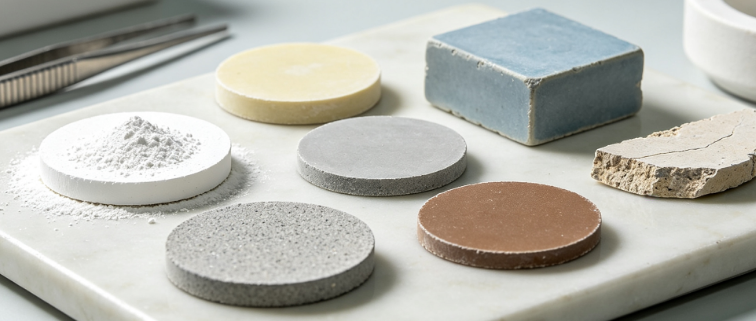
Why Professional Inorganic Metal Oxide Testing Is Indispensable for Quality and Reliability
Metal oxides are used in applications where failure is costly or dangerous: solid oxide fuel cells, lithium‑ion battery cathodes, gas sensors, varistors, thermal barrier coatings, and nuclear fuels. Their properties are governed by a complex interplay of composition, crystal structure, microstructure, and defects. For example, the catalytic activity of TiO₂ depends critically on its anatase‑to‑rutile ratio and surface hydroxyl density; the ionic conductivity of yttria‑stabilized zirconia is determined by dopant concentration and grain boundary chemistry; the color and opacity of iron oxide pigments depend on particle size and phase purity. Without rigorous characterization, these critical parameters remain unknown, leading to inconsistent products, premature failures, and regulatory rejections. Our testing services provide the objective evidence needed to diagnose process drift, qualify new suppliers, and support technology transfer. We help clients navigate the complex landscape of standards and specifications, including ASTM, ISO, DIN, and GB/T, ensuring that every metal oxide material meets the stringent requirements of its intended application.
Our Comprehensive Characterization Platform – From Bulk Composition to Surface Chemistry
We evaluate inorganic metal oxides across the entire lifecycle, from raw powders and precursors to sintered bodies, coatings, and finished components. Our capabilities span the full range of characterization techniques, enabling correlative analysis that is impossible when samples are shipped between multiple vendors.
Chemical Composition and Purity Analysis: X‑ray fluorescence (XRF) provides rapid, non‑destructive elemental analysis of major oxides and trace elements, with detection limits down to 10 ppm. Inductively coupled plasma optical emission spectrometry (ICP‑OES) and inductively coupled plasma mass spectrometry (ICP‑MS) offer higher sensitivity, achieving detection limits as low as 0.01 ppb for trace impurities. We also perform combustion analysis for carbon and sulfur, inert gas fusion for oxygen and nitrogen, and ion chromatography for anions. For surface contamination, we use total reflection X‑ray fluorescence (TXRF) and time‑of‑flight secondary ion mass spectrometry (ToF‑SIMS).
Crystal Structure and Phase Identification: X‑ray diffraction (XRD) with Cu Kα radiation is the primary tool for phase identification, lattice parameter determination, and crystallite size analysis. We perform Rietveld refinement to quantify phase fractions, site occupancies, and microstrain. High‑temperature XRD up to 1600 °C enables in‑situ studies of phase transitions and thermal stability. Raman spectroscopy and Fourier‑transform infrared spectroscopy (FTIR) complement XRD for amorphous or nanocrystalline phases and for detecting subtle structural changes.
Particle Size, Surface Area, and Morphology: Laser diffraction and dynamic light scattering (DLS) measure particle size distributions from 10 nm to 3 mm. Brunauer‑Emmett‑Teller (BET) analysis determines specific surface area and pore size distribution. Scanning electron microscopy (SEM) and transmission electron microscopy (TEM) provide high‑resolution imaging of particle shape, agglomeration, and surface texture. Atomic force microscopy (AFM) measures surface roughness and grain boundary topography with sub‑nanometer resolution.
Thermal Properties and Stability: Thermogravimetric Analysis (TGA) and differential scanning calorimetry (DSC) quantify mass loss, decomposition, phase transitions, and specific heat capacity. Differential thermal analysis (DTA) detects exothermic and endothermic events. Dilatometry measures coefficient of thermal expansion (CTE) from room temperature to 1600 °C. Laser flash analysis determines thermal diffusivity and conductivity. We also perform thermal shock resistance testing per ASTM C1525.
Electrical, Optical, and Magnetic Properties: For functional oxides, we measure dielectric constant and loss tangent by impedance spectroscopy, DC resistivity, and dielectric breakdown strength. For semiconductors, we perform Hall effect measurements to determine carrier concentration and mobility. UV‑Vis‑NIR spectrophotometry quantifies transmittance, reflectance, and bandgap. Photoluminescence (PL) spectroscopy reveals defect‑related emission. Magnetic properties are characterized by vibrating sample magnetometry (VSM) and superconducting quantum interference device (SQUID) magnetometry.
Surface Chemistry and Defect Analysis: X‑ray photoelectron spectroscopy (XPS) quantifies surface elemental composition, oxidation states, and adsorbed species. Auger electron spectroscopy (AES) provides high‑spatial‑resolution chemical mapping. Electron paramagnetic resonance (EPR) detects unpaired electrons and oxygen vacancies. Cathodoluminescence (CL) mapping correlates radiative defects with microstructure.
Failure Analysis and Root‑Cause Diagnostics: When metal oxide components fail, our failure analysis service combines fractography, microscopy, spectroscopy, and thermal analysis to identify the root cause. We use SEM‑EDS, FIB‑TEM, X‑ray CT, and finite element analysis (FEA) to reconstruct failure timelines and recommend corrective actions.
Our Distinctive Competencies – Accreditation, Expertise, Integration, and Rapid Turnaround
What sets our inorganic metal oxide testing service apart is the seamless integration of chemical, structural, morphological, thermal, electrical, optical, and surface analysis within a single laboratory, enabling correlative interpretation that is impossible when samples are shipped between multiple vendors. Our team comprises PhD‑level materials scientists, chemists, and engineers with extensive experience in oxide synthesis, processing, and characterization. We do not simply report numbers; we interpret them in terms of synthesis chemistry, processing kinetics, and end‑use conditions – for example, distinguishing between phase impurities formed during calcination versus those formed during sintering, or identifying the root cause of low surface area as agglomeration versus insufficient pore development.
Our laboratory is ISO/IEC 17025 accredited for a wide range of metal oxide test methods, and we are recognized by major certification bodies and industry associations. We maintain NIST‑traceable calibrations for all equipment and participate in international proficiency testing programs (e.g., ASTM, ISO, NIST) to ensure global comparability. We offer rapid turnaround – typically 5–7 business days for standard testing packages, with expedited options available – and we accept samples in various forms: powders, slurries, sintered pellets, coatings, and finished components. Our data analytics platform employs statistical process control and machine learning to identify trends and anomalies across batches, helping clients monitor supplier quality and optimize their own production.
We also provide custom test plans for novel metal oxides (e.g., high‑entropy oxides, perovskite oxides, spinel oxides, and 2D oxides) and for specific environments (e.g., cryogenic, corrosive, high‑radiation). Our consulting services include material selection, design allowables, certification strategy, and failure analysis with root‑cause determination. We offer on‑site sampling and mobile testing units for large components, ensuring that critical measurements can be performed without transport delays.
Comprehensive Service Modules – Tailored to Your Material and Application
We organize our testing into modular packages to meet diverse client objectives:
Module 1 – Chemical Composition and Purity: XRF, ICP‑OES, ICP‑MS, combustion analysis, and ion chromatography – for elemental composition, trace impurities, and stoichiometry.
Module 2 – Crystal Structure and Phase Analysis: XRD, Rietveld refinement, high‑temperature XRD, Raman, and FTIR – for phase identification, polymorph quantification, and crystallite size.
Module 3 – Particle Size, Surface Area, and Morphology: Laser diffraction, DLS, BET, SEM, TEM, and AFM – for particle size distribution, surface area, porosity, and shape.
Module 4 – Thermal Properties and Stability: TGA, DSC, DTA, dilatometry, and laser flash – for thermal expansion, conductivity, phase transitions, and decomposition.
Module 5 – Electrical, Optical, and Magnetic Properties: Impedance spectroscopy, Hall effect, UV‑Vis‑NIR, PL, VSM, and SQUID – for functional characterization of electronic and magnetic oxides.
Module 6 – Surface Chemistry and Defect Analysis: XPS, AES, EPR, ToF‑SIMS, and CL mapping – for surface composition, oxidation states, and defect identification.
Module 7 – Failure Analysis and Root‑Cause Investigation: SEM‑EDS, FIB‑TEM, X‑ray CT, and FEA – for component failures and process troubleshooting.
Module 8 – Comprehensive Metal Oxide Qualification Package: All modules combined into a single project, with integrated analysis, statistical summary, and a detailed interpretive report – suitable for product launch, certification, or regulatory submission.
We also design custom test plans for special requirements, such as high‑temperature mechanical testing in inert atmosphere, electrical testing at cryogenic temperatures, or in‑situ XRD during sintering.
Data Integrity, Security, and Reporting
All measurements are performed under strict SOPs, with fully traceable calibration records and environmental logging. Our Laboratory Information Management System (LIMS) records every operation, operator, and timestamp, ensuring full auditability. We use encrypted data transfer and role‑based access to protect client proprietary information. Our reports include comprehensive tables, graphs, uncertainty statements, and an executive summary that translates technical findings into actionable insights. Raw data files are available upon request. A post‑delivery review meeting is included to discuss results and recommend next steps.
Client Engagement and Workflow
Our engagement begins with a complimentary consultation to understand your metal oxide type, intended application, target market, and specific concerns (e.g., phase purity, particle size, or electrical properties). We then propose a tailored test plan with a fixed price and timeline. Upon sample receipt, we log and inspect the samples, then commence testing. Clients receive progressive updates through a secure portal, with preliminary data shared on request. The final report is delivered in PDF format, and we offer a follow‑up call to discuss the findings and their implications for your product development or certification.
Conclusion – Ensuring Metal Oxide Excellence from Powder to Performance
Inorganic metal oxides are the backbone of countless advanced technologies, and their reliable performance depends on rigorous, multidimensional testing that goes beyond simple visual inspection. Our comprehensive, ISO‑accredited testing service provides exactly that – a one‑stop solution that combines chemical, structural, morphological, thermal, electrical, optical, and surface analyses into a unified, interpretable picture. With our advanced instrumentation, deep materials expertise, and client‑centric approach, we empower our clients to verify compliance, prevent costly failures, and confidently bring high‑performance metal oxide products to market. Whether you are developing a new oxide grade, qualifying a supplier, or investigating a field failure, our service delivers the clarity and confidence you need to succeed.
We invite you to contact our inorganic metal oxide testing specialists to discuss your specific requirements. Let us partner with you to ensure that your metal oxide materials meet the highest standards of quality, purity, and performance – from the synthesis reactor to the final application. Your journey to metal oxide excellence begins with our rigorous, integrative, and actionable testing.