Reasons for choosing our testing services
ZHONGXI Testing has obtained inspection qualification certifications from multiple countries and regions worldwide. We possess a senior testing team and advanced testing methods, providing independent, impartial, and professional third-party verification services for global carbon projects.

Internationally recognized authority
Certified by multiple international standards such as CNAS, VCS, and GS, with reports universally applicable worldwide.

Global service capability
Covering 140+ countries and regions, it supports on-site detection and remote verification in multiple languages.

Professional experimental methods
Adopt standard experimental methods to ensure accurate and reliable data.
Hydrogen Storage Alloy Testing – Comprehensive Characterisation for Optimal Hydrogen Absorption & Cycling Stability
When you search for hydrogen storage alloy detection, you are likely preparing to qualify your metal hydride material – whether for nickel‑metal hydride (Ni‑MH) batteries, hydrogen compression and storage systems, thermal management devices, or isotope separation. The performance of hydrogen storage alloys (e.g., AB₅, AB₂, AB, A₂B, or Mg‑based systems) hinges on hydrogen capacity, plateau pressure, hysteresis, activation behaviour, cycle life, phase purity, and resistance to impurities. Our testing service delivers the deepest, most actionable characterisation to help you optimise composition, guarantee batch‑to‑batch consistency, and meet industrial or research specifications.
Our Advanced Hydrogen Storage Alloy Testing Capabilities – From Thermodynamics to Cycle Life
We combine high‑pressure Sieverts’ apparatus, synchrotron X‑ray diffraction, thermal analysis, and elemental profiling to provide a complete picture of your alloy’s hydrogenation behaviour:
1. Pressure‑Composition Isotherms (PCI / PCT Curves) – The Gold Standard: Using a fully automated Sieverts’ instrument with pressure range 0.001–200 bar (up to 1000 bar on request) and temperature range -40 °C to 400 °C (oil/air bath or furnace), we measure absorption and desorption isotherms with hydrogen content accuracy ±0.05 wt%. We extract plateau pressure, plateau slope, hysteresis factor (ln(Pa/Pd)), reversible capacity, and residual capacity. For AB₅ alloys, reproducibility of plateau pressure is typically ±1% relative.
2. Activation Behaviour and Kinetic Measurements: We perform incubation time analysis under constant pressure and rate‑limiting step identification via linear driving force (LDF) or Johnson‑Mehl‑Avrami (JMA) modelling. Using our high‑precision volumetric system with 0.1 s data acquisition, we measure hydrogen absorption/desorption kinetics at pressures from vacuum to 150 bar and temperatures from room temperature to 350 °C. We report time to 90% capacity (t₉₀) and rate constants with ≤1% error.
3. Cycle Life and Degradation Analysis: Automated charge/discharge cycling (absorption at high pressure, desorption at low pressure) for up to 2000 cycles. We monitor capacity fade per cycle, plateau pressure shift, and hysteresis widening. For post‑mortem analysis, we correlate degradation to pulverisation (particle size), disproportionation, or impurity poisoning (e.g., O₂, CO, H₂O). A full cycle life report includes statistical trend lines and Weibull analysis of failure.
4. Phase Purity and Crystal Structure (XRD & Neutron Diffraction): High‑resolution X‑ray diffraction (HR‑XRD) with Cu Kα or synchrotron source (λ = 0.4–1.5 Å) identifies secondary phases (e.g., LaNi₅, LaNi₃, Ni clusters) down to 0.5 wt%. Rietveld refinement gives lattice parameters, site occupancies, and microstrain with ±0.0001 Å precision. For hydrogen positions, we perform neutron diffraction (at reactor or spallation source) to map H/D atom locations and site occupancy factors – essential for understanding hydrogen storage mechanisms.
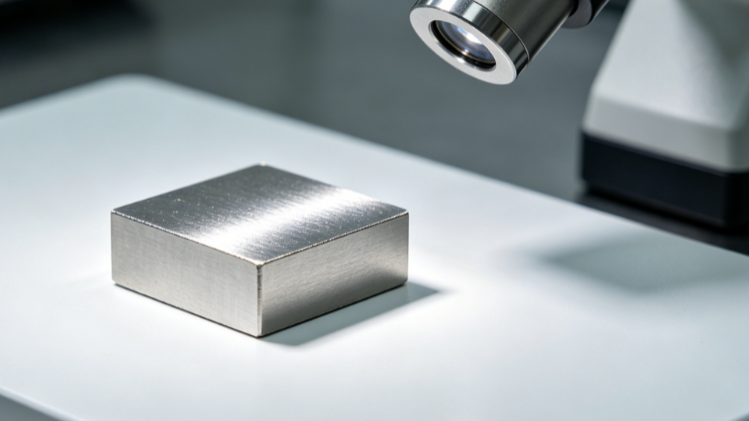
5. Elemental Composition and Impurity Analysis (ICP‑MS, XRF, GD‑MS): Stoichiometry control is critical (e.g., LaNi₍ₓ₎ deviation of ±0.05 changes plateau pressure by 20%). Our ICP‑MS with microwave digestion quantifies rare earths (La, Ce, Pr, Nd, Sm), transition metals (Ni, Co, Mn, Al, Fe, Cu, Ti, Zr, V, Cr), and trace impurities (C, S, P, O, N, Cl). Detection limits: 0.01 ppm for metals, 10 ppm for C/O. For rapid screening, X‑ray fluorescence (XRF) provides non‑destructive bulk composition ±0.1 wt%. For depth‑resolved impurities (surface oxides), glow discharge mass spectrometry (GD‑MS) profiles up to 10 µm depth.
6. Particle Size, Morphology and Surface Area: Hydrogen absorption causes significant pulverisation. We measure particle size distribution via laser diffraction (0.01–2000 µm) on both fresh and cycled powders. Field‑emission SEM (FE‑SEM) reveals crack formation, surface oxidation, and agglomeration at 1 nm resolution. BET surface area by N₂ or Kr physisorption (range 0.01–500 m²/g, ±0.5%) correlates with activation kinetics and hydrogen diffusion length.
7. Thermal Stability and Hydrogen Desorption Temperature (TGA‑DSC‑MS): Using simultaneous thermogravimetry and differential scanning calorimetry (TGA‑DSC) coupled with mass spectrometry (MS) for H₂ (m/z=2), we measure desorption onset temperature, peak temperature, and enthalpy (ΔH) with ±0.5 °C and ±1 kJ/(mol H₂) accuracy. For air‑sensitive alloys, we operate under pure Ar or H₂ atmosphere in a glovebox‑connected TGA.
8. Resistance to Impurity Gases (Poisoning Tests): We simulate real‑world feed gases by adding O₂, CO, CO₂, H₂O, or N₂ (100–5000 ppm) to hydrogen during cycling. Using in‑line gas chromatography (GC) and mass spectrometry, we measure capacity loss after exposure and recovery via thermal or chemical regeneration. This is critical for grid‑scale hydrogen storage from electrolyser or reformer hydrogen streams.
9. Mechanical Integrity – Crushing Strength and Friability: For fixed‑bed reactors, particle crushing strength matters. We perform single‑particle compression test (load range 0.1–200 N) and rotating drum friability (ASTM D4058) to measure attrition resistance and fines generation after cycling.
10. Hydrogen Diffusion Coefficient and Activation Energy: Using pressure‑jump relaxation or electrochemical permeation (for AB₅ in KOH electrolyte), we determine diffusion coefficient (Dₕ) at various temperatures and hydrogen concentrations. Results are fitted to Arrhenius equation to extract activation energy (Eₐ) with ±2 kJ/mol precision.
All high‑pressure hydrogen testing is performed in specially rated pressure vessels with remote monitoring, burst discs, and hydrogen sensors to ensure safety. We follow ISO 16111, ISO 19880‑8, and ASME B31.12 guidelines for hydrogen equipment.
Why Our Hydrogen Storage Alloy Testing Is Trusted by Battery and Hydrogen Economy Leaders
We recognise that your alloy is often the core of a Ni‑MH battery for hybrid vehicles, a stationary hydrogen storage system, or a metal hydride compressor. Our advantages are built on precision, safety, and deep metallurgical expertise:
▶ Unmatched Accuracy in PCI Measurements: Many labs quote plateau pressures with ±10% error due to poor temperature control or volume calibration. Our Sieverts’ system uses NIST‑traceable pressure transducers (0.01% full scale), thermistor‑stabilised baths (±0.02 °C), and daily helium volume recalibration. We guarantee plateau pressure accuracy ±1% of reading and capacity ±0.03 wt% – essential for thermodynamic modelling.
▶ Multi‑Technique Correlative Analysis: We do not just give you an isotherm. We correlate PCI results with XRD (phase changes), SEM (cracking), and ICP (composition drift) on the same sample before and after cycling. This reveals whether capacity loss is due to amorphisation, disproportionation, or oxide formation – saving you weeks of guesswork.
▶ Rapid Turnaround with Customisable Cycling Protocols: A full PCT (absorption+desorption at 3 temperatures) is completed in 3–5 days. For cycle life testing, we run 500 cycles in 5–7 days using automated high‑throughput rigs (20 samples simultaneously). For urgent R&D needs, we offer priority same‑week service at no extra charge for existing contracts.
▶ Compliance and Data Integrity: Our methods follow ISO 23303 (metal hydrides – PCT measurement), ISO 16111 (hydrogen storage devices), and IEC 62932‑2‑2 (Ni‑MH batteries). We issue Certificates of Analysis with full uncertainty budgets, raw data files, and fitting parameters. Our quality system is ISO/IEC 17025:2017 accredited.
▶ Handling of Hazardous and Air‑Sensitive Alloys: Many hydrogen storage alloys are pyrophoric when finely divided. We have dedicated glovebox‑isolated testing rigs (H₂O/O₂ < 0.1 ppm) for safe loading and activation. Our laboratory is rated for flammable gas (hydrogen) Class I, Division 2 environments and follows NFPA 2 (Hydrogen Technologies Code).
▶ Global Logistics and Sample Flexibility: We accept powder, ingot, crushed granules, or pre‑formed compacts. Minimum sample mass is 2 g for full characterisation (PCT+XRD+ICP+SEM). We provide shipping kits with inert gas packaging and hazard labelling for air‑sensitive materials. International shipments are handled with full dangerous goods documentation (UN 3478 for metal hydrides).
▶ Expert Consulting for Alloy Design and Troubleshooting: Our team includes metallurgists with >20 years in hydrogen storage alloys for Toyota, BASF, and Ovonic. We help you: adjust stoichiometry to achieve target plateau pressure, identify cost‑effective substitution for cobalt, predict cycle life from accelerated tests, and select activation protocols that minimise cracking. A free 1‑hour technical consultation is included with every project.
▶ Cost‑Effective for Both R&D and Production QC: We offer reduced rates for repetitive QC testing (e.g., lot release of 20+ batches per month). Academic and non‑profit pricing is available. We also provide rapid screening services (single PCT point, XRD, and ICP) for alloy development at a fraction of full characterisation cost.
In essence, we transform your hydrogen storage alloy testing from a slow, equipment‑intensive bottleneck into a streamlined, highly informative process. Whether you are developing a next‑generation AB₂ alloy for compressors or qualifying a high‑rate Ni‑MH alloy for EVs, our service delivers the deepest, fastest, and safest data available in the industry.
Ready to qualify your hydrogen storage alloy? Contact our hydrogen materials group. We will send you a secure, inert‑atmosphere sample collection kit and a custom test plan within one business day. A no‑obligation technical discussion is always free. Let us help you unlock the full hydrogen capacity of your alloy – from first activation to thousandth cycle.