Reasons for choosing our testing services
ZHONGXI Testing has obtained inspection qualification certifications from multiple countries and regions worldwide. We possess a senior testing team and advanced testing methods, providing independent, impartial, and professional third-party verification services for global carbon projects.

Internationally recognized authority
Certified by multiple international standards such as CNAS, VCS, and GS, with reports universally applicable worldwide.

Global service capability
Covering 140+ countries and regions, it supports on-site detection and remote verification in multiple languages.

Professional experimental methods
Adopt standard experimental methods to ensure accurate and reliable data.
Magnetic Graphite Material Analysis – Advanced Characterisation for Hybrid Carbon-Magnetic Properties
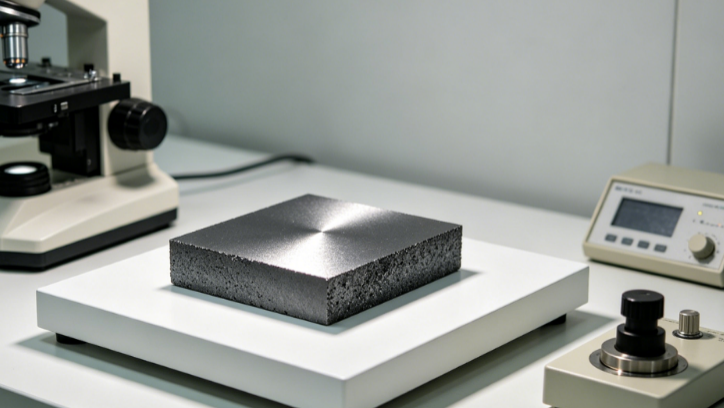
When you search for magnetic graphite detection, you are likely preparing to evaluate a unique class of hybrid materials that combine the electrical, thermal, and structural benefits of graphite with magnetic functionality – whether for electromagnetic interference (EMI) shielding, magnetic separation, targeted drug delivery, spintronic devices, or advanced composites. Magnetic graphite (typically graphite intercalated with magnetic nanoparticles, iron‑filled carbon nanotubes, or metal‑decorated graphene) requires precise characterisation of magnetic response, carbon structure, phase purity, nanoparticle distribution, and surface chemistry. Our testing service delivers the deepest possible insight into your magnetic graphite, correlating magnetic performance with microstructural integrity to support R&D, quality control, and regulatory compliance.
Our Comprehensive Magnetic Graphite Testing Capabilities – From Magnetometry to Atomic‑Scale Imaging
We deploy an integrated suite of advanced instruments that simultaneously interrogate magnetic, structural, and chemical properties of your magnetic graphite – whether in powder, flake, film, or composite form:
1. Magnetic Property Quantification – VSM, SQUID, and MOKE: For bulk magnetic behaviour, we use vibrating sample magnetometry (VSM) with sensitivity 1×10⁻⁶ emu and applied fields up to ±3 T (9 T optional). We extract saturation magnetisation (Mₛ), remanent magnetisation (Mᵣ), coercivity (H꜀), squareness ratio (Mᵣ/Mₛ), and initial susceptibility with ±0.5% accuracy. For ultra‑small samples (<1 mg) or cryogenic temperatures (2–400 K), our superconducting quantum interference device (SQUID) magnetometer achieves sensitivity 1×10⁻⁸ emu – essential for detecting trace magnetic phases or superparamagnetic behaviour. For surface‑sensitive magnetic imaging, we offer magneto‑optical Kerr effect (MOKE) with lateral resolution 1 µm.
2. Identification of Magnetic Phases and Particle Size Distribution (TEM, XRD, Mössbauer): Magnetic graphite often contains iron oxides (Fe₃O₄, γ‑Fe₂O₃), metallic Fe, Ni, Co, or their alloys. Using high‑resolution transmission electron microscopy (HR‑TEM) with energy‑dispersive X‑ray spectroscopy (EDS) and selected area electron diffraction (SAED), we identify crystalline phase, size, shape, and spatial distribution of magnetic nanoparticles down to 0.2 nm resolution. Complementary X‑ray diffraction (XRD) with Rietveld refinement quantifies phase fractions down to 0.5 wt%. For iron‑based phases, ⁵⁷Fe Mössbauer spectroscopy at room temperature and 77 K uniquely distinguishes between Fe⁰, Fe²⁺, Fe³⁺, and different iron oxides (magnetite vs. maghemite) – no other technique can do this with the same specificity.
3. Graphite Structure and Defect Density (Raman, XRD, XPS): The carbon matrix’s quality affects both electrical conductivity and magnetic coupling. Our Raman micro‑spectroscopy (excitation 325 nm, 532 nm, 785 nm) measures the G/D band intensity ratio (Iᴅ/Iɢ) to quantify graphitisation degree and defect density with ±0.01 ratio precision. X‑ray photoelectron spectroscopy (XPS) provides sp²/sp³ carbon ratio and identifies surface functional groups (–OH, –COOH, C=O) that anchor magnetic nanoparticles. For crystallographic ordering, high‑resolution XRD determines interlayer spacing (d₀₀₂) with ±0.0002 nm accuracy – a sensitive indicator of intercalation or strain.
4. Magnetic Hysteresis and Temperature‑Dependent Behaviour (FC/ZFC): Using our SQUID or VSM with cryostat and furnace, we perform field‑cooled (FC) and zero‑field‑cooled (ZFC) magnetisation vs. temperature from 2 K to 400 K. The ZFC/FC bifurcation point gives the blocking temperature (Tʙ) for superparamagnetic nanoparticles; the Curie temperature (T꜀) identifies ferromagnetic phases. We also measure magnetic anisotropy constant (Kᵤ) using the law of approach to saturation.
5. Elemental Composition and Trace Impurities (ICP‑MS, GD‑MS, CHNS/O): We quantify Fe, Ni, Co, Mn, Zn, Cr, Al, Si, S, P, and other metals by ICP‑MS (digestion with HF/HNO₃) to sub‑ppb levels. For light elements (C, H, N, S, O), a CHNS/O elemental analyser gives ±0.1 wt% absolute accuracy. For depth‑resolved impurities near the surface of flakes, glow discharge mass spectrometry (GD‑MS) profiles down to 5 nm depth.
6. Nanoparticle Size Distribution from Magnetic Measurements (Superparamagnetic Analysis): For superparamagnetic magnetic graphite, we extract magnetic particle size distribution by fitting magnetisation curves using Langevin functions with log‑normal distribution. This provides mean magnetic diameter (dₘ) and distribution width (σ) with ±0.5 nm precision – independent of TEM sampling bias.
7. Specific Surface Area and Porosity (BET, BJH): For magnetic graphite used in adsorption or catalysis, N₂ physisorption (77 K) gives BET surface area (range 0.01–3000 m²/g, ±0.5%) and pore size distribution (DFT/BJH, 0.35–100 nm). This helps correlate magnetic nanoparticle loading with surface availability.
8. Morphology and Nanoparticle Homogeneity (SEM, TEM‑EDS Mapping, STEM‑HAADF): Field‑emission SEM (FE‑SEM) at low kV (1–5 kV) visualises surface distribution of magnetic nanoparticles on graphite flakes. Scanning TEM (STEM) with high‑angle annular dark‑field (HAADF) and EDS mapping provides sub‑nanometre elemental maps showing whether nanoparticles are internal (within graphite interlayers) or surface‑adsorbed – critical for understanding magnetic coupling and stability.
9. Electrical Resistivity and Magnetoresistance (Four‑Probe, PPMS): For spintronic or sensing applications, we measure in‑plane and out‑of‑plane resistivity (Ω·cm) using a four‑point probe (range 10⁻⁶ to 10⁹ Ω·cm). Our physical property measurement system (PPMS) with applied magnetic field (0–9 T) measures magnetoresistance (MR %) at temperatures from 1.8 K to 400 K – essential for evaluating spin‑dependent transport.
10. Thermal Stability (TGA‑DSC‑MS): Magnetic graphite can lose magnetic nanoparticles or oxidise at elevated temperatures. Using Thermogravimetric Analysis (TGA) coupled with differential scanning calorimetry (DSC) and mass spectrometry (MS) for evolved gases (CO, CO₂, H₂O), we measure oxidation onset temperature, char yield, and magnetic phase transition heat flows from room temperature to 1200 °C in air or inert atmosphere.
All measurements are performed under controlled atmosphere (N₂, Ar, or vacuum) where needed. Our labs are equipped to handle powders, flakes, dispersions, and solid compacts with sample masses from 5 mg to 100 g.
Why Our Magnetic Graphite Testing Service Is Uniquely Powerful – Correlating Magnetism with Carbon Structure
Magnetic graphite is a niche, demanding material. General‑purpose labs often treat it as either “just graphite” or “just magnetic powder” – missing the critical interplay. Our advantages stem from integrated, multi‑modal characterisation and deep materials physics expertise:
▶ Simultaneous Magnetic and Structural Correlation: We do not measure VSM in one lab and Raman in another. We perform site‑specific correlative microscopy: identify a magnetic nanoparticle in TEM, then measure its local magnetisation via off‑axis electron holography (quantitative magnetic flux mapping at 10 nm resolution). This directly links particle size, phase, and coercivity – data impossible to obtain from bulk magnetometry alone.
▶ Unrivalled Sensitivity for Trace Magnetic Phases: Our SQUID magnetometer can detect ferromagnetic impurities as low as 0.001 wt% Fe (equivalent to 10 ppm). This is vital for quality control: even 50 ppm of Fe contamination can ruin a non‑magnetic graphite application but may be desirable for magnetic graphite. We provide quantitative magnetic phase mapping across your sample.
▶ Advanced Mössbauer Spectroscopy for Iron Chemistry: Many labs cannot distinguish between Fe₃O₄ (magnetite), γ‑Fe₂O₃ (maghemite), and Fe⁰. Our ⁵⁷Fe Mössbauer at variable temperature (80–300 K) uniquely identifies each species, even when multiple phases coexist. We also detect superparamagnetic relaxation effects that correlate with nanoparticle size below ~20 nm.
▶ Fast Turnaround with Actionable Reporting: Standard magnetic characterisation (VSM + XRD + Raman + ICP) is completed in 3–5 business days. For urgent process troubleshooting (e.g., batch of magnetic graphite shows low Mₛ), we offer a 24‑hour express service combining VSM, XRD, and TEM to identify the cause (e.g., oxidation, phase segregation). Every report includes raw data, fitting parameters, and an interpretative summary by a PhD‑level physicist.
▶ Compliance and Data Integrity: Our methods follow ASTM A341 (VSM), ASTM E1941 (XRD for carbon materials), and ISO 19819 (Raman for carbon). We operate under ISO/IEC 17025:2017 accreditation and provide 21 CFR Part 11 compliant electronic records for regulated industries (medical devices, aerospace).
▶ Global Logistics and Safe Handling: Magnetic graphite powders may be pyrophoric if very fine. We provide inert‑gas sample collection kits and UN‑approved packaging for air‑sensitive materials. Our logistics team manages all customs paperwork, including MSDS and dangerous goods declarations when applicable.
▶ Expert Consultation for Material Optimisation: Our team includes specialists in magnetic nanoparticles and carbon materials. We help you: choose the optimal magnetic phase for your application (e.g., soft vs. hard ferrite), determine ideal nanoparticle loading to avoid agglomeration, predict long‑term oxidation stability, and benchmark against competing products. A free 30‑minute technical review is included with every project.
▶ Cost‑Effective Solutions for R&D and QC: We offer academic/non‑profit discounts and volume pricing for recurring production lot testing. For routine screening (e.g., Mₛ and XRD only), we have a basic package that delivers fast, affordable results without compromising quality.
In essence, we turn the complexity of magnetic graphite characterisation into a clear, confident decision‑making tool. Whether you are developing a new EMI shielding composite, scaling up a magnetic adsorbent for water treatment, or certifying a spintronic material, our service provides the most comprehensive, precise, and interpretable data you can find.
Ready to test your magnetic graphite? Submit a sample request via our secure portal. For initial screening, we need 10 mg of powder or a 1 cm² flake. You will receive a custom test plan and fixed quote within one business day. A no‑obligation technical discussion with our magnetic materials expert is always free. Let us help you harness the full potential of magnetic graphite – from atomic spins to macroscopic performance.