Reasons for choosing our testing services
ZHONGXI Testing has obtained inspection qualification certifications from multiple countries and regions worldwide. We possess a senior testing team and advanced testing methods, providing independent, impartial, and professional third-party verification services for global carbon projects.
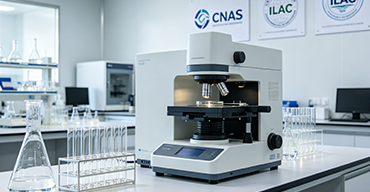
Internationally recognized authority
Certified by multiple international standards such as CNAS, VCS, and GS, with reports universally applicable worldwide.

Global service capability
Covering 140+ countries and regions, it supports on-site detection and remote verification in multiple languages.
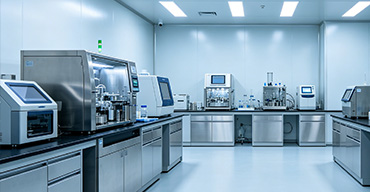
Professional experimental methods
Adopt standard experimental methods to ensure accurate and reliable data.
Advanced Characterization of Viscose‑Based Activated Carbon Fibers (Rayon‑based ACF)
If you are searching for viscose‑based activated carbon fiber (ACF) testing, you are likely working with this high‑performance adsorbent material in applications such as gas purification, solvent recovery, air filters, protective clothing, supercapacitors, or medical wound dressings. Unlike granular or powdered activated carbons, viscose‑derived ACF offers a unique combination of high specific surface area (typically 1000–2500 m²/g), well‑developed microporosity, uniform fiber diameter (5–20 µm), and excellent adsorption/desorption kinetics. However, the performance of ACF depends critically on parameters such as BET surface area, micropore volume and distribution, pore size (especially pores <2 nm), iodine number, methylene blue adsorption, mechanical strength (tensile, abrasion), ash content, and surface functional groups. Even small variations in activation conditions (temperature, steam/CO₂, dwell time) can shift pore structure, reducing selectivity or capacity. We understand that your need for testing is driven by incoming material qualification, process optimization, regulatory compliance (e.g., NIOSH, ASTM), or failure analysis in filtration systems. Our laboratory offers the most comprehensive, high‑depth analytical suite for viscose‑based activated carbon fibers – from standard adsorption indices to advanced pore architecture mapping, surface chemistry, and mechanical integrity under simulated service conditions.
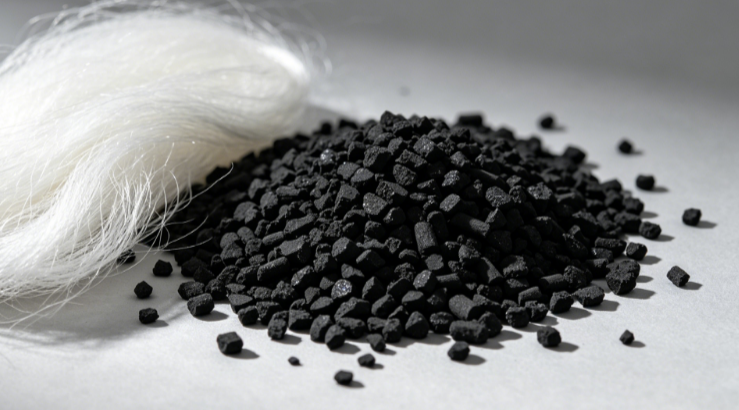
What We Can Do for Your Viscose‑Based Activated Carbon Fiber Samples
We provide complete testing for all forms of viscose‑derived ACF: fiber bundles, felt, non‑woven mats, woven fabrics, and granularized ACF. Our core capabilities include:
- Specific surface area (BET, N₂ adsorption at 77 K) – Multi‑point BET from 0.005 to 0.30 P/P₀, with range from <1 m²/g to >3000 m²/g. Precision ±2% RSD. Also measure micropore volume (t‑plot or αs‑method) and total pore volume (at P/P₀ ≈ 0.99).
- Pore size distribution (PSD) – Using Density Functional Theory (DFT) model for carbon slit‑shaped pores, covering micropores (<2 nm) and mesopores (2–50 nm). Also provide Horvath‑Kawazoe (H‑K) and Barrett‑Joyner‑Halenda (BJH) upon request. Resolution down to 0.2 nm.
- Iodine number (ASTM D4607) – The standard index for micropore content. Range 400–2000 mg/g, accuracy ±3%.
- Methylene blue adsorption (ASTM D4608) – Indicator of mesopore volume; typical range 100–600 mg/g.
- Benzene / toluene / carbon tetrachloride activity (ASTM D5228) – Dynamic adsorption capacity at specific relative humidity (0%, 50%, 80%).
- Ash content (ASTM D2866, 850 °C) – Quantify inorganic residues (Na, Ca, Fe, Si, etc.) that can cause catalytic oxidation or reduce capacity. Detection limit 0.02 wt%.
- Elemental analysis (C, H, N, S, O by combustion / pyrolysis) – Determine carbon purity, heteroatom content; oxygen level often correlates with surface acidity.
- pH of aqueous extract (ASTM D6851) – Measures surface acidity/basicity. Typical range 5–9 for viscose‑based ACF.
- Mechanical properties – tensile strength of single fibers (gauge length 10 mm, strain rate 1 mm/min) and abrasion resistance of felt/mat (ASTM D4966). Also measure burst strength for non‑wovens.
- Fiber morphology and diameter distribution by high‑resolution SEM (5–20 kV, working distance 10 mm). Measure 50+ fibers per sample, report average, standard deviation, and D10/D50/D90.
- X‑ray diffraction (XRD) – Identify graphitic domains (002 peak) and measure turbostratic stacking height (Lc) and lateral size (La).
- Thermal stability (TGA in air or N₂) – Determine onset oxidation temperature (typically 350–450 °C for ACF in air), char yield, and decomposition profile.
How Deep Our Characterization Goes
We go far beyond routine “BET and iodine number”. Our advanced methods resolve subtle structural and chemical features that dictate ACF performance in challenging applications. Examples of our technical depth:
- High‑pressure/high‑resolution adsorption (up to 100 bar, <10⁻⁶ relative pressure) using Hiden Isochema IGAsorp – measure ultra‑micropores (<0.7 nm) via CO₂ adsorption at 273 K (Dubinin‑Radushkevich method). Detect pores that N₂ at 77 K cannot access due to activated diffusion. Provides true total microporosity.
- Non‑local DFT (NLDFT) pore size modelling with QSDFT for accurate slit‑pore distribution, including surface roughness correction. We supply pore volume as a function of pore width (0.3–50 nm) with 1 nm increments – essential for predicting selectivity toward specific volatile organic compounds (VOCs).
- Surface chemistry by X‑ray photoelectron spectroscopy (XPS) and temperature‑programmed desorption (TPD‑MS) – Quantify oxygen functional groups (C‑O, C=O, COOH, O‑C=O) and surface N‑containing species. TPD‑MS up to 1100 °C in He identifies CO (from quinones/ethers) and CO₂ (from carboxyl/lactone) evolution profiles, with quantification better than 0.05 mmol/g.
- Dynamic adsorption breakthrough testing under simulated industrial conditions – We use a custom gas flow system (0.1–10 L/min) with humidity control (0–95% RH) and VOC generator (toluene, acetone, cyclohexane, etc.). Measure breakthrough time, adsorption capacity at 10% breakthrough, and working capacity. Detection of outlet concentration by GC‑FID or PID down to 1 ppm.
- Micropore diffusion coefficient determination by gravimetric uptake kinetics (IGA) – Fit Fickian diffusion model to obtain D/r² (s⁻¹) for different adsorbates. Critical for predicting filter performance at high flow rates.
- Mechanical integrity after repeated adsorption/desorption cycles – Perform accelerated cyclic test (50–1000 cycles) with hot nitrogen regeneration (150 °C). Measure attrition loss (weight % fines generated) and residual BET after cycling.
- Scanning transmission electron microscopy (STEM) with EELS on microtomed fiber cross‑sections – visualize pore distribution at nm scale, detect surface skin vs. core porosity, and measure graphitic edge orientation.
- Trace metal impurities by ICP‑MS after microwave digestion – Ca, Fe, Mg, Na, K, Al, Cu, Zn, Pb, Cr, etc. Detection limits 0.01 ppm. High Fe can catalyze carbon combustion; Ca and K affect pH and salt adsorption.
- Hydrophobicity / hydrophilicity index via water vapor adsorption isotherms (up to 95% RH at 25 °C). Quantify water uptake at 50% RH – important for ACF used in humid air filters.
Why Our Laboratory Is the Right Choice for Viscose‑Based Activated Carbon Fiber Testing
General carbon characterization labs often treat ACF like granular activated carbon, ignoring fiber‑specific parameters (mechanical integrity, kinetic performance, anisotropic pore structure). Our advantages are built on decades of experience in fibrous carbon materials and dedicated adsorption/mechanical testing infrastructure:
➤ Specialized sample handling for fibrous and non‑woven ACF – We have developed non‑destructive fiber sampling protocols that prevent compression of the pore network. For BET measurements, we use low‑dead‑volume cells with controlled fiber packing density (0.1–0.2 g/cm³) to avoid artificial macroporosity. Mechanical testing follows ASTM D3822 (single fiber) and ASTM D5035 (grab strength for fabrics).
➤ State‑of‑the‑art pore architecture analysis – Our ASAP 2460 and 3Flex (Micromeritics) provide N₂ and Ar adsorption at 87 K and CO₂ at 273 K. We perform DFT pore size analysis with slit, cylindrical, and hybrid models, and provide confidence intervals based on fitting error. We also offer quenched solid DFT (QSDFT) for carbons with surface heterogeneity.
➤ Dynamic breakthrough rig with real‑time mass spectrometry – Allows measurement of multiple adsorbates simultaneously (binary/ternary mixtures) – e.g., toluene/water vapor or benzene/acetone. Testing conditions: -20 °C to +80 °C, pressure 0.8–1.2 bar, linear velocities 1–20 cm/s. Simulate real industrial filter conditions.
➤ Comprehensive “Performance‑Grade Certificate” – Combines physical (BET, pore size, bulk density), chemical (ash, elemental analysis, surface functional groups), adsorption (iodine, MB, benzene activity), mechanical (tensile strength, abrasion loss), and dynamic breakthrough data. Includes a Kinetic Performance Index (KPI) – ratio of dynamic capacity to equilibrium capacity at defined flow rate – for direct filter design.
➤ Fast turnaround and transparent reporting – Standard full characterization (BET, pore size, iodine number, ash, tensile, SEM) completed within 5‑7 business days. Dynamic breakthrough and XPS/TPD add 3‑5 days. You receive raw isotherms, pore size distribution tables, mechanical stress‑strain curves, breakthrough profiles, and full uncertainty budgets.
➤ Global logistics and safe handling – ACF is generally non‑hazardous but can generate fine dust. We provide anti‑static, sealed pouches or rigid containers, with MSDS and customs clearance support.
➤ One‑on‑one technical consultation from carbon materials engineers – We help you interpret why a certain ACF batch has lower adsorption capacity (e.g., over‑activation causing mesopore collapse, or residual sulfur blocking micropores). We advise on activation temperature optimization, steam/CO₂ ratio adjustment, or post‑treatment (acid wash to reduce ash). We also support failure analysis: e.g., premature breakthrough due to fiber breakage or surface contamination.
Ready to Get Your Viscose‑Based Activated Carbon Fiber Tested?
Whether you are qualifying a new ACF lot for respirator cartridges, optimizing activation to increase micropore volume, or troubleshooting a filter that failed to meet VOC removal specifications, our laboratory delivers the most thorough, technically relevant characterization of viscose‑based ACF available. Contact our advanced carbon materials team with your target application (air purification, solvent recovery, energy storage) and key performance metrics – we will return a custom test plan and competitive quote within 24 hours.