Reasons for choosing our testing services
ZHONGXI Testing has obtained inspection qualification certifications from multiple countries and regions worldwide. We possess a senior testing team and advanced testing methods, providing independent, impartial, and professional third-party verification services for global carbon projects.

Internationally recognized authority
Certified by multiple international standards such as CNAS, VCS, and GS, with reports universally applicable worldwide.

Global service capability
Covering 140+ countries and regions, it supports on-site detection and remote verification in multiple languages.

Professional experimental methods
Adopt standard experimental methods to ensure accurate and reliable data.
automotive windscreen (Windshield) Testing Services: Safety, Optical Quality & Durability Validation
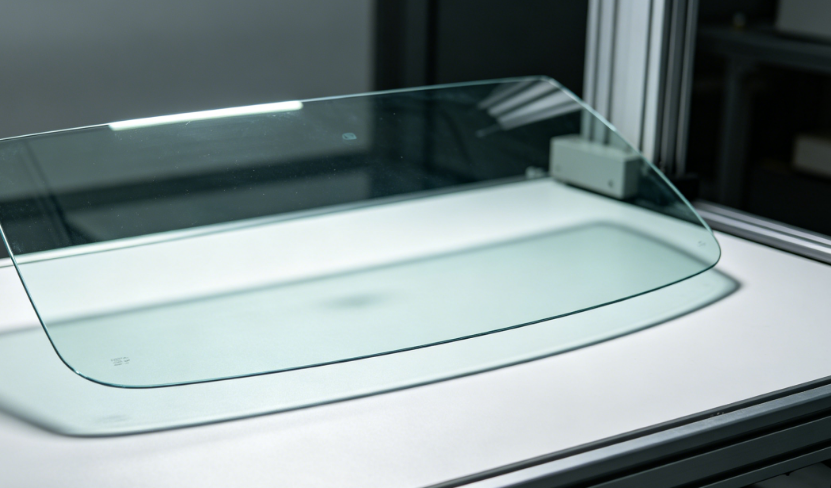
As an independent third-party testing service provider, we offer comprehensive testing for automotive glazing – specifically windscreens (windshields), as well as side windows, rear windows, and sunroofs made of laminated glass or tempered glass. The windscreen is a critical safety component that provides structural integrity to the vehicle cabin, occupant retention during rollover, proper airbag deployment surface, and optical clarity for the driver. Our accredited laboratory follows international regulations (UN ECE R43, ANSI/SAE Z26.1, GB 9656, ISO 3536, ISO 3537, ISO 3538, ISO 20565) to evaluate mechanical strength, impact resistance, optical distortion, light transmittance, abrasion resistance, and environmental durability. This article outlines our automotive glass testing capabilities – including scope, key test items, and standard test methods – to help windshield manufacturers, automotive OEMs, aftermarket suppliers, and certification bodies ensure compliance and safety.
1. Our Testing Scope for automotive windscreens
We cover all types of automotive safety glazing:
By glass type: Laminated safety glass (windscreen) – two glass layers bonded by PVB (polyvinyl butyral) or other interlayer; tempered glass (side and rear windows); Zone‑tempered (monolithic) glass; Heated / defrosting windscreens; HUD (heads‑up display) windscreens with wedge interlayer; Acoustic interlayer glass; Coloured / shaded top band glasses.
By test category: Mechanical properties (impact resistance – headform, steel ball, shot bag); Optical & visual quality (light transmittance, haze, secondary image, distortion, refractive power, colour); Environmental & chemical durability (abrasion, humidity, temperature, radiation, salt spray, chemical resistance); Laminated glass specific tests (pummel adhesion, boil resistance, peel strength, fogging, interlayer thickness uniformity); Fragment retention (for tempered side windows); Dimensions & flatness.
By regulatory framework: UN ECE Regulation No. 43 (Uniform provisions for safety glazing materials); ANSI/SAE Z26.1 (USA – Safety glazing materials for motor vehicles); GB 9656 (China – Safety glass for motor vehicles); ISO 3536 (Flexural strength), ISO 3537 (Mechanical tests), ISO 3538 (Optical tests), ISO 20565 (Thermal and weathering tests).
2. Key Test Items & Measurements We Perform
Our automotive windscreen testing services are grouped into six performance domains. Each domain addresses critical safety and quality requirements specified in ECE R43 and equivalent national standards.
2.1 Optical Quality & Visual Performance
Light transmittance (luminous transmittance) – measured in the visible spectrum (380‑780 nm) using a spectrophotometer. Requirement: for windscreen area in the driver’s forward field, ≥ 75% (ECE R43), ≥ 70% (ANSI Z26.1). For side windows, values vary. For tinted top bands, measurement is taken in the central area.
Haze (light scattering) – measured with a hazemeter (ASTM D1003). Maximum allowable haze: 2.0% for clear laminated glass.
Distortion (optical deviation) – using a collimated light beam and screen measurement. Maximum angular deviation of transmitted image: typically ≤ 15 minutes of arc for primary vision area, ≤ 25 minutes for peripheral area.
Secondary image (double image) – measurement of angular separation between primary and secondary reflections (for laminated windscreens). Requirement: ≤ 15 minutes of arc (primary area) and ≤ 20 minutes (secondary area).
Refractive power (lens effect) – measurement of power variation across the screen; maximum change within 100 mm: ≤ 0.08 diopters.
Colour recognition (distortion of colour) – visual assessment or colorimetry; no significant colour shift (traffic light colours must be distinguishable).
Focal length variation – for HUD windscreens – measured by optical bench.
Standards: ECE R43 Annex 3 (optical tests), ISO 3538, ASTM C1652, SAE J674.
2.2 Mechanical Strength & impact resistance
Headform impact (simulated human head) – a 10 kg hemispherical dummy headform (or 4.5 kg for certain regulations) dropped from specified height (e.g., 1.5 m for windscreen, 1.3 m for side windows) onto the glass. Evaluation: glass must crack but not perforate, and the inner (cabin) surface must not exhibit sharp fragments. Also measures deceleration (g‑force) – maximum g‑level specified (e.g., 150 g for 10 kg headform).
Steel ball impact (ball drop) – a 227 g steel ball dropped from 10 m (for laminated windscreen) – glass must not be perforated. For tempered glass, a 227 g ball dropped from 3 m – glass must break into small fragments.
Shot bag impact (for zone‑tempered and side windows) – a 2.3 kg leather shot bag dropped from specified height (e.g., 2.5 m).
Penetration resistance (for laminated glass) – ECE R43 Annex 7: a 2.26 kg steel ball dropped from 4 m onto the glass; the ball must not pass through within 5 seconds after impact.
Flexural strength (three‑point bending) – ISO 3536: measuring breaking load of a glass strip; for quality control of glass and lamination.
Standards: ECE R43 Annex 4 (headform), Annex 5 (steel ball), Annex 6 (shot bag), ISO 3537, SAE Z26.1 (impact tests).
2.3 Fragment Retention & tempered glass Fracture Pattern
tempered glass fragmentation test (for side/rear windows) – after breaking the glass with a centre punch, the number of fragments in a 50 mm × 50 mm square is counted. Requirement: minimum number of fragments depending on nominal thickness (e.g., for 3‑3.5 mm glass, at least 60 fragments). Also no fragment longer than 75 mm (for thick glass) or specific area limits.
Laminated glass pummel test (interlayer adhesion) – the glass is broken by a hammer, then a blunt steel rod is used to pummel the PVB interlayer. The amount of glass remaining adhered to the interlayer is rated 0‑10 (0 = no adhesion, 10 = full adhesion). Requirement typically ≥ 4 or 5 depending on specification.
Boil resistance (laminate durability) – the laminated glass sample is boiled in water for 2 hours; then inspected for bubbles, delamination, or other defects (ECE R43 Annex 14).
Humidity resistance – sample kept at 50°C / 95% RH for 2 weeks, then inspected for bubbles or delamination (ECE R43 Annex 13).
Standards: ECE R43 Annex 10 (tempered fragment count), Annex 11 (pummel test), Annex 12 (boil test), Annex 13 (humidity), ISO 20565, SAE Z26.1.
2.4 Environmental & Weathering Durability
Abrasion resistance (Taber abraser) – 1000 cycles with CS‑10F abrasive wheels, 500 g load. Measured increase in haze after abrasion: maximum ≤ 2% (ECE R43). Alternatively, change in luminous transmittance: maximum decrease ≤ 5%.
Temperature & humidity cycling – exposure to high temperature (85°C), low temperature (-40°C), and humidity (50°C / 95% RH) cycles; then inspected for cracking, delamination, or haze.
Radiation test (UV exposure) – 200 hours of UV radiation (xenon arc or mercury vapour lamp); measured change in transmittance (≤ 5% maximum) and no visible discolouration.
Salt spray corrosion – exposure to 5% NaCl fog at 35°C for 240 hours; then inspect for corrosion at edges and any delamination.
Chemical resistance – immersion in ethanol, white spirit, ammonia solution, and other specified chemicals; no softening, blistering, or transmittance change (per ECE R43).
Climatic cycling (combined temperature, humidity, UV) – for regions with extreme weather.
Standards: ECE R43 Annex 8 (abrasion), Annex 14 (environmental tests), ISO 20565, ASTM D1044 (taber abrasion).
2.5 Electrical & Heating Performance (for Heated Windscreens)
Electrical resistance of heating layer (ohmic value) – per design specification.
Defrosting / demisting performance – temperature rise across the glass surface within specified time at given ambient temperature (-18°C) and humidity, with voltage applied.
Power consumption (watts).
High voltage insulation test (for HUD systems) – electrical safety between heating layer and frame.
Thermal shock resistance (with heating layer) – rapid temperature change without cracking.
Standards: OEM specific (e.g., Ford, GM, VW, Tesla) and ISO 13859 (performance of heated glazing).
2.6 HUD (Heads‑Up Display) Windscreen Specific Tests
Optical distortion with wedge interlayer – measurement of ghost image reduction; angle between primary and secondary images must be below specified threshold (typically < 0.3 mrad).
Projection image quality – sharpness, colour fidelity, contrast ratio under various ambient light conditions.
Geometric position accuracy – projected image alignment with driver’s eye box.
Wedge angle uniformity – variation of PVB wedge angle across the screen; measured by optical profiling.
Standards: OEM specific (e.g., Audi, BMW, Mercedes, GM) and ISO 15008 (ergonomics of HUD).
2.7 Dimensional & Edge Quality
Overall dimensions (length, width) – using coordinate measuring machine (CMM) or template.
Thickness (glass layers and interlayer) – micrometers or ultrasonic gauge.
Edge chipping, scratches, bubbles, inclusions – visual inspection under specified lighting (e.g., 1000 lux).
Flatness / twist – measured with a straightedge and feeler gauge, or optical profilometer.
Standards: ECE R43 Annex 2 (tolerances and defects).
3. Standard Test Methods We Apply
All tests are performed according to internationally recognised regulations and standards. Our laboratory is ISO/IEC 17025 accredited and equipped with optical benches, spectrophotometers, hazemeters, drop towers, headform impact rigs, Taber abraders, environmental chambers, and salt spray chambers.
3.1 UN ECE Regulation No. 43 (Main Standard)
ECE R43 (Uniform provisions for the approval of safety glazing materials). This regulation covers all tests: optical quality (Annex 3), mechanical tests (Annex 4‑6), fragment retention (Annex 10, 11), environmental durability (Annex 8, 12‑14).
3.2 USA Standards (ANSI/SAE Z26.1)
ANSI/SAE Z26.1 (Safety glazing materials for motor vehicles). Equivalent to ECE R43 with minor differences; includes test procedures for laminated and tempered glass.
3.3 Chinese National Standard GB 9656
GB 9656 (Safety glass for motor vehicles). Largely harmonised with ECE R43; used for CCC (China Compulsory Certification) compliance.
3.4 ISO & Other International Standards
ISO 3536 (Glass for motor vehicles – Flexural strength).
ISO 3537 (Mechanical tests – impact, penetration).
ISO 3538 (Optical tests – light transmittance, distortion, secondary image).
ISO 20565 (Glass – resistance to thermal and weathering).
ISO 6743 (Laminated glass – boil test).
ASTM D1003 (Haze).
ASTM D1044 (taber abrasion).
4. Why Choose Our Third‑Party automotive windscreen Testing Services?
As an independent laboratory, we provide unbiased, accurate, and globally accepted test data. Our advantages include:
ISO/IEC 17025 accreditation – CNAS/CMA certified, with regular proficiency testing (e.g., ECE R43 round robins).
Full test suite for ECE R43, Z26.1, and GB 9656 – we can support certification for EU, US, China, and other markets.
Specialised equipment – headform impact tower (up to 1.5 m), steel ball drop (up to 10 m), optical bench with collimator and screen, spectrophotometer with integrating sphere, Taber abraser, environmental chambers, etc.
Fast turnaround – typical optical and mechanical tests within 1‑2 weeks; full certification programme in 3‑4 weeks.
Detailed reporting – includes test setup photos, raw data (transmittance %, haze %, fragment count, pummel rating), images of broken glass, and clear pass/fail conclusions.
Confidentiality – full protection of your glass design, HUD optical parameters, and customer specifications.
Consultative support – our optical and mechanical engineers help interpret test results, diagnose optical distortions, and advise on lamination process adjustments.
Whether you need to certify a new windscreen for UN ECE R43, test optical quality for a HUD system, verify fragment retention for side windows, or investigate a field failure (delamination, optical distortion, premature breakage), our automotive glass testing experts are ready to deliver reliable, actionable data.
Get Started with Your automotive windscreen Testing Project
Contact our team with your glass type (laminated, tempered, HUD), target regulations (ECE R43, ANSI Z26.1, GB 9656, or OEM specifications), and required test items. We will provide a detailed quotation, sample submission guidelines (including glass dimensions and edge finishing requirements), and a testing schedule. Let us help you ensure that your automotive glazing meets all safety, optical, and durability requirements for driver and passenger protection.
This article provides an overview of our automotive windscreen testing capabilities. For specific test methods, sample quantity, and pricing, please request a tailored service proposal.