Reasons for choosing our testing services
ZHONGXI Testing has obtained inspection qualification certifications from multiple countries and regions worldwide. We possess a senior testing team and advanced testing methods, providing independent, impartial, and professional third-party verification services for global carbon projects.

Internationally recognized authority
Certified by multiple international standards such as CNAS, VCS, and GS, with reports universally applicable worldwide.

Global service capability
Covering 140+ countries and regions, it supports on-site detection and remote verification in multiple languages.

Professional experimental methods
Adopt standard experimental methods to ensure accurate and reliable data.
aerogel Testing Services: Comprehensive Characterisation for Next‑Generation Nanoporous Materials
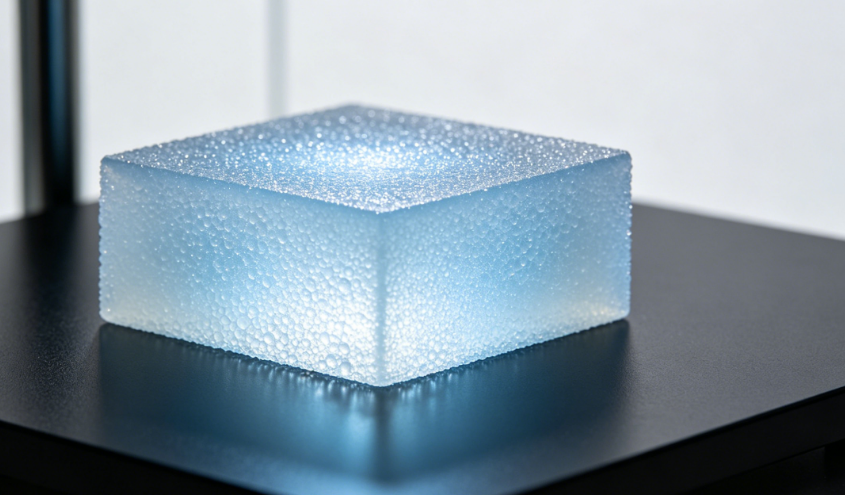
As an independent third‑party testing service provider, we offer comprehensive testing and characterisation services for all types of aerogel materials – including silica aerogels, carbon aerogels, metal oxide aerogels (alumina, zirconia, titania), organic aerogels (polyimide, polyurethane, cellulose), and composite aerogels (fibre‑reinforced, polymer‑crosslinked, hybrid aerogels). aerogels are among the most advanced nanoporous materials, featuring ultra‑low density (0.003‑0.2 g/cm³), high porosity (85‑99.8%), extremely low thermal conductivity (down to 0.012‑0.020 W/(m·K)), and high specific surface area (300‑1200 m²/g). These unique properties make them essential for thermal insulation, aerospace, energy storage, environmental remediation, catalysis, sensors, and biomedical applications. Our accredited laboratory follows international standards (ISO, ASTM, GB/T, EN) and employs state‑of‑the‑art characterisation instruments to deliver accurate, reproducible, and legally defensible test data. This article outlines our aerogel testing capabilities – including scope, key test items, and standard test methods – to help manufacturers, researchers, and quality assurance teams verify material performance and regulatory compliance.
1. Our Testing Scope for aerogel Materials
We cover all major aerogel types and product forms across diverse industrial applications:
By aerogel type: Silica aerogels (pure, hydrophobic, composite); Carbon aerogels (conductive, doped); Metal oxide aerogels (alumina, zirconia, titania); Organic aerogels (cellulose, polyimide, polyurethane, chitosan); Hybrid aerogels (organic‑inorganic, metal‑doped); Fiber‑reinforced aerogel composites (glass fibre, carbon fibre, pre‑oxidised fibre).
By product form: aerogel blankets / felts; aerogel boards and panels; aerogel granules and powders; aerogel monoliths and blocks; aerogel films and coatings; aerogel composites (e.g., battery thermal barriers, pipeline wraps).
By test category: Microstructural characterisation (specific surface area, pore size distribution, porosity, density); Thermal properties (thermal conductivity, thermal stability, specific heat capacity, coefficient of thermal expansion); Mechanical properties (compressive strength, elastic modulus, tensile strength, flexibility); Chemical and surface properties (hydrophobicity / contact angle, chemical composition, elemental analysis, functional group identification); Environmental durability (water resistance, salt spray resistance, UV/weathering resistance, chemical corrosion resistance); Fire performance (flammability rating, limiting oxygen index, non‑combustibility, smoke density); Electrical properties (dielectric constant, electrical resistivity, dielectric strength); Acoustic properties (sound absorption coefficient, acoustic impedance – by arrangement).
By industry application: Building & construction insulation; Industrial equipment (LNG pipelines, steam lines, industrial furnaces); Aerospace (cryogenic tanks, re‑entry vehicles); Automotive (battery thermal barriers, EV fire protection); Oil & gas (offshore platforms, refineries); Environmental remediation (oil spill absorption, water treatment); Energy storage (supercapacitors, batteries); Catalysis (catalyst supports).
2. Key Test Items & Measurements We Perform
Our aerogel testing services are organised into six performance domains, aligned with GB/T 34336, ASTM C1728, ISO 22482, and other relevant standards.
2.1 Microstructural Characterisation
Specific surface area (SSA) – measured by nitrogen adsorption‑desorption using the Brunauer‑Emmett‑Teller (BET) method (ISO 9277, GB/T 19587). Typical values: 400‑1200 m²/g for high‑quality aerogels. Requirements per GB/T 34336: ≥ 600 m²/g.
Pore size distribution – determined by Barrett‑Joyner‑Halenda (BJH) method from desorption isotherm, or by mercury intrusion porosimetry (for larger meso‑ and macropores). aerogels typically exhibit mesopores (2‑50 nm) dominated by < 20 nm pores. Standard: ISO 15901‑2, GB/T 21650.
Porosity – calculated from bulk density and skeletal density using the formula ε = (1 − ρbulk / ρskeletal) × 100%. aerogels typically achieve porosity ≥ 90% (silica aerogels ≥ 95%). Standard: ASTM D6226, GB/T 5486.
Bulk density – measured by geometric volume and dry mass (GB/T 5486, ISO 845). Typical range: 0.003‑0.2 g/cm³.
True (skeletal) density – measured by helium pycnometry (ASTM D5550, ISO 12154).
Microstructure imaging – scanning electron microscopy (SEM) and transmission electron microscopy (TEM) for visualisation of nanoporous network, particle size, and interparticle connectivity. Accelerating voltage typically 5‑15 kV, working distance 8‑10 mm; samples require gold or platinum sputter coating to avoid charging.
2.2 Thermal Properties
Thermal conductivity (λ, k) – the most critical performance parameter for insulation applications. Measured by steady‑state (ASTM C177, C518; GB/T 10294, 10295) or transient (ISO 22007‑2, ASTM E1461) methods. For aerogel blankets, typical λ = 0.012‑0.025 W/(m·K) at 25°C. Requirements per GB A‑level: ≤ 0.030 W/(m·K). ASTM C1728 specifies thermal conductivity limits based on mean temperature.
Thermal stability / decomposition temperature – determined by Thermogravimetric Analysis (TGA, ISO 11358, GB/T 27761). aerogels typically withstand 400‑600°C for silica‑based products; carbon aerogels in inert atmosphere up to 800‑1000°C. Requirement: mass loss ≤ 5% at rated temperature.
Specific heat capacity – measured by differential scanning calorimetry (DSC, ASTM E1269, ISO 22007‑2) or modulated DSC. For silica aerogels, Cp ≈ 0.8‑1.2 J/(g·K).
Coefficient of linear thermal expansion (CTE) – measured by thermomechanical analyser (TMA, ASTM E831). Silica aerogel CTE ≈ 2‑5 × 10⁻⁶ /°C, comparable to glass.
Maximum service temperature – determined by heat resistance tests (ASTM C411, C447). Requirement: no melting, no visible degradation, no exothermic reaction. Fibre‑reinforced aerogels can withstand 400‑1000°C depending on reinforcement (glass fibre: up to 650°C; ceramic fibre: up to 800‑1000°C).
Thermal diffusivity – measured by laser flash analysis (ASTM E1461).
2.3 Mechanical Properties
compressive strength – measured by universal testing machine with loading rate 0.5‑1 mm/min until specimen deformation reaches 10% or specimen fracture (ISO 5017, GB/T 8813). Typical aerogel blankets exhibit 0.1‑1.0 MPa compressive strength at 10% strain. Requirement per GB/T 34336: ≥ 0.1 MPa.
Compressive modulus – slope of stress‑strain curve within elastic region.
tensile strength – measured by dog‑bone specimen (GB/T 1040, ISO 527‑4) – for fibre‑reinforced aerogel blankets. Typical values: 0.5‑3.0 MPa depending on fibre content and orientation.
Flexural strength (modulus of rupture) – three‑point or four‑point bending (GB/T 9341, ISO 178). For aerogel boards.
elastic modulus (Young’s modulus) – static (from compression/tensile curves) or dynamic (by resonant frequency, DMA). Typical E = 0.5‑20 MPa for silica aerogels.
Flexibility (for aerogel blankets) – assessed by mandrel bending or cyclic folding test (ASTM C1101). Requirement: no cracking or delamination after specified handling.
Bond strength / peel strength – for laminated or coated aerogel composites.
Hardness – Shore 00 or Shore A for flexible aerogels; Vickers microhardness for monolithic aerogels (by arrangement).
2.4 Chemical & Surface Properties
Hydrophobicity (water contact angle) – measured by sessile drop method (ISO 27448). Silica aerogels typically exhibit contact angle ≥ 120° (super‑hydrophobic > 150°). Requirement per GB/T 34336: ≥ 120°.
Water absorption (gravimetric) – ASTM C1763, GB/T 5480. Requirements per ASTM C1728: ≤ 8% weight gain (as‑received) or ≤ 16% (after thermal aging). For hydrophobic aerogels, water absorption is typically < 5%.
Water vapour sorption – measured in humidity chamber at elevated RH (ASTM C1104). Requirement per ASTM C1728: ≤ 5% weight gain after 72 hours at 49°C / 95% RH.
Oil absorption capacity (oleophilicity) – for oil spill remediation applications, measured by absorption ratio (g oil / g aerogel). Typical values: 4‑10 g/g.
Chemical resistance – immersion tests in acidic (HCl, H₂SO₄), alkaline (NaOH), saline (NaCl) and organic solvent solutions; weight change, dimensional change, and mechanical property retention evaluated.
Elemental analysis – X‑ray fluorescence (XRF) or inductively coupled plasma (ICP‑OES/MS) for elemental composition; trace impurities (Fe ≤ 0.01 wt%, Al ≤ 0.02 wt%). Requirement: SiO₂ content ≥ 99.5 wt% for pure silica aerogels.
Functional group identification – Fourier transform infrared spectroscopy (FTIR, ASTM E1252) – identifies Si‑O‑Si, Si‑CH₃, Si‑OH bonds; confirms surface treatment (e.g., trimethylsilylation).
pH value of aqueous extract – for biocompatibility and corrosion assessment (ISO 3071).
Volatile organic compounds (VOC) emission – by environmental chamber method (ISO 16000‑6, GB 18587). Requirement: ≤ 50 μg/m³.
Heavy metal leachability – Pb, Cd, Hg, Cr measured by ICP‑MS after extraction (GB 31604.34).
2.5 Fire Performance & Flammability
Flame spread and smoke developed index – measured by Steiner tunnel test (ASTM E84, UL 723). Class A / Class 1 requires flame spread index ≤ 25 and smoke developed index ≤ 450.
Limiting oxygen index (LOI) – minimum oxygen concentration to support combustion (ASTM D2863, ISO 4589‑2). For flame‑retardant aerogels, LOI ≥ 35‑40%. Silica aerogels are inherently non‑combustible; LOI > 60% for pure silica.
UL 94 vertical/horizontal burning rating – for thin aerogel sheets and tapes (IEC 60695‑11‑10). Typical aerogel‑based composites achieve V‑0 or 5VA ratings.
Non‑combustibility test – ASTM E136, ISO 1182, GB/T 5464. Inorganic silica aerogels pass as non‑combustible (A1 or A2 rating per EN 13501‑1).
Heat release rate (HRR) – cone calorimeter test (ISO 5660) – measures total heat release, peak heat release rate, and time to ignition.
Smoke density – ASTM E662, GB/T 8627 – measures specific optical density of smoke; low smoke generation required for enclosed spaces.
Fire resistance integrity and insulation – furnace tests per ASTM E119, EN 1363‑1, GB/T 9978 – for aerogel insulation boards used in fire‑rated assemblies.
2.6 Electrical & Specialised Properties
Dielectric constant (permittivity) – measured by capacitance method (ASTM D150). Silica aerogels have exceptionally low dielectric constant (≈1.05‑1.2) due to high porosity, making them ideal for low‑k interlayer dielectrics in microelectronics.
Dielectric strength (Breakdown Voltage) – ASTM D149, IEC 60243‑1. aerogel insulation can withstand > 20‑25 kV/mm.
Volume and surface resistivity – ASTM D257. Silica aerogels are excellent electrical insulators (resistivity ≥ 10¹⁴ Ω·cm).
Sound absorption coefficient – measured by impedance tube method (ASTM E1050, ISO 10534‑2). aerogels exhibit good acoustic absorption, especially in mid‑high frequency ranges.
Light transmittance – for monolithic silica aerogels – UV‑Vis‑NIR spectrophotometry (ASTM E1348). Visible light transmittance can reach ≥ 80% for thin sections.
Refractive index – measured by ellipsometry (ASTM D1925) or refractometer. aerogel refractive index ≈ 1.005‑1.05, close to air (1.0003).
3. Standard Test Methods We Apply
All tests are performed according to internationally recognised standards. Our laboratory is ISO/IEC 17025 accredited and equipped with BET surface area analysers, mercury porosimeters, thermal conductivity testers, universal testing machines, TGA/DSC, SEM, FTIR, contact angle goniometers, flammability test chambers, and environmental simulation chambers.
3.1 Microstructural & Physical Characterisation Standards
Specific surface area (BET): ISO 9277, GB/T 19587, ASTM D6556.
Pore size distribution (BJH): ISO 15901‑2, GB/T 21650, ASTM D4641.
Porosity (helium pycnometry): ASTM D6226, ISO 12154.
Density (bulk / apparent): GB/T 5486, ISO 845, ASTM D1622.
Microscopy (SEM / TEM): ISO 16700 (SEM), ASTM E1508.
3.2 Thermal Properties Standards
Thermal conductivity (steady‑state – guarded hot plate): ASTM C177, GB/T 10294, ISO 8302.
Thermal conductivity (steady‑state – heat flow meter): ASTM C518, GB/T 10295, ISO 8301.
Thermal conductivity (transient – hot disk / plane source): ISO 22007‑2.
Thermal conductivity (pipe insulation): ASTM C335 (for aerogel blanket pipe wraps).
Thermal stability (TGA): ISO 11358, GB/T 27761, ASTM E2550.
Specific heat capacity (DSC): ASTM E1269, ISO 22007‑2.
Coefficient of linear thermal expansion (TMA): ASTM E831, ISO 11359.
Maximum service temperature (heat resistance): ASTM C411, C447.
3.3 Mechanical Properties Standards
compressive strength (rigid foams / boards): GB/T 8813, ISO 844, ASTM D1621.
compressive strength (blocks / monolithic): ISO 5017.
tensile strength (reinforced blankets): GB/T 1040, ISO 527‑4.
Flexural strength / modulus of rupture (boards): GB/T 9341, ISO 178.
Flexibility (blankets): ASTM C1101.
elastic modulus (dynamic): ASTM E1876 (resonant frequency).
3.4 Chemical & Surface Properties Standards
Water contact angle (hydrophobicity): ISO 27448, ASTM D5946.
Water absorption (immersion): ASTM C1763, GB/T 5480.
Water vapour sorption (humidity): ASTM C1104.
Chemical resistance (immersion): ASTM D543, GB/T 11547.
Elemental analysis (XRF / ICP‑OES): ASTM E1621, ISO 11885.
Functional groups (FTIR): ASTM E1252, ISO 19702.
VOC emissions (environmental chamber): ISO 16000‑6, GB 18587.
Heavy metal leachability (ICP‑MS): GB 31604.34, EPA 3052.
Flame spread / smoke (Steiner tunnel): ASTM E84, UL 723, GB/T 8624, GB/T 8627.
Limiting oxygen index (LOI): ASTM D2863, ISO 4589‑2, GB/T 2406.
UL 94 flammability rating (vertical / horizontal): IEC 60695‑11‑10, UL 94.
Non‑combustibility (furnace): ASTM E136, ISO 1182, GB/T 5464.
Cone calorimeter (heat release rate): ISO 5660, ASTM E1354.
Smoke density (smoke chamber): ASTM E662, GB/T 8627.
Fire resistance (integrity / insulation – furnace): ASTM E119, EN 1363‑1, GB/T 9978.
European fire classification: (for building products): EN 13501‑1.
3.6 Electrical & Acoustic Standards
Dielectric constant / dissipation factor: ASTM D150, IEC 60250, GB/T 1409.
Dielectric strength (Breakdown Voltage): ASTM D149, IEC 60243‑1.
Volume / surface resistivity: ASTM D257, IEC 60093.
Sound absorption coefficient (impedance tube): ASTM E1050, ISO 10534‑2.
Light transmittance / optical properties: ASTM E1348, ISO 9050.
GB/T 34336‑2017 (Nanoporous aerogel composite thermal insulation products) – Chinese national standard for industrial and architectural aerogel composites.
ASTM C1728‑17 (Standard specification for flexible aerogel insulation) – covers classification, testing, and performance criteria for aerogel blankets used from -196°C to 649°C.
ISO 22482:2021 (Thermal insulation products – aerogel blankets for building applications) – first international standard specifically for building‑grade aerogel blankets.
EN 13172 (Thermal insulation products – Factory‑made aerogel products – Common requirements).
JC/T 2292‑2014 (Chinese industry standard – Industrial aerogel insulation products).
4. Why Choose Our Third‑Party aerogel Testing Services?
As an independent laboratory with specialised expertise in nanoporous materials, we provide unbiased, accurate, and regulation‑ready data. Our advantages include:
ISO/IEC 17025 accreditation – CNAS/CMA certified, with regular proficiency testing (e.g., ASTM C177, C518; ISO 9277).
Specialised characterisation instrumentation – BET surface area analysers (Micromeritics ASAP 2460), steady‑state and transient thermal conductivity testers (HFM, Hot Disk, LFA), universal testing machines (precision 0.5 grade), SEM/EDS, contact angle goniometers, cone calorimeters, and environmental simulation chambers.
Complete test portfolio – microstructure, thermal, mechanical, chemical, fire, electrical, and acoustic characterisation all under one roof.
Fast turnaround – typical BET surface area and porosity testing in 5‑7 business days; thermal conductivity and mechanical property tests in 3‑5 business days; full certification programmes in 2‑4 weeks.
Comprehensive reporting – includes isotherm curves (BET), pore size distribution plots (BJH), thermal conductivity vs. temperature data, stress‑strain curves, contact angle images, SEM micrographs, and clear pass/fail conclusions against specification limits (GB/T 34336, ASTM C1728, ISO 22482, etc.).
Confidentiality – full protection of your aerogel formulation, composite architecture, and proprietary processing conditions.
Consultative support – our materials scientists help select the appropriate test matrix, interpret unexpected results (e.g., degraded hydrophobicity, increased thermal conductivity), and advise on processing parameter optimisation (drying conditions, surface modification, reinforcement selection).
Whether you need to certify a new aerogel blanket line for industrial insulation, verify the hydrophobicity of a silica aerogel powder, qualify a battery thermal barrier for EV applications, or investigate the fire performance of a composite aerogel board, our aerogel testing experts are ready to deliver reliable, actionable data.
Get Started with Your aerogel Testing Project
Contact our team with your aerogel type (silica, carbon, organic, composite), product form (blanket, board, powder, monolith), target specification (GB/T 34336, ASTM C1728, ISO 22482, or custom), and required test items. We will provide a detailed quotation, sample submission guidelines (including specimen dimensions, conditioning requirements – 23±2°C / 50±5% RH for 24 hours minimum – and special handling precautions), and a testing schedule. Let us help you validate that your aerogel materials meet all structural, thermal, mechanical, chemical, and fire‑resistance requirements for your target application.
This article provides an overview of our aerogel testing capabilities. For specific test methods, sample quantity, and pricing, please request a tailored service proposal.