Reasons for choosing our testing services
ZHONGXI Testing has obtained inspection qualification certifications from multiple countries and regions worldwide. We possess a senior testing team and advanced testing methods, providing independent, impartial, and professional third-party verification services for global carbon projects.

Internationally recognized authority
Certified by multiple international standards such as CNAS, VCS, and GS, with reports universally applicable worldwide.

Global service capability
Covering 140+ countries and regions, it supports on-site detection and remote verification in multiple languages.

Professional experimental methods
Adopt standard experimental methods to ensure accurate and reliable data.
Advanced Characterization and Performance Evaluation of Mixed Oxide Adsorbents for CO2 Capture – Specialized Analytical Services
Mixed oxide adsorbents—encompassing materials such as MgO–Al2O3, CaO–ZrO2, Na2O–SiO2, and multi-component spinel or perovskite-derived oxides—have attracted exceptional interest for post-combustion and direct air capture (DAC) of CO2 due to their tunable basicity, high thermal stability, and regenerative potential. However, the practical deployment of these adsorbents is contingent upon a nuanced understanding of their chemical composition, phase evolution, surface basicity, pore architecture, mechanical strength, and cyclic stability under realistic flue gas conditions. If you are searching for testing services for CO2 mixed oxide adsorbents, you are likely at a critical juncture where precise, multi-dimensional physico-chemical characterization is indispensable for optimizing synthesis protocols, validating scale-up processes, or benchmarking your material against existing commercial sorbents. This article describes our comprehensive detection capabilities, the technical rigor we apply, and the distinctive advantages that make our laboratory a trusted partner for academic, industrial, and governmental clients worldwide.
The Scientific Imperative for Rigorous Mixed Oxide Adsorbent Testing
Mixed oxide adsorbents are inherently heterogeneous, often comprising multiple crystalline phases, amorphous surface layers, and defect sites that collectively dictate CO2 uptake capacity, kinetics, and selectivity. The interaction between CO2 and the adsorbent surface involves chemisorption via basic oxygen sites (e.g., O2− surface anions) and physisorption within micropores, with the relative contribution strongly dependent on the calcination temperature, metal molar ratio, and aging conditions. Furthermore, in real-world applications, the presence of water vapor, SOx, NOx, and oxygen can induce phase segregation, carbonation, or sulfation, leading to rapid deactivation. Therefore, a holistic testing protocol that integrates structural, textural, surface-chemical, and dynamic performance metrics is not a luxury—it is a prerequisite for meaningful material development. Our service is engineered to provide exactly that: a systematic, tiered analytical workflow that uncovers the underlying structure–function relationships, enabling you to predict and enhance the CO2 capture performance with confidence.
Our Comprehensive Analytical Portfolio for CO2 Mixed Oxide Adsorbents
We deploy an extensive array of complementary techniques, each optimized to probe a specific aspect of mixed oxide adsorbents. Our approach is designed to cover the entire value chain from bulk crystallography to surface reactivity and operational durability.
1. Bulk and Surface Phase Composition: We utilize high-temperature X-ray diffraction (HT-XRD) with in-situ controlled atmosphere cells to track phase transformations, solid-state reactions, and thermal expansion coefficients from room temperature up to 1000 °C. Rietveld refinement is applied to quantify phase fractions and lattice parameters, while pair distribution function (PDF) analysis, available through our synchrotron access, reveals local atomic ordering even in poorly crystalline or amorphous components. For surface-sensitive phase identification, we employ grazing-incidence XRD (GIXRD) with variable incidence angles, providing depth-resolved information down to 2 nm.
2. Textural Properties and Pore Architecture: Nitrogen and argon physisorption at 77 K and 87 K, respectively, are performed using a fully automated volumetric system, delivering specific BET surface area, total pore volume, and pore-size distribution via DFT and NLDFT models tailored for oxide materials. We also conduct mercury intrusion porosimetry for macroporosity assessment and helium pycnometry for true skeletal density. For adsorbents designed with hierarchical porosity, we apply 3D focused ion beam – scanning electron microscopy (FIB-SEM) tomography to reconstruct the pore network and quantify tortuosity—a critical parameter for diffusion-limited CO2 capture kinetics.
3. Surface Basicity and CO2 Affinity: Temperature-programmed desorption of CO2 (CO2-TPD) is performed with online mass spectrometry, allowing us to distinguish weak, medium, and strong basic sites based on desorption temperature peaks. We further complement this with in-situ diffuse reflectance infrared Fourier transform spectroscopy (DRIFTS) during CO2 adsorption, which identifies the nature of surface species (e.g., unidentate, bidentate, and bridged carbonates) and their evolution with temperature. For quantitative assessment, we provide site density (μmol CO2 per gram) and adsorption enthalpy derived from van't Hoff analysis of adsorption isotherms measured at multiple temperatures (e.g., 25, 50, 75 °C).
4. Chemical State and Elemental Distribution: X-ray photoelectron spectroscopy (XPS) with monochromatic Al Kα radiation is employed to determine the surface atomic ratios of cations (Mg, Ca, Na, Al, Zr, etc.) and the oxygen chemical environment (lattice oxygen, hydroxyl groups, carbonate species). Depth profiling via argon cluster ion sputtering allows differentiation between surface carbonate layers and the underlying oxide matrix. Additionally, we utilize time-of-flight secondary ion mass spectrometry (ToF-SIMS) to map elemental and molecular fragments with sub-micrometer spatial resolution, revealing segregation effects or heterogeneous mixing in composite oxides.
5. Mechanical and Thermal Stability: Crush strength testing (for pelletized or extruded forms) and attrition resistance measurements are conducted according to ASTM standards, providing quantitative durability indices. Thermogravimetric Analysis (TGA) coupled with differential scanning calorimetry (DSC) under simulated flue gas atmospheres (CO2/N2/O2/H2O) evaluates mass change, heat flow, and onset of sintering or phase transition over multiple thermal cycles. We also perform long-term isothermal aging tests (up to 1000 hours) to assess structural degradation under realistic operating temperatures (e.g., 600–800 °C for calcium-looping cycles).
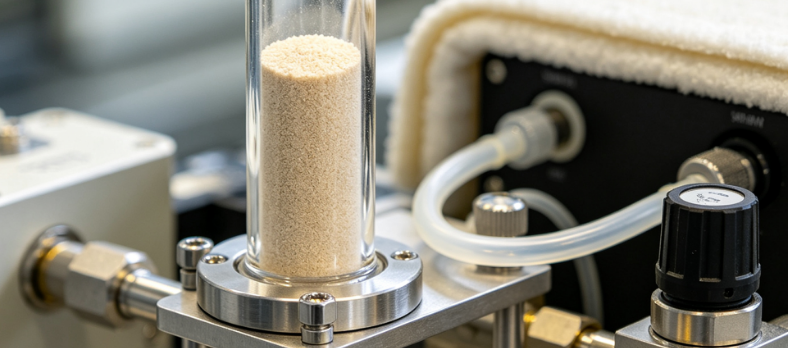
6. Dynamic CO2 Capture Performance under Realistic Conditions: Our custom-built fixed-bed and fluidized-bed reactor systems are equipped with precise mass flow controllers, humidifiers, and online NDIR CO2 analyzers capable of measuring concentrations from 100 ppm to 50 vol%. We conduct breakthrough curve experiments to determine dynamic adsorption capacity, utilization factor, and mass transfer zone length under various space velocities, CO2 partial pressures, and temperatures. For cyclic performance, we automate regeneration steps (temperature swing, pressure swing, or vacuum swing) and report deactivation rates, regenerability, and energy consumption per mole of CO2. We also offer multi-cycle accelerated aging tests (up to 500 cycles) to predict long-term stability, a vital metric for industrial feasibility.
7. Advanced Operando and In-Situ Spectroscopy: To elucidate the mechanism of CO2 capture at the molecular level, we provide operando Raman spectroscopy and near-ambient pressure XPS (NAP-XPS) during adsorption/desorption cycles. These techniques reveal real-time changes in surface carbonate speciation, oxidation states of redox-active cations, and the role of surface hydroxyl groups. For materials containing paramagnetic cations (e.g., Mn, Fe), we perform electron paramagnetic resonance (EPR) to track defect evolution and oxygen vacancies, which are known to enhance CO2 chemisorption.
Beyond Routine Analysis – Our Advanced Diagnostics and Modeling
What sets our service apart is the integration of experimental data with physicochemical modeling and simulation. We employ a proprietary platform that combines experimental isotherm data with dual-site Langmuir–Freundlich or Toth models to predict adsorption behavior over a wide range of conditions. For complex mixed oxides, we perform density functional theory (DFT) calculations on representative surface clusters to compute binding energies of CO2 on different crystal facets and defect sites, which are then correlated with experimental TPD and DRIFTS results. This combined experimental–computational approach yields a mechanistic descriptor that can guide rational design of next-generation adsorbents.
Furthermore, we offer high-throughput screening for combinatorial libraries of mixed oxide compositions (e.g., varying Mg/Ca ratios or doping levels). Using automated sample preparation and rapid TGA screening, we can identify promising compositions within days, drastically reducing development time. Our statistical analysis includes principal component analysis (PCA) and partial least squares (PLS) regression to correlate synthesis parameters with performance metrics, providing actionable insights that go beyond simple reporting.
We also support customized deactivation studies—for example, exposing adsorbents to SO2 or HCl in a controlled gas stream to mimic industrial flue gases, followed by post-mortem characterization (XRD, XPS, TEM) to pinpoint degradation mechanisms. Such in-depth forensic analysis is rarely offered elsewhere but is essential for troubleshooting and improving material robustness.
Our Key Advantages in CO2 Mixed Oxide Adsorbent Testing
Our laboratory has established a reputation for excellence in sorbent characterization through a combination of infrastructure, expertise, and operational philosophy. The following advantages consistently resonate with our clients:
Advantage 1 – Unified Analytical Platform with In-House Instrumentation: We operate all major characterization tools—from powder XRD and TGA to XPS and electron microscopy—within our own ISO/IEC 17025 accredited facility. This eliminates sample transfer delays, reduces contamination risks, and ensures that all measurements are performed under consistent environmental controls. More importantly, it enables seamless cross-correlation of data, as the same sample aliquot can be analyzed by multiple techniques without intermediate storage artifacts.
Advantage 2 – Tailored Testing Protocols for Specific Application Scenarios: We recognize that a calcium-looping adsorbent for cement plants has vastly different requirements than a low-temperature sorbent for DAC. Our scientific team works closely with you to design a test plan that mirrors your intended operating conditions—including gas composition, pressure, temperature cycles, and impurities. We adapt our reactor configurations, analytical settings, and data reduction algorithms to reflect your real-world constraints, ensuring that the results are directly translatable to your application.
Advantage 3 – Superior Data Quality and Uncertainty Quantification: Every measurement is accompanied by a rigorous uncertainty budget, including repeatability, reproducibility, and systematic errors. We use certified reference materials (e.g., NIST SRM 1917 for BET calibration) and participate in inter-laboratory proficiency testing to validate our methods. Our reports include confidence intervals and statistical significance tests, allowing you to make scientifically defensible comparisons between different batches or formulations.
Advantage 4 – Expert Interpretation and Contextual Benchmarking: Our team comprises specialists in heterogeneous catalysis and adsorption science with decades of combined experience. We do not merely deliver numbers; we provide a comprehensive discussion that places your results within the broader literature, highlighting how your material compares to state-of-the-art mixed oxides (e.g., MgO–Al2O3, hydrotalcite-derived, or perovskite-type adsorbents). This contextual insight is invaluable for grant writing, patent preparation, and publication.
Advantage 5 – Rapid Turnaround with Agile Communication: Standard projects are completed within 15–20 working days, with expedited options for urgent R&D needs. We assign a dedicated project scientist who provides regular updates, shares preliminary data, and adjusts the testing plan if unexpected phenomena emerge. This collaborative approach ensures that you remain in control and that the final report addresses your core questions.
Advantage 6 – Global Logistics and Flexible Sample Submission: With sample receiving hubs in the Americas, Europe, and Asia, we offer streamlined international shipping. Our online client portal allows you to track samples, upload safety data sheets, and download reports in multiple formats (PDF, Excel, JSON). We also provide secure data storage for at least five years, enabling you to revisit historical data as new analysis methods arise.
Who Benefits from Our Service
Our testing solutions are designed for a wide range of stakeholders: academic researchers investigating novel mixed oxide systems for high-impact journals; chemical engineering firms scaling up sorbent production for pilot plants; environmental consultancies verifying CO2 capture efficiency for regulatory compliance; and energy companies evaluating sorbents for integration with carbon capture, utilization, and storage (CCUS) infrastructures. We also support equipment manufacturers who need to qualify sorbent performance for their capture units, as well as government agencies seeking independent performance validation for policy-making.
Performance Benchmarks and Technical Specifications
To illustrate the precision of our measurements, we highlight typical performance indicators:
- XRD detection limit for minor phases: < 1 wt% (lab source) and < 0.2 wt% (synchrotron).
- BET surface area reproducibility: ± 0.8% on reference materials.
- CO2-TPD temperature accuracy: ± 1 °C with linear heating rates from 1 to 50 °C min−1.
- Breakthrough curve measurement precision: RSD ≤ 2% for adsorption capacity at 50% breakthrough.
- GC/MS detection limits for trace gases (CO, CH4, H2S): sub-ppm levels.
- Cyclic stability test capacity: automated operation for up to 500 cycles without human intervention.
These capabilities ensure that even subtle differences—such as a 5% change in basic site density or a 0.02 eV shift in carbonate binding energy—are reliably captured and quantitatively reported.
How to Engage Our Services
Initiating a project is straightforward and begins with a complimentary consultation. We discuss your material's composition, synthesis history, target operating conditions, and specific performance goals. Based on this, we propose a detailed testing matrix with a transparent cost estimate and timeline. After your approval, we provide comprehensive sample submission guidelines, including recommended mass, particle size, and storage conditions. Upon sample receipt, we perform a visual and gravimetric check before commencing the analytical workflow. Throughout the project, you receive periodic progress summaries, and at the conclusion, we deliver a comprehensive final report that integrates all raw data, processed results, statistical analysis, and interpretive comments. For clients with ongoing development programs, we offer retainer agreements that guarantee priority scheduling and discounted rates.
Quality, Safety, and Ethical Compliance
All testing is conducted in compliance with ISO 9001 and ISO 14001 standards. We maintain meticulous electronic records for every instrument and sample, ensuring full traceability. Given that some mixed oxides contain heavy metals or alkaline-earth compounds, we follow strict waste handling and personal protective equipment (PPE) protocols. Our laboratory is regularly audited by external bodies, and we are committed to the highest standards of scientific integrity, including the prevention of data fabrication or manipulation.
Conclusion – Elevate Your CO2 Adsorbent Research with Expert Characterization
In the competitive landscape of carbon capture materials, the depth and accuracy of characterization often distinguish a breakthrough from an incremental improvement. CO2 mixed oxide adsorbents present a rich landscape of compositional and structural variables, and unlocking their full potential requires a partner who can navigate this complexity with both breadth and depth of expertise. Our integrated analytical service provides not just data, but actionable intelligence—from fundamental surface chemistry to long-term cyclic performance, from crystallographic perfection to mechanical resilience. We are committed to delivering results that are scientifically robust, technically meaningful, and directly applicable to your objectives.
We invite you to reach out to our technical specialists to discuss your specific characterization needs. Whether you are optimizing a novel ternary oxide, benchmarking a commercial sample, or troubleshooting a deactivation issue, we have the tools and talent to support you. Let us help you accelerate the path from material synthesis to successful CO2 capture deployment.
Schedule your free initial consultation today and discover how our tailored detection services can advance your research and industrial applications.