Reasons for choosing our testing services
ZHONGXI Testing has obtained inspection qualification certifications from multiple countries and regions worldwide. We possess a senior testing team and advanced testing methods, providing independent, impartial, and professional third-party verification services for global carbon projects.

Internationally recognized authority
Certified by multiple international standards such as CNAS, VCS, and GS, with reports universally applicable worldwide.

Global service capability
Covering 140+ countries and regions, it supports on-site detection and remote verification in multiple languages.

Professional experimental methods
Adopt standard experimental methods to ensure accurate and reliable data.
Advanced Multi-Technique Characterization of Copper Sulfide (CuS) Catalysts – Specialized Analytical Services
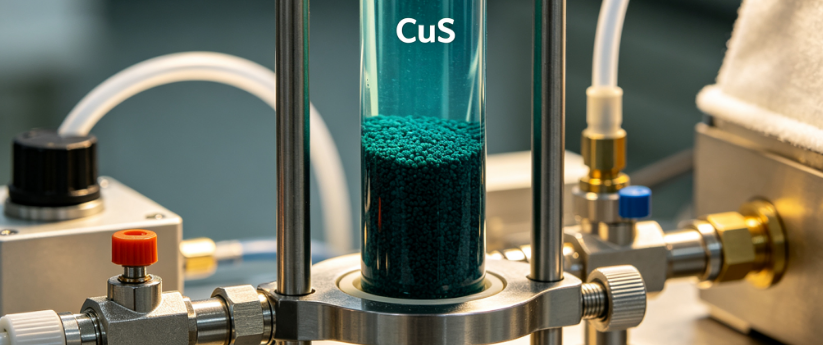
Copper sulfide (CuS) has garnered substantial interest as a versatile catalyst for diverse reactions, including photocatalytic hydrogen evolution, electrochemical CO2 reduction, organic transformations, and environmental remediation. Its unique electronic structure, stemming from the partially filled 3d orbitals of copper and the polarizable sulfide ligand, endows CuS with tunable band gaps, metallic-like conductivity in some phases, and exceptional redox flexibility. However, the catalytic performance of CuS is exquisitely sensitive to its stoichiometry, crystallographic phase (covellite, chalcocite, or digenite), morphology (nanoparticles, nanosheets, or hierarchical structures), surface defects, and oxidation state distribution. Furthermore, CuS is prone to oxidation, surface reconstruction, and phase segregation under reaction conditions, making representative ex-situ and operando characterization indispensable. If you are searching for CuS catalyst testing, you are likely at a stage where precise and comprehensive analytical data are crucial for validating your synthesis protocol, comparing different synthetic routes, elucidating structure–activity relationships, or troubleshooting deactivation issues. This article describes our extensive characterization portfolio, the technical depth we provide, and the key advantages that distinguish our laboratory as a premier partner for CuS catalyst research and development.
The Critical Need for Holistic CuS Catalyst Characterization
CuS catalysts operate at the intersection of solid-state chemistry, surface science, and electrochemistry. Their catalytic efficiency is governed by a delicate balance of factors: the Cu/S atomic ratio, which dictates the formal valence of copper and the density of cationic vacancies; the presence of Cu+ vs. Cu2+ species, which influences charge carrier dynamics and reactant adsorption; and the surface sulfur species (S2−, S22−, or sulfate) that modulate acid–base properties and resistance to poisoning. In photocatalysis, the band-edge positions and the recombination lifetime of photogenerated electron–hole pairs are directly controlled by crystallite size and defect density. In electrocatalysis, the electrochemical active surface area (ECSA) and the charge-transfer resistance at the solid–liquid interface are paramount. Therefore, a multi-technique approach that combines bulk structural analysis, surface chemical speciation, textural assessment, and functional testing under relevant conditions is essential for a meaningful evaluation. Our service is architected to deliver this integrated perspective, providing you with a complete map of your CuS catalyst's properties—from atomic-scale ordering to macroscopic performance.
Our Comprehensive Characterization Suite for CuS Catalysts
We apply a broad and complementary set of analytical tools, each selected to probe a specific facet of CuS catalysts. Our workflow spans crystallography, morphology, surface chemistry, optical and electronic properties, and catalytic activity under both photochemical and electrochemical regimes.
1. Phase Identification and Crystallographic Precision: We employ high-resolution powder X-ray diffraction (HR-XRD) with Cu Kα radiation, supplemented by synchrotron X-ray diffraction for ultra-high resolution and detection of trace phases. Rietveld refinement is routinely performed to determine precise lattice parameters, phase fractions (e.g., covellite vs. chalcocite), and microstrain. For samples with pronounced stacking faults or nanometric crystallites, we apply the Warren–Averbach analysis to separate size and strain broadening. In-situ HT-XRD is available to monitor phase transformations under controlled atmospheres (inert, reducing, or oxidizing), providing critical insights into thermal stability and sintering behavior.
2. Morphological and Microstructural Imaging: Scanning electron microscopy (SEM) with field-emission gun (FE-SEM) provides high-resolution imaging of particle size, shape, and agglomeration state, while energy-dispersive X-ray spectroscopy (EDS) mapping gives semi-quantitative elemental distribution. For nanoscale details, we use high-angle annular dark-field scanning transmission electron microscopy (HAADF-STEM) coupled with electron energy loss spectroscopy (EELS), enabling atomic-resolution imaging and simultaneous analysis of Cu and S core-loss edges to map oxidation states and local stoichiometry at the sub-nanometer level. Selected area electron diffraction (SAED) is used to confirm phase purity at the individual particle level.
3. Surface Chemical States and Composition: X-ray photoelectron spectroscopy (XPS) with monochromatic Al Kα radiation is performed to determine the binding energies of Cu 2p and S 2p core levels, allowing deconvolution of Cu+, Cu2+, and Cu0 species, as well as sulfide (S2−), disulfide (S22−), and sulfate (SO42−) states. We provide quantitative surface atomic ratios and use argon cluster ion sputtering for depth profiling to differentiate surface oxidation from bulk composition. For enhanced surface sensitivity, we also offer low-energy ion scattering (LEIS) to probe the outermost atomic layer, which is critical for understanding catalytic active sites.
4. Optical and Electronic Properties: UV-Vis-NIR diffuse reflectance spectroscopy (DRS) with an integrating sphere is used to measure optical band gaps via Tauc plot analysis, considering both direct and indirect transitions. Photoluminescence (PL) spectroscopy, including steady-state and time-resolved PL (TRPL), is applied to assess exciton recombination dynamics, trap-state density, and carrier lifetimes, with temporal resolution down to 30 ps. For electrochemical catalysts, we perform ultraviolet photoelectron spectroscopy (UPS) to measure the work function and valence band edge, providing a complete band alignment relative to vacuum.
5. Textural Properties and Surface Area: Nitrogen physisorption at 77 K is carried out to determine BET surface area, pore volume, and pore-size distribution using DFT and NLDFT models. We also measure carbon content via combustion analysis to assess any residual organic species from synthesis, which can block active sites. For porous CuS architectures, we add argon physisorption for improved resolution in the micropore region.
6. Catalytic Performance Evaluation: We offer a range of functional tests tailored to your application. For photocatalytic reactions, we use a fully automated photoreactor with tunable LED light sources (365–780 nm) and online GC/HPLC analysis to measure degradation of model pollutants (e.g., methylene blue, rhodamine B) or H2 evolution from water splitting. Apparent quantum yields (AQY) are calculated at specific wavelengths. For electrocatalytic applications (e.g., CO2 reduction, oxygen evolution, or hydrogen evolution), we perform linear sweep voltammetry (LSV), electrochemical impedance spectroscopy (EIS), cyclic voltammetry (CV), and chronoamperometry in a three-electrode configuration using a high-precision potentiostat. We determine overpotential, Tafel slope, turnover frequency (TOF), and Faradaic efficiency for specific products, with product quantification via gas chromatography and mass spectrometry (GC-MS).
7. Stability and Durability Assessments: Accelerated aging tests are conducted under operating conditions (illumination, applied potential, or thermal cycling) for extended periods (up to 1000 hours). We perform post-mortem analysis (XRD, XPS, TEM) to identify degradation mechanisms such as dissolution, phase transformation, or surface passivation. In-situ Raman spectroelectrochemistry is also available to monitor structural changes during electrochemical polarization, offering real-time insight into catalyst evolution.
Advanced Diagnostics – Beyond Routine Characterization
Our service transcends conventional analysis by integrating experimental data with theoretical and computational modeling. We perform DFT calculations to compute surface energies, adsorption energies of reactants/intermediates, and reaction pathways on different CuS surfaces, directly correlating with experimental kinetics. We also apply machine learning algorithms to correlate synthesis parameters (e.g., precursor ratio, temperature, time) with catalytic outcomes, enabling predictive optimization. For clients requiring the highest level of insight, we offer operando X-ray absorption spectroscopy (XAS) at synchrotron facilities, which provides real-time information on Cu oxidation state and local coordination geometry under reaction conditions—an indispensable tool for identifying the true active species.
Additionally, we provide high-throughput screening for compositional libraries (e.g., CuS with varying dopants) using automated electrochemical or photochemical test stations, allowing rapid identification of optimal formulations. Our data analysis pipeline includes multivariate statistical analysis (PCA, PLS) to isolate key performance descriptors from complex datasets, offering clear guidance for material improvement.
Our Key Advantages in CuS Catalyst Testing
Our laboratory has established a strong presence in the field of transition metal chalcogenide characterization through a combination of technical excellence, operational efficiency, and client-centric service. The following advantages are consistently recognized by our clients:
Advantage 1 – All-In-One Integrated Laboratory: We operate a full suite of instruments—from XRD, XPS, SEM, TEM, and BET to photoreactors, electrochemical workstations, and Raman spectrometers—under one roof. This eliminates sample handling delays, reduces the risk of contamination or alteration between measurements, and ensures consistent environmental conditions. It also enables rapid cross-correlation of data from multiple techniques on the same sample batch.
Advantage 2 – Customized Protocols Tailored to Your Scientific Question: Whether you are investigating the effect of a new surfactant, comparing different copper precursors, or evaluating a new composite, we design the testing matrix to address your specific hypotheses. We adapt measurement parameters (e.g., scan rates for electrochemistry, light intensities for photocatalysis) to mimic your target operating conditions, ensuring that the results are directly relevant to your application.
Advantage 3 – Exceptional Data Quality and Traceability: All instruments are calibrated with NIST-traceable standards, and we adhere to strict internal quality control procedures. We report uncertainties for each measured parameter, allowing you to statistically compare different samples. Our participation in international round-robin tests guarantees reproducibility and credibility.
Advantage 4 – Expert Scientific Interpretation and Benchmarking: Our senior scientists possess extensive experience in Cu-based catalysts, with a deep understanding of phase diagrams, surface chemistry, and catalytic mechanisms. We provide not just numbers, but a comprehensive narrative that places your results in the context of the state-of-the-art, highlighting strengths, potential pitfalls, and recommendations for further development. This interpretive layer is particularly valuable for publication and patent drafting.
Advantage 5 – Fast Turnaround with Responsive Communication: Most projects are completed within 10–15 working days, with expedited options for urgent timelines. We assign a dedicated project manager who keeps you informed through weekly updates, shares preliminary findings, and adjusts the plan if unexpected results appear. This agile approach ensures that your project stays on track and that you are never left uninformed.
Advantage 6 – Global Logistics and Secure Data Handling: With shipment hubs in three continents, we simplify international sample submission. Our online portal allows you to upload safety data sheets, track shipments, and securely download final reports in various formats (PDF, CSV, raw data). We also offer long-term data storage for future reference.
Who Benefits from Our Services
Our testing solutions cater to a diverse clientele: academic research groups exploring novel CuS nanostructures for energy and environmental applications; industrial R&D teams developing CuS-based catalysts for chemical synthesis or pollution control; start-ups in the clean-tech sector requiring rapid validation of new formulations; and government or regulatory bodies seeking independent performance verification. We also support equipment manufacturers who need to qualify catalysts for their proprietary reactors or electrolyzers.
Performance Benchmarks and Technical Specifications
To demonstrate the precision of our measurements, we highlight typical performance indicators:
- XRD detection limit for impurity phases: < 0.5 wt% (lab) and < 0.1 wt% (synchrotron).
- XPS energy resolution: ≤ 0.45 eV (Ag 3d5/2), enabling deconvolution of Cu 2p3/2 peaks separated by 0.8 eV.
- BET surface area reproducibility: ± 0.5 m2/g for reference materials.
- TRPL temporal resolution: < 40 ps, allowing accurate lifetime determination even for fast recombination.
- Electrochemical current sensitivity: < 1 pA, with potentiostat noise < 0.1% of full scale.
- Photocatalytic activity repeatability: RSD ≤ 3% for degradation rate constants across triplicate runs.
- GC-MS detection limits for organic products: < 0.1 ppm.
These capabilities ensure that subtle differences—such as a 0.05 eV shift in binding energy or a 5% change in surface Cu+/Cu2+ ratio—are reliably detected and quantified.
How to Initiate a CuS Catalyst Testing Project
The engagement process is designed for simplicity and efficiency. It begins with a free consultation where we discuss your catalyst synthesis, your key questions, and your intended application. We then propose a tailored testing plan with a detailed quotation and timeline. Once you approve, we provide comprehensive sample submission guidelines (mass, storage, shipping). Upon receipt, we perform an initial check and commence the analysis. Throughout, we provide regular progress updates. The final deliverable is a comprehensive report that integrates all raw data, processed results, statistical analysis, and expert commentary. We also offer a post-report discussion to clarify any points and plan subsequent steps.
Quality and Ethical Standards
Our laboratory operates under ISO 9001:2015 quality management and follows strict safety protocols for handling copper and sulfide compounds. All data are recorded in electronic lab notebooks with full audit trails. We uphold the highest standards of scientific integrity, ensuring unbiased and truthful reporting.
Conclusion – Partner with Us for Unrivaled CuS Catalyst Characterization
CuS catalysts offer a remarkable platform for sustainable chemistry, but their complexity demands a characterization approach that is equally sophisticated. With our comprehensive analytical portfolio, advanced in-situ capabilities, and experienced scientific team, we provide the depth and clarity you need to accelerate your research, optimize your catalyst, and achieve your performance targets. We are committed to delivering not just data, but actionable knowledge that empowers your next breakthrough.
We invite you to reach out to our expert team to discuss your specific CuS characterization needs. Let us help you unlock the full catalytic potential of your materials with precision, reliability, and scientific insight.
Request your free initial consultation today and discover the difference that specialized, integrated testing can make for your CuS catalyst development.