Reasons for choosing our testing services
ZHONGXI Testing has obtained inspection qualification certifications from multiple countries and regions worldwide. We possess a senior testing team and advanced testing methods, providing independent, impartial, and professional third-party verification services for global carbon projects.
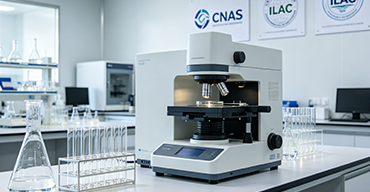
Internationally recognized authority
Certified by multiple international standards such as CNAS, VCS, and GS, with reports universally applicable worldwide.

Global service capability
Covering 140+ countries and regions, it supports on-site detection and remote verification in multiple languages.
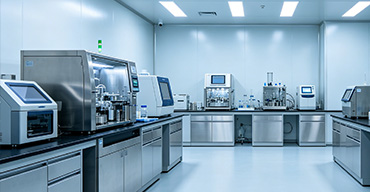
Professional experimental methods
Adopt standard experimental methods to ensure accurate and reliable data.
Comprehensive Performance and Compliance Testing of Sulfur-Reduction Additives for FCC Gasoline – Specialized Analytical Services
Fluid Catalytic Cracking (FCC) gasoline constitutes a major portion of the global gasoline pool, but its high sulfur content remains a significant challenge for refiners aiming to meet stringent fuel specifications (e.g., Euro VI, China VI, and US Tier 3). Sulfur-reduction additives—including proprietary metal-based promoters, sulfur-transfer catalysts, and novel sorbent formulations—are increasingly employed in the FCC unit or downstream post-treatment processes to selectively reduce sulfur species (thiophenes, benzothiophenes, mercaptans, and sulfides) while minimizing octane loss and hydrogen consumption. However, the performance of these additives is critically dependent on their chemical composition, active phase dispersion, surface acidity, thermal stability, and resistance to poisoning by nitrogen compounds and heavy metals. If you are searching for testing services for FCC gasoline sulfur-reduction additives, you are likely at a pivotal stage where accurate, multi-dimensional characterization and performance verification are essential to select the most effective additive, optimize injection rates, validate long-term performance under realistic process conditions, or troubleshoot unexpected sulfur breakthrough in commercial operation. This article details our comprehensive analytical portfolio, the technical depth we deliver, and the distinct advantages that position us as a trusted partner for refining technology developers, catalyst manufacturers, and fuel quality compliance laboratories worldwide.
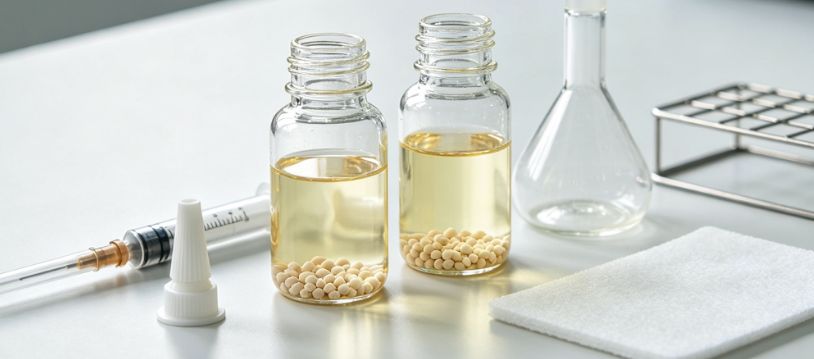
The Scientific Rationale for Rigorous Additive Testing in FCC Gasoline Desulfurization
The sulfur compounds in FCC gasoline are distributed among various chemical classes, each exhibiting different reactivity toward hydrodesulfurization (HDS) and adsorption-based removal. Effective sulfur-reduction additives must exhibit high activity for C–S bond cleavage, selectivity toward refractory sulfur species (e.g., 4,6-dimethyldibenzothiophene), and minimal hydrogenation of olefins to preserve octane number. Furthermore, additives must withstand the harsh environment of the FCC regenerator (temperatures up to 750 °C, steam partial pressure, and cyclic redox conditions) without significant sintering or phase transformation. In downstream applications, additives must be compatible with existing hydrotreating units and show sustained performance over long runs. Consequently, a multifaceted testing strategy that integrates chemical analysis, textural characterization, surface property assessment, and catalytic performance evaluation under simulated industrial conditions is essential. Our service is constructed to deliver exactly this—a systematic, tiered workflow that spans from powder characterization to pilot-scale reactor validation, providing you with the data needed to make informed decisions.
Our Comprehensive Analytical and Performance Testing Capabilities
We apply a broad array of complementary techniques, each optimized to address a specific aspect of sulfur-reduction additives. Our testing covers bulk composition, phase structure, surface chemistry, textural properties, thermal/mechanical stability, and desulfurization activity under conditions mimicking FCC riser, regenerator, or post-treatment reactors.
1. Elemental and Phase Composition Analysis: We employ X-ray fluorescence (XRF) and inductively coupled plasma optical emission spectroscopy (ICP-OES) to determine the precise elemental composition of the additive, including active metals (e.g., Ni, Mo, Co, Zn, Cu, Fe), promoters (e.g., Ce, La, P), and support elements (e.g., Al, Si, Zr). For phase identification and crystallinity, we use high-resolution X-ray diffraction (HR-XRD) with Rietveld refinement to quantify the fractions of active phases (e.g., NiMoO4, Co9S8, ZnS) and support phases (e.g., γ-Al2O3, SiO2, titania). In-situ HT-XRD is available to track phase evolution during calcination and reduction, providing insights into the formation of the catalytically active sulfide or oxide species.
2. Textural Properties and Pore Architecture: Nitrogen physisorption at 77 K is performed to determine BET surface area, total pore volume, and pore-size distribution (DFT/NLDFT), which are critical for diffusion of bulky sulfur compounds. For additives with hierarchical porosity, we add mercury intrusion porosimetry to probe macropores and helium pycnometry for skeletal density. We also measure crush strength and attrition resistance (for shaped additives) using standardized methods (e.g., ASTM D4179), because mechanical integrity is vital for commercial fluidized-bed or fixed-bed operation.
3. Surface Chemistry and Acidity: The surface acidity of the additive influences both desulfurization activity and coke formation. We perform temperature-programmed desorption of ammonia (NH3-TPD) to quantify total acid site density and strength distribution. For a more nuanced view, we use pyridine-adsorbed DRIFTS to distinguish Brønsted vs. Lewis acid sites. Additionally, X-ray photoelectron spectroscopy (XPS) is employed to determine the surface oxidation states of active metals (e.g., Mo6+/Mo4+, Ni2+/Ni0) and the chemical environment of sulfur, oxygen, and carbon on the additive surface, which is crucial for understanding deactivation by coke or sulfur poisoning.
4. Desulfurization Performance Testing Under Realistic Conditions: Our custom-designed high-pressure micro-reactor and fixed-bed pilot units are equipped with on-line gas chromatography (GC-FID and GC-SCD) and mass spectrometry to measure sulfur speciation in the feed and product streams. We operate at typical FCC process conditions (e.g., 450–550 °C for riser simulation, or 300–400 °C for post-treatment hydrodesulfurization) with representative feedstock compositions (sulfur content 500–5000 ppm, including thiophene, benzothiophene, dibenzothiophene and their alkylated derivatives). We determine sulfur conversion, product sulfur distribution, octane number (via octane index or GC-based correlations), and selectivity to desulfurized hydrocarbons. For additives used in the FCC regenerator, we evaluate SOx emission reduction using a specialized micro-reactor with on-line SO2 analyzers.
5. Thermal and Hydrothermal Stability: We subject additives to accelerated deactivation protocols—including steam aging at 750 °C for up to 24 hours and thermal cycling between oxidation and reduction atmospheres. After treatment, we re-measure activity, surface area, and phase composition to quantify deactivation rates. This is essential to predict additive lifetime and replacement frequency in commercial units.
6. Poisoning Resistance: We simulate the effect of feed contaminants (e.g., nitrogen compounds such as quinoline, carbazole; and heavy metals like V, Ni) by doping the feed or by pre-loading the additive with metal naphthenates, followed by performance testing. We then perform post-mortem analysis (XPS, SEM-EDS, TEM) to identify the location and chemical form of deposited poisons, helping you understand additive tolerance and potential regeneration strategies.
7. Additive-Feedstock Compatibility and Kinetic Modeling: We offer kinetic studies under differential conditions to derive apparent activation energies, reaction orders, and rate constants for the desulfurization reactions. This data can be used to build reactor models for process scale-up. We also evaluate hydrogen consumption and coke yield, which are critical economic parameters for refinery operations.
Advanced Diagnostics – Beyond Routine Additive Testing
Our service transcends conventional characterization by integrating experimental results with computational and predictive tools. We perform density functional theory (DFT) calculations to model the adsorption of sulfur compounds on different active sites and to predict the energetics of C–S bond scission, providing a fundamental understanding that can guide additive design. We also use principal component analysis (PCA) to correlate additive properties (composition, acidity, pore size) with performance metrics, enabling rapid identification of key performance descriptors.
For clients requiring the highest level of insight, we offer operando X-ray absorption spectroscopy (XAS) at synchrotron facilities to monitor the dynamic evolution of active metal sulfide phases during reaction, directly linking structure to activity. Furthermore, we provide high-throughput screening of additive libraries (varying metal ratios, support types, and preparation parameters) using automated multi-channel reactors, significantly accelerating development cycles.
Our Key Advantages in FCC Sulfur-Reduction Additive Testing
Our laboratory is uniquely positioned to provide this specialized service due to several core strengths:
Advantage 1 – Integrated Facility with Industry-Scale Simulation: Unlike academic labs, our facility houses both standard characterization instruments and pilot-scale reactor systems that can operate at realistic FCC conditions (up to 600 °C, 2–4 MPa, and with real or model feeds). This allows us to deliver results that are directly scalable to commercial operation, reducing risks and uncertainties associated with additive selection.
Advantage 2 – Deep Expertise in Refining Catalysis: Our scientific team has extensive experience in FCC chemistry, hydrotreating, and fuel sulfur analysis. We are familiar with the complexities of sulfur speciation, octane retention, and the interplay between desulfurization and side reactions. This domain knowledge translates into intelligent test design and meaningful interpretation of results, far beyond routine data generation.
Advantage 3 – Customized Protocols for Specific Additive Types: We recognize that sulfur-reduction additives differ greatly—some are designed for the FCC riser, others for downstream HDS, and yet others for SOx reduction in the regenerator. We tailor our test conditions (temperature, pressure, space velocity, gas atmosphere, feed composition) to match your additive's intended application, ensuring that the results are relevant and actionable.
Advantage 4 – High Precision Sulfur Speciation: Our GC-SCD (sulfur chemiluminescence detection) provides picogram-level detection of individual sulfur compounds, enabling detailed product sulfur speciation. We can distinguish conversion of thiophenes vs. benzothiophenes, providing insight into additive selectivity. This level of detail is critical for optimizing additive formulations.
Advantage 5 – Rigorous Quality Assurance and Reporting: We operate under ISO 17025 accreditation for many of our test methods. All performance tests include replicates and internal standards to ensure reproducibility. Our final reports provide not only results but also uncertainty estimates, cross-reference to industry standards (e.g., ASTM D5453, D2622), and interpretative summary with expert recommendations.
Advantage 6 – Global Logistics and Responsive Support: With sample receiving hubs in three continents, we offer seamless international service. You will work with a dedicated technical coordinator who ensures clear communication and timely updates. We also provide emergency testing for urgent troubleshooting, with results delivered in as little as 5–7 working days.
Who Benefits from Our Testing Services
Our services are utilized by FCC additive manufacturers seeking to validate new product performance; oil refining companies evaluating additives for deployment in their FCC units; technology licensors who need independent verification of additive efficacy for their process guarantees; regulatory and testing laboratories required to certify fuel compliance; and research institutions exploring novel desulfurization materials. We also support engineering contractors designing new FCC or post-treatment units who require reliable additive performance data for process design.
Performance Benchmarks and Technical Specifications
To illustrate the precision of our measurements, we highlight typical performance indicators:
- Sulfur detection (GC-SCD): detection limit < 50 ppb for individual sulfur species, linear range up to 5,000 ppm.
- Activity test reproducibility: conversion values within ± 1.5% relative for replicate runs.
- BET surface area precision: ± 0.5 m2/g for standard reference materials.
- XRD phase quantification: detection limit < 0.5 wt% for secondary phases.
- NH3-TPD reproducibility: ± 2% for total acid site density.
- Thermal aging temperature control: ± 1 °C at 750 °C, with programmable ramps.
- Octane number estimation: precision ± 0.3 RON using GC-based correlations.
These capabilities ensure that even incremental improvements in additive performance (e.g., 2% higher desulfurization activity or 5% lower coke yield) can be confidently detected and quantified.
How to Initiate a Testing Project
The engagement process is straightforward and client-focused. It begins with a free consultation where we discuss your additive composition, intended application, and specific testing requirements (e.g., performance screening, competitive benchmarking, troubleshooting, or long-term stability). Based on this, we propose a tailored testing plan with a detailed cost estimate and timeline. Upon your approval, we provide sample submission guidelines (quantity, particle size, packaging). After receipt, we perform a preliminary check and then execute the agreed workflow. You receive regular progress updates and a final comprehensive report, followed by an interactive debriefing session.
Quality and Ethical Standards
Our laboratory operates under strict quality management systems (ISO 9001 and ISO 17025). We maintain comprehensive electronic records for full traceability. Given the hazardous nature of feedstocks and additives, we adhere to stringent health, safety, and environmental (HSE) protocols. We are committed to unbiased, transparent reporting and to protecting your proprietary information with utmost confidentiality.
Conclusion – Partner with Us for Reliable, Actionable Additive Performance Data
In the competitive landscape of fuel refining, the choice of sulfur-reduction additive can have significant economic and compliance implications. Our comprehensive testing service delivers the scientific rigor, operational realism, and interpretative depth needed to support confident decision-making. We combine advanced analytics with practical engineering insight to provide not just numbers, but a clear understanding of how your additive will perform in real-world conditions.
We invite you to contact our specialist team to discuss your additive testing needs. With our proven track record in FCC catalyst and additive evaluation, we are well-equipped to help you optimize performance, mitigate risks, and achieve your sulfur-reduction targets.
Request your free initial consultation today and experience the value of expert-led, industry-relevant additive characterization.