Reasons for choosing our testing services
ZHONGXI Testing has obtained inspection qualification certifications from multiple countries and regions worldwide. We possess a senior testing team and advanced testing methods, providing independent, impartial, and professional third-party verification services for global carbon projects.

Internationally recognized authority
Certified by multiple international standards such as CNAS, VCS, and GS, with reports universally applicable worldwide.

Global service capability
Covering 140+ countries and regions, it supports on-site detection and remote verification in multiple languages.

Professional experimental methods
Adopt standard experimental methods to ensure accurate and reliable data.
Advanced Characterization and Performance Evaluation of Sodalite‑Silica Composite Nanospheres – A Complete Analytical Service
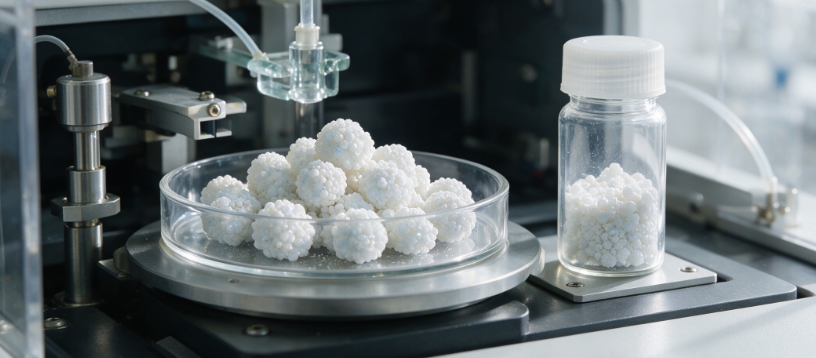
The convergence of microporous zeolitic frameworks with amorphous mesoporous silica into hierarchical composite architectures has opened new frontiers in heterogeneous catalysis, gas separation, drug delivery, and nanocomposite reinforcement. Among these, sodalite‑silica composite nanospheres—often termed “white carbon black” hybrids—offer a unique combination of high specific surface area, thermal stability, tunable acidity, and controlled particle morphology. However, the functional performance of these sophisticated materials is critically governed by a delicate balance of crystallinity of the sodalite phase, silica matrix porosity, interfacial bonding, sphere size distribution, and the accessibility of active sites. Subtle variations in synthesis parameters—such as silicate precursor ratio, aging time, hydrothermal temperature, or the presence of mineralizers—can dramatically alter the composite’s adsorption capacity, mechanical integrity, or catalytic selectivity. Therefore, a comprehensive, multi‑technique characterisation is not merely a quality‑control step, but a fundamental prerequisite for process optimisation, batch‑to‑batch reproducibility, and application‑specific tailoring. Our ISO/IEC 17025‑accredited laboratory provides a fully integrated testing platform specifically designed for sodalite‑silica composite spheres, covering everything from primary crystallite size to macroscopic pellet behaviour, and delivering quantitative, traceable data for both R&D and industrial scale‑up.
1. Why Dedicated Testing of Sodalite‑Silica Composites Is Essential
Despite the apparent simplicity of the sodalite (SOD) framework and silica matrix, their composite formation introduces complexities that are not encountered in either component alone. For instance, the embedding of sodalite nanocrystals within an amorphous silica sphere can lead to partial pore blockage, altered hydrophilicity, or the formation of new acid sites at the interface. Moreover, the sphericity and size uniformity directly affect packing density, flowability, and pressure‑drop behaviour in fixed‑bed reactors. In adsorption applications, the micro‑/mesopore interconnectivity determines the kinetics of molecular transport, while in catalysis, the distribution of active sodalite domains governs accessibility to bulky substrates. Conventional single‑method analyses (e.g., BET or XRD alone) are insufficient to characterise these hierarchical structures; a synergistic approach combining scattering, spectrometry, microscopy, and thermo‑mechanical testing is required. Our service is precisely designed to meet this demand, providing a complete property fingerprint that enables you to correlate synthesis inputs with functional outputs reliably.
2. Our Comprehensive Characterisation Platform for Sodalite‑Silica Composite Spheres
We offer a modular yet interlinked suite of analytical techniques, each selected to address a specific aspect of composite structure and performance. All measurements are performed with certified reference materials and validated standard operating procedures, ensuring high repeatability and inter‑laboratory comparability.
2.1 Phase Composition and Crystallinity
Powder X‑ray diffraction (XRD) with Cu Kα radiation and a high‑resolution Bragg‑Brentano geometry is used to confirm the sodalite structure (typical reflections at 2θ ≈ 14.0°, 24.5°, 32.0°) and to quantify the amorphous silica content via the internal standard method. Rietveld refinement yields unit‑cell parameters (with an accuracy of ±0.001 Å) and provides an estimate of apparent crystallite size using the Scherrer equation, corrected for instrumental broadening. For samples with low sodalite loading (< 5 wt%), we employ synchrotron‑based high‑energy XRD or pair distribution function (PDF) analysis to detect short‑range ordering.
2.2 Particle Size, Morphology, and Sphericity
We use field‑emission scanning electron microscopy (FE‑SEM) and transmission electron microscopy (TEM) at accelerating voltages up to 300 kV to capture detailed images of individual composite spheres, including surface texture and cross‑sectional views (via FIB‑milling). Automated image analysis (over 500 particles per sample) provides number‑, volume‑, and area‑weighted size distributions, as well as shape descriptors (circularity, aspect ratio, convexity). For bulk powder, laser diffraction particle sizing (wet dispersion) and dynamic image analysis (dry dispersion) complement the microscopy data, covering a size range from 0.1 to 2000 µm.
2.3 Pore Architecture – Micro‑ and Mesoporosity
Nitrogen physisorption at 77 K is performed after careful outgassing (optimised to avoid structural collapse). We report BET surface area (with a precision of ±2%), t‑plot micropore volume, and BJH mesopore size distribution (applying the Kruk‑Jaroniec‑Sayari correction for cylindrical pores). For a more detailed assessment of ultramicropores (< 0.7 nm), we use CO₂ adsorption at 273 K and the Dubinin‑Radushkevich (DR) method. To evaluate the connectivity between micropores and mesopores, we perform mercury intrusion porosimetry (up to 60,000 psi) on compacted spheres, providing inter‑particle macropore information and crush strength correlation.
2.4 Chemical Composition and Surface Functionality
The bulk elemental composition (Si/Al ratio, and trace impurities such as Na, Fe, Ti) is determined by X‑ray fluorescence (XRF) and inductively coupled plasma optical emission spectrometry (ICP‑OES). Surface chemistry is examined by X‑ray photoelectron spectroscopy (XPS) with monochromatic Al Kα radiation, providing the surface Si/Al ratio, and the presence of silanol (Si‑OH) or sodium species. Additionally, Fourier‑transform infrared spectroscopy (FTIR) in diffuse reflectance mode (DRIFTS) is used to identify framework vibrations (T‑O‑T asymmetric stretching near 950–1050 cm⁻¹) and to probe the nature of acid sites via pyridine adsorption.
2.5 Thermal and Hydrothermal Stability
Thermogravimetric Analysis (TGA) coupled with differential scanning calorimetry (DSC) is carried out from 30 °C to 1000 °C in air and nitrogen atmospheres to determine dehydration, organic template removal (if any), and framework collapse temperatures. For hydrothermal stability, we expose the spheres to steam at 200–400 °C and re‑measure the crystallinity and surface area to quantify degradation.
2.6 Mechanical Integrity and Pellet Performance
For bulk spheres (diameter > 1 mm), we perform single‑pellet crush strength tests according to ASTM D4179, with a load cell precision of ±0.1 N. For smaller microspheres, we evaluate the attrition resistance using a jet‑mill impact tester, reporting the fines generation percentage. These data are essential for fixed‑bed and fluidised‑bed reactor designs.
3. Advanced Analytical Capabilities – Going Beyond Routine Characterisation
For clients demanding deeper insight into the structure‑property‑performance relationships of their composites, we offer a set of cutting‑edge techniques that are rarely available in commercial testing laboratories.
3.1 Electron Tomography and 3D Pore Reconstruction
Using tilt‑series TEM (STEM‑HAADF) combined with iterative reconstruction algorithms, we generate three‑dimensional models of individual composite spheres, visualising the spatial distribution of sodalite crystals within the silica matrix and the tortuosity of the pore network. This enables quantitative assessment of pore connectivity and accessibility, which directly correlates with mass‑transfer limitations in catalysis.
3.2 Positron Annihilation Lifetime Spectroscopy (PALS)
PALS is a powerful tool for probing free‑volume holes and nanoscale defects in the silica matrix. The ortho‑positronium lifetime components provide information on pore size in the sub‑nanometre to 2‑nm range, complementing gas adsorption and offering sensitivity to pore wall chemistry.
3.3 In‑Situ XRD and SAXS Under Controlled Atmosphere
We conduct in‑situ high‑temperature XRD and small‑angle X‑ray scattering (SAXS) to monitor structural evolution during calcination or under reactive gas environments (e.g., CO₂, H₂O vapour). This provides real‑time data on phase transitions, crystallite growth, and particle sintering, essential for optimising activation and regeneration protocols.
3.4 Solid‑State Nuclear Magnetic Resonance (ssNMR)
Using ²⁹Si and ²⁷Al MAS‑NMR, we distinguish between different silicon environments (Q³, Q⁴, Si‑O‑Al linkages) and determine the coordination state of aluminium (tetrahedral vs. octahedral). This gives direct insight into the acid‑site distribution and the extent of sodalite‑silica interfacial bonding.
3.5 Surface Energy and Wettability Assessment
We measure dynamic contact angles with water, diiodomethane, and formamide to calculate the surface free energy components (dispersive and polar) using the Owens‑Wendt or van Oss‑Good methods. This data is crucial for predicting adsorption affinity towards polar vs. non‑polar molecules and for evaluating dispersion stability in various media.
3.6 Breakthrough Adsorption and Kinetic Studies
For gas‑phase applications, we perform fixed‑bed breakthrough experiments with CO₂, CH₄, or VOCs, using online GC‑FID/TCD detection. We extract adsorption capacities, mass‑transfer coefficients, and selectivity factors under realistic flow rates and temperatures, providing direct process‑oriented performance metrics.
4. Data Quality, Standardisation, and Expert Reporting
Our measurement protocols are built on rigorous statistical control. For each parameter, we provide: - Detailed experimental conditions (e.g., outgassing temperature, scan speed, dispersion medium). - Uncertainty estimates (standard deviation, coefficient of variation, or expanded uncertainty at 95% confidence). - Cross‑validated results where applicable (e.g., particle size from SEM vs. laser diffraction, surface area from BET vs. geometric calculation). - Graphical representations (size histograms, pore‑size distributions, XRD patterns, TGA/DSC curves) with clear labelling and interpretation.
Our reports are prepared by senior materials scientists who specialise in zeolite‑silica composites. We provide not just raw data, but a comprehensive discussion that correlates measured properties with potential end‑use performance, highlighting critical control parameters for your synthesis. For instance, we will identify whether a drop in surface area is due to pore blockage or structural collapse, and recommend specific adjustments (e.g., silica precursor ratio, aging time) to achieve your target properties.
We also offer fast turnaround: a complete standard characterisation package is delivered within 5–7 working days, with an express option (48 hours) for urgent projects.
5. Why Our Laboratory Is Your Ideal Partner for Composite Analysis
Our competitive advantages are built on technical excellence, operational agility, and deep domain knowledge.
Integrated multi‑technique facility: We house over 20 complementary instruments under one roof, including TEM, SEM‑EDS, XRD, XPS, FTIR, Raman, BET, TGA‑MS, and porosimeters. This enables single‑point coordination, eliminating the logistical overhead and data inconsistencies of using multiple external labs. Moreover, our specialists routinely cross‑correlate results from different techniques, ensuring a consistent and coherent material description.
Specialised expertise in hierarchical composites: Our team has published extensively on zeolite‑silica hybrid materials and understands the subtle artefacts that can affect measurements—for example, the effect of moisture on BET results or the interference of amorphous silica in XRD quantification. We apply tailored corrections and alternative analysis routes (e.g., using the Debye‑Scherrer method with a SiO₂ standard) to deliver accurate and reliable data.
Flexibility for diverse sample forms: We accept samples as powders, pre‑formed pellets, monoliths, or even slurries. Our sample preparation protocols are adaptable to minimise alteration of the native structure, including cryo‑milling for fragile spheres and low‑temperature outgassing for thermally sensitive materials.
Commitment to intellectual property protection: All data are handled under strict confidentiality. We are accustomed to working with proprietary materials and provide reports in a format that protects your synthesis details while giving you the technical depth required for internal decisions, patent applications, or regulatory filings.
Cost‑effective and transparent pricing: We offer modular packages—you select only the analyses relevant to your project, with volume discounts for repeat testing or comprehensive multi‑batch screening. There are no hidden fees for consultation or data interpretation.
Our track record includes successful collaborations with over 80 clients in the fields of gas separation, catalysis, and nanocomposite development, helping them achieve significant improvements in product consistency and performance. We invite you to leverage this expertise for your sodalite‑silica composite spheres.
Ready to characterise your composite nanospheres with unparalleled depth and precision? Contact our technical experts today to design a tailored testing programme that meets your specific objectives. We will provide a detailed quotation and timeline within one business day.