Reasons for choosing our testing services
ZHONGXI Testing has obtained inspection qualification certifications from multiple countries and regions worldwide. We possess a senior testing team and advanced testing methods, providing independent, impartial, and professional third-party verification services for global carbon projects.
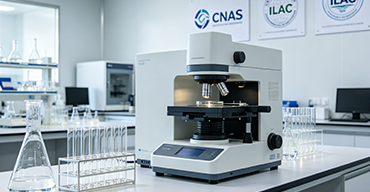
Internationally recognized authority
Certified by multiple international standards such as CNAS, VCS, and GS, with reports universally applicable worldwide.

Global service capability
Covering 140+ countries and regions, it supports on-site detection and remote verification in multiple languages.

Professional experimental methods
Adopt standard experimental methods to ensure accurate and reliable data.
Ore Material Testing Services: Accurate Analysis for Mining, Exploration & Trade
As an independent third-party testing service provider, we support mining companies, exploration firms, commodity traders, smelters, and regulatory bodies in verifying the quality, grade, and composition of ores and mineral concentrates. Ore materials – including metallic ores (iron, copper, gold, bauxite, zinc, lead, nickel, etc.), industrial minerals (phosphate, limestone, graphite, potash, etc.), and rare earth ores – require rigorous chemical, physical, and mineralogical characterization to determine economic value, processability, and compliance with international trade specifications. Our accredited laboratory performs a full range of tests according to global standards (ISO, ASTM, JIS, GB, AS, and industry-specific methods). This article outlines our ore testing capabilities – including scope, key test items, and standard test methods – to help you select the right analytical services for your project.
1. Our Testing Scope for Ore Materials
We cover a wide variety of ore types and associated materials:
By ore type: Iron ores (hematite, magnetite, limonite); Base metal ores (copper, lead, zinc, nickel, cobalt, molybdenum); Precious metal ores (gold, silver, platinum group metals – PGMs); Light metal ores (bauxite – aluminum, lithium spodumene); Ferroalloy ores (chromite, manganese, tungsten, vanadium, titanium); Industrial minerals (phosphate rock, limestone, dolomite, barite, fluorspar, graphite, potash, salt); Uranium and thorium ores; Rare earth element ores (bastnäsite, monazite, xenotime).
By material form: Run-of-mine (ROM) ore, crushed ore, mill feed, flotation concentrates, tailings, sinter, pellets, briquettes, dust, slurry, and drill core samples.
By industry application: Mine exploration and resource definition; Grade control during production; Pre-feasibility and feasibility studies; Export/import trade settlements (inspections); Environmental assessment (acid rock drainage, heavy metal leaching); Process optimization (metallurgical testing).
2. Key Test Items We Perform
Our ore testing services are grouped into six main categories. Each category addresses specific requirements for valuation, processing, and regulatory compliance.
2.1 Elemental & Chemical Composition
Major element analysis – determination of primary metal content (e.g., Fe, Cu, Al, Zn, Pb, Ni, Au, Ag, P₂O₅, K₂O).
Minor and trace elements – arsenic, cadmium, mercury, thallium, antimony, selenium, etc. (environmental and smelter penalty elements).
Gangue composition – silica (SiO₂), alumina (Al₂O₃), magnesia (MgO), calcium oxide (CaO), sulfur (S), phosphorus (P).
Loss on ignition (LOI) – indicates volatile content (water, CO₂, organics).
Moisture content (hygroscopic and surface moisture).
Carbon and sulfur speciation – total carbon, organic carbon, carbonate carbon, total sulfur, sulfate sulfur, sulfide sulfur.
Assay of precious metals – fire assay (lead collection) for gold and silver; PGMs by nickel sulfide or lead collection with ICP finish.
2.2 Mineralogy & Phase Analysis
Qualitative and quantitative X-ray diffraction (XRD) – identifies ore minerals, gangue minerals, alteration products, and clay content.
Automated mineralogy (SEM-EDS / QEMSCAN / MLA) – liberation analysis, grain size distribution, mineral association, and lockup textures.
Thin section petrography (optical microscopy) – for structural and textural characterization.
Determination of oxide vs. sulfide speciation – critical for process design (flotation vs. leaching).
Clay mineral identification (smectite, kaolinite, illite) – impacts handling and thickening.
2.3 Physical & Metallurgical Properties
Particle size distribution (sieve analysis, laser diffraction) – for crushing and grinding optimisation.
Work index (Bond ball mill work index) – measures grindability for comminution circuit design.
Bulk density, specific gravity (true and apparent) – for resource tonnage calculations.
Angle of repose, flowability – for bin and conveyor design.
Abrasion index – predicts wear on crushers and mills.
Moisture retention and capillary suction – for dewatering and filtration.
Thermal analysis (DSC/TGA) – for carbonate decomposition, oxidation behavior.
2.4 Beneficiation & Process Amenability
Froth flotation testing – batch or locked-cycle tests for recovery and concentrate grade.
Gravity separation (table, cone, spiral) – for dense minerals like gold, tin, chromite.
Magnetic separation (low and high intensity) – for magnetic ores (magnetite, ilmenite).
Leaching tests (cyanidation for gold, acid leach for copper, bioleach) – kinetic and bottle-roll tests.
Agglomeration and pelletizing tests – for iron ore pellet feed.
Thickening and settling rate tests (flocculant selection).
2.5 Environmental & Geochemical Testing
Acid rock drainage (ARD) / Net acid generation (NAG) – static and kinetic tests (ABA, NAG, humidity cells).
Heavy metal leachability (TCLP, SPLP, EN 12457) – for waste classification and disposal.
Mercury speciation and total mercury – for pre-treatment evaluation.
Cyanide amenable and total cyanide (for gold ore).
Radioactivity (uranium, thorium, radium) – for NORM (naturally occurring radioactive material) compliance.
Sulfide sulfur and potential for acid generation.
2.6 Quality Control & Trade Settlement
Check assays and umpire analysis – for independent verification of commercial shipments.
Sample preparation (crushing, splitting, pulverising) to international standards (ISO 3082, ASTM D2013).
Moisture determination at loading/discharge (loss of mass at 105°C).
Determination of deleterious elements – S, P, As, Hg, Cl, F, K, Na (affects smelting and steelmaking).
Size analysis for lump and fine ores – oversize and undersize percentages.
3. Standard Test Methods We Apply
All tests are performed according to internationally recognized standards. Our laboratory is ISO/IEC 17025 accredited with rigorous quality control (blanks, duplicates, certified reference materials).
3.1 Elemental Analysis Methods
X-ray fluorescence (XRF – fused bead, pressed powder): ISO 9516 (iron ores), ISO 12677, ASTM E1621 – major and minor elements.
Inductively coupled plasma optical emission spectrometry (ICP-OES) and ICP-mass spectrometry (ICP-MS): ISO 17093, ISO 22036, ASTM E3061 – trace elements, rare earths, and low-level metals after acid digestion (multi-acid, aqua regia, four-acid).
Fire assay (gravimetric or ICP finish): ISO 11468 (gold, silver), ASTM E1335 (gold).
Atomic absorption spectrometry (AAS): ISO 11047 (lead, cadmium, zinc), ASTM E508.
Combustion / infrared method for carbon and sulfur: ISO 9556 (carbon), ISO 4935 (sulfur).
Loss on ignition (LOI) by gravimetry: ISO 11535, ASTM E1358.
Moisture content (oven drying): ISO 3087, ASTM D2216.
3.2 Mineralogical Analysis Methods
X-ray diffraction (XRD) – qualitative and Rietveld quantitative: ISO 22262 (clay minerals), ASTM D934.
Automated mineralogy (SEM-EDS based): not standardised by ISO but conforms to best practices (MLA, QEMSCAN, TIMA).
Optical petrography (reflected and transmitted light): ISO 7404 (coal petrography adapted for ores).
Determination of sulfide and oxide speciation: by sequential digestion or XRD.
3.3 Physical & Metallurgical Test Methods
Particle size (sieve analysis): ISO 3310, ASTM E11, ISO 2591 (test sieving).
Bond ball mill work index: derived from Bond’s method (non-ISO but industry standard).
Bulk density (Archimedes or dimension/weight): ISO 1183 (for dense ores), ASTM C29/C29M.
True density (gas pycnometry): ASTM D5550, ISO 12154.
Abrasion index: ASTM D4058.
Angle of repose: ASTM D6393.
Flotation testing (batch kinetics): follows standard metallurgical laboratory procedures – no single ISO standard; results reported as recovery vs. grade.
Gravity separation (Wilfley table, Mozley separator): ISO 14607 (mineral separation).
Cyanidation bottle-roll test (gold ore): USEPA 7740, AMTC method 1.1.
Magnetic separation: ISO 8833 for magnetite.
3.5 Environmental Geochemistry Methods
Acid-base accounting (ABA – maximum potential acidity and neutralisation potential): ASTM D5744 (humidity cell), BC Research initial test.
Net acid generation (NAG) – static test: AMIRA P387 method.
Leachability (TCLP – Toxicity Characteristic Leaching Procedure): USEPA 1311.
SPLP (Synthetic Precipitation Leaching Procedure): USEPA 1312.
EN 12457 (compliance batch leaching test) – for European waste acceptance criteria.
Total mercury (cold vapor AAS / ICP-MS): USEPA 7473, ASTM D6722.
Cyanide speciation (total, amenable, weak acid dissociable): USEPA 9014, ASTM D2036.
3.6 Sample Preparation & Trade Methods
Sample preparation (crushing, splitting, pulverising): ISO 3082 (iron ores), ISO 11323 (general), ASTM D2013 (coal and coke).
Determination of lot moisture at loading/discharge: ISO 3087, ASTM D3960.
Size analysis for iron ore lump and fines: ISO 4701, ASTM E276.
Umpire analysis protocols – per international shipping contracts (e.g., ICS, TIC).
4. Why Choose Our Third-Party Ore Testing Services?
As an independent laboratory with no commercial interest in mining or trading, we deliver unbiased, legally defensible results. Our advantages include:
Accredited quality system – CMA and CNAS accredited to ISO/IEC 17025, regularly participating in proficiency testing (e.g., GeoPT, MINESS).
Global standard coverage – ISO, ASTM, JIS, GB, AS, SANS – we test to the standard required by your contract or jurisdiction.
Fast turnaround for exploration rush – dedicated preparation and analytical lines with rush options.
Comprehensive reporting – includes method detection limits, measurement uncertainty, QC data, and graphical presentation.
Confidentiality and data security – your resource estimates and commercial terms remain private.
Customer support – we help you select appropriate digestion methods (e.g., total vs. aqua regia) and advise on duplicate and reference material insertion.
Whether you require exploration sample analysis, grade control for mine production, metallurgical testwork for process design, or independent umpire assays for cargo settlement, our ore testing specialists are ready to assist. We serve mining majors, junior explorers, commodity inspection agencies, and smelters worldwide.
Get Started with Your Ore Testing Project
Contact our team with details of your ore type, required analytes, reporting limits, and applicable standard(s). We will provide a detailed quotation, sample submission guidelines (including chain of custody), and a planned delivery schedule. Let us help you accurately value your ore, optimise processing, and meet regulatory obligations.
This article provides an overview of our ore material testing capabilities. For specific test methods, sample quantity, and pricing, please request a tailored service proposal.