Reasons for choosing our testing services
ZHONGXI Testing has obtained inspection qualification certifications from multiple countries and regions worldwide. We possess a senior testing team and advanced testing methods, providing independent, impartial, and professional third-party verification services for global carbon projects.

Internationally recognized authority
Certified by multiple international standards such as CNAS, VCS, and GS, with reports universally applicable worldwide.

Global service capability
Covering 140+ countries and regions, it supports on-site detection and remote verification in multiple languages.

Professional experimental methods
Adopt standard experimental methods to ensure accurate and reliable data.
CTOD (Crack Tip Opening Displacement) Testing Services: Fracture Toughness Assessment for Welded Structures & Critical Components
As an independent third-party testing service provider, we offer comprehensive CTOD (Crack Tip Opening Displacement) fracture toughness testing for metallic materials, welded joints, heat‑affected zones (HAZ), and structural components used in offshore platforms, pressure vessels, pipelines, shipbuilding, and heavy engineering. CTOD is a fracture mechanics parameter that quantifies the resistance of a material to crack propagation by measuring the displacement of the crack faces at the original crack tip. It is particularly valuable for materials that exhibit ductile tearing before brittle fracture, such as structural steels and weldments. Unlike linear elastic fracture mechanics (KIC), CTOD is applicable to elastic‑plastic conditions – making it the preferred method for toughness assessment of welds where some plasticity occurs before failure. Our accredited laboratory follows international standards (ISO 12135, BS 7448, ASTM E1820, API RP 2Z, DNVGL‑OS‑C401) using servo‑hydraulic testing machines, cryogenic chambers, clip gauges, and advanced instrumentation. This article outlines our CTOD testing capabilities – including scope, key test items, and standard test methods – to help manufacturers, welding engineers, and quality assurance teams evaluate fracture resistance and ensure structural integrity.
1. Our Testing Scope for CTOD Fracture Toughness
We cover a broad range of materials, specimen configurations, and test environments:
By material type: Structural steels (carbon‑manganese steels, low‑alloy high‑strength steels – e.g., S355, S460, S690, API 5L grades); Pipeline steels (X65, X70, X80); Offshore platform steels (DH36, EH36, F36); Pressure vessel steels (SA516, SA537, SA533); stainless steels (austenitic, duplex, super duplex); Nickel‑based alloys; Aluminum alloys (for cryogenic applications).
By specimen configuration: Single edge notch bend (SENB) specimens – the most common configuration (three‑point bending). Dimensions: typically B × 2B (width W = 2× thickness B) or B × W (W = 4B). The specimen contains a fatigue pre‑crack (machined notch + propagated sharp crack). Compact tension (CT) specimens – for thicker materials or when bending geometry is unsuitable. Standard thickness: 12.5 mm, 19 mm, 25 mm, 50 mm (or proportionally scaled).
By notch location / crack orientation: Weld metal (WM) – crack located entirely in the weld deposit; Heat‑affected zone (HAZ) – crack tip positioned in the HAZ (typically coarse‑grained HAZ or intercritically reheated HAZ); Base metal (BM); Fusion line (FL) – crack tip on the boundary between weld and base metal; Through‑thickness orientation – T‑L, L‑T, S‑T.
By test condition / environment: Ambient temperature (20‑25°C); Low temperature (down to -196°C using liquid nitrogen cooled chambers) – typical for offshore and arctic applications; Elevated temperature (up to +300°C – by arrangement); Corrosive environment (sour gas – by arrangement).
By test output: CTOD (δ – critical crack tip opening displacement at fracture initiation, in mm); CTOD resistance curve (R‑curve) – δ vs. stable crack extension (Δa) for ductile materials; Fracture toughness transition temperature (Tδ) – temperature where CTOD meets a specified requirement (e.g., 0.1 mm, 0.2 mm).
By industry standard / application: Offshore structures – DNVGL‑OS‑C401, API RP 2Z, BS 7910; Pressure vessels – ASME Section VIII, BS 7448, ISO 12135; Pipelines – API 1104, DNV‑OS‑F101, BS 7910; Shipbuilding – Classification societies (ABS, LR, DNV, BV); General structural steel – EN 1993‑1‑10 (Eurocode 3), BS 7910.
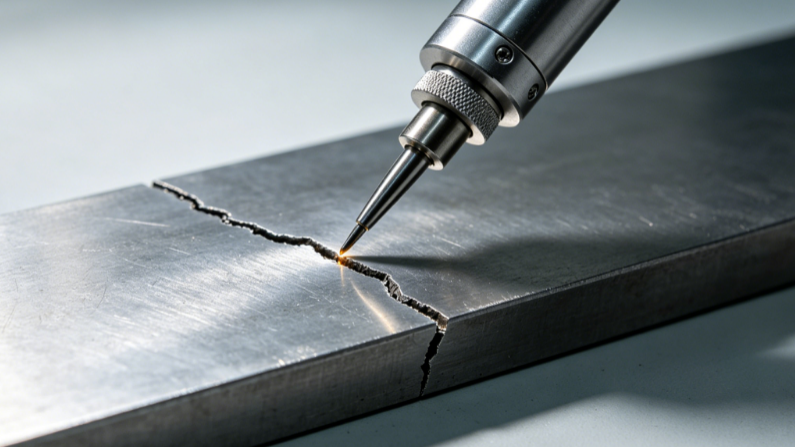
2. Key Test Items & Measurements We Perform
Our CTOD testing services deliver critical fracture toughness parameters for engineering critical assessment (ECA) and structural integrity evaluation.
2.1 Critical CTOD Value (δc or δm)
The CTOD value at the point of fracture initiation is determined from the load‑displacement curve. For brittle fractures (pop‑in or unstable crack growth), δc is calculated at the onset of fracture. For ductile tearing, the CTOD value at maximum load plateau or at a specified amount of stable crack extension (e.g., 0.2 mm) is reported. The result is expressed in millimeters (mm). Typical acceptance criteria for offshore structures: δ ≥ 0.15 mm (or 0.20 mm) at the minimum service temperature.
2.2 CTOD Resistance Curve (R‑Curve)
For ductile materials, we perform multiple single‑specimen tests at different crack extensions (or use multi‑specimen unloading compliance method) to generate a CTOD vs. crack extension (Δa) curve. The R‑curve defines the material‘s resistance to stable tearing and is used in ductile tearing analysis for strain‑based designs.
2.3 Fatigue Pre‑Cracking
Before the CTOD test, each specimen is subjected to cyclic loading to propagate a sharp fatigue crack from the machined notch tip. The fatigue pre‑crack length (typically 0.5‑2.0 mm) and orientation are controlled per the standard. The pre‑cracking procedure must minimize residual stresses and ensure a straight crack front. We report the final fatigue crack length measured from the fracture surface.
2.4 Fracture Surface Examination
After testing, the specimen is broken open (or heat‑tinted) to measure the initial fatigue crack length, the stable ductile crack extension, and the total fracture depth. Measurements are taken at nine points across the thickness. The fracture surface is examined to determine the failure mode (cleavage, ductile tearing, or mixed). We provide high‑resolution digital images of the fracture face with measurement overlays.
2.5 Load‑Displacement (P‑V) Curve & Clip Gauge Measurement
The test records the applied load (P) vs. the crack mouth opening displacement (V) measured by a clip gauge mounted across the notch. The CTOD value (δ) is calculated using the following formula (for SENB specimens): δ = (K² × (1‑ν²)) / (2×σYS×E) + (Vp × (W‑a)) / (0.4×W + 0.6×a + 0.5×z), where Vp is the plastic component of the clip gauge displacement, W is specimen width, a is crack length, and z is knife edge height. The elastic component is derived from the stress intensity factor K (based on load).
3. Standard Test Methods We Apply
All tests are performed according to internationally recognised standards. Our laboratory is ISO/IEC 17025 accredited and equipped with servo‑hydraulic universal testing machines (100‑600 kN), environmental chambers (-196°C to +300°C), clip‑on gauges (calibrated for CTOD), and data acquisition systems (1 kHz minimum).
3.1 ISO 12135 (Metallic materials – Unified method of test for the determination of quasistatic fracture toughness)
This standard covers the determination of KIC, CTOD (δ), and J‑integral for metals. It specifies requirements for test specimens (SENB, CT), fatigue pre‑cracking, test procedure (constant displacement rate), data recording, and analysis for CTOD determination. For CTOD, the standard requires the calculation of δc or δu using the plastic hinge model. The standard provides detailed guidance for constructing R‑curves and for determining valid δc values.
3.2 BS 7448‑1 (Method for determination of KIC, critical CTOD and critical J values of metallic materials)
The British standard widely referenced in offshore and pipeline industries. Part 1 covers fracture toughness testing of metals (KIC, CTOD, J). It specifies the three‑point bend specimen geometry (B × 2B, B × 4B) and compact tension specimen. It includes detailed equations for CTOD calculation (for SENB specimens: δ = [K²(1‑ν²)]/(2σYSE) + [Vp(W‑a)]/[z + W – a + (0.25)(W‑a)] – specific to the knife edge position).
3.3 ASTM E1820 (Standard test method for measurement of fracture toughness)
This standard covers KIC, J‑integral, and CTOD (δ) using the single‑specimen unloading compliance method. It provides procedures for determining the initiation fracture toughness (δi) and constructing resistance curves. For CTOD, the calculation uses the plastic component of the load line displacement (δp) and the elastic component (δe). The standard also includes requirements for verifying specimen size and geometry to ensure plane strain conditions where applicable.
3.4 API RP 2Z (Recommended practice for preproduction qualification for steel plates for fixed offshore structures)
This practice specifies CTOD testing requirements for offshore structural steel, including test temperature (typically -10°C to -20°C), specimen orientation, and acceptance criteria (e.g., minimum δ = 0.15 mm).
3.5 DNVGL‑OS‑C401 (Fabrication and testing of offshore structures)
This standard mandates CTOD testing for weld procedure qualifications in offshore applications. It specifies test temperature (typically -30°C to -40°C for North Sea), specimen location (weld center, HAZ, fusion line), and acceptance criteria (e.g., mean CTOD ≥ 0.15 mm, individual ≥ 0.10 mm).
4. Test Procedure & Specifications (ISO 12135 / BS 7448 Example)
Our laboratory strictly follows the procedural requirements of ISO 12135 and BS 7448 for SENB specimens. The following step‑by‑step procedure is standardised for CTOD testing of welded joints.
Step 1: Specimen machining – The specimen is machined from the parent plate or welded plate with the notch located at the required position (weld center, HAZ, or fusion line). Standard dimensions: thickness B = 25 mm, width W = 50 mm (2×B), total length L = 4.5×W (225 mm). A machined notch (root radius ≤ 0.1 mm) is introduced, and then a fatigue pre‑crack is grown to a specified length (a0 ≈ 0.45‑0.55 W).
Step 2: Fatigue pre‑cracking – The specimen is cyclically loaded in three‑point bending (R‑ratio = 0.1) with a sinusoidal waveform. The final stress intensity factor range (ΔK) is reduced stepwise to ≤ 0.6 MPa√m to minimise residual stresses. The final fatigue crack length (including the machined notch) is targeted at a0 = 0.5 W ± 0.05 W.
Step 3: Mounting and instrumentation – The specimen is placed on two supports (span S = 4W for BS 7448, S = 4W or 4.5W for ISO) on the testing machine. A clip gauge is attached to the knife edges at the notch mouth. The load cell and clip gauge outputs are connected to a data acquisition system.
Step 4: Temperature conditioning – The specimen is cooled (or heated) to the target test temperature within a chamber. The temperature is monitored by thermocouples attached to the specimen surface near the notch. Stabilisation time is at least 30 minutes after the thermocouple readings reach the target ±2°C.
Step 5: Test execution – The test is performed at a constant displacement rate (typically 0.5‑2.0 mm/min) such that the load‑displacement curve reaches maximum within 1‑10 minutes. The load and clip gauge displacement are recorded continuously. The test is stopped after the load has dropped to about 50‑80% of the maximum load (for ductile materials) or immediately after unstable crack propagation (for brittle materials).
Step 6: Post‑test measurements – The specimen is heat‑tinted (by heating to 300°C to oxidize the fracture surface) or stained, then cooled and broken open. The initial fatigue crack length (a0) and the stable crack extension (Δa) are measured at nine equally spaced points across the thickness using a measuring microscope (resolution ±0.01 mm). The average values are used in the CTOD calculation.
Step 7: Calculation – The critical CTOD (δc) is calculated from the load‑displacement record using the appropriate formula (per BS 7448 or ISO 12135). For brittle fracture, the value at the point of fracture initiation is taken. For ductile tearing, δc may be defined as the CTOD at maximum load or at a specified stable crack extension (e.g., 0.2 mm).
5. Why Choose Our Third‑Party CTOD Testing Services?
As an independent laboratory, we provide unbiased, accurate, and legally defensible fracture toughness data. Our strengths include:
ISO/IEC 17025 accreditation – Our CTOD testing complies with ISO 12135, BS 7448, ASTM E1820, and DNVGL‑OS‑C401, with regular proficiency testing (e.g., TWI round robins).
Dedicated fracture mechanics test rigs – We operate multiple servo‑hydraulic test frames (100‑600 kN) with high‑low temperature chambers (-196°C to +300°C), calibrated clip gauges (0.5‑10 mm range), and low‑noise instrumentation.
Fatigue pre‑cracking expertise – We have extensive experience in pre‑cracking welded specimens, including coarse‑grained HAZ and weld metal, where crack path deviation can be a challenge. Our procedures minimise residual stress and produce straight, sharp cracks.
Fracture surface measurement – We use digital optical microscopes with automated measurement software to ensure accurate and repeatable crack length measurement across nine points.
Full documentation – For each test, we provide: load‑displacement (P‑V) curve; calculated CTOD value; fracture surface photograph with measurement overlay; fatigue pre‑crack length data; test temperature history; and compliance with the referenced standard.
Fast turnaround – Typical CTOD test series (3‑5 specimens) completed within 2‑3 weeks (including pre‑cracking). Urgent projects can be expedited.
Confidentiality – Full protection of your weld procedure specifications, material batch details, and component design.
Consultative support – Our fracture mechanics engineers assist in selecting the appropriate test temperature, specimen location, acceptance criteria (per code or client specification), and interpreting low CTOD results (e.g., identifying brittle inclusions, HAZ softening, or misalignment).
Whether you need to qualify a welding procedure for an offshore platform, validate CTOD requirements for a sour service pipeline, assess the fracture toughness of a pressure vessel steel at cryogenic temperature, or investigate a brittle failure in a ship hull weld, our CTOD testing experts are ready to deliver reliable, actionable results.
Get Started with Your CTOD Testing Project
Contact our team with your material grade, weld procedure, required test temperature, desired CTOD acceptance criteria (e.g., 0.15 mm), and applicable standard (BS 7448, ISO 12135, DNVGL, API, or customer spec). We will provide a detailed quotation, specimen preparation guidelines (including welding consumables, plate dimensions, and machining instructions), and a testing schedule. Let us help you ensure that your welds and base materials possess sufficient fracture resistance for safe operation in demanding environments.
This article provides an overview of our CTOD fracture toughness testing capabilities. For specific test methods, sample quantity, and pricing, please request a tailored service proposal.