Reasons for choosing our testing services
ZHONGXI Testing has obtained inspection qualification certifications from multiple countries and regions worldwide. We possess a senior testing team and advanced testing methods, providing independent, impartial, and professional third-party verification services for global carbon projects.

Internationally recognized authority
Certified by multiple international standards such as CNAS, VCS, and GS, with reports universally applicable worldwide.

Global service capability
Covering 140+ countries and regions, it supports on-site detection and remote verification in multiple languages.

Professional experimental methods
Adopt standard experimental methods to ensure accurate and reliable data.
Comprehensive Testing and Characterisation of Crystalline Aluminium Silicate – Advanced Mineralogical, Chemical, and Performance Analysis for Industrial and Research Applications
The precise characterisation of crystalline aluminium silicate materials—encompassing a diverse family of minerals and synthetic phases such as andalusite, sillimanite, kyanite, mullite, zeolites, and clay-based aluminosilicates—is essential for quality control, process optimisation, and regulatory compliance across a wide range of industries. These materials serve as critical raw components in ceramics, refractories, glass production, cement, catalysts, adsorbents, and advanced composites. The functional performance of crystalline aluminium silicate is governed not by a single parameter, but by a complex interplay of phase composition, crystallinity, purity, particle size distribution, thermal stability, and surface chemistry. Even minor variations in the aluminium-to-silicon ratio, the presence of impurity phases (e.g., free silica, iron oxides, or titania), or the degree of structural ordering can significantly alter the material’s refractoriness, mechanical strength, chemical resistance, and ion-exchange capacity. Routine quality checks based on bulk oxide analysis or simple loss-on-ignition provide only a superficial snapshot, failing to detect the subtle mineralogical variations that can lead to catastrophic process failures. Our ISO/IEC 17025-accredited and GMP-compliant laboratory offers a fully integrated analytical platform specifically designed for crystalline aluminium silicate materials, covering the entire spectrum from quantitative phase analysis and trace element profiling to advanced thermal behaviour assessment and surface characterisation—delivering quantitative, traceable data that directly support raw material qualification, process development, and product certification.
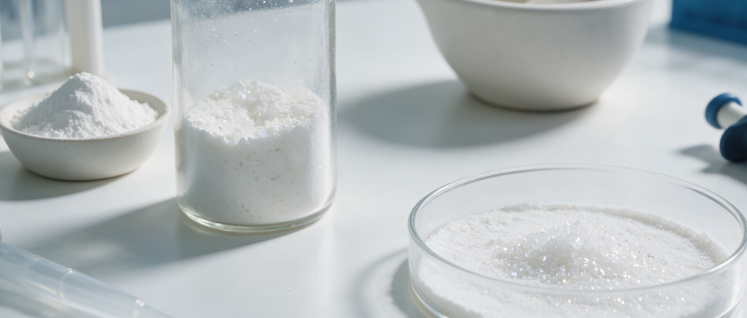
1. The Critical Need for Comprehensive Characterisation of Crystalline Aluminium Silicate
Crystalline aluminium silicates are inherently heterogeneous materials that can vary significantly depending on their geological origin, synthesis route, and post-treatment history. For example, two materials with an identical bulk chemical composition (Al₂O₃:SiO₂ ratio) may exhibit vastly different refractoriness or catalytic activity due to differences in the crystalline phase assemblage (e.g., the presence of mullite vs. sillimanite vs. amorphous glassy phases) or the degree of structural defects and lattice strain. In the ceramic and refractory industries, the presence of even a few weight percent of free silica (as quartz or cristobalite) can trigger destructive phase transformations at elevated temperatures, leading to spalling and premature failure of kiln linings. In catalyst applications, the specific surface area, pore architecture, and the distribution of acid sites (Lewis vs. Brønsted) are the primary determinants of activity and selectivity, and these properties are exquisitely sensitive to the synthesis conditions and the presence of trace dopants (e.g., transition metals or alkali ions). Routine oxide analysis (by XRF or ICP) is insufficient to resolve these critical mineralogical and structural differences. Our approach integrates powder X-ray diffraction (XRD) with Rietveld refinement, high-resolution scanning and transmission electron microscopy (SEM/TEM), X-ray photoelectron spectroscopy (XPS), nitrogen physisorption (BET/BJH), and differential thermal analysis (DTA/TGA) to provide a complete, cross-validated characterisation that links mineralogy and structure to functional performance.
2. Our Comprehensive Analytical Platform for Crystalline Aluminium Silicate
We offer a modular, fully customisable test suite that covers every critical attribute of your crystalline aluminium silicate material, from bulk composition to nanoscale surface chemistry. All measurements are performed with certified reference materials and validated protocols to ensure high precision and inter-laboratory comparability.
2.1 Quantitative Phase Analysis and Crystallinity Assessment
The definitive characterisation of any crystalline silicate is the identification and quantification of the crystalline phases present. We employ powder X-ray diffraction (XRD) with a high-resolution Bragg-Brentano or parallel-beam geometry, coupled with Rietveld refinement using comprehensive databases (ICDD PDF, ICSD) to quantify the relative abundance of all crystalline phases, including mullite (3Al₂O₃·2SiO₂), sillimanite (Al₂O₃·SiO₂), kyanite, andalusite, quartz, cristobalite, feldspars, clay minerals, and any amorphous or glassy components. This method provides phase concentrations with a typical accuracy of ±1–2 wt% and detects minor phases down to approximately 0.5 wt%. We also determine the crystallite size and microstrain from the peak broadening using the Williamson-Hall or Scherrer analysis, which are sensitive indicators of the material's grinding history and thermal processing.
2.2 Bulk and Surface Chemical Composition – Major, Minor, and Trace Elements
The bulk elemental composition (Al₂O₃, SiO₂, and the full suite of minor and trace elements including Fe₂O₃, TiO₂, CaO, MgO, Na₂O, K₂O, P₂O₅, and transition metals) is quantified by X-ray fluorescence (XRF) on fused beads or pressed pellets, with a precision of ±0.1–0.3% relative for major oxides. For trace elements (down to the low ppm level), we use inductively coupled plasma mass spectrometry (ICP-MS) and inductively coupled plasma optical emission spectrometry (ICP-OES) after microwave-assisted acid digestion. This dual approach ensures both high precision for major constituents and ultra-high sensitivity for trace impurities, which are essential for high-purity refractory and electronic-grade applications.
2.3 Morphology and Microstructure – Particle Size, Shape, and Texture
The particle size distribution is determined by laser diffraction (wet or dry dispersion) over a range of 0.1 µm to 2 mm, with the results expressed as D₁₀, D₅₀, D₉₀, and the span. The particle morphology and surface texture are examined by scanning electron microscopy (SEM) at magnifications from 10× to 100,000×, coupled with energy-dispersive X-ray spectroscopy (EDS) for rapid elemental mapping and for the detection of trace surface contaminants. For nanoscale characterisation, we employ transmission electron microscopy (TEM) at 200 kV and 300 kV, with selected area electron diffraction (SAED) to confirm the crystal structure of individual particles and to detect any amorphous coatings or nano-inclusions.
2.4 Specific Surface Area and Pore Architecture
The Brunauer–Emmett–Teller (BET) specific surface area is determined by multi-point N₂ adsorption at 77 K, with outgassing conditions optimised for the specific material to avoid structural changes. The Barrett–Joyner–Halenda (BJH) pore size distribution (for mesopores, 2–50 nm) and the total pore volume are reported, along with the t-plot micropore analysis (for zeolites and other microporous materials). For materials with significant macroporosity, we use mercury intrusion porosimetry (MIP) to provide a continuous pore size distribution from 3 nm to 500 µm.
2.5 Thermal Behaviour and Phase Stability
The thermal stability of crystalline aluminium silicates is critical for refractory and catalyst applications. We perform simultaneous Thermogravimetric Analysis (TGA) and differential thermal analysis (DTA) (up to 1600 °C) under controlled atmospheres (air, argon, or nitrogen) to monitor dehydration, dehydroxylation, phase transformations (e.g., the conversion of kyanite to mullite), and the onset of sintering or melting. For high-temperature phase stability, we provide in-situ XRD at elevated temperatures (up to 1400 °C) under selected atmospheres, enabling the direct observation of phase evolution as a function of temperature and time.
2.6 Surface Chemistry and Acid-Base Properties
For catalytic and adsorption applications, the surface chemical properties are paramount. We determine the point of zero charge (pHPZC) by potentiometric titration or the drift method, and we quantify the surface acidity and basicity by temperature-programmed desorption (TPD) of ammonia (NH₃) and carbon dioxide (CO₂), respectively, with deconvolution of weak, medium, and strong sites. For a more detailed assessment of the acid site type (Brønsted vs. Lewis), we perform pyridine-adsorbed diffuse reflectance FTIR (DRIFTS) at controlled temperatures (150 °C and 350 °C) with band integration at 1545 cm⁻¹ (Brønsted) and 1450 cm⁻¹ (Lewis).
2.7 Loss on Ignition (LOI) and Volatile Content
The loss on ignition is determined by heating the material at 1000 °C (or the specified temperature) and measuring the weight loss, which accounts for moisture, organic matter, carbonates, and other volatile constituents. This is a critical parameter for refractories and for ensuring consistent formulation in ceramic processing.
3. Advanced Capabilities – Beyond Routine Characterisation
For clients requiring a deeper understanding of the material’s properties or for high-level validation, we offer a suite of customised, research-grade services that are rarely available in commercial testing laboratories.
3.1 High-Resolution Transmission Electron Microscopy (HRTEM) and Electron Energy-Loss Spectroscopy (EELS)
Using an aberration-corrected TEM, we obtain atomic-scale images of the crystal lattice, grain boundaries, and defects, and we use EELS to map the distribution of aluminium, silicon, and oxygen at the nanoscale, providing direct evidence of the chemical homogeneity and the presence of any amorphous intergranular films.
3.2 Synchrotron-Based X-ray Absorption Spectroscopy (XAS)
In collaboration with synchrotron facilities, we perform X-ray absorption near-edge structure (XANES) and extended X-ray absorption fine structure (EXAFS) to determine the local coordination environment of aluminium (Al) and silicon (Si) atoms – including the Al-O and Si-O bond lengths, the coordination numbers (e.g., Al⁽ⁱⱽ⁾ vs. Al⁽ⱽⁱ⁾), and the degree of disorder. This is essential for distinguishing between different polymorphs and for validating structural models.
3.3 Inductively Coupled Plasma Mass Spectrometry (ICP-MS) with Laser Ablation (LA-ICP-MS)
For spatially resolved trace element analysis (e.g., to map the distribution of impurities in a refractory grain or to distinguish between different mineral phases in a polycrystalline material), we use LA-ICP-MS with a spot size as small as 5 µm, providing in-situ elemental concentration maps with a sensitivity in the sub-ppm range.
3.4 3D X-ray Computed Tomography (X-ray CT)
For non-destructive 3D visualisation of the internal structure, including porosity, cracks, and the distribution of dense inclusions (e.g., iron oxides or zirconia grains), we use X-ray microtomography with a resolution down to 1 µm. This is invaluable for assessing the integrity of fired ceramic components and for predicting their mechanical performance.
3.5 Surface Free Energy and Wettability
Using dynamic contact angle measurements with multiple probe liquids (water, diiodomethane, ethylene glycol), we calculate the dispersive and polar components of the surface free energy, which are critical for predicting the adhesion of coatings, binders, and inks to the aluminium silicate surface.
3.6 Comprehensive Phase Diagram Modelling
Our senior geochemists and ceramic engineers can integrate your analytical data with phase equilibrium models (e.g., FactSage, Thermo-Calc, or CALPHAD) to predict the stability of your material under specific processing conditions (temperature, pressure, atmosphere) and to guide formulation development for high-temperature applications.
4. Data Integrity, Standardisation, and Expert Reporting
All analyses are conducted under a strict quality management system with daily instrument calibration, use of certified reference materials (e.g., NIST SRM 679 for brick clay, SRM 278 for glass sand, and international mineral reference materials), and participation in proficiency testing schemes (e.g., the GeoPT programme for geochemical analysis). Our reports provide:
- Full experimental parameters (e.g., X-ray tube voltage and current, diffraction scan range, ICP-MS acquisition settings, BET outgassing conditions).
- Quantitative results for all measured parameters (phase composition, oxide concentrations, trace element levels, BET surface area, pore size distribution, thermal behaviour, etc.) with expanded uncertainty (k=2) and limits of detection/quantification.
- Cross-validated data (e.g., Al₂O₃ content by XRF vs. ICP-OES; phase abundance by Rietveld vs. internal standard method; BET surface area vs. geometric calculation from particle size).
- Graphical outputs (XRD diffractograms with Rietveld fits, SEM images with EDS spectra, N₂ adsorption-desorption isotherms and BJH plots, DTA/TGA profiles, and in-situ XRD patterns) with clear annotations and any integration notes.
- Interpretative comments from our senior materials scientists, linking the measured properties to your specific application (e.g., refractoriness, catalytic activity, mechanical strength), and providing actionable recommendations for synthesis optimisation or process adjustment.
Typical turnaround for a complete characterisation package (including phase analysis, bulk and trace chemistry, BET, and thermal analysis) is 5–7 working days, with expedited services (24–48 hours) available for urgent raw material qualification or troubleshooting.
5. Why Partner with Us for Your Crystalline Aluminium Silicate Testing
Our service is distinguished by a unique combination of technical depth, methodological versatility, and commercial responsiveness.
Multi-technique integration: We are one of the few commercial laboratories that combine quantitative XRD with Rietveld, high-resolution electron microscopy, ICP-MS, XPS, and advanced thermal analysis under one roof. This eliminates the need for subcontracting, reduces data inconsistency, and allows rapid cross-correlation of results – for example, linking an anomalous thermal expansion to the presence of a specific impurity phase, or correlating a loss in catalytic activity to a change in surface acidity.
Deep expertise in silicate mineralogy: Our team includes mineralogists, crystallographers, and ceramic engineers with over 20 years of collective experience in the characterisation of silicate-based materials. We understand the nuances of polymorphism, solid-solution behaviour, and the subtle effects of trace elements on phase transformations, allowing us to deliver data that are not only accurate but also interpretable in the context of your operations.
Customised study design: We do not offer a generic package. After an in-depth consultation, we design a test plan that addresses your specific challenges – whether it is detecting a deleterious phase, optimising the particle size for a ceramic glaze, validating a new synthesis route, or providing data for a patent application. We also provide ongoing support for method development and validation for novel or unusual materials.
Regulatory and legal support: Our data are widely accepted by regulatory bodies and by major industrial clients. We provide comprehensive data packages that support raw material qualification, supplier audits, environmental impact assessments, and dispute resolution, and our experts are available for technical testimony if required.
Transparent and modular pricing: You pay only for the tests you need, with significant discounts for bundled packages and long-term monitoring agreements. There are no hidden fees for data interpretation, statistical analysis, or consultation – these are included as standard.
With a track record of serving over 60 clients in the ceramics, refractories, glass, catalyst, and cement industries, we have enabled our partners to ensure raw material consistency, optimise firing schedules, improve product performance, and achieve regulatory compliance. We invite you to leverage our expertise for your crystalline aluminium silicate testing requirements.
Unlock the full potential of your crystalline aluminium silicate materials with our comprehensive analytical services. Contact our technical experts today to discuss your sampling plan, analytical objectives, and acceptance criteria. We will deliver a detailed proposal and project timeline within one business day.