Reasons for choosing our testing services
ZHONGXI Testing has obtained inspection qualification certifications from multiple countries and regions worldwide. We possess a senior testing team and advanced testing methods, providing independent, impartial, and professional third-party verification services for global carbon projects.

Internationally recognized authority
Certified by multiple international standards such as CNAS, VCS, and GS, with reports universally applicable worldwide.

Global service capability
Covering 140+ countries and regions, it supports on-site detection and remote verification in multiple languages.

Professional experimental methods
Adopt standard experimental methods to ensure accurate and reliable data.
puncture strength Testing Services: Evaluating Material Resistance to Penetration & Tearing
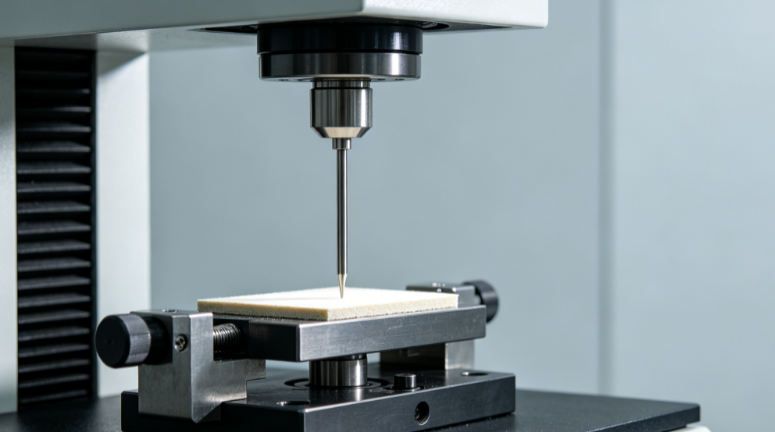
As an independent third-party testing service provider, we offer comprehensive puncture strength testing for films, foils, paper, textiles, packaging materials, gloves, membranes, coated fabrics, and flexible composites. Puncture resistance is the ability of a material to withstand the penetration of a probe, needle, or sharp object without tearing or rupturing. This property is critical for protective packaging (sharps containers, medical pouches), industrial gloves (cut/needle resistance), geomembranes (landfill liners), artificial leather, and food packaging (puncture from sharp product corners). Our accredited laboratory follows international standards (ASTM D4833, ASTM F1306, ISO 23996, GB/T 10004, EN 14477, ASTM D3420) using universal testing machines equipped with puncture probes (e.g., 1 mm, 3.2 mm, 19 mm diameter, or custom sizes) and pneumatic grips. This article outlines our puncture strength testing capabilities – including scope, key test items, and standard test methods – to help manufacturers, quality assurance teams, and packaging engineers validate material integrity and performance under penetrating forces.
1. Our Testing Scope for puncture strength
We cover a broad range of materials, product forms, and testing configurations:
By material type: Plastic films (polyethylene, polypropylene, polyester, PVC, nylon, EVOH, laminated films); Flexible packaging (pouches, sachets, stand‑up bags, retort pouches); Paper and paperboard (corrugated box liners, kraft paper, carton board); textiles and non‑wovens (woven fabrics, synthetic leather, medical gowns, geotextiles); Protective gloves (latex, nitrile, vinyl, cut‑resistant gloves); Geomembranes (HDPE, LLDPE, PVC liners); Medical packaging (sterile barrier systems, pouches, lids); Coated fabrics (tarpaulins, airbags, inflatable structures); Foils and thin metal sheets (aluminum, copper).
By puncture probe type / geometry: Spherical puncture (ball) – e.g., 3.2 mm diameter ball (ASTM F1306) for medical packaging, 19 mm diameter ball (ASTM D3420) for impact puncture; Needle puncture (sharp tip) – e.g., 1 mm diameter needle with 45° angle (for glove testing – EN 388, ASTM F2878); Cylindrical probe (flat ended) – e.g., 1.6 mm or 3.2 mm diameter (ASTM D4833); Custom probe – customer‑specified shape and diameter.
By test mode / speed: Constant rate of extension (static puncture) – probe moves at constant speed (e.g., 50 mm/min, 100 mm/min, 300 mm/min) until perforation; Impact puncture (dynamic) – pendulum or falling dart; Specimen clamping: annular clamp with defined hole diameter (e.g., 25 mm, 32 mm, 50 mm) to hold the specimen flat during penetration.
By environmental condition: Ambient temperature (23±2°C); Low temperature (down to -40°C, for cold‑impact resistance); Conditioned humidity (50% RH or 95% RH).
By industry application / standard: Medical packaging – ASTM F1306 (puncture resistance of flexible barrier films), ISO 23996 (puncture resistance of sterile barrier systems); Geomembranes – ASTM D4833 (puncture resistance of geotextiles and geomembranes), ISO 12236 (static puncture test for geotextiles); Gloves – ASTM F2878 (needle puncture resistance of protective clothing materials), EN 388 (puncture resistance of protective gloves – sharp probe); Film packaging – GB/T 10004 (puncture resistance of plastic films for packaging), ASTM D3420 (impact puncture resistance of plastic films).
2. Key Test Items & Measurements We Perform
Our puncture strength testing services deliver quantitative penetration resistance data and failure mode characterization.
2.1 Maximum Puncture Force (Peak Load)
The maximum force recorded during the test, measured in Newtons (N) or pounds-force (lbf). This is the primary parameter for most standards. A higher peak force indicates greater puncture resistance. For example, a 50‑micron thick LDPE film may exhibit 10‑20 N puncture force, while a 200‑micron nylon film may exceed 100 N.
2.2 Puncture Energy (Work to Puncture)
The total energy absorbed by the specimen until rupture, calculated as the area under the force‑displacement curve (in Joules). This parameter is important for materials that undergo significant deformation before puncture (e.g., elastomers, stretch films).
2.3 Puncture Displacement (Extension at Puncture)
The distance the probe travels from initial contact to the point of rupture (mm). Indicates material ductility and stretching capability before failure.
2.4 Puncture Resistance of Medical Gloves (Needle Puncture)
Specialized test for protective gloves: a sharp needle (1 mm diameter, 45° bevel) is driven into the glove material at a constant speed (100 mm/min). The maximum force is recorded. Results are compared to performance levels (e.g., EN 388 – Level 1: ≥ 10 N, Level 2: ≥ 20 N, etc.).
2.5 Failure Mode Analysis
After testing, we examine the puncture site and classify failure: clean puncture (sharp hole with no tearing); star‑shaped tear (radial cracks); plastic deformation without rupture; delamination (for laminates); or substrate cracking. Photographs of the puncture zone are included in the report.
2.6 Puncture Resistance of Geomembranes & Geotextiles
For geomembrane liners (landfills, ponds), we perform puncture testing using a cylindrical probe (1.6 mm or 3.2 mm diameter). The specimen is supported on a base plate with a 25 mm diameter hole. The maximum force and the mode of failure (e.g., ductile or brittle puncture) are recorded.
3. Standard Test Methods We Apply
All tests are performed according to internationally recognised standards. Our laboratory is ISO/IEC 17025 accredited and equipped with universal testing machines (10 N to 10 kN capacity), environmental chambers, and interchangeable puncture probes.
3.1 Medical & Pharmaceutical Packaging
ASTM F1306 (Standard test method for slow rate penetration resistance of flexible barrier films and laminates). – Specifies a 3.2 mm diameter spherical‑tipped probe, crosshead speed 250 mm/min, specimen clamped between rings (25 mm or 32 mm diameter opening). Reports maximum force, energy to puncture, and puncture displacement.
ISO 23996 (Puncture resistance of sterile barrier systems). – Similar to ASTM F1306, used for medical device packaging validation.
3.2 Geomembranes & Geotextiles
ASTM D4833 (Standard test method for index puncture resistance of geotextiles, geomembranes, and related products). – Uses a 1.6 mm or 3.2 mm diameter solid steel rod with a 45° beveled tip. Crosshead speed 50 mm/min. Specimen clamped over a 25 mm diameter hole. Reports puncture resistance (N).
ISO 12236 (Geosynthetics – Static puncture test (CBR test)). – Uses a 50 mm diameter cylindrical plunger (piston) to simulate puncture from coarse stones. Specimen diameter 200 mm. Reports maximum force.
3.3 Flexible Packaging & Plastic Films
GB/T 10004 (Plastic laminated films and pouches for packaging – puncture resistance test). – Uses a 1.0 mm diameter steel needle (or 1.6 mm for thicker films), crosshead speed 50 mm/min. Specimen clamping diameter 25 mm. Reports puncture force (N).
ASTM D3420 (Standard test method for dynamic puncture resistance of plastic films – pendulum method). – Impact puncture, used for packaging films where high‑speed puncture is relevant (e.g., dropping of products). A pendulum with a spherical tip strikes the film; the energy loss indicates puncture resistance.
3.4 Protective Gloves & Clothing
ASTM F2878 (Standard test method for protective clothing material – needle puncture resistance). – Uses a 1.0 mm diameter needle with 45° bevel, crosshead speed 100 mm/min. Reports maximum force (N).
EN 388 (Protective gloves against mechanical risks – puncture resistance). – Uses a sharp probe (1.0 mm diameter, 30° bevel) at 100 mm/min. Performance levels: Level 0 (< 5 N), Level 1 (≥ 5 N), Level 2 (≥ 10 N), Level 3 (≥ 15 N), Level 4 (≥ 20 N).
3.5 General Puncture Test for Films & Sheets
ASTM D5748 (Standard test method for puncture resistance of stretch wrap film). – Uses a 19 mm diameter hemispherical probe, crosshead speed 250 mm/min, for evaluating stretch wrap performance.
ISO 7765‑1 (Plastics film – Determination of impact resistance by the free‑falling dart method). – Measures energy to puncture by falling dart, not static.
4. Test Procedure & Specifications (Example – ASTM F1306 for Medical Packaging)
Our laboratory strictly follows the procedural requirements of ASTM F1306. The following step‑by‑step procedure is standardised for flexible barrier films.
Step 1: Specimen preparation – The film is cut into squares or circles large enough to be clamped (typically 75 mm × 75 mm). Specimens are conditioned at 23±2°C, 50±5% RH for at least 24 hours (or as specified).
Step 2: Mounting – The specimen is placed over the lower ring of the fixture (32 mm diameter opening) and secured with the upper ring (also 32 mm inner diameter). The assembly is clamped tightly without wrinkles or excessive tension.
Step 3: Probe alignment – The 3.2 mm diameter spherical‑tipped probe is centered over the opening. The probe is lowered until it just touches the specimen surface (zero point).
Step 4: Test execution – The probe is driven upward (or the fixture is raised) at a constant crosshead speed of 250 mm/min. The force and displacement are recorded continuously until the probe has completely penetrated the specimen or the force drops by 50% from the peak.
Step 5: Data analysis – The maximum puncture force (N), puncture energy (area under the curve, J), and puncture displacement (mm) are reported. For each condition, at least 5 specimens are tested, and the mean and standard deviation are calculated.
5. Advantages & Limitations of puncture strength Testing
Advantages: Directly simulates real‑world penetration risks (sharps, packaging corners, stones, needles). Results are reproducible and sensitive to material thickness, orientation, and lamination quality. Wide range of probe shapes and sizes allows customisation to specific hazards. Can be performed at various temperatures to simulate storage or use conditions. The static puncture test is simple and cost‑effective.
Limitations: Results are highly dependent on probe geometry, clamping method, and test speed – different standards are not directly comparable. For very thin or highly elastic films, the specimen may stretch and neck before puncture, requiring careful interpretation of the force‑displacement curve. The test may not represent multi‑axial or flexural puncture (e.g., a bag being compressed from multiple sides).
6. Reporting & Result Presentation
Our test reports are detailed, transparent, and compliant with ISO/IEC 17025 and the relevant standard. Each report includes:
Specimen identification – Material description, thickness, orientation, lamination structure, conditioning history.
Test conditions – Standard referenced, probe diameter and tip shape, crosshead speed, clamping diameter, temperature and humidity.
Individual results – For each specimen: force‑displacement curve, peak force (N), puncture energy (J), puncture displacement (mm), failure mode description.
Statistical summary – Mean peak force, standard deviation, coefficient of variation, and range for the specimen set.
Calibration records – Load cell calibration date, probe geometry verification, speed verification.
Compliance statement – Pass/fail determination against customer specification or standard requirement (e.g., “The mean puncture force of 25.3 N meets the requirement of ≥ 20 N”).
7. Why Choose Our Third‑Party puncture strength Testing Services?
As an independent laboratory, we provide unbiased, accurate, and legally defensible puncture data. Our strengths include:
ISO/IEC 17025 accreditation – Our puncture testing (ASTM F1306, D4833, D5748, F2878, etc.) is CNAS/CMA accredited, with regular proficiency testing.
Extensive probe library – We stock spherical (3.2 mm, 5 mm, 19 mm), cylindrical (1.6 mm, 3.2 mm), and sharp needle (1 mm, 45° bevel, 30° bevel) probes. Custom probes manufactured on request.
Multiple test modes – Static (constant rate) and dynamic (impact) puncture, and high‑speed video recording available for failure analysis.
Environmental control – We offer testing at temperatures from -40°C to +200°C, and humidity control (10‑98% RH).
Fast turnaround – Routine puncture tests (5 specimens, one condition) completed within 1‑2 business days; full material characterisation in 3‑5 business days.
Detailed reporting – Force‑displacement curves, high‑resolution puncture site images, and statistical summaries are included.
Confidentiality – Full protection of your material specifications and product designs.
Consultative support – Our packaging and materials engineers assist in selecting the appropriate probe, clamping method, and test speed to simulate specific end‑use hazards (e.g., medical packaging puncture by sharp instrument, landfill liner puncture by stones).
Whether you need to qualify a sterile barrier pouch for surgical instruments, evaluate the puncture resistance of a geomembrane for landfill construction, test the needle protection level of a medical glove, or compare different packaging films for sharp‑edged products, our puncture strength testing experts are ready to deliver reliable, actionable results.
Get Started with Your puncture strength Testing Project
Contact our team with your material type, thickness, intended application, required standard (ASTM, ISO, GB/T, EN), and any special conditions (probe size, test speed, temperature). We will provide a detailed quotation, sample submission guidelines (minimum sample dimensions, conditioning requirements), and a testing schedule. Let us help you ensure that your materials resist penetration and protect against puncture hazards.
This article provides an overview of our puncture strength testing capabilities. For specific test methods, sample quantity, and pricing, please request a tailored service proposal.