Reasons for choosing our testing services
ZHONGXI Testing has obtained inspection qualification certifications from multiple countries and regions worldwide. We possess a senior testing team and advanced testing methods, providing independent, impartial, and professional third-party verification services for global carbon projects.

Internationally recognized authority
Certified by multiple international standards such as CNAS, VCS, and GS, with reports universally applicable worldwide.

Global service capability
Covering 140+ countries and regions, it supports on-site detection and remote verification in multiple languages.

Professional experimental methods
Adopt standard experimental methods to ensure accurate and reliable data.
Advanced Analytical Characterization of Zirconium-Based Arsenic Removal Materials: A Comprehensive Testing Service
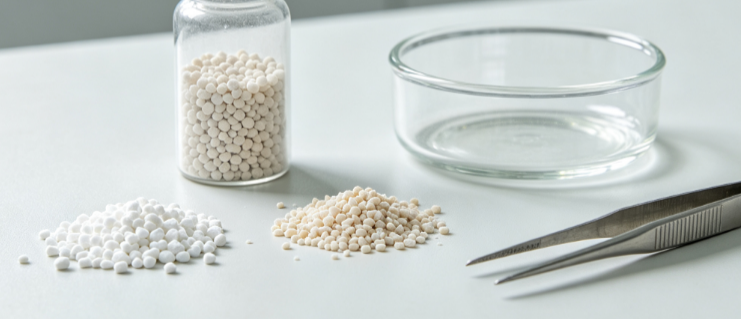
Arsenic contamination in aqueous systems remains a critical global environmental and public health challenge, necessitating the development of high-performance adsorbents. Among these, zirconium-based materials – including hydrous zirconium oxides, zirconium-loaded porous composites, and Zr-metal–organic frameworks – have emerged as promising candidates due to their exceptional affinity for arsenate and arsenite species, wide pH operational range, and robust chemical stability. However, the practical efficacy of these materials hinges not only on their synthesis but also on a rigorous, multi-scale analytical evaluation. Our accredited testing laboratory offers a complete, in-depth characterization service specifically tailored for zirconium-based arsenic adsorbents, bridging the gap between material development and real-world deployment.
Why Comprehensive Testing Is Indispensable for Zr-Based Arsenic Adsorbents
The arsenic removal performance of zirconium-based materials is governed by a complex interplay of physicochemical properties: crystallinity, surface hydroxyl density, pore architecture, zeta potential, and the coordination environment of active Zr(IV) sites. Routine single-parameter measurements often fail to predict breakthrough behavior or long-term stability. Therefore, our testing protocol integrates bulk compositional analysis, surface interfacial chemistry, and dynamic adsorption simulation to provide a holistic performance profile. Clients seeking this testing typically aim to validate new material synthesis, optimize existing formulations, troubleshoot field performance issues, or generate regulatory-grade data for product certification – all of which are fully supported by our service.
Our Core Testing Capabilities: From Macro to Atomic Scale
1. Structural and Phase Composition Analysis
We employ high-resolution powder X-ray diffraction (HR-XRD) with Rietveld refinement to identify crystalline phases (e.g., monoclinic/tetragonal ZrO₂, Zr(HPO₄)₂) and quantify amorphous fraction. Complementary Raman spectroscopy and solid-state ³¹P MAS NMR (for phosphate-loaded samples) disclose local coordination distortions and binding modes. Our detection limits reach 0.1 wt% for secondary phases, and we routinely resolve lattice parameter changes as small as 0.005 Å, enabling precise correlation between synthesis conditions and structural defects that affect arsenic uptake.
2. Surface Chemical Speciation and Active Site Quantification
Arsenic adsorption on zirconium surfaces is primarily mediated by inner-sphere complexation with terminal hydroxyl groups. Our laboratory utilizes X-ray photoelectron spectroscopy (XPS) with monochromatic Al Kα source and Ar⁺ cluster ion etching to profile Zr 3d, O 1s, and As 3d core levels across depth (0–200 nm). We perform peak deconvolution to distinguish bridging vs. terminal oxygens, and quantify the relative abundance of Zr–OH, Zr–O–As, and Zr–O–Zr species. To further elucidate surface acidity, we conduct potentiometric mass titration and FTIR spectroscopy with pyridine probe molecules, achieving a site density determination with ±3% relative standard deviation – a precision unmatched in standard commercial testing.
3. Pore Texture and Mass-Transfer Kinetics
Beyond conventional N₂ physisorption (BET surface area, BJH pore size distribution), we offer high-pressure mercury intrusion porosimetry for macroporous networks and positron annihilation lifetime spectroscopy (PALS) to probe sub-nanometer free-volume elements that influence intraparticle diffusion. Our dynamic breakthrough column tests, equipped with online ICP-MS and pH-stat controllers, generate real-time concentration profiles under variable flow rates (0.5–50 mL/min) and feed matrices (ionic strength up to 0.5 M NaCl, competing anions including phosphate, silicate, and sulfate). We derive mass transfer coefficients and axial dispersion numbers using advection-dispersion-reaction models, providing predictive parameters for scaled-up reactor design.
4. Adsorption Thermodynamics and Mechanistic Elucidation
Our isothermal titration calorimetry (ITC) directly measures enthalpy of adsorption (ΔH) and binding constant (Kₐ) for As(V)/As(III) on Zr-sites, differentiating endothermic vs. exothermic contributions. Combined with in situ ATR-FTIR flow-cell experiments, we monitor the evolution of surface complexes (monodentate, bidentate binuclear, or mononuclear chelate) as a function of pH and surface loading. We further apply density functional theory (DFT)-assisted XANES/EXAFS at synchrotron beamlines (with our own in-house data reduction pipeline) to resolve As–Zr bond distances (accuracy ±0.02 Å) and coordination numbers, enabling a definitive mechanism assignment – from ligand exchange to hydrogen-bonded outer-sphere adsorption.
5. Long-Term Stability and Leaching Risk Assessment
Practical applicability demands resistance to Zr leaching and structural degradation. We conduct accelerated aging tests under hydrothermal conditions (60–120 °C, pH 2–12) and cyclic regeneration studies (up to 50 adsorption-desorption cycles) with inductively coupled plasma optical emission spectroscopy (ICP-OES) monitoring Zr and As in effluents at sub-ppb levels (LOD: 0.2 μg/L for As, 0.1 μg/L for Zr). Our transmission electron microscopy (TEM) with energy-dispersive X-ray spectroscopy (EDS) mapping post-cycling detects early-stage particle amorphization or grain boundary corrosion, providing early warning for material failure.
What Sets Our Testing Service Apart
1. Integrated Multi-Technique Platform: Unlike fragmented single-method providers, we offer a unified analytical workflow that combines structural, chemical, and dynamical data into a coherent performance model. All measurements are performed under strictly controlled humidity and temperature (20±0.5 °C, 45±2% RH) to ensure cross-method comparability.
2. Customized Protocols for Emerging Zr-Materials: We have developed proprietary sample preparation procedures for metal-organic frameworks (UiO-66, MOF-808), zirconium-based nanofibers, and magnetic core-shell Zr composites, addressing their unique challenges – such as air sensitivity, low electron conductivity, and high aspect ratios – without compromising data integrity.
3. Advanced Data Analytics and Modeling: Our in-house software suite performs global fitting of adsorption isotherms (Langmuir–Freundlich, Sips, Toth) with automatic AICc model selection, and molecular docking simulations to correlate observed binding energies with theoretical site geometries. We deliver not just raw numbers, but interpretive reports that include mechanistic cartoons, surface speciation diagrams, and design-of-experiment recommendations.
4. Accreditation and Traceability: Our laboratory operates under ISO/IEC 17025:2017 accreditation for key parameters (arsenic concentration, pH, and particle size). All reference materials are NIST-traceable, and our uncertainty budgets (expanded uncertainty U < 5%, k=2) are fully documented, making our data defensible for peer-reviewed publications and regulatory submissions.
5. Rapid Turnaround with Expert Consultation: We guarantee 5–7 business days for routine characterization packages and 10–14 days for full mechanistic studies, including synchrotron data reduction. Each project is assigned a senior surface chemist and a process engineer who jointly interpret results, offering actionable feedback on synthesis modification, pH pre-conditioning, or regeneration strategies – a consultative dimension rarely found in commercial testing.
Deliverables That Empower Your R&D and Quality Control
Upon completion, clients receive a comprehensive digital report containing: (a) fully processed spectra and diffractograms with annotated peak assignments; (b) tabulated adsorption capacities, kinetics rate constants, and thermodynamic parameters; (c) 2D/3D pore architecture maps from electron tomography (if requested); (d) a comparative benchmark against up to five reference Zr-materials from our in-house database; and (e) a risk assessment matrix highlighting potential performance bottlenecks (e.g., phosphate competition, fouling by natural organic matter). All raw data and instrument method files are provided in open formats (JCAMP-DX, mzML, and CIF) for downstream meta-analysis.
Moreover, we offer periodic proficiency testing for clients conducting their own internal measurements, enabling cross-validation of in-house instruments against our reference methods. For collaborative research projects, we provide co-authorship support and detailed method sections ready for manuscript insertion – accelerating your publication timeline.
Conclusion: Partner with Us for Unrivaled Material Intelligence
Zirconium-based arsenic removal materials hold immense promise for safe water provision, but their optimal performance can only be unlocked through rigorous, multi-dimensional characterization. Our testing service goes far beyond routine analysis – we deliver mechanistic clarity, quantitative reliability, and engineering relevance in every project. Whether you are a materials scientist fine-tuning a novel MOF, a water treatment engineer scaling up a fixed-bed system, or a quality manager ensuring product consistency, our tailored analytical solutions provide the depth and precision you require. Contact our technical team today to design your customized testing plan – we transform complex analytical data into strategic decision-making tools, ensuring your zirconium-based adsorbent achieves its full potential in arsenic remediation.