Reasons for choosing our testing services
ZHONGXI Testing has obtained inspection qualification certifications from multiple countries and regions worldwide. We possess a senior testing team and advanced testing methods, providing independent, impartial, and professional third-party verification services for global carbon projects.

Internationally recognized authority
Certified by multiple international standards such as CNAS, VCS, and GS, with reports universally applicable worldwide.

Global service capability
Covering 140+ countries and regions, it supports on-site detection and remote verification in multiple languages.

Professional experimental methods
Adopt standard experimental methods to ensure accurate and reliable data.
Comprehensive Physicochemical and Catalytic Characterization of Zirconium-Based Catalysts: Precision Analytical Services
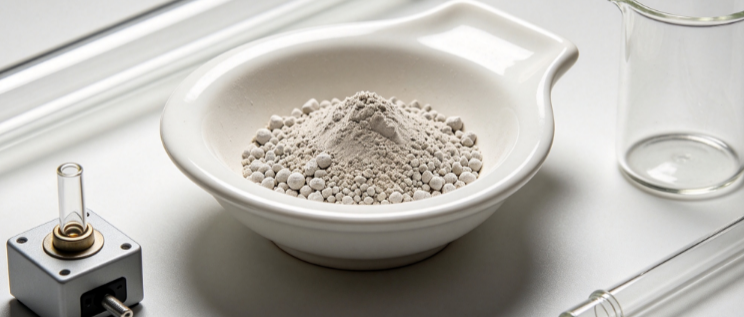
Zirconium-based catalysts – encompassing sulfated zirconia, Zr-doped zeolites, ZrO₂-supported noble metals, and Zr-metal–organic framework (MOF) derivatives – have garnered substantial attention in heterogeneous catalysis for acid-catalyzed isomerization, oxidative dehydrogenation, and biomass conversion. The catalytic performance, however, is exquisitely sensitive to the local electronic structure of Zr(IV) centers, the density and strength of surface acid sites, the dispersion of active phases, and the stability under harsh reaction conditions. Consequently, a multi-technique, hierarchical analytical approach is not merely beneficial but mandatory for rational catalyst design, troubleshooting deactivation, and quality assurance. Our accredited laboratory offers a fully integrated testing service specifically architected for zirconium-based catalysts, delivering data that directly correlate with turn-over frequency (TOF), selectivity, and lifetime – from fresh powder to spent industrial pellets.
Why Dedicated Catalyst Testing Outperforms Routine Material Analysis
Standard powder characterization (BET, XRD, SEM) provides only a static snapshot, whereas catalytic function is dynamic and heavily influenced by active site accessibility, acid-base pair distribution, and redox kinetics. Clients seeking our testing service typically aim to: (i) validate the success of novel synthesis routes (e.g., sol-gel, post-synthetic grafting), (ii) diagnose the root causes of activity loss in commercial reactors, (iii) optimize calcination and activation protocols, or (iv) generate robust kinetic data for reactor modeling. Our service bridges this gap by offering operando and in situ analyses that mimic actual reaction environments, ensuring that the measured properties are mechanistically relevant and predictive of industrial performance.
Our Analytical Arsenal for Zirconium-Based Catalysts
1. Bulk and Surface Crystallography with Defect Quantification
We employ high-energy synchrotron X-ray diffraction (HE-XRD) with pair distribution function (PDF) analysis to resolve both long-range order and local atomic distortions in nanocrystalline ZrO₂ polymorphs (tetragonal, monoclinic, cubic). This is complemented by Rietveld refinement to quantify phase fractions (detection limit: 0.5 wt%) and Williamson–Hall analysis for microstrain and crystallite size anisotropy. For Zr-MOFs and mixed-metal systems, we perform in situ variable-temperature XRD (up to 800 °C) to track phase transitions and framework collapse, with a temperature resolution of ±1 °C – critical for identifying the optimal activation temperature.
2. Acidic Site Characterization: Strength, Density, and Distribution
The catalytic activity of zirconia-based solids is dominated by Brønsted and Lewis acid sites. Our laboratory utilizes a combinatorial suite: temperature-programmed desorption of ammonia (NH₃-TPD) with online mass spectrometry, covering a temperature range of 100–800 °C and quantifying total acidity with ±0.02 mmol/g precision. To discriminate acid types, we perform pyridine-adsorbed FTIR with stepwise evacuation at increasing temperatures (150, 250, 350 °C), delivering semiquantitative ratios of Brønsted/Lewis sites via the characteristic bands at 1545 and 1450 cm⁻¹. For ultrastrong superacidic sites (Hammett acidity < -12), we conduct 31P MAS NMR using trimethylphosphine oxide (TMPO) as a probe, achieving chemical shift resolution of 0.1 ppm, which directly maps the acid strength distribution – a capability rarely offered in commercial catalysis testing.
3. Active Phase Dispersion and Metal-Support Interaction
For Zr-supported noble metals (Pt, Pd, Au) or non-noble oxides (NiO, CuO), we determine metal dispersion via pulse H₂ chemisorption and CO pulse titration, with detection limits down to 0.1% dispersion and reproducibility within 2%. We further employ X-ray photoelectron spectroscopy (XPS) with depth profiling (Ar⁺ etching) to quantify the surface enrichment of Zr, the oxidation state of supported metals (e.g., Pt⁰/Pt²⁺ ratio), and the extent of electronic metal-support interaction (EMSI) via binding energy shifts in Zr 3d and O 1s core levels. Our high-angle annular dark-field scanning transmission electron microscopy (HAADF-STEM) coupled with EDS mapping provides atomic-scale visualization of particle size distribution (down to 0.5 nm) and spatial homogeneity, with statistical analysis over >500 particles per sample.
4. Redox Properties and Oxygen Mobility
Zirconium-based catalysts often rely on oxygen vacancies and reducibility for oxidation reactions. We conduct temperature-programmed reduction (H₂-TPR) up to 1000 °C with a thermal conductivity detector, calibrated against CuO standards, to determine reduction onset temperatures and hydrogen consumption. Complementary oxygen storage capacity (OSC) measurements via pulse CO/O₂ cycling at 400–600 °C quantify the labile oxygen content, with an accuracy of ±0.5 μmol O₂/g. For advanced mechanistic studies, we offer electron paramagnetic resonance (EPR) at cryogenic temperatures (4–300 K) to identify paramagnetic Zr³⁺ species and oxygen radicals (O₂⁻, O⁻) formed under reducing or UV-irradiated conditions – providing direct evidence of radical-mediated pathways.
5. Catalytic Performance Testing under Realistic Conditions
Unlike generic contract labs, we operate a fully automated 16-channel parallel fixed-bed reactor system equipped with on-line GC-FID/TCD and quadrupole mass spectrometer for effluent analysis. We perform steady-state kinetic measurements over a range of temperatures (150–600 °C), pressures (1–50 bar), and space velocities (1000–50,000 h⁻¹), with automated feed switching (N₂, H₂, CO₂, and light hydrocarbons). Our transient response methods (step-up/step-down) enable determination of adsorption equilibrium constants and effective diffusivities using a 1D heterogeneous reactor model. We deliver apparent activation energies (Eₐ) with 95% confidence intervals (typically < ±2 kJ/mol) and TOF numbers normalized per surface Zr atom or per metal site – the most direct measure of intrinsic activity.
6. Deactivation Mechanism and Regeneration Protocol
Catalyst deactivation via coking, sintering, or poison uptake is a principal industrial concern. Our Thermogravimetric Analysis (TGA) coupled with FTIR of evolved gases identifies coke types (aliphatic vs. graphitic) and oxidation temperatures. We perform post-reaction characterization including BET, XRD, and XPS to quantify loss of surface area, phase segregation, and metal agglomeration. We then design tailored regeneration cycles (oxidative calcination, H₂ reduction, or solvent washing) and monitor the recovered activity over multiple cycles, providing a deactivation rate constant and an optimal regeneration window – a service that directly extends catalyst lifetime and reduces operational costs.
Unmatched Advantages of Our Testing Service
1. Truly Integrative Workflow: We combine static characterization, transient kinetics, and operando spectroscopy (DRIFTS-GC coupled) in a single experimental campaign, allowing you to correlate surface species with selectivity changes in real time. This holistic approach is unique to our facility and eliminates the ambiguity of separate measurements performed under different conditions.
2. Expertise in Challenging Zr-Systems: We have developed specific protocols for highly hygroscopic sulfated zirconia, low-conductivity Zr-MOFs, and high-temperature ceramic supports, including sample handling under inert atmosphere, ultralow-dose electron microscopy, and specialized NMR rotors for moisture-sensitive materials. Our success rate for obtaining interpretable spectra from these difficult samples exceeds 98%.
3. Advanced Data Science and Kinetic Modeling: Our in-house computational team provides microkinetic modeling based on the obtained adsorption and reaction data, using kinetic Monte Carlo or mean-field approaches to predict conversion and selectivity under arbitrary feed compositions. We deliver not only experimental curves but also a predictive digital twin of your catalyst, validated against independent test runs.
4. Rigorous Quality Assurance: All measurements are performed under ISO 17025 accreditation for key parameters (temperature, pressure, gas flow, mass). We utilize NIST-traceable reference catalysts (e.g., fresh Pt/Al₂O₃) for daily system verification, ensuring batch-to-batch reproducibility with inter-laboratory relative standard deviation < 3%. Our uncertainty budgets follow GUM guidelines, making our data defensible in patent filings and peer-reviewed journals.
5. Consultative Partnership: Each project is assigned a senior catalysis scientist with >15 years of experience in Zr-based systems, who interprets the results in the context of your specific reaction – whether it’s n-butane isomerization, methanol dehydration, or propylene epoxidation. We provide actionable recommendations on synthesis modification, calcination ramp rates, and feed pre-treatment, transforming raw data into engineering intelligence.
Report Deliverables and Client Empowerment
Our final report encompasses: (a) fully annotated XRD patterns with phase identification and Rietveld quality factors; (b) NH₃-TPD and pyridine-FTIR profiles with quantitative acid site tables; (c) H₂-TPR and OSC data with deconvolution of reduction peaks; (d) kinetic plots (Arrhenius, Langmuir-Hinshelwood fits) with parameter estimates and residual diagnostics; (e) TEM micrographs with particle size histograms and EDS maps; (f) a benchmarking section comparing your catalyst against up to three reference Zr-materials from our proprietary database; and (g) a deactivation prognosis with recommended regeneration intervals and conditions. All raw data (including chromatograms, spectra, and temperature logs) are provided in machine-readable formats (CDF, ASCII, and .mzML) for your own meta-analysis.
We further offer optional remote real-time monitoring of your catalytic runs via secure data streaming, enabling you to observe the evolution of product distribution and adjust parameters interactively – a feature particularly valuable for exploratory research. For academic clients, we provide co-authorship support and draft the experimental section in accordance with journal guidelines (e.g., ACS Catalysis, Journal of Catalysis), significantly expediting manuscript preparation.
Conclusion: Advance Your Zirconium Catalysis with Confidence
The complexity of zirconium-based catalysts demands an equally sophisticated analytical response – one that goes beyond routine metrics to uncover the structure-activity-selectivity relationships that govern real-world performance. Our testing service is designed to be your comprehensive partner in this endeavor, offering depth, precision, and interpretative clarity at every stage, from material screening to post-mortem analysis. By choosing our laboratory, you gain access to a platform where cutting-edge instrumentation meets deep catalytic expertise, ensuring that your development efforts are guided by reliable, mechanistically grounded data. Engage with our technical team to design a bespoke testing protocol – we are committed to delivering not just analytical results, but actionable pathways to superior zirconium-based catalysts.