Reasons for choosing our testing services
ZHONGXI Testing has obtained inspection qualification certifications from multiple countries and regions worldwide. We possess a senior testing team and advanced testing methods, providing independent, impartial, and professional third-party verification services for global carbon projects.

Internationally recognized authority
Certified by multiple international standards such as CNAS, VCS, and GS, with reports universally applicable worldwide.

Global service capability
Covering 140+ countries and regions, it supports on-site detection and remote verification in multiple languages.

Professional experimental methods
Adopt standard experimental methods to ensure accurate and reliable data.
Comprehensive Performance and Safety Testing of Reactive Oxygen Species (ROS) Generators: Advanced Analytical Services for Oxidative Process Validation
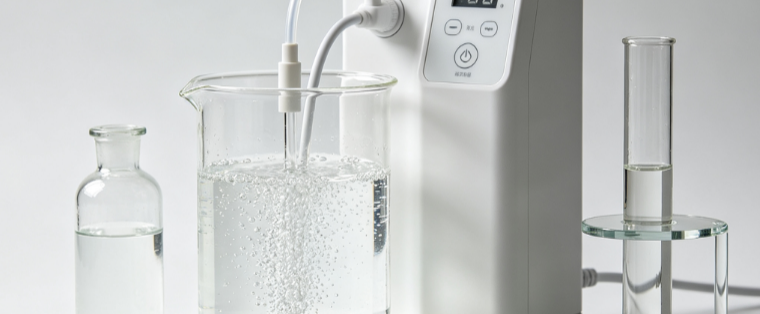
Reactive oxygen species (ROS) generators – including corona discharge ozonizers, UV-based photolytic units, electrochemical cells, and plasma-assisted systems – are increasingly employed in water disinfection, air purification, advanced oxidation processes (AOPs), and medical sterilization. The efficacy of these devices hinges on the precise generation rate, the concentration of specific ROS (ozone, hydroxyl radicals, hydrogen peroxide, singlet oxygen, and superoxide), the spatial distribution, the long-term stability under variable operating conditions, and the potential formation of harmful by-products such as bromate, aldehydes, or organic acids. A reliable, multi-parametric analytical evaluation is therefore essential for design validation, quality assurance, regulatory compliance (e.g., EPA, NSF, or CE), and troubleshooting of field performance. Our ISO/IEC 17025-accredited laboratory offers a dedicated, mechanism-oriented testing service tailored specifically for ROS generators, integrating advanced chemical, spectroscopic, and electrochemical methods to deliver a complete performance, efficiency, and safety profile – far beyond simple ozone concentration measurements.
Why Comprehensive ROS Generator Testing Is Critical for Product Development and Regulatory Approval
Clients seeking our testing services typically aim to: (i) quantify the absolute and relative yields of each ROS species under controlled operating parameters (voltage, current, flow rate, humidity), (ii) determine the spatial and temporal distribution of reactive species in a representative chamber or reactor, (iii) measure the steady-state concentration and the kinetic decay of short-lived radicals (e.g., •OH, •O₂⁻), (iv) evaluate the net oxidation capacity (expressed as the equivalent chlorine or oxygen demand) and the mineralization efficiency for target pollutants, (v) assess the by-product formation and the residual oxidant levels to ensure safety for human contact or discharge, (vi) investigate the long-term stability of the generator's output under continuous operation and accelerated aging, and (vii) generate robust data for performance certifications, patent applications, and customer specification sheets. Routine single-parameter tests (e.g., ozone meter readings) are insufficient because the overall oxidation power depends on the synergistic interplay of multiple ROS, mass transfer limitations, and the scavenging effects of the medium. Our integrated platform combines chemical actinometry, selective scavenger/fluorescent probe assays, electron paramagnetic resonance (EPR) spectroscopy with spin traps, iodometric/bromate-specific titrations, high-performance liquid chromatography (HPLC) for by-product analysis, gas chromatography (GC) with mass spectrometry (MS) for volatile organics, and real-time electrochemical sensors – providing a holistic mechanistic and performance profile.
Our Comprehensive Analytical Framework for ROS Generator Testing
1. Quantitative Determination of Individual ROS Species
We employ a suite of probe-based methods to differentiate and quantify the major ROS generated. For hydroxyl radicals (•OH), we use terephthalic acid (TA) as a scavenger to form fluorescent 2-hydroxyterephthalic acid (TAOH), quantified by fluorescence spectroscopy with a detection limit of 0.1 µM and a precision of ±3%; cross-validation is performed by EPR spin-trapping using DMPO, calibrated against a standard Fenton system. For superoxide anions (•O₂⁻), we utilize the nitroblue tetrazolium (NBT) reduction assay, monitored by UV-Vis at 560 nm, along with cytochrome c reduction and SOD inhibition to confirm specificity. Hydrogen peroxide (H₂O₂) is measured by the peroxidase-mediated oxidation of Amplex Red (fluorescence) or by the classic iodide method (iodometric titration), with a detection limit of 0.01 ppm. Singlet oxygen (¹O₂) is quantified using the furfuryl alcohol (FFA) consumption method, followed by HPLC-UV analysis, and confirmed by the shift in the absorption of 1,3-diphenylisobenzofuran (DPBF). Ozone (O₃) is measured by direct UV absorption (at 254 nm) and by the indigo method (colorimetric), with detection limits in the ppb range. We report the absolute generation rate (mg/min or µmol/min) for each species and the relative distribution (%) under the specified operating conditions.
2. Real-Time Monitoring and Spatial Distribution Mapping
We perform multi-point spatial mapping of the ROS concentration in the treatment chamber or fluid stream using a combination of microelectrochemical sensors (for O₃, H₂O₂) and optical fiber probes for fluorescence-based detection (for •OH and ¹O₂). The data are collected at various positions and times to generate 2D or 3D concentration profiles. We also use planar laser-induced fluorescence (PLIF) with a suitable tracer (e.g., TAOH) to obtain high-resolution spatial distributions in transparent flow cells. The temporal evolution is captured at sampling rates up to 10 Hz, allowing the determination of the mixing efficiency and the half-life of each species in the reactor. These data are essential for computational fluid dynamics (CFD) model validation and for optimizing the reactor geometry and flow path.
3. Oxidation Capacity and Pollutant Degradation Assessment
We evaluate the practical oxidation capacity using a set of standard probe compounds that cover different reaction kinetics: para-chlorobenzoic acid (pCBA) for •OH-specific oxidation, atrazine for ozone and •OH, fluorescein for fast radical reactions, and methylene blue for general oxidative bleaching. We perform batch and continuous-flow degradation experiments under controlled conditions, monitoring the residual probe concentration by HPLC-UV or LC-MS/MS. From the pseudo-first-order decay curves, we calculate the second-order rate constant (for known probes) and the overall oxidation capacity expressed as the equivalent chlorine demand or as the total organic carbon (TOC) mineralization rate. We also assess the disinfection efficacy against E. coli and Bacillus subtilis spores following standard microbiological protocols (e.g., ISO 11737).
4. By-Product Identification and Safety Risk Evaluation
The reaction of ROS with dissolved organic matter or bromide can generate regulated by-products such as bromate (BrO₃⁻), aldehydes, ketoacids, and trihalomethanes. We perform targeted analysis for bromate by ion chromatography (IC) with post-column derivatization and UV detection (LOD: 0.5 µg/L), and for aldehydes (formaldehyde, acetaldehyde, glyoxal) by derivatization with 2,4-dinitrophenylhydrazine (DNPH) followed by HPLC-UV. For non-targeted screening, we use gas chromatography with high-resolution mass spectrometry (GC-HRMS) and liquid chromatography with quadrupole time-of-flight (LC-QTOF) MS to identify and semi-quantify unknown organic by-products. We also measure the residual oxidant concentration (as O₃, H₂O₂, or total chlorine equivalent) at the outlet to ensure it remains within the recommended safety limits for discharge or for human exposure (e.g., OSHA and EPA guidelines). This comprehensive by-product analysis ensures that the generator not only achieves the desired oxidation but also does not create secondary contamination.
5. Long-Term Stability, Aging, and Maintenance Analysis
We subject the ROS generator to accelerated life testing by running it continuously for up to 1000 hours or under cyclic on/off conditions. At regular intervals (e.g., every 100 hours), we re-measure the ROS output, the power consumption, the gas/liquid flow rates, and any temperature rise. We also monitor the degradation of critical components (e.g., electrodes, dielectric materials, UV lamps) by post-test inspection using SEM/EDS and optical microscopy. The output decay rate (e.g., % reduction in •OH yield per 100 hours) and the overall energy efficiency (e.g., g O₃ per kWh or mol •OH per kWh) are reported, along with a recommended maintenance schedule. This service is particularly valuable for warranty validation and for predicting the total cost of ownership.
6. Compatibility with Various Water and Air Matrices
We evaluate the ROS generation and stability in different background matrices: ultrapure water, tap water, wastewater effluent, and synthetic air with varying humidity and VOC content. We measure the scavenging effect of common anions (bicarbonate, carbonate, chloride, nitrate) and dissolved organic carbon (DOC) on the ROS yield and the oxidation efficiency. Using statistical design of experiments (DoE), we construct response surfaces that predict the generator's performance under user-specific conditions. This data enables our clients to anticipate real-world performance and to adjust the operating parameters (e.g., voltage, residence time) accordingly.
7. Electrical and Operational Parameter Characterization
We characterize the electrical characteristics of the generator, including the voltage-current (V-I) curve, the power factor, and the waveform analysis (for corona discharge) using an oscilloscope and a power analyzer. We also measure the flow field (gas or liquid) using an anemometer or a flow meter, and the temperature profile by an array of thermocouples. These parameters are correlated with the ROS output to determine the optimal operating window for maximum efficiency and minimal energy consumption. We provide a complete operational envelope for safe and efficient use.
Our Distinctive Advantages in ROS Generator Testing
1. Uniquely Comprehensive ROS Speciation Platform: We are among the few facilities that can simultaneously quantify the five major ROS species (•OH, •O₂⁻, H₂O₂, ¹O₂, and O₃) using a combination of selective fluorescent probes, EPR spin-trapping, and chemical titrations. This allows us to generate a complete ROS fingerprint of the generator, enabling the diagnosis of the dominant oxidation pathways and the optimization of the design for target applications (e.g., disinfection vs. micropollutant removal). Such detailed speciation is rarely available in standard testing services.
2. Advanced Real-Time and Imaging Capabilities: Our ability to perform spatially resolved ROS mapping using microelectrodes and optical probes, and to capture transient species with time-resolved spectroscopies, sets us apart. We can detect short-lived radicals (t½ < 1 µs) using stopped-flow or pulse-radiolysis mimic setups, providing fundamental kinetic data that support mechanism elucidation.
3. Expertise in Complex Matrices and By-Product Analysis: Our advanced chromatography and mass spectrometry capabilities enable us to identify and quantify even trace by-products in complex water or air samples. Our method development team customizes protocols for specific matrices, ensuring accurate and interference-free results, even in the presence of high organic loads.
4. Regulatory-Grade Quality and Full Traceability: Our laboratory is accredited under ISO/IEC 17025:2017 for all relevant test methods (e.g., ozone measurement, bromate analysis, microbial inactivation). We use NIST-traceable standards and certified reference materials for calibration. All uncertainties are reported with expanded uncertainties (k=2) typically <5% for ROS concentrations and <4% for by-products, ensuring the data are defensible for regulatory submissions (e.g., EPA, NSF, and UL).
5. Consultative Engineering Partnership: Each project is led by a senior process engineer with extensive expertise in advanced oxidation systems. We provide interpretative reports that include not only the test results but also engineering recommendations for improving the reactor design, choosing the right power supply, or adjusting the flow configuration. We also offer on-site training for your technical staff on the interpretation of ROS data and on routine performance verification protocols. Our collaborative approach ensures that the laboratory findings translate directly into practical improvements.
Report Deliverables and Client Empowerment
Our final comprehensive report includes: (a) quantitative ROS generation rates and relative distributions (including calibration curves and detection limits); (b) spatial and temporal concentration profiles with graphical contour maps; (c) oxidation capacity data for standard probes and pollutant degradation kinetics; (d) complete by-product analysis (bromate, aldehydes, organic acids, etc.) with risk assessment; (e) long-term stability profiles and degradation rates; (f) matrix compatibility tables and scavenging effects; (g) electrical and operational characterization with recommended operating windows; (h) a benchmarking summary comparing your generator against reference technologies (e.g., UV/H₂O₂, ozone-only, or plasma systems) from our proprietary database; and (i) an optimization roadmap with specific suggestions for hardware or software modifications. All raw data (spectra, chromatograms, sensor logs, images) are supplied in open, machine-readable formats (CDF, JCAMP-DX, .csv, .tiff) for independent verification.
We also offer subscription-based performance verification programs for routine quality checks, including periodic spot tests and annual comprehensive re-evaluations. Our secure client portal enables real-time tracking of sample status and direct communication with our technical experts.
Conclusion: Precision Assessment for Safe and Efficient ROS Generation
Reactive oxygen species generators are powerful tools for advanced oxidation and disinfection, but their effectiveness and safety must be rigorously verified under realistic operating conditions. Our testing service provides exactly that – a multi-technique, mechanism-focused evaluation that covers ROS speciation, spatial distribution, oxidation capacity, by-product safety, and long-term stability. By choosing our laboratory, you gain access to a platform where scientific precision meets engineering practicality, ensuring that your ROS generator delivers optimal performance with minimal environmental impact. Engage with our expert team today to design a customized testing protocol – we are committed to advancing your oxidative technologies with reliable, actionable data and deep technical insight.