Reasons for choosing our testing services
ZHONGXI Testing has obtained inspection qualification certifications from multiple countries and regions worldwide. We possess a senior testing team and advanced testing methods, providing independent, impartial, and professional third-party verification services for global carbon projects.

Internationally recognized authority
Certified by multiple international standards such as CNAS, VCS, and GS, with reports universally applicable worldwide.

Global service capability
Covering 140+ countries and regions, it supports on-site detection and remote verification in multiple languages.

Professional experimental methods
Adopt standard experimental methods to ensure accurate and reliable data.
Comprehensive Performance, Safety, and Durability Testing of Sepiolite-Based Air Purification Media: Advanced Analytical Services for Indoor Air Quality Solutions
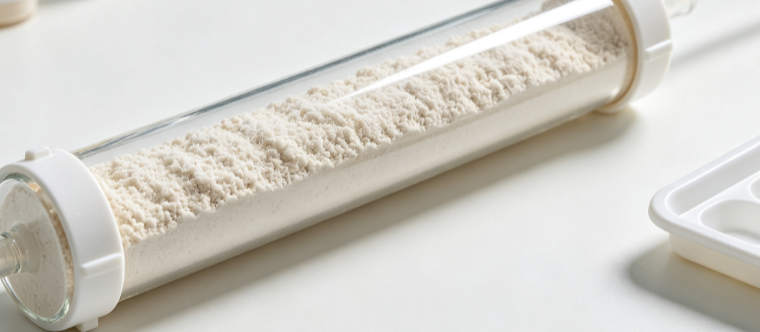
Sepiolite is a naturally occurring fibrous clay mineral with a unique microporous structure, high specific surface area, and strong affinity for polar molecules, making it an excellent candidate for air purification applications. Sepiolite-based air purifiers, often in the form of pellets, granules, or monolithic filters, are widely used for the removal of volatile organic compounds (VOCs), formaldehyde, ammonia, and other malodorous gases, as well as for humidity control and antimicrobial protection. However, the actual performance and safety of these materials are critically dependent on a multitude of factors: the specific surface area and pore architecture, the surface chemistry and functional groups, the presence of catalytic or adsorbent additives, the particle size and mechanical integrity, the moisture adsorption isotherm, the breakthrough capacity for target pollutants, the regeneration efficiency, and the release of any potentially harmful leachables or particulates. Even minor variations in these properties can lead to reduced purification efficiency, early saturation, secondary contamination, or poor user experience. Therefore, a rigorous, multi-parametric analytical regime is essential for product development, quality control, regulatory compliance, and consumer confidence. Our ISO/IEC 17025-accredited laboratory offers a dedicated, high-depth testing service tailored specifically for sepiolite-based air purification media, integrating advanced physicochemical, thermal, textural, and dynamic performance methods to deliver a complete functional and safety profile – far beyond simple BET surface area or formaldehyde spot tests.
Why Comprehensive Characterization of Sepiolite Air Purifiers Is Critical for Product Validation and Market Success
Clients seeking our testing services typically aim to: (i) determine the specific surface area, micropore volume, and pore size distribution to assess the physical adsorption capacity, (ii) quantify the dynamic adsorption capacity for key indoor air pollutants (formaldehyde, toluene, ammonia, etc.) under realistic flow and humidity conditions, (iii) measure the water vapor adsorption isotherm and the hysteresis loop to predict the dehumidification and humidity buffering performance, (iv) evaluate the surface functional groups (hydroxyl, silanol, carbonate, etc.) and the point of zero charge to understand the interaction with polar and non-polar molecules, (v) assess the particle size distribution, mechanical crush strength, and attrition resistance to ensure low dust generation and long-term structural stability, (vi) test for the release of volatile organic compounds (off-gassing) and the leachability of heavy metals or other toxic elements under simulated use conditions, (vii) determine the regeneration temperature and the number of cycles before significant capacity loss, (viii) verify the antibacterial/Antifungal efficacy, if claimed, and (ix) generate robust data for product certifications, environmental claims, and regulatory submissions. Standard single-parameter tests are insufficient because the real-world performance of sepiolite air purifiers depends on the interplay of physical adsorption, chemisorption, humidity effects, and kinetics. Our integrated platform combines N₂/Ar physisorption (BET, BJH, NLDFT), dynamic breakthrough testing with online GC-FID/FTIR, water vapor sorption (DVS), mercury intrusion porosimetry, Fourier-transform infrared spectroscopy (FTIR) with diffuse reflectance (DRIFTS), X-ray diffraction (XRD), X-ray photoelectron spectroscopy (XPS), scanning electron microscopy (SEM) with EDS, laser diffraction particle sizing, mechanical crush strength and attrition (ASTM), Thermogravimetric Analysis (TGA) coupled with mass spectrometry (MS), headspace GC-MS for off-gassing, inductively coupled plasma mass spectrometry (ICP-MS) for leachable metals, and antibacterial/Antifungal testing (ISO 22196, JIS Z 2801) – providing a comprehensive quality and performance passport.
Our Advanced Analytical Framework for Sepiolite Air Purification Media
1. Dynamic Adsorption Performance for Target Pollutants
We evaluate the dynamic adsorption capacity for volatile organic compounds (formaldehyde, toluene, xylene, etc.) and inorganic gases (ammonia, hydrogen sulfide) using a custom-built flow-through test system that conforms to ISO 16000-23 and ASTM D6670 standards. The test system precisely controls the temperature (15–40 °C), relative humidity (10–90% RH), and gas flow rate (0.1–5 L/min), and it generates defined pollutant concentrations using certified permeation tubes or gas cylinders. The inlet and outlet concentrations are continuously monitored by an online FTIR spectrometer (for formaldehyde) and a gas chromatograph with a flame ionization detector (GC-FID) for VOCs, achieving detection limits in the low ppb range. We generate breakthrough curves and derive the breakthrough capacity (at 5% and 10% penetration), the total saturation capacity, and the clean air delivery rate (CADR) normalized by the media mass or volume. We also perform multi-cycle tests (adsorption – regeneration – re-adsorption) to evaluate the regenerability and the capacity decay. These data are essential for predicting the service life and the replacement frequency in real indoor environments.
2. Textural Properties: Surface Area, Micropore Volume, and Pore Size Distribution
We measure the BET-specific surface area and the total pore volume by N₂ physisorption at 77 K (and Ar at 87 K for micropore analysis) over a relative pressure range of 10⁻⁶–0.995, with a reproducibility of ±1.5%. The pore size distribution is derived using NLDFT, QSDFT, and BJH models to cover micropores (<2 nm), mesopores (2–50 nm), and macropores. We also determine the external surface area and the micropore volume from the t-plot method. For a comprehensive porosity assessment, we perform mercury intrusion porosimetry (up to 600 MPa) to characterize the macroporosity and the pore throat distribution, which influence the accessibility of the active sites to large molecules.
3. Surface Chemistry and Functional Group Profiling
We use diffuse reflectance infrared Fourier transform spectroscopy (DRIFTS) to identify and semi-quantify the surface functional groups (hydroxyl, silanol, carbonate, organic groups) in the range of 400–4000 cm⁻¹. For a detailed surface chemical state, we apply X‑ray photoelectron spectroscopy (XPS) to quantify the elemental composition and the bonding states (Si 2p, O 1s, C 1s, and trace metals). We also determine the point of zero charge (pHPZC) by the potentiometric mass titration method, which predicts the adsorption affinity for ionic species and the impact of pH on the performance.
4. Moisture Adsorption and Humidity Control Performance
We measure the water vapor adsorption isotherm at 25 °C and 40 °C over a full relative humidity (RH) range (0–98% RH) using a gravimetric dynamic vapor sorption (DVS) system with an ultra-microbalance (precision ±0.1 µg). The isotherm provides the monolayer capacity (from BET on water), the total water uptake at 80% RH, and the hysteresis loop area, which are critical for evaluating the humidity buffering capacity and the potential for mold growth. We also perform water vapor permeability tests on packed or monolithic forms to assess the moisture transfer rate, relevant for comfort applications.
5. Mechanical Integrity and Particle Characterization
We measure the particle size distribution by laser diffraction (dry and wet methods) from 0.1 to 3500 µm, reporting D10, D50, D90, and the span. The particle morphology and surface texture are examined by field‑emission scanning electron microscopy (FE‑SEM) with EDS for elemental mapping. The mechanical crush strength of individual pellets is determined using a precision compression tester, and the attrition resistance is evaluated according to ASTM D4058 or D5757, reporting the fines generation percentage and the attrition index. These properties are essential for ensuring low dust emissions, stable pressure drop, and minimal media loss during shipping and service.
6. Off-Gassing, Leachable, and Extractable Contaminants
We perform headspace gas chromatography-mass spectrometry (headspace GC-MS) at elevated temperatures (40 °C and 60 °C) to identify and semi‑quantify volatile organic compounds (VOCs) that may be released from the sepiolite material itself or from organic binders/additives. For leachable metals and anions, we conduct batch extraction tests in deionized water and in acidic (pH 4) and alkaline (pH 10) solutions, following EPA Method 1311 (TCLP) or custom protocols, and we analyze the extracts by ICP‑MS and ion chromatography (IC). We also measure the pH and electrical conductivity of the extract. The results are compared against the relevant occupational exposure limits and consumer safety standards (e.g., RoHS, REACH).
7. Thermal Stability and Regeneration Behavior
We perform Thermogravimetric Analysis (TGA) coupled with differential scanning calorimetry (DSC) and evolved gas mass spectrometry (MS) from 25 °C to 900 °C under inert and oxidizing atmospheres. The TGA curve reveals the moisture content, the decomposition of organic matter (if any), and the thermal stability limit. We also conduct multiple adsorption‑regeneration cycles in a thermogravimetric analyzer with controlled humidity and temperature cycling to determine the regeneration efficiency and the energy consumption per cycle. The recommended regeneration temperature is reported, along with the number of cycles until the capacity drops by 20%.
8. Antibacterial and Antifungal Efficacy (Optional)
For products claiming biocidal activity, we evaluate the antibacterial efficacy against Staphylococcus aureus and Escherichia coli (ISO 22196) and the Antifungal efficacy against Aspergillus niger (ASTM G21) on the surface of the sepiolite media. The antimicrobial activity is reported as the log reduction in colony-forming units (CFU) after a defined contact time.
9. Mineralogical Phase Identification and Purity
We determine the mineralogical composition by powder X‑ray diffraction (XRD) with Rietveld refinement, quantifying the sepiolite content and the presence of accessory minerals (quartz, calcite, dolomite, feldspar, etc.). The loss on ignition (LOI) at 1000 °C is measured to estimate the organic matter, carbonate, and structural water. These data ensure the consistency of the raw material and help in identifying potential sources of performance variability.
Our Distinctive Advantages in Sepiolite Air Purifier Testing
1. Fully Integrated Multi‑Technique Platform with Realistic Simulation: We uniquely combine dynamic gas breakthrough testing, comprehensive textural and surface analysis, moisture sorption, mechanical integrity assessment, and safety screening (off‑gassing and leaching) in a single workflow. This integration allows us to correlate the porous structure with the dynamic adsorption performance, the surface chemistry with the pollutant selectivity, and the mechanical properties with the long‑term durability – providing a complete lifecycle assessment that is rarely available from standard testing services.
2. Expertise in Clay‑Based and Hybrid Adsorbent Materials: Our scientists have extensive experience with fibrous clays, pillared clays, and hybrid organic‑inorganic materials. We have developed customized degassing and pre‑treatment protocols to preserve the delicate fibrous structure and the surface hydroxyl groups, ensuring that the measured properties reflect the true native state. Our inter‑laboratory reproducibility for key parameters (BET, breakthrough capacity, crush strength) is within 2‑3% RSD, validated on over 150 commercial sepiolite products.
3. Advanced Data Modeling and Process Optimization Support: We use the measured isotherms and breakthrough data to build validated predictive models (e.g., linear driving force, Yoon‑Nelson, Thomas) that simulate the performance under different operating conditions – including variable flow rates, humidity, and inlet concentrations. We provide recommendations on the optimal media loading, bed depth, and replacement schedule, enabling our clients to design efficient air purifiers and to make evidence‑based marketing claims.
4. Regulatory‑Grade Quality and Full Traceability: Our facility is accredited under ISO/IEC 17025:2017 for all relevant test methods (BET, mercury porosimetry, TGA, GC‑MS, ICP‑MS). We use NIST‑traceable standards and certified reference materials. All measurement uncertainties are reported with expanded uncertainties (k=2) typically <2% for surface area, <3% for breakthrough capacity, and <5% for leachate concentrations, ensuring the data are defensible in quality audits, regulatory submissions, and consumer claims.
5. Consultative Partnership and Rapid Turnaround: Each project is led by a senior adsorption scientist with specific expertise in air purification materials. We provide interpretative reports that not only present the data but also explain the implications for product design – for example, linking a low micropore volume to weak formaldehyde adsorption, or identifying a high carbonate impurity as a cause of ammonia release. We also offer co‑authorship support for technical publications and assist in drafting material safety data sheets (MSDS) and product specifications.
Report Deliverables and Client Empowerment
Our final comprehensive report includes: (a) dynamic breakthrough curves and the derived capacities (breakthrough, saturation, CADR) for target pollutants under multiple test conditions; (b) BET surface area, micropore volume, mesopore volume, and pore size distribution from N₂ physisorption and mercury intrusion; (c) surface functional groups (DRIFTS), XPS surface composition, and pHPZC; (d) water vapor adsorption isotherm, total water uptake, and humidity buffering index; (e) particle size distribution, SEM images, crush strength, and attrition index; (f) off‑gassing (VOCs) and leachable metals/anions with compliance assessment; (g) thermal stability and regeneration efficiency; (h) antibacterial/Antifungal efficacy (if requested); (i) mineralogical composition and LOI; (j) a benchmarking summary comparing your product with industry references and competitor materials; and (k) a process optimization guide with recommended operating parameters and maintenance schedules. All raw data (breakthrough logs, diffractograms, spectra, thermograms, and images) are supplied in open, machine‑readable formats (CIF, JCAMP‑DX, .csv, .tiff, .mzML) for independent verification and long‑term data archiving.
We also offer subscription‑based monitoring programs for regular quality surveillance, with trend analysis and statistical quality control (SQC) charts. Our secure client portal provides 24/7 access to project data and direct communication with our technical experts.
Conclusion: Precision Characterization for High‑Performance and Safe Sepiolite Air Purifiers
Sepiolite‑based air purification media offer a sustainable and efficient solution for improving indoor air quality, but their performance, durability, and safety must be rigorously verified under realistic conditions. Our testing service delivers that verification – integrating dynamic adsorption performance, comprehensive textural and surface analysis, mechanical testing, thermal stability, and safety screening with expert interpretation and predictive modeling. By choosing our laboratory, you gain a trusted partner that ensures your product meets the highest standards of efficacy and safety, enabling you to build consumer trust and accelerate market entry. Partner with our expert team today to design a customized testing protocol – we are committed to advancing your air purification technology with unmatched analytical depth and scientific rigor.