Reasons for choosing our testing services
ZHONGXI Testing has obtained inspection qualification certifications from multiple countries and regions worldwide. We possess a senior testing team and advanced testing methods, providing independent, impartial, and professional third-party verification services for global carbon projects.

Internationally recognized authority
Certified by multiple international standards such as CNAS, VCS, and GS, with reports universally applicable worldwide.

Global service capability
Covering 140+ countries and regions, it supports on-site detection and remote verification in multiple languages.

Professional experimental methods
Adopt standard experimental methods to ensure accurate and reliable data.
Comprehensive Characterization and Performance Testing of Seaweed‑Derived Activated Carbon: Advanced Analytical Services for Sustainable Adsorbent Materials
Seaweed‑derived activated carbon (SWAC) has emerged as a promising bio‑based adsorbent for water treatment, air purification, and energy storage, owing to its unique precursor chemistry – high mineral content, inherent nitrogen and sulfur functional groups, and a macro‑/mesoporous structure derived from the cellular architecture of marine algae. Compared to conventional lignocellulosic activated carbons, SWAC often exhibits higher mesoporosity, surface heteroatom doping, and exceptional adsorption capacity for polar pollutants. However, the performance and reproducibility of SWAC depend critically on the pyrolysis and activation conditions, the elemental composition of the feedstock, and the subsequent processing steps. A rigorous, multi‑parameter analytical regime is therefore essential for process optimization, quality assurance, and application‑specific validation. Our ISO/IEC 17025‑accredited laboratory offers a dedicated, high‑depth testing service specifically tailored for seaweed‑based activated carbons, integrating advanced physicochemical, structural, and performance‑based methods to deliver a complete material fingerprint – far beyond routine iodine number or ash content measurements.
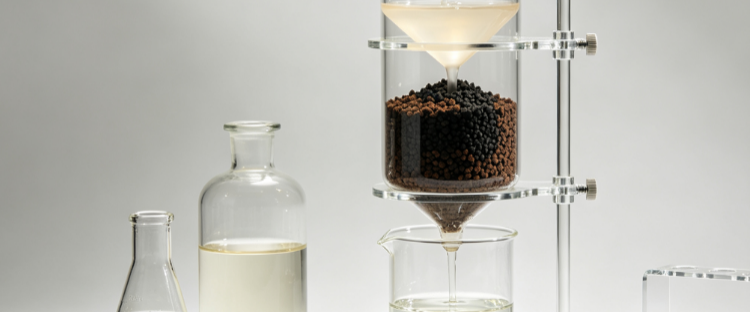
Why Comprehensive Characterization of Seaweed‑Derived Activated Carbon Is Critical for Sustainable Material Development
Clients seeking our testing services typically aim to: (i) determine the specific surface area, micropore and mesopore volume, and pore size distribution to predict the adsorption capacity and kinetics, (ii) quantify the heteroatom content (N, S, O) and the surface functional groups that govern the selectivity for organic dyes, heavy metals, and pharmaceutical residues, (iii) evaluate the ash composition and the content of soluble minerals that may leach into the treated water, (iv) measure the mechanical strength and particle size distribution for practical handling and filtration applications, (v) assess the adsorption performance for target pollutants (e.g., methylene blue, phenol, lead, cadmium) under realistic conditions, (vi) evaluate the thermal stability and the evolution of volatile species during regeneration, (vii) detect the presence of any residual toxic compounds (e.g., polycyclic aromatic hydrocarbons, dioxins) from the activation process, and (viii) generate robust data for product certification, environmental claims, and regulatory compliance. Routine tests such as single‑point BET or a simple decolorization test are insufficient because the unique properties of SWAC – including its heteroatom doping and hierarchical porosity – require a suite of complementary techniques. Our integrated platform combines N₂ and CO₂ physisorption (BET, DFT, BJH), mercury intrusion porosimetry, elemental analysis (CHN/S/O), X‑ray photoelectron spectroscopy (XPS) for surface functional groups, scanning electron microscopy (SEM) with EDS, X‑ray diffraction (XRD) for graphitic domains, Thermogravimetric Analysis (TGA) coupled with mass spectrometry (MS), inductively coupled plasma mass spectrometry (ICP‑MS) for trace metals, dynamic adsorption breakthrough testing, and selective pollutant assays (methylene blue, iodine, heavy metal uptake) – providing a comprehensive and application‑oriented quality profile.
Our Advanced Analytical Framework for Seaweed‑Derived Activated Carbon
1. Textural Properties: Surface Area, Pore Volume, and Pore Size Distribution
We determine the BET‑specific surface area and total pore volume by N₂ physisorption at 77 K (and Ar at 87 K for micropore refinement) over a relative pressure range of 10⁻⁶–0.995, with a reproducibility of ±1.5%. The pore size distribution is derived using NLDFT, QSDFT, and BJH models to accurately resolve the hierarchical porosity – typically a combination of micropores from the carbonization process and meso‑/macropores derived from the seaweed cellular structure. For a complete porosity assessment, we perform CO₂ physisorption at 273 K to quantify the ultramicroporosity (<1 nm). We also use mercury intrusion porosimetry (up to 600 MPa) to characterize the macroporosity and the bulk density. These data are essential for predicting the accessibility of the active sites to large molecules (e.g., humic acids, dyes) and for optimizing the activation conditions.
2. Elemental Composition, Heteroatom Doping, and Surface Chemistry
We quantify the bulk elemental composition (C, H, N, S, O) by combustion analysis (LECO) with a precision of ±0.1%, and we determine the ash content by high‑temperature combustion. The surface chemical states and the heteroatom functionalities (e.g., pyridinic‑N, pyrrolic‑N, sulfoxide, sulfone) are probed by X‑ray photoelectron spectroscopy (XPS) with monochromatic Al Kα radiation, providing the atomic concentrations and the bonding configurations. The acidic/basic functional groups (carboxyl, phenolic, lactone, carbonyl, basic sites) are quantified by Boehm titration, and the point of zero charge (pHPZC) is determined by potentiometric mass titration. These surface chemistry parameters are directly correlated with the adsorption affinity for specific contaminants, such as cationic heavy metals (favored by high negative charge) or anionic dyes (favored by basic sites).
3. Adsorption Performance for Key Contaminants
We conduct batch adsorption studies for a range of model pollutants under controlled temperature, pH, and agitation conditions. We measure the iodine number (ASTM D4607) and the methylene blue number to assess the relative microporosity and mesoporosity. For detailed performance, we determine the equilibrium isotherm for organic pollutants (phenol, malachite green, methylene blue) and for heavy metals (Pb²⁺, Cd²⁺, Cu²⁺, etc.) using ICP‑MS or UV‑Vis spectrophotometry. The isotherm data are fitted to Langmuir, Freundlich, Sips, and Redlich–Peterson models, and we report the maximum monolayer capacity (Qm), the affinity constants, and the heterogeneity parameters. We also perform kinetic studies to determine the pseudo‑first‑order and pseudo‑second‑order rate constants and the intraparticle diffusion coefficients.
4. Dynamic Column and Breakthrough Performance
For practical applications in fixed‑bed or cartridge filters, we operate a custom‑built breakthrough system with an online UV‑Vis or ICP‑MS detector, simulating the real flow rates and bed depths. We derive the breakthrough capacity (at 5% and 10% of influent concentration), the mass transfer zone length, and the utilization efficiency of the bed. These data are critical for sizing the adsorber units and predicting the replacement frequency.
5. Mineral Composition and Leaching Risk Assessment
Seaweed‑derived carbon often retains substantial inorganic minerals (Ca, Mg, K, Na, Fe, Al, etc.), which can influence the pH and the ionic strength of the treated water. We quantify the major and trace elements in the ash by X‑ray fluorescence (XRF) and by inductively coupled plasma mass spectrometry (ICP‑MS) after acid digestion. To assess the potential leaching of heavy metals or other toxic elements under service conditions, we perform batch leaching tests in deionized water and in acidic (pH 4) and alkaline (pH 10) solutions, following the EPA Method 1311 (TCLP) or custom protocols. The leachate is analysed for metals (Pb, Cd, As, Cr, Hg, etc.) by ICP‑MS and for anions (chloride, sulfate) by ion chromatography. The results are compared against the relevant drinking water and discharge standards.
6. Thermal Stability and Regeneration Behavior
We perform simultaneous Thermogravimetric Analysis (TGA) and differential scanning calorimetry (DSC) from 25 °C to 1000 °C under inert and oxidizing atmospheres, with evolved gas analysis by mass spectrometry (MS). The TGA curve reveals the moisture content, the decomposition of functional groups, the loss of mineral‑bound carbonates, and the thermal stability limit. We also conduct accelerated regeneration tests (thermal, microwave, or chemical) to determine the regeneration efficiency and the number of cycles before the capacity drops by 20%. This is essential for assessing the economic viability and the environmental footprint of the adsorbent.
7. Structural and Graphitic Characterisation
We use powder X‑ray diffraction (XRD) to identify the presence of amorphous carbon, turbostratic graphitic domains, and crystalline mineral phases (e.g., calcite, quartz). The Raman spectroscopy (with 532 nm and 785 nm excitation) provides the D‑band/G‑band intensity ratio (ID/IG), which is a measure of the disorder and the graphitic structure – influencing the electrical conductivity and the adsorption of aromatic compounds.
8. Morphology, Particle Size, and Mechanical Integrity
We measure the particle size distribution by laser diffraction (dry and wet) from 0.1 to 3500 µm, reporting D10, D50, D90, and the span. The morphology and the surface texture are examined by field‑emission scanning electron microscopy (FE‑SEM) with EDS for elemental mapping. The mechanical crush strength of pellets and the attrition resistance (ASTM D4058) are evaluated to predict the loss of fines during handling and hydraulic transport.
9. Trace Organic Contaminants from the Activation Process
To ensure the safety of the activated carbon for applications in drinking water or food processing, we perform solvent extraction (dichloromethane, acetone) followed by GC‑MS and high‑performance liquid chromatography (HPLC) with diode‑array detection (DAD) and mass spectrometry (MS) to screen for polycyclic aromatic hydrocarbons (PAHs), dioxins, furans, and other potential toxic by‑products of the activation process. The levels are compared against the regulatory limits (e.g., EPA, EU).
Our Distinctive Advantages in Seaweed‑Derived Activated Carbon Testing
1. Unmatched Depth in Heteroatom and Surface Chemistry Analysis: We uniquely combine XPS, Boehm titration, elemental analysis, and pHPZC determination to provide a complete picture of the surface functionality, which is critical for explaining the enhanced performance of SWAC for specific pollutants (e.g., mercury or pharmaceuticals). This level of detail is rarely available from standard activated carbon testing laboratories.
2. Integrated Textural and Performance Platform: We link the pore architecture (BET, DFT, mercury porosimetry) with the dynamic breakthrough capacity and the batch isotherm data, enabling a direct correlation between the structural parameters and the practical adsorption performance. This integration allows us to provide application‑specific recommendations – for example, suggesting a higher mesoporosity for large‑molecule adsorption or a higher micropore volume for small‑molecule capture.
3. Expertise in Bio‑Based and Heterogeneous Carbons: Our team has extensive experience with activated carbons derived from lignocellulosic, algae, and waste biomass. We have developed customized degassing and digestion protocols to handle the high mineral content and the variable composition of seaweed precursors, ensuring accurate and reproducible results. Our inter‑laboratory reproducibility for key parameters (BET, Qm, metal leaching) is within 2‑3% RSD, validated on numerous seaweed‑based materials from different species (e.g., brown, green, red algae).
4. Comprehensive Safety and Regulatory Screening: We provide a full suite of safety tests – including leachability of heavy metals, PAH/dioxin screening, and off‑gas analysis – to ensure that your activated carbon meets the strictest environmental and food‑contact standards. This one‑stop approach saves you time and resources by avoiding the need to send samples to multiple specialists.
5. Regulatory‑Grade Quality and Full Traceability: Our facility is accredited under ISO/IEC 17025:2017 for all relevant methods (BET, elemental analysis, ICP‑MS, TGA, GC‑MS). We use NIST‑traceable standards and certified reference materials. All uncertainties are reported with expanded uncertainties (k=2) typically <2% for surface area, <3% for adsorption capacities, and <5% for trace metals, ensuring the data are defensible in quality audits, regulatory submissions, and product certifications.
Report Deliverables and Client Empowerment
Our final comprehensive report includes: (a) BET surface area, micropore and mesopore volumes, and pore size distributions (from N₂, CO₂, and mercury intrusion); (b) bulk and surface elemental composition (CHN/S/O, XPS), functional group quantification (Boehm), and pHPZC; (c) adsorption isotherms and kinetic data for target pollutants (organic and heavy metals), with fitted model parameters; (d) dynamic breakthrough curves and the derived capacities (breakthrough, saturation); (e) ash composition (XRF), trace metals, and leaching test results with compliance assessment; (f) thermal stability (TGA‑DSC‑MS) and regeneration efficiency; (g) XRD and Raman data for structural characterization; (h) particle size distribution, SEM images, and mechanical strength data; (i) organic contaminant screening (PAHs, dioxins) with compliance flagging; (j) a benchmarking summary comparing your material with commercial activated carbons and literature data; and (k) a recommendation guide for the optimal application, activation tuning, and regeneration conditions. All raw data (isotherms, diffractograms, spectra, thermograms, chromatograms, and images) are supplied in open, machine‑readable formats (CIF, JCAMP‑DX, .csv, .tiff, .mzML) for independent verification and long‑term data archiving.
We also offer subscription‑based quality surveillance programs for regular batch inspection, with trend analysis and statistical quality control (SQC) charts. Our secure client portal provides 24/7 access to project data and direct communication with our technical experts.
Conclusion: Precision Characterization for High‑Performance Seaweed‑Derived Activated Carbon
Seaweed‑derived activated carbon represents a sustainable and highly functional adsorbent with a unique combination of structural, chemical, and adsorptive properties. However, to fully exploit its potential, a thorough understanding of its textural, chemical, thermal, and performance attributes is indispensable. Our testing service provides that understanding – integrating state‑of‑the‑art porosity analysis, surface chemistry profiling, contaminant adsorption studies, safety screening, and process optimization with expert interpretation. By choosing our laboratory, you gain a trusted partner that ensures your SWAC meets the most demanding specifications for environmental remediation, water treatment, and energy applications. Partner with our expert team today to design a customized testing protocol – we are committed to advancing your sustainable material innovation with unmatched analytical depth and scientific rigor.