Reasons for choosing our testing services
ZHONGXI Testing has obtained inspection qualification certifications from multiple countries and regions worldwide. We possess a senior testing team and advanced testing methods, providing independent, impartial, and professional third-party verification services for global carbon projects.

Internationally recognized authority
Certified by multiple international standards such as CNAS, VCS, and GS, with reports universally applicable worldwide.

Global service capability
Covering 140+ countries and regions, it supports on-site detection and remote verification in multiple languages.

Professional experimental methods
Adopt standard experimental methods to ensure accurate and reliable data.
Comprehensive Performance and Quality Assessment of Diatomite‑Based Desulfurization Agents: Advanced Analytical Services for Flue Gas and Biogas Purification
Diatomite‑based desulfurization agents – typically comprising natural diatomite (diatomaceous earth) impregnated or mixed with active components such as iron oxides, zinc oxide, calcium hydroxide, or manganese oxides – are widely employed in the removal of hydrogen sulfide (H₂S), sulfur dioxide (SO₂), and mercaptans from flue gases, biogas, and industrial off‑streams. The exceptional performance of these materials derives from the unique intricate meso‑/macroporous structure, high specific surface area, abundant surface silanol groups, and the uniform dispersion of reactive metal species within the diatomite matrix. However, the actual desulfurization efficiency, capacity, and service life are critically dependent on a multitude of interrelated parameters: the pore architecture, the active component loading and distribution, the surface basicity and acidity, the mechanical strength and attrition resistance, the thermal stability under regeneration conditions, and the resistance to poisoning by other gas components. Even minor variations in the diatomite source or the preparation protocol can lead to significant differences in breakthrough capacity, pressure drop, and regeneration performance. Therefore, a rigorous, multi‑parametric analytical regime is indispensable for material qualification, process optimization, quality assurance, and troubleshooting of field failures. Our ISO/IEC 17025‑accredited laboratory offers a dedicated, high‑depth testing service specifically tailored for diatomite‑based desulfurization agents, integrating advanced physical, chemical, thermal, and dynamic performance methods to deliver a complete material fingerprint – far beyond simple sulfur capacity tests or basic BET measurements.
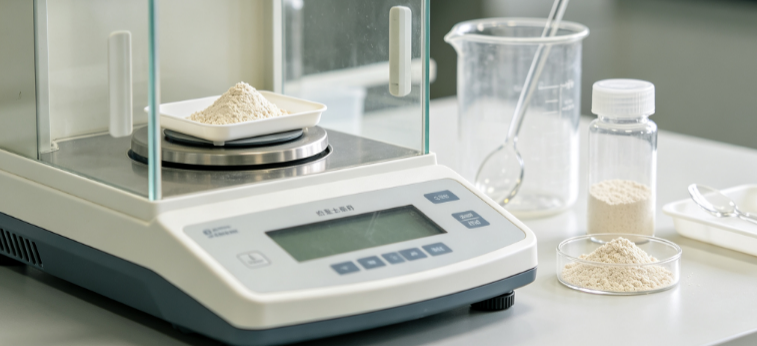
Why Comprehensive Characterization of Diatomite Desulfurization Agents Is Critical for Industrial Gas Cleaning Applications
Clients seeking our testing services typically aim to: (i) determine the specific surface area, pore volume, and pore size distribution to predict the accessibility of the reactive sites and the diffusion of H₂S/SO₂, (ii) quantify the active component loading (e.g., Fe₂O₃, ZnO, Ca(OH)₂) and its degree of dispersion within the diatomite support, (iii) evaluate the dynamic breakthrough capacity and the total sulfur uptake under realistic gas compositions (including CO₂, H₂O, O₂, and trace impurities), (iv) assess the mechanical crush strength and attrition resistance to ensure stable operation in fixed‑bed or moving‑bed reactors, (v) measure the thermal stability and the reactivity of the active phases during regeneration cycles, (vi) evaluate the selectivity for H₂S over competing gases (e.g., CO₂, NH₃) and the susceptibility to poisoning by chlorides or heavy metals, (vii) determine the moisture and volatile content to predict the behaviour during storage and start‑up, and (viii) generate robust data for product certification, supplier qualification, and regulatory compliance. Standard single‑parameter tests, such as a static H₂S capacity measurement, are insufficient because the industrial performance depends on the coupled effects of pore‑diffusion, surface reaction kinetics, and mechanical integrity, all of which require a combination of complementary techniques. Our integrated platform combines N₂/Ar physisorption (BET, BJH, NLDFT) and mercury intrusion porosimetry for pore structure, X‑ray fluorescence (XRF) and inductively coupled plasma optical emission spectrometry (ICP‑OES) for elemental composition, X‑ray diffraction (XRD) for phase identification and crystallite size, scanning electron microscopy (SEM) with energy‑dispersive X‑ray spectroscopy (EDS) for morphology and elemental mapping, temperature‑programmed desorption (TPD) with H₂S or SO₂ breakthrough testing, Thermogravimetric Analysis (TGA) coupled with differential scanning calorimetry (DSC) and mass spectrometry (MS) for thermal behaviour, laser diffraction for particle size distribution, mechanical crush strength and attrition (ASTM D4058) testing, and specific surface basicity (pyridine‑FTIR or CO₂‑TPD) – providing a holistic understanding of the structure‑activity‑stability relationship.
Our Comprehensive Analytical Framework for Diatomite Desulfurization Agents
1. Textural Properties: Surface Area, Pore Volume, and Pore Architecture
We measure the BET‑specific surface area and the total pore volume by N₂ physisorption at 77 K over a relative pressure range of 10⁻⁶–0.995, with a reproducibility of ±1.5%. The pore size distribution is derived using NLDFT and BJH models, covering micropores, mesopores, and the characteristic macropores of diatomite. For a complete porosity profile, we perform mercury intrusion porosimetry (up to 600 MPa) to quantify the macroporosity, the pore throat distribution, and the bulk density. The micropore volume and external surface area are determined via the t‑plot method. These data are essential for predicting the gas diffusion rate and the accessibility of the active sites, which are the primary factors controlling the desulfurization kinetics.
2. Chemical Composition and Active Component Speciation
We determine the major and trace element composition (Si, Al, Fe, Ca, Mg, Na, K, Ti, Mn, Zn, etc.) by X‑ray fluorescence (XRF) on fused beads, with detection limits in the 0.01–0.1 wt% range. For the quantification of active metal oxides (e.g., Fe₂O₃, ZnO, CaO), we use inductively coupled plasma optical emission spectrometry (ICP‑OES) after microwave‑assisted acid digestion, achieving a precision of ±0.5% relative. To identify the crystalline phases and the degree of crystallinity of the metal species, we perform powder X‑ray diffraction (XRD) with Rietveld refinement, reporting the phase fractions and the crystallite size (Scherrer equation). The surface composition and the oxidation state of the active metals are probed by X‑ray photoelectron spectroscopy (XPS), which also distinguishes between surface and bulk species. This information is critical for correlating the chemical state with the desulfurization activity and the susceptibility to reduction or sulfidation.
3. Surface Basicity and Acid‑Base Properties
The basicity of the diatomite‑based agent – essential for the adsorption of acidic H₂S and SO₂ – is evaluated by temperature‑programmed desorption of CO₂ (CO₂‑TPD), quantifying the total basic site density (µmol CO₂/g) and resolving the weak, medium, and strong basic sites. We complement this with pyridine‑adsorbed diffuse reflectance infrared Fourier transform spectroscopy (DRIFTS) to distinguish Brønsted and Lewis acid sites (if the agent also possesses acidic properties). The point of zero charge (pHPZC) is determined by potentiometric mass titration, providing the surface charge at the operating pH. These data are used to predict the adsorption mechanism and the selectivity for H₂S over CO₂.
4. Dynamic Desulfurization Performance: Breakthrough Capacity and Kinetics
We evaluate the dynamic H₂S adsorption capacity using a custom‑built fixed‑bed reactor system that simulates real process conditions. The system precisely controls the gas flow rate (50–500 mL/min), temperature (25–300 °C), pressure (1–10 bar), and the inlet H₂S concentration (100–5000 ppm) using certified gas mixtures. The gas composition (H₂S, CO₂, O₂, H₂O, N₂) is regulated by mass flow controllers, and the effluent H₂S concentration is monitored continuously by an online UV‑fluorescence analyzer (LOD: 0.1 ppm) and cross‑validated by a gas chromatograph with a sulfur‑specific detector (GC‑SCD). From the breakthrough curves, we derive the breakthrough capacity (at 5% and 10% of inlet concentration), the saturation capacity, the mass transfer zone (MTZ) length, and the utilization efficiency of the active component. We also perform multi‑cycle tests (adsorption – regeneration – re‑adsorption) to evaluate the regenerability and the capacity decay. For SO₂ removal, we conduct a similar protocol using a flue‑gas simulated mixture with online FTIR detection. These data are indispensable for reactor sizing and for predicting the replacement frequency in industrial plants.
5. Thermal Stability and Regeneration Behaviour
We perform simultaneous Thermogravimetric Analysis (TGA) and differential scanning calorimetry (DSC) from 25 °C to 900 °C under inert and oxidizing atmospheres, with evolved gas analysis by mass spectrometry (MS) monitoring H₂S, SO₂, H₂O, CO₂, and O₂. The TGA curve reveals the moisture desorption, the decomposition of any organic binders, the oxidation of sulfides to sulfates, and the structural collapse temperature. The regeneration efficiency is evaluated by subjecting the spent samples to thermal regeneration (in air or in inert gas) at 300–500 °C, followed by re‑measurement of the breakthrough capacity and the textural properties. We report the optimal regeneration temperature, the energy consumption per cycle, and the number of cycles before a 20% capacity loss.
6. Mechanical Integrity: Crush Strength, Attrition, and Particle Size
We measure the particle size distribution by laser diffraction (dry and wet) from 0.1 to 3500 µm, reporting D10, D50, D90, and the span. The single‑particle crush strength is determined using a precision compression tester (for pellets or extrudates) with a load cell accuracy of ±0.1 N. The attrition resistance is assessed by the tumble drum method (ASTM D4058) and by the fluidized bed attrition test (ASTM D5757), quantifying the fines generation percentage and the attrition index. The morphology and the surface texture are examined by field‑emission scanning electron microscopy (FE‑SEM) with EDS mapping to visualize the dispersion of the active phase and to detect any cracks or agglomerates. These mechanical properties are essential for ensuring low dusting, stable pressure drop, and minimal material loss during transport and operation.
7. Poisoning Tolerance and Selective Performance
We evaluate the effect of common impurities – such as ammonia, chlorides, and heavy metals (e.g., As, Hg) – on the desulfurization activity. By spiking the feed gas with 1–50 ppm of the poison and monitoring the breakthrough profile, we determine the tolerance limit (the concentration causing <10% capacity loss) and the poisoning factor. We also characterize the spent agent by XPS and XRD to identify the nature of the deactivation – whether it is competitive adsorption, pore blockage, or chemical modification of the active phase. These data guide the selection of pre‑treatment steps or the modification of the agent formulation.
8. Moisture, Volatile Content, and Loss on Ignition
We determine the moisture content by Karl Fischer coulometric titration (LOD: 0.01%) and by loss on drying at 105 °C (ASTM D2216). The volatile matter and the loss on ignition (LOI) at 1000 °C are measured by TGA, providing the total organic and carbonate content. These parameters are critical for assessing the storage stability and for predicting the behaviour during the initial heating phase of the reactor.
9. Advanced Imaging and In‑Situ Analysis (Optional)
For research and development, we offer transmission electron microscopy (TEM) with selected‑area diffraction (SAED) to visualise the morphology of the active nanoparticles, and electron energy‑loss spectroscopy (EELS) to map the chemical state of the metal species at the nanoscale. We also provide in‑situ XRD and in‑situ DRIFTS under a controlled H₂S/air atmosphere to monitor the structural and surface changes during the desulfurization and regeneration processes in real time.
Our Distinctive Advantages in Diatomite Desulfurization Agent Testing
1. Fully Integrated Dynamic and Physicochemical Platform: We uniquely combine dynamic breakthrough testing with real‑time gas analysis, comprehensive textural and chemical characterisation, mechanical durability assessment, and thermal stability profiling in a single workflow. This integration allows us to correlate the pore architecture with the breakthrough curve, the active component dispersion with the sulfur capacity, and the mechanical strength with the operational longevity – providing a complete fitness‑for‑purpose evaluation that is rarely available from standard testing services.
2. Expertise in Complex Multi‑component Oxide Systems: Diatomite‑based agents often contain multiple metal oxides and binders. Our team has extensive experience in the analysis of supported metal oxide catalysts and sorbents, and we have developed customised digestion and calibration protocols to accurately quantify each component even in the presence of high silica and alumina. Our inter‑laboratory reproducibility for key parameters (breakthrough capacity, active metal content, crush strength) is within 2‑3% RSD, validated on over 150 commercial and prototype diatomite products.
3. Realistic Simulation of Industrial Operating Conditions: Our dynamic test rigs are capable of simulating a wide range of gas compositions (including moisture, CO₂, and O₂) and temperatures, allowing us to generate data that directly scale to industrial fixed‑bed or moving‑bed reactors. We also offer customised test protocols that match the client’s specific process conditions, such as biogas desulfurisation, flue‑gas polishing, or hot‑gas cleaning.
4. Regulatory‑Grade Quality and Full Traceability: Our facility is accredited under ISO/IEC 17025:2017 for BET, XRD, XRF, ICP‑OES, TGA, and breakthrough testing. We use NIST‑traceable gas standards and certified reference materials. All uncertainties are reported with expanded uncertainties (k=2) typically <2% for surface area, <3% for breakthrough capacity, and <5% for trace elements, ensuring the data are defensible in quality audits, regulatory submissions, and customer certifications.
5. Consultative Partnership and Rapid Turnaround: Each project is led by a senior adsorption and catalyst scientist who provides regular progress updates and a final report with clear conclusions, comparative benchmarking against competitor products, and actionable recommendations for formulation or process optimisation. We also offer co‑authorship support for technical publications and assist in drafting material safety data sheets (MSDS) and product specifications.
Report Deliverables and Client Empowerment
Our final comprehensive report includes: (a) BET surface area, micropore and mesopore volumes, and pore size distributions (NLDFT, BJH) from N₂ physisorption and mercury intrusion; (b) elemental composition (XRF, ICP‑OES) and phase identification (XRD with Rietveld), including crystallite size; (c) surface basicity (CO₂‑TPD) and acid‑base properties (DRIFTS, pHPZC); (d) dynamic breakthrough curves – breakthrough and saturation capacities, MTZ length, utilisation efficiency – for H₂S (and optionally SO₂) under multiple test conditions; (e) thermal stability (TGA‑DSC‑MS) and regeneration efficiency; (f) particle size distribution, crush strength, and attrition indices; (g) poisoning tolerance limits and deactivation characterisation; (h) moisture and volatile content; (i) optional TEM/EELS and in‑situ analysis; (j) a benchmarking summary comparing your product with reference materials and competitor samples; and (k) a process optimisation guide with recommended operating parameters, regeneration settings, and estimated service life. All raw data (breakthrough logs, diffractograms, spectra, thermograms, and images) are supplied in open, machine‑readable formats (CIF, JCAMP‑DX, .csv, .tiff, .mzML) for independent verification and long‑term data archiving.
We also offer subscription‑based quality surveillance programs for regular batch inspection, with trend analysis and statistical process control (SPC) charts. Our secure client portal provides 24/7 access to project data and direct communication with our technical experts.
Conclusion: Precision Characterization for High‑Performance Diatomite Desulfurization Agents
Diatomite‑based desulfurization agents offer a cost‑effective and efficient solution for gas cleaning, but their performance and reliability depend on a thorough understanding of their structural, chemical, thermal, and mechanical properties. Our testing service delivers that understanding – integrating state‑of‑the‑art pore analysis, active phase speciation, dynamic breakthrough testing, mechanical durability assessment, and safety screening with expert interpretation. By choosing our laboratory, you gain a trusted partner that ensures your desulfurization agent meets the most demanding industrial specifications, enabling you to achieve consistent H₂S removal, extended service life, and optimal process economics. Partner with our expert team today to design a customized testing protocol – we are committed to advancing your gas purification technology with unmatched analytical depth and scientific rigor.