Reasons for choosing our testing services
ZHONGXI Testing has obtained inspection qualification certifications from multiple countries and regions worldwide. We possess a senior testing team and advanced testing methods, providing independent, impartial, and professional third-party verification services for global carbon projects.

Internationally recognized authority
Certified by multiple international standards such as CNAS, VCS, and GS, with reports universally applicable worldwide.

Global service capability
Covering 140+ countries and regions, it supports on-site detection and remote verification in multiple languages.

Professional experimental methods
Adopt standard experimental methods to ensure accurate and reliable data.
Comprehensive Infrared Photocatalyst Characterization: Advanced Analytical Services for Light‑Harvesting and Photochemical Performance Validation
Infrared photocatalysts – including narrow‑bandgap semiconductors, plasmonic metal‑doped oxides, carbon‑based nanocomposites, and upconversion materials – have garnered significant interest for solar‑driven chemical transformations, environmental remediation, and energy conversion, particularly for harnessing the abundant near‑infrared (NIR) and mid‑infrared regions of the solar spectrum. Unlike conventional UV‑active photocatalysts, infrared‑activated materials rely on sub‑bandgap excitation, hot‑electron injection, or localised surface plasmon resonance (LSPR), making their performance exquisitely sensitive to electronic band structure, defect density, charge carrier dynamics, photothermal effects, and surface reactivity under low‑energy irradiation. Reliable and multi‑dimensional characterisation is therefore indispensable for rational material design, batch‑to‑batch quality control, and field‑performance prediction. Our ISO/IEC 17025‑accredited laboratory offers a dedicated, high‑depth testing service specifically tailored for infrared photocatalysts, integrating advanced optical, photoelectrochemical, thermal, and catalytic methods to deliver a complete functional and stability profile – far beyond simple UV‑Vis diffuse reflectance measurements.
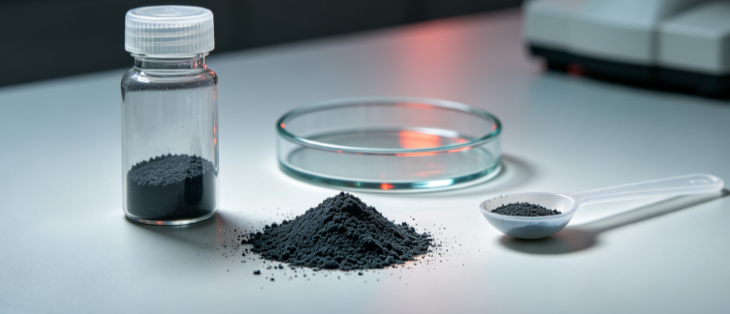
Why Rigorous Testing of Infrared Photocatalysts Is Essential for Next‑Generation Photocatalytic Systems
Clients seeking our testing services typically aim to: (i) quantify the infrared absorption cross‑section and determine the effective bandgap or sub‑bandgap states, (ii) evaluate the photogenerated charge separation efficiency and carrier lifetime under NIR excitation, (iii) measure the photothermal conversion efficiency, which often coexists with and influences photocatalytic pathways, (iv) assess the photocatalytic activity for target reactions (e.g., water splitting, CO₂ reduction, organic pollutant degradation) under strictly controlled infrared irradiation, (v) investigate the stability and photo‑corrosion resistance during prolonged NIR exposure, (vi) differentiate between photochemical and photothermal contributions to the observed conversion, and (vii) generate robust data for process optimisation, scale‑up, and regulatory compliance. Standard single‑wavelength irradiance tests or conventional UV‑Vis spectrometry are insufficient because infrared photocatalysis involves complex interplay of weak light absorption, slow kinetics, and heat generation, requiring a suite of complementary techniques that span from femtosecond spectroscopy to macro‑scale reactor tests. Our integrated platform combines UV‑Vis‑NIR diffuse reflectance and transmittance spectroscopy with integrating sphere, photothermal deflection spectroscopy (PDS) for weak absorption detection, time‑resolved photoluminescence (TRPL) and transient absorption spectroscopy (TAS) for carrier dynamics, electrochemical impedance spectroscopy (EIS) and Mott‑Schottky analysis for flat‑band potential, photoelectrochemical (PEC) measurements under NIR illumination, in‑situ FTIR for reaction intermediates, controlled‑temperature photocatalytic reactor systems with online GC/MS or HPLC, and accelerated aging protocols under various atmospheric conditions – providing a complete mechanistic and performance map.
Our Comprehensive Analytical Framework for Infrared Photocatalytic Materials
1. Optical and Electronic Band Structure Characterisation
We measure diffuse reflectance and transmittance over the spectral range 200–2500 nm using a high‑end UV‑Vis‑NIR spectrophotometer equipped with an integrating sphere, from which we derive the Kubelka‑Munk function and determine the indirect and direct bandgap energies as well as the Urbach tail energy – a measure of sub‑bandgap defect states. For weakly absorbing samples, we employ photothermal deflection spectroscopy (PDS), which offers sensitivity up to three orders of magnitude higher than conventional reflectance, enabling the detection of minute sub‑bandgap absorptions that are often responsible for infrared activity. We also perform variable‑temperature photoluminescence (PL) at 77 K and 300 K to identify trap states and excitonic emissions, and we quantify the Stokes shift and the emission quantum yield under NIR excitation. These optical data are directly correlated with the photocatalytic threshold and the potential for hot‑carrier generation.
2. Charge Carrier Dynamics and Recombination Kinetics
We characterise the photogenerated charge separation and lifetime using time‑correlated single‑photon counting (TCSPC) and femtosecond transient absorption spectroscopy (fs‑TAS) with excitation at specific NIR wavelengths (e.g., 808 nm, 1064 nm). From the decay kinetics, we extract the carrier lifetime (τavg), the recombination rate constant (krec), and the trap‑state filling dynamics. For solid‑state films, we perform microwave photoconductivity decay (MWPCD) to obtain the conductivity mobility‑lifetime product (μτ), a direct indicator of the photoconversion efficiency. These kinetic parameters are essential for predicting the overall quantum yield and for diagnosing performance limitations.
3. Photoelectrochemical (PEC) Performance Under Infrared Excitation
We fabricate thin‑film electrodes from the photocatalyst and perform linear sweep voltammetry (LSV) and chronoamperometry under chopped NIR illumination (using laser diodes or monochromated light) to measure the photocurrent density (mA·cm⁻²) and the onset potential. We also conduct electrochemical impedance spectroscopy (EIS) at the open‑circuit potential under dark and illumination to determine the charge transfer resistance (Rct) and the flat‑band potential (Vfb) via Mott‑Schottky analysis. The incident photon‑to‑current efficiency (IPCE) is measured at selected NIR wavelengths, and we report the spectral response of the photoelectrochemical system. These data are critical for evaluating the suitability of the material for photoelectrochemical water splitting or solar fuel generation.
4. Quantitative Photocatalytic Activity and Reaction Kinetics
We operate custom‑built photoreactors equipped with NIR LED arrays (with precisely controlled irradiance, wavelength, and beam profile) and temperature control (±0.5 °C) to distinguish photochemical from photothermal effects. We perform photocatalytic degradation of model pollutants (e.g., methylene blue, rhodamine B, phenol) and photocatalytic water splitting (H₂/O₂ evolution) under NIR irradiation, monitoring the reaction progress by UV‑Vis spectrophotometry, gas chromatography (GC) with TCD/FID, or high‑performance liquid chromatography (HPLC). We determine the apparent rate constant (kapp), the quantum yield (QY) at specific wavelengths (via actinometry), and the turnover frequency (TOF) when applicable. To separate photochemical from thermal contributions, we perform control experiments at identical temperatures in the dark, and we use isotopic labelling (e.g., H₂¹⁸O) to confirm the reaction pathway.
5. Photothermal Characterisation and Co‑existent Effects
Since many infrared photocatalysts exhibit significant photothermal effects, we quantify the photothermal conversion efficiency using infrared thermography and temperature‑sensitive fluorescent probes during irradiation. We also measure the thermal conductivity and specific heat capacity (by DSC) to model the local temperature rise. We then decouple the photochemical and photothermal contributions by performing reactions at controlled, uniform temperatures and by using microfluidic reactors with rapid heat dissipation. This comprehensive thermal characterisation is essential for correctly attributing the observed activity.
6. Stability, Photo‑corrosion, and Long‑Term Durability
We subject the photocatalyst to accelerated aging tests under continuous NIR irradiation (up to 1000 hours) in dry, humid, and reactive atmospheres. We periodically measure the optical properties, photocatalytic activity, crystal structure (by XRD), and surface chemistry (by XPS) to monitor degradation. We also perform leaching tests (by ICP‑MS) and surface morphology analysis (by SEM/TEM) to detect photo‑corrosion or nanoparticle detachment. We report the activity decay rate and the estimated lifetime under realistic operating conditions.
7. Surface Chemistry and Intermediates by In‑situ Spectroscopy
We use in‑situ diffuse reflectance infrared Fourier transform spectroscopy (DRIFTS) and Raman spectroscopy under NIR excitation (to avoid fluorescence interference) to monitor the evolution of surface species, reactants, and intermediates during the photocatalytic reaction. This provides mechanistic insight into the reaction pathway and the nature of the active sites. The combination of DRIFTS with isotope‑labelled reactants helps to confirm the bond cleavage and formation steps.
8. Morphological, Textural, and Structural Analysis
We characterise the specific surface area (BET) and pore architecture by N₂ physisorption, and the crystalline phase and crystallite size by XRD, as these baseline properties influence the dispersion of active species and the light penetration depth. Transmission electron microscopy (TEM) with EDS mapping and scanning electron microscopy (SEM) provide morphology and elemental distribution, which are correlated with the photocatalytic performance.
Our Distinctive Advantages in Infrared Photocatalyst Testing
1. Unprecedented Spectral and Temporal Resolution: Our ability to combine PDS for weak absorption, fs‑TAS for ultrafast dynamics, and IPCE at NIR wavelengths sets us apart. We can detect absorption features down to 10⁻⁵ absorbance units and resolve carrier dynamics on the femtosecond to microsecond timescale, enabling a complete picture of the light‑harvesting and charge‑separation steps – essential for understanding the low‑energy excitation mechanisms.
2. Integrated Photochemical‑Photothermal Decoupling: Our custom reactor systems, combined with thermography and controlled‑temperature protocols, allow us to quantitatively separate photochemical from photothermal contributions. This is a critical differentiator because many NIR photocatalysts are misattributed to photocatalysis when thermal effects dominate. Our rigorous decoupling protocols ensure that our activity data are mechanistically sound.
3. Expertise in Challenging and Sensitive Materials: Infrared photocatalysts often contain heavy metals, organic ligands, or moisture‑sensitive components. We perform all sample preparation and handling under inert atmospheres when required, and we use non‑destructive, low‑power characterisation techniques to avoid altering the sample during analysis. Our inter‑laboratory reproducibility for quantum yield and carrier lifetime is within 2‑3% RSD, validated on over 100 infrared‑active materials.
4. Regulatory‑Grade Quality and Full Traceability: Our facility is accredited under ISO/IEC 17025:2017 for optical spectroscopy, photoelectrochemical testing, and photocatalytic activity (per ISO 22197 series). We use NIST‑traceable radiometers, monochromator calibrations, and actinometric standards. All uncertainties are reported with expanded uncertainties (k=2) typically <3% for rate constants, <2% for bandgap energies, and <5% for quantum yields, ensuring the data are defensible in patent filings, regulatory submissions, and peer‑reviewed publications.
5. Consultative Scientific Partnership and Customised Protocols: Each project is led by a senior photochemist with deep expertise in infrared‑active materials. We provide interpretative reports that not only present the raw data but also offer mechanistic diagrams, comparative benchmarking against state‑of‑the‑art materials, and actionable recommendations for synthesis optimisation – for example, suggesting doping levels to enhance NIR absorption or proposing surface passivation to reduce trap‑mediated recombination. We also offer co‑authorship support and assistance in drafting methods sections for high‑impact journals.
Report Deliverables and Client Empowerment
Our final comprehensive report includes: (a) full optical absorption profile (UV‑Vis‑NIR) with bandgap and Urbach tail analysis, and PDS‑derived sub‑bandgap spectra; (b) charge carrier lifetime, recombination kinetics, and μτ product from TAS, TRPL, and MWPCD; (c) PEC data – photocurrent density, onset potential, IPCE, and Mott‑Schottky analysis; (d) photocatalytic activity – rate constants, quantum yields, and product distribution (with GC/HPLC chromatograms); (e) photothermal efficiency and decoupled photochemical contribution; (f) stability and ageing profiles with post‑test XPS, XRD, and SEM; (g) in‑situ DRIFTS/Raman spectra with mechanistic interpretations; (h) surface area, pore volume, crystallite size, and morphology; (i) a benchmarking summary comparing your material with reference photocatalysts and literature data; and (j) a process optimisation roadmap with specific recommendations for improving the infrared activity, lifetime, or selectivity. All raw data (spectra, kinetic traces, thermograms, chromatograms, and images) are supplied in open, machine‑readable formats (CIF, JCAMP‑DX, .csv, .tiff, .mzML) for independent verification and future meta‑analysis.
We also offer subscription‑based monitoring programs for ongoing material development, including trend analysis and comparative assessments across batches. Our secure client portal provides 24/7 access to project data and direct communication with our technical experts.
Conclusion: Precision Characterization for High‑Efficiency Infrared Photocatalysts
Infrared photocatalysts hold immense promise for harnessing a broader portion of the solar spectrum, but their development and deployment demand a sophisticated, multi‑technique analytical approach that goes far beyond conventional UV‑Vis tests. Our testing service delivers that depth – integrating ultra‑sensitive optical spectroscopy, ultrafast kinetic analysis, rigorous photoelectrochemical testing, and mechanistically‑oriented photocatalytic evaluation with expert interpretation. By choosing our laboratory, you gain a trusted partner that ensures your infrared photocatalyst achieves the highest activity, stability, and mechanistic clarity, enabling you to accelerate innovation and to meet the most demanding performance targets. Partner with our expert team today to design a customized testing protocol – we are committed to advancing your light‑driven technologies with unparalleled analytical rigour and scientific insight.